Choosing the Right Gate Material for Oahu’s Weather Conditions
Smart Choice Guide: Choosing the right gate material in Oahu means prioritizing resistance to salt air, humidity, and UV exposure over aesthetics alone. Vinyl, reinforced aluminum, and masonry systems offer the best long-term performance, while wood and steel require ongoing maintenance, making material selection critical for durability, function, and long-term value.
We’ve seen many gate failures on the island, and in most cases they stem less from installation quality and more from material choices that are poorly suited for a coastal, tropical environment. If durability, appearance, and long-term value matter, the material choice deserves careful thought.
Understanding Oahu’s Environmental Stressors
Before comparing materials, it helps to understand what a gate endures on Oahu. Moisture is constant, even in areas that see little rainfall. Salt settles into hinges, fasteners, and porous surfaces. Heat and sun exposure cause expansion, contraction, and fading.
During storms, wind loads test structural integrity, especially on wider driveway gates.
According to gate installation services in Hawaii, any gate material that cannot resist corrosion, warping, or UV degradation will struggle over time. This reality eliminates some popular options immediately.
Wood Gates and the Reality of Tropical Exposure
Wood is often chosen for its natural appearance and warmth. On Oahu, it is also one of the highest maintenance options available.
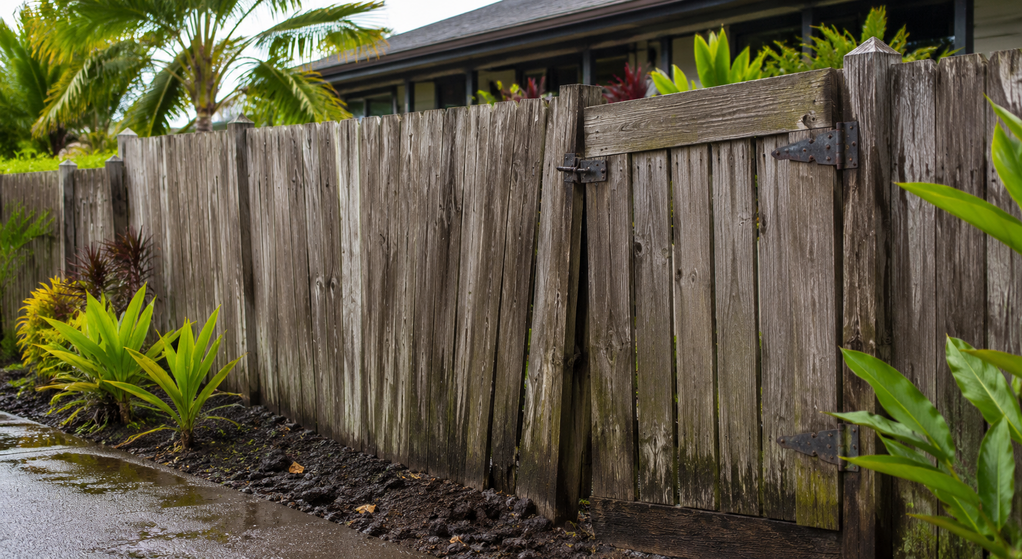
Even pressure-treated wood absorbs moisture in humid conditions. Over time, this leads to swelling, cracking, rot, and insect activity. Salt air accelerates metal fastener corrosion, which loosens joints and compromises structural stability. Sun exposure fades stains quickly, requiring frequent refinishing to maintain appearance.
Hardwoods such as teak or ipe perform better than softwoods, but they are expensive and still require ongoing care. Without consistent sealing and inspection, even premium wood gates eventually show deterioration.
For those seeking longevity with minimal upkeep, natural wood is rarely the most practical choice on Oahu for most properties.
Steel and Iron Gates in a Coastal Climate
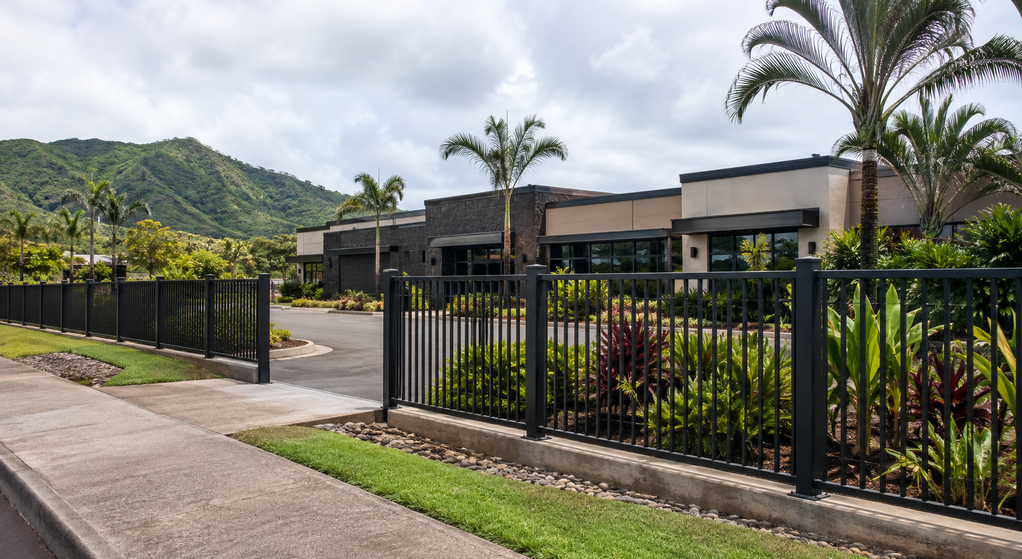
Rust is the primary concern. Even galvanized or powder-coated steel can develop corrosion once protective coatings are scratched or compromised. Salt accelerates this process significantly. Hinges, welds, and fasteners are especially vulnerable.
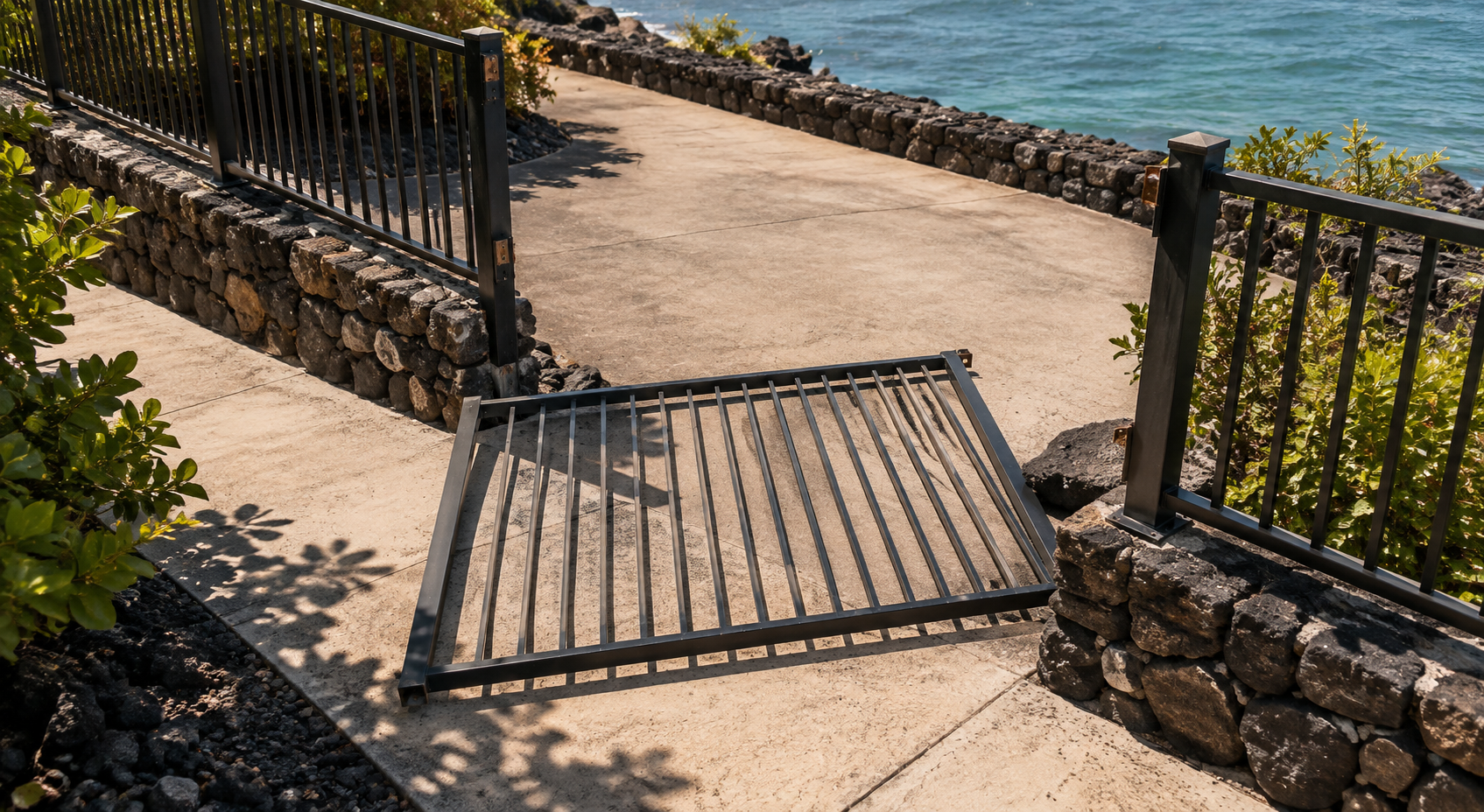
Aluminum performs better than steel in coastal settings because it does not rust. However, our gate installation team suggests that aluminum gates must be properly engineered to prevent flexing, especially for larger spans. Thin or poorly reinforced aluminum gates may warp under wind load.
Metal gates can be a solid option when properly designed and maintained, but they are not maintenance-free. Regular inspection and touch-up of protective coatings are essential to prevent long-term damage.

Vinyl Gates and Long-Term Performance
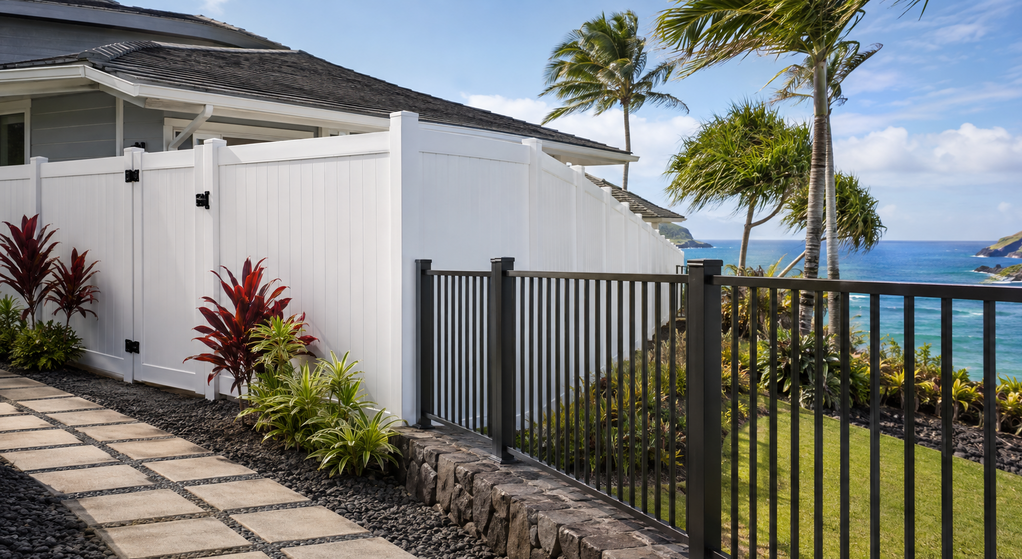
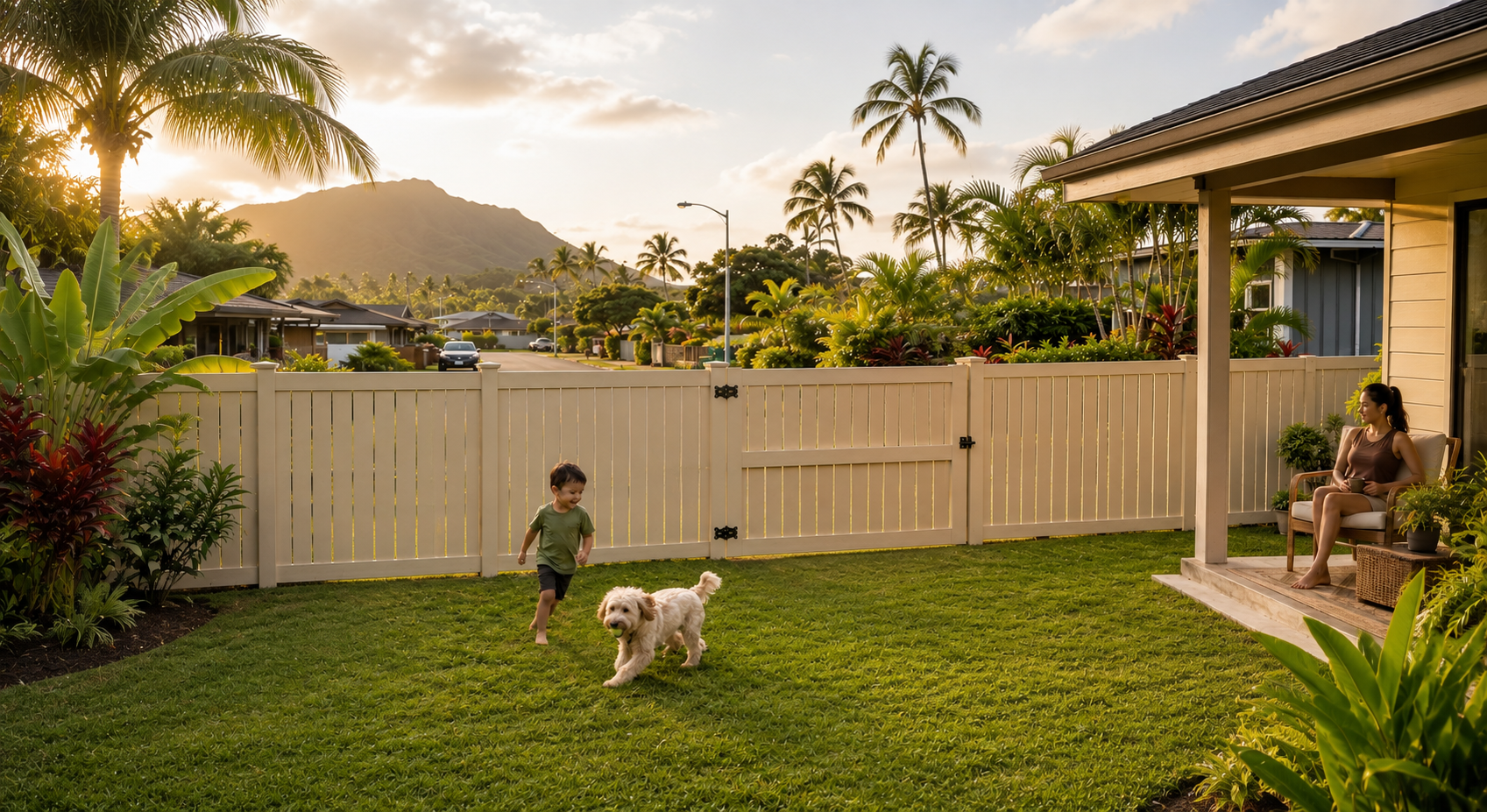
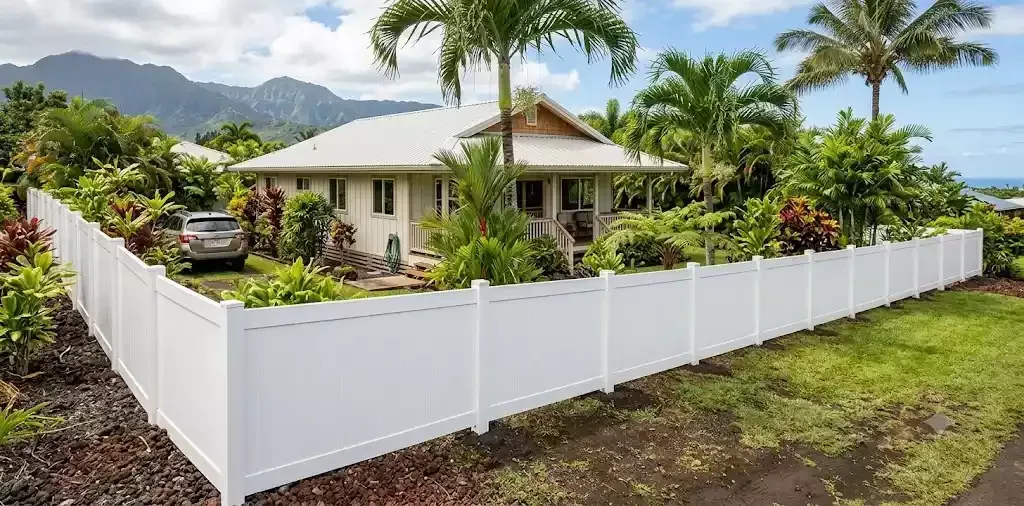
Vinyl fencing and gates have become increasingly common across Oahu for good reason. High-quality vinyl is resistant to moisture, salt, and insects. It does not rot, rust, or require painting.
Modern vinyl materials are engineered with UV inhibitors to resist fading and brittleness under strong sun exposure. When paired with internal reinforcement, vinyl gates maintain structural stability even in windy conditions.
One common misconception is that vinyl lacks strength. In reality, properly reinforced vinyl systems perform exceptionally well when installed with correct footing and alignment. Maintenance is minimal. Occasional cleaning with water is usually sufficient to keep the gate looking new.
For homeowners prioritizing durability, consistency, and low maintenance, vinyl is one of the most reliable gate materials for Oahu’s climate.
Rock and Masonry Gates for Structural Permanence
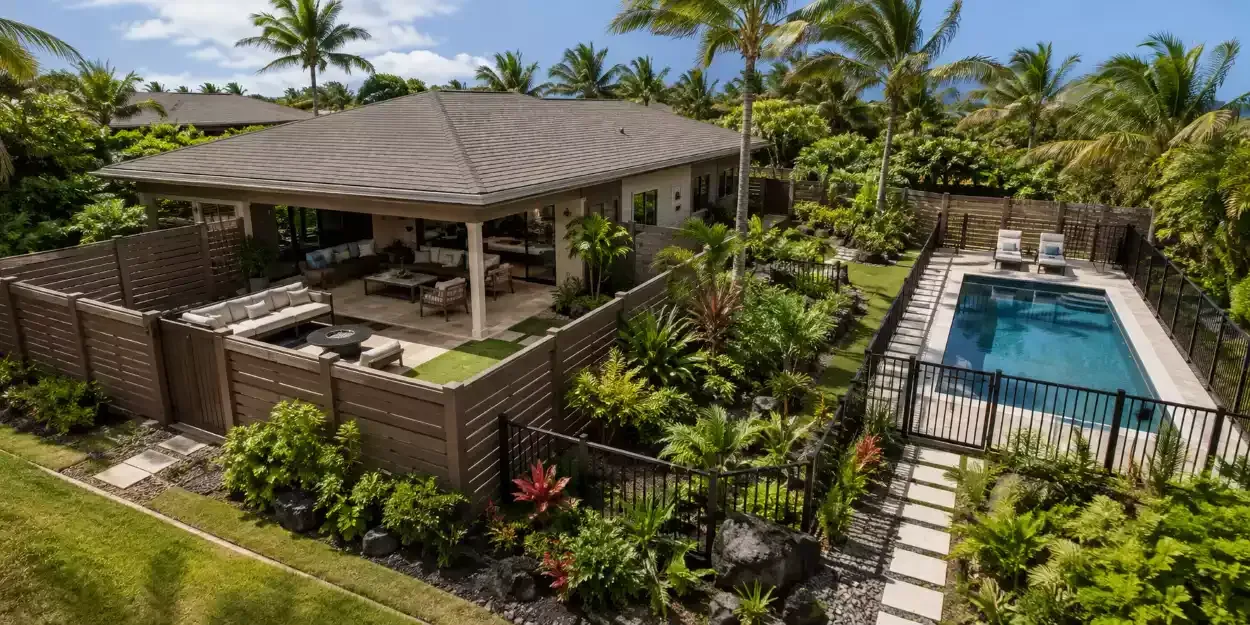
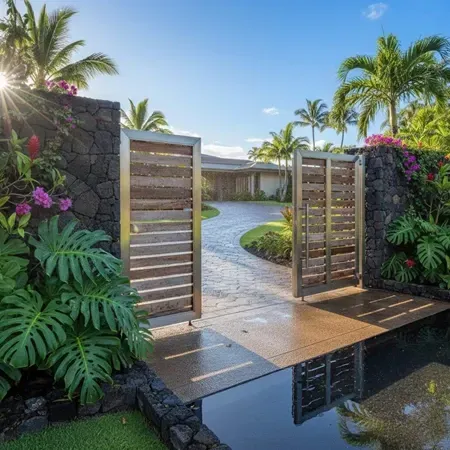
Masonry elements such as rock walls paired with metal or vinyl gate panels are deeply rooted in local building traditions. Stone and masonry perform extremely well in Oahu’s environment when properly constructed.
Rock walls resist moisture, salt, and UV exposure naturally. Their mass provides wind resistance and long-term stability. When paired with a well-chosen gate panel, masonry structures create a durable and visually grounded entrance.
The key is proper footing and drainage. We’ve often seen poorly built masonry shifts over time, especially on sloped or varied soil conditions. When engineered correctly, masonry gate systems offer unmatched longevity.
This option is ideal for properties seeking permanence, privacy, and strong alignment with island aesthetics.
Hardware and Footing Matter as Much as Materials
Gate material alone does not determine performance. Hardware and footing play a critical role in long-term success.
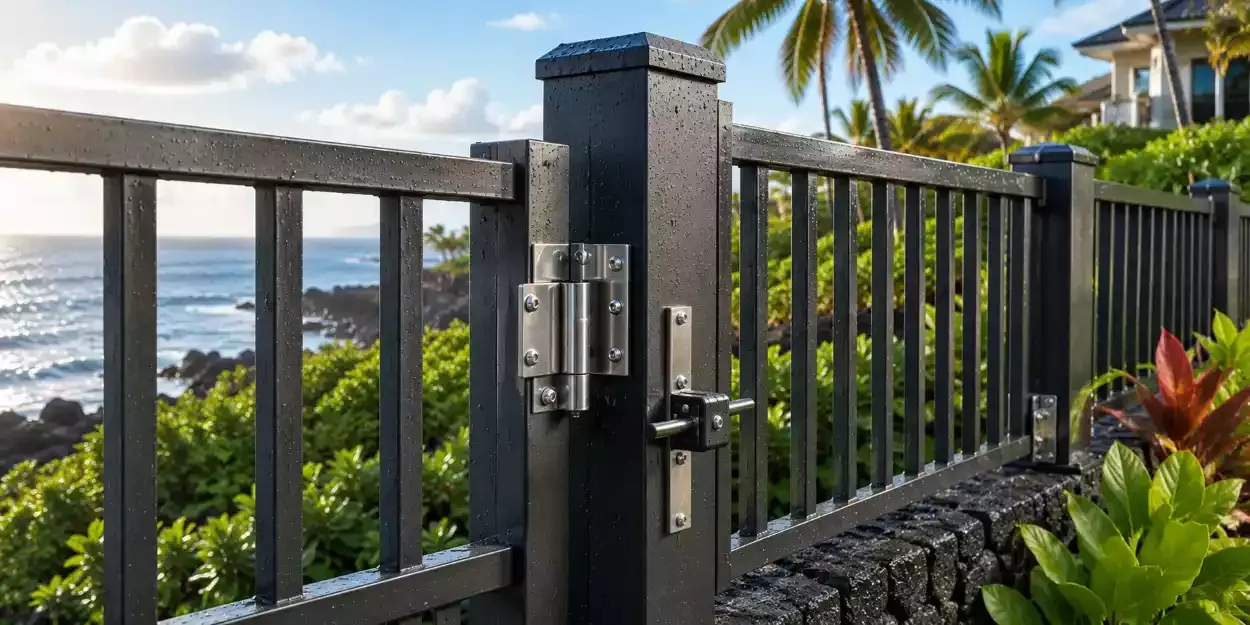
Stainless steel or corrosion-resistant hardware is essential. Inferior hinges and fasteners fail quickly in salt air. Footings must be deep, properly reinforced, and suited to soil conditions. Shallow or poorly compacted footings lead to sagging and misalignment regardless of gate material.
Gates are dynamic structures. They move, swing, and bear load. Material selection must be paired with correct engineering to ensure reliability.
Vinyl fences can withstand humidity when installed with care and precision. Learn how proper installation extends the life of vinyl fences in humid conditions to ensure lasting performance and low maintenance.

Choosing the Best Material for Your Property
There is no universal best gate material for every property, but there is a best choice for Oahu’s climate. Materials that resist moisture, corrosion, and UV exposure consistently outperform those that do not.
Vinyl stands out for homeowners seeking durability with minimal maintenance. Aluminum offers corrosion resistance with a more modern appearance when properly reinforced. Masonry systems provide unmatched permanence when installed correctly. Wood and steel require careful consideration and ongoing care to remain viable.
Design preferences matter, but climate performance matters more. A gate should look good years after installation, not just on day one.
Not all gate materials withstand Oahu’s sun, humidity, and salty air equally. Learn whether wood, vinyl, or metal gates work best in Oahu’s climate to make a choice that lasts.
| Material | Durability (Oahu Climate) | Maintenance Level | Pros | Cons |
|---|---|---|---|---|
| Wood | Low | High | Natural look | Rot, warping, insects |
| Steel/Iron | Moderate | Moderate-High | Strong | Rust risk in salt air |
| Aluminum | High | Low | Rust-resistant | Can flex if not reinforced |
| Vinyl | Very High | Very Low | Moisture + UV resistant | Needs reinforcement |
| Masonry | Extremely High | Very Low | Permanent, stable | Higher upfront cost |
Final Thoughts on Building for Island Conditions
Oahu’s environment rewards materials that are engineered for moisture, salt, and sun. Choosing the right gate material is less about trends and more about understanding how materials behave over time.
When material selection aligns with climate realities, gates remain functional, attractive, and structurally sound for years. When it does not, even the best installation struggles to overcome environmental stress.
A well-chosen gate material is an investment in longevity, not just appearance. In Oahu’s demanding conditions, durability is not optional. It is the standard. Choosing materials designed to withstand humidity, salt air, and constant exposure ensures the gate performs reliably for years.
Ensuring your gate stands up to Oahu’s harsh conditions requires professional expertise and careful material selection. Reach out to professionals to make an investment in durability that lasts.