Fencing Solutions for Hawaii Schools, Churches, and Community Properties
Summary
Fencing for Hawaii community properties should reflect who uses each space, when access changes, and how people move during busy periods. Schools, churches, and shared facilities benefit from coordinated boundaries, visible entrances, suitable materials, and workable gate routines. Start with daily operations before choosing fence height or appearance.
A school campus, church courtyard, and community hall may share one property while needing different access arrangements. Children arrive before morning programs, volunteers receive deliveries, and evening visitors need a clear route to the correct building. A continuous perimeter alone does not resolve those overlapping uses.
For committees considering aluminum fence installation for Oahu properties, the first decision is where an open, visible boundary fits the site's activities. Sunset Hawaii Fencing Company, founded by third-generation mason and fencer Londene Manu, offers residential and commercial fencing on Oahu. A useful project brief should explain how the property operates before requesting a particular fence style.
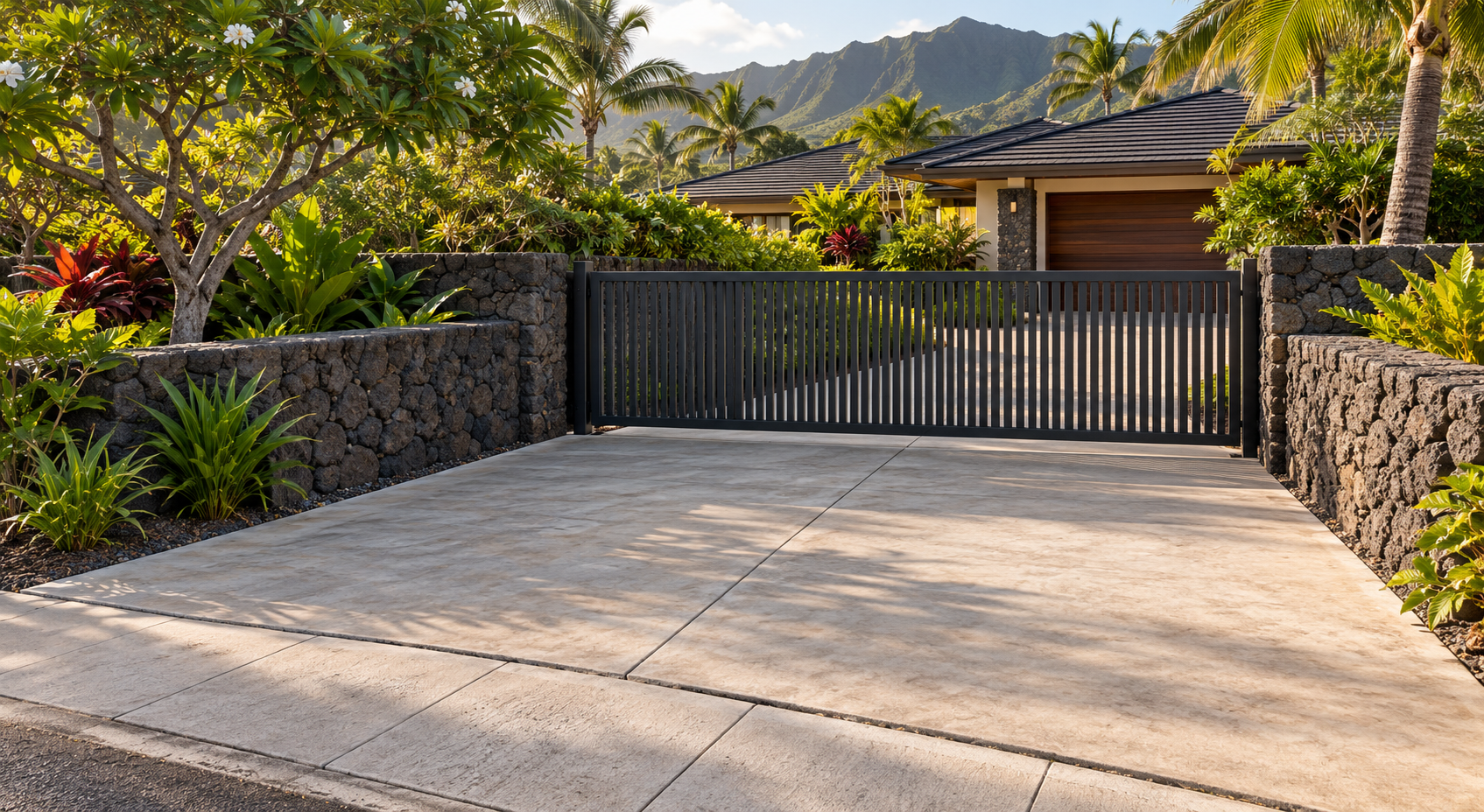
The guide to why fence hardware and coatings matter in Hawaii explains coastal exposure for panels, fasteners, and latches. For visitor and vehicle access, planning driveway gate placement before installation helps evaluate waiting space and turning paths.
Map Who Needs Access Throughout the Week
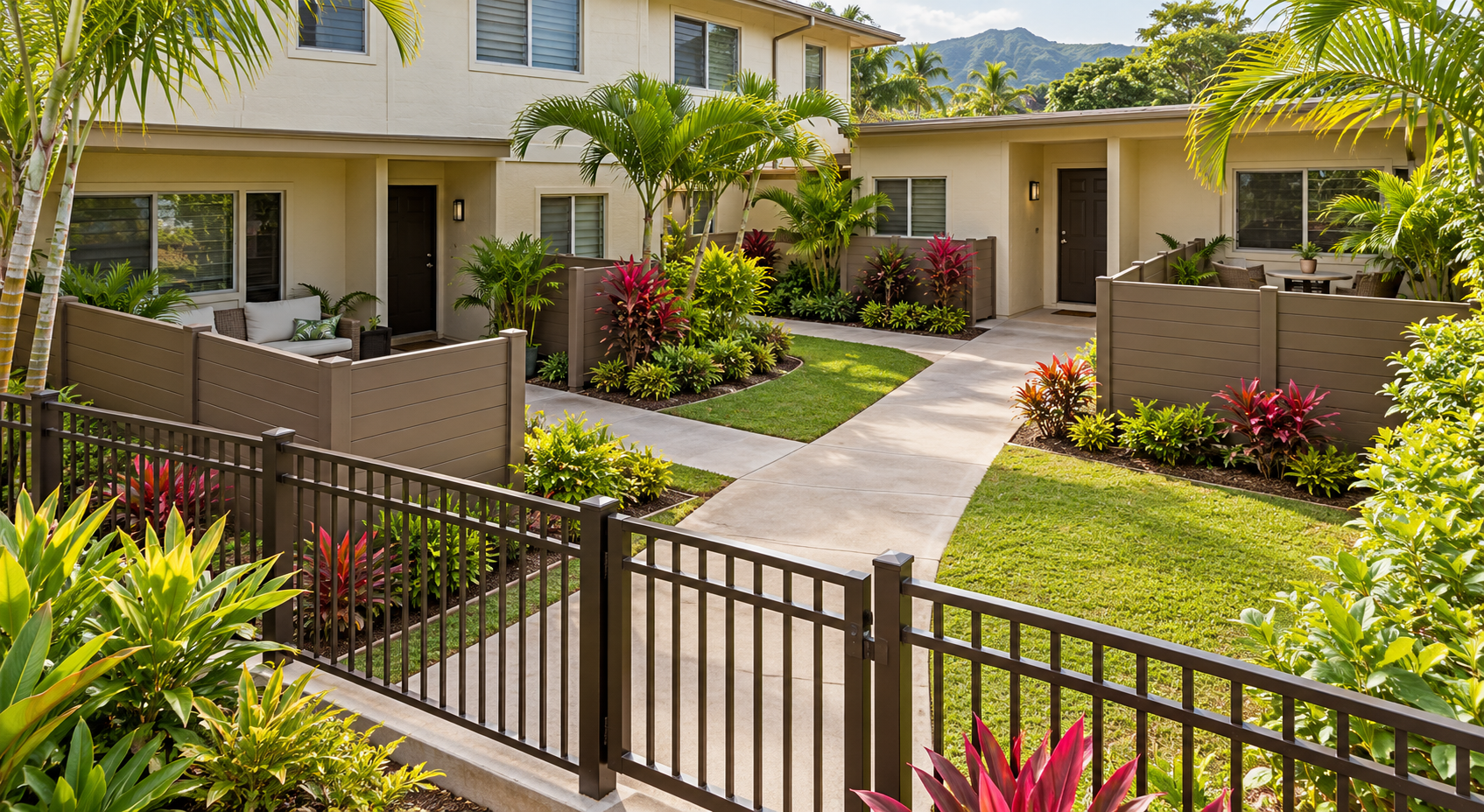
Draw the property as a set of activity areas: classrooms, worship space, parking, play areas, equipment storage, and public gathering space. Mark which areas visitors may enter freely and which need supervised or restricted access.
Then test the drawing against three situations: normal daily use, the busiest recurring event, and after-hours closure. A gate that works during a quiet weekday may become a bottleneck after a service or school performance.
For example, a church hosting weekday childcare could need a separate route for office visitors so they do not pass through the children's outdoor area. This is a planning scenario, not a reason to divide every property into small enclosures. Each additional gate brings another opening to operate, inspect, and manage.
Record who opens each entrance, who monitors it, and who closes it when responsibility passes between groups.
Preserve Supervision Where Children and Visitors Gather
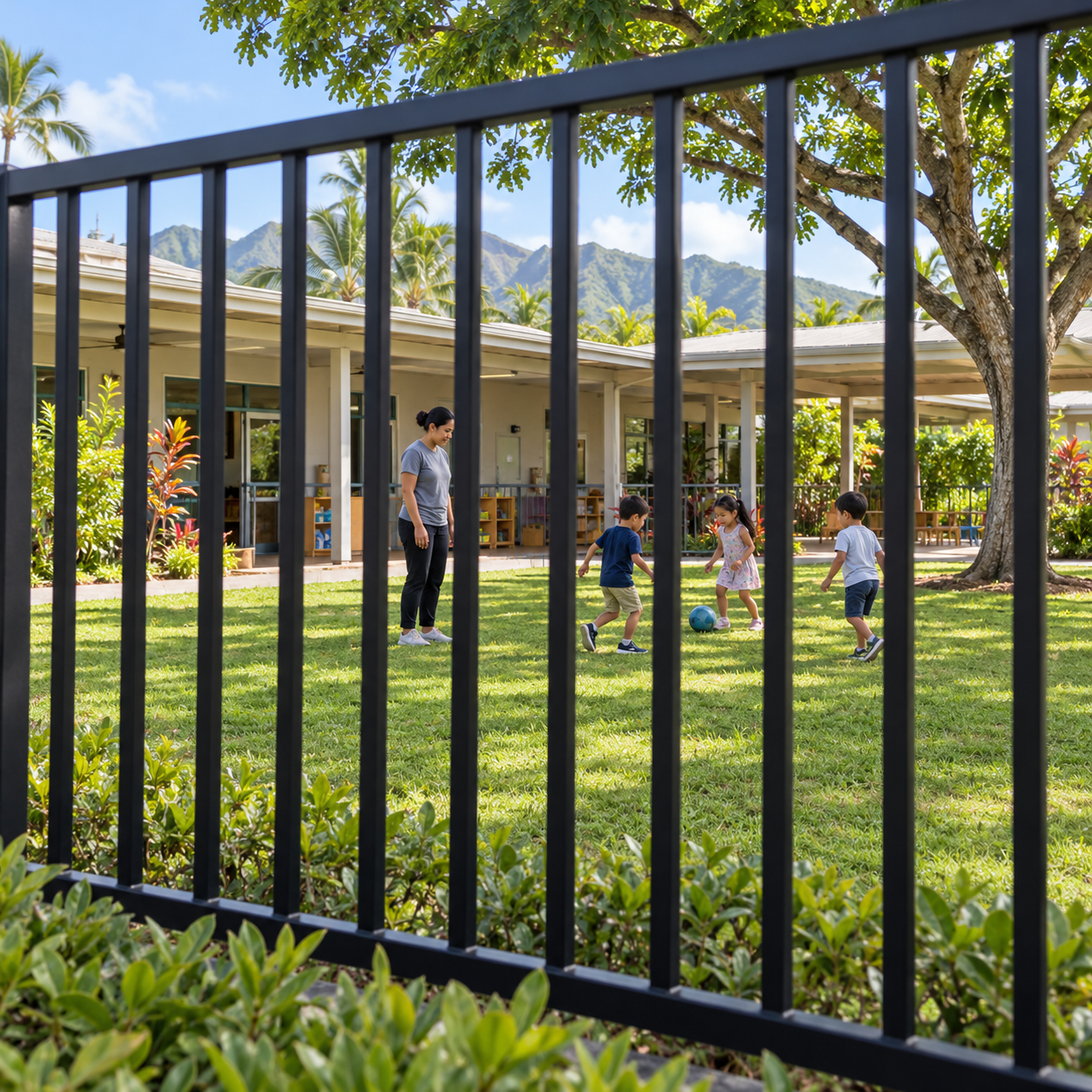
Open fencing can support visibility across a boundary. Solid screening may suit a refuse enclosure or a private gathering area, but its placement deserves closer review beside entrances, pedestrian crossings, or spaces staff supervise.
The CISA K–12 School Security Guide on assessing vulnerabilities and planning layered protection treats school security as a coordinated system.
Fencing belongs within that broader plan alongside visitor procedures, staff responsibilities, and other protective measures.
Walk the proposed fence line from the positions where staff actually stand. Check whether planting, parked vehicles, corners, or screening would hide an approaching visitor. For children's areas, have the designer assess openings, climbable features, projections, and adjacent objects that could provide footholds. A decorative fence should not be assumed suitable simply because it marks the boundary neatly.
Choose Materials by Zone and Maintenance Capacity
Using one material everywhere may simplify purchasing, but different parts of the property can have different priorities:
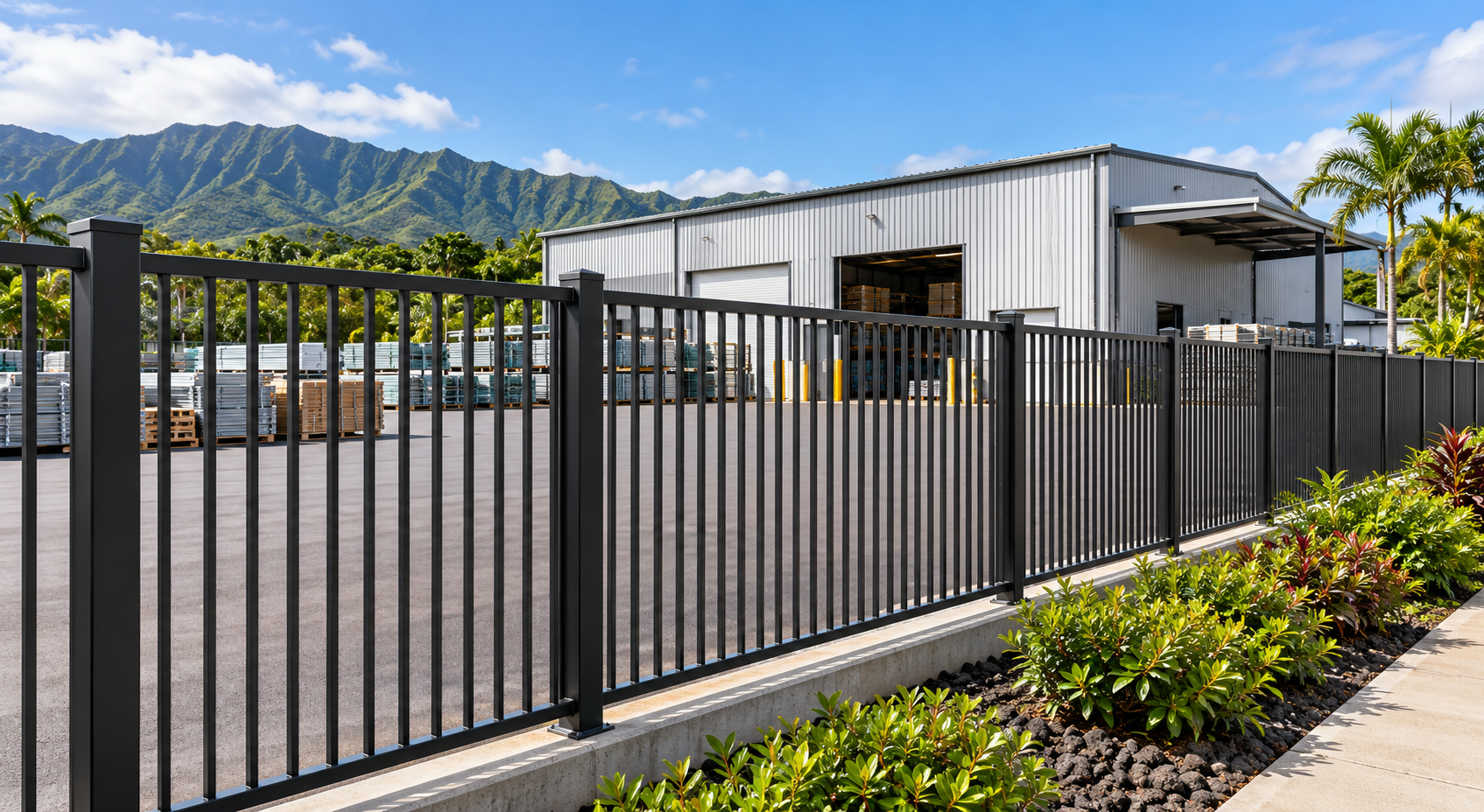
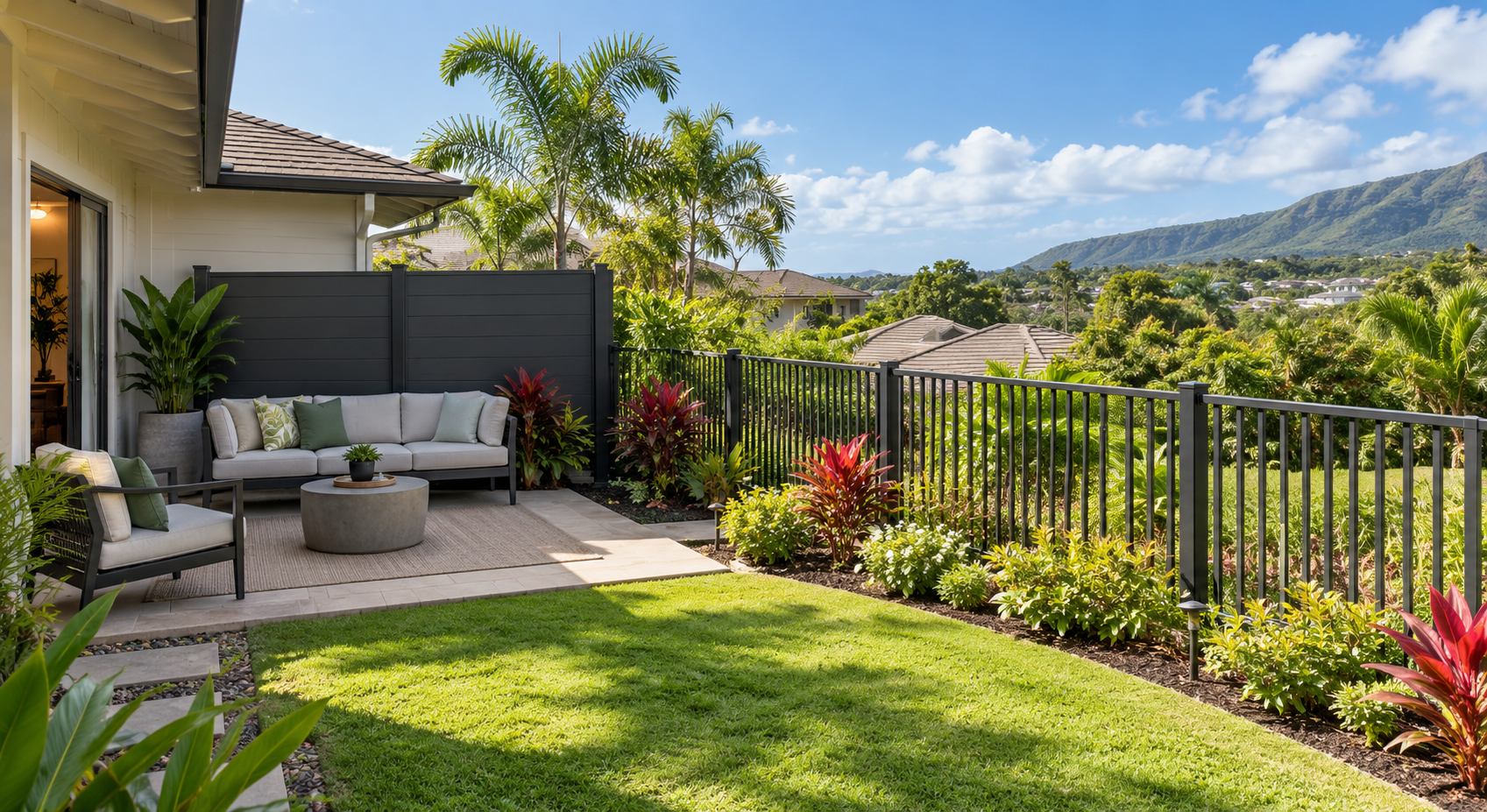
- Public-facing entrances: Open aluminum panels can define the edge while retaining views toward reception or gathering spaces.
- Long secondary boundaries: Chain-link is an option to price where appearance is less central. Compare the complete system, including gates and hardware.
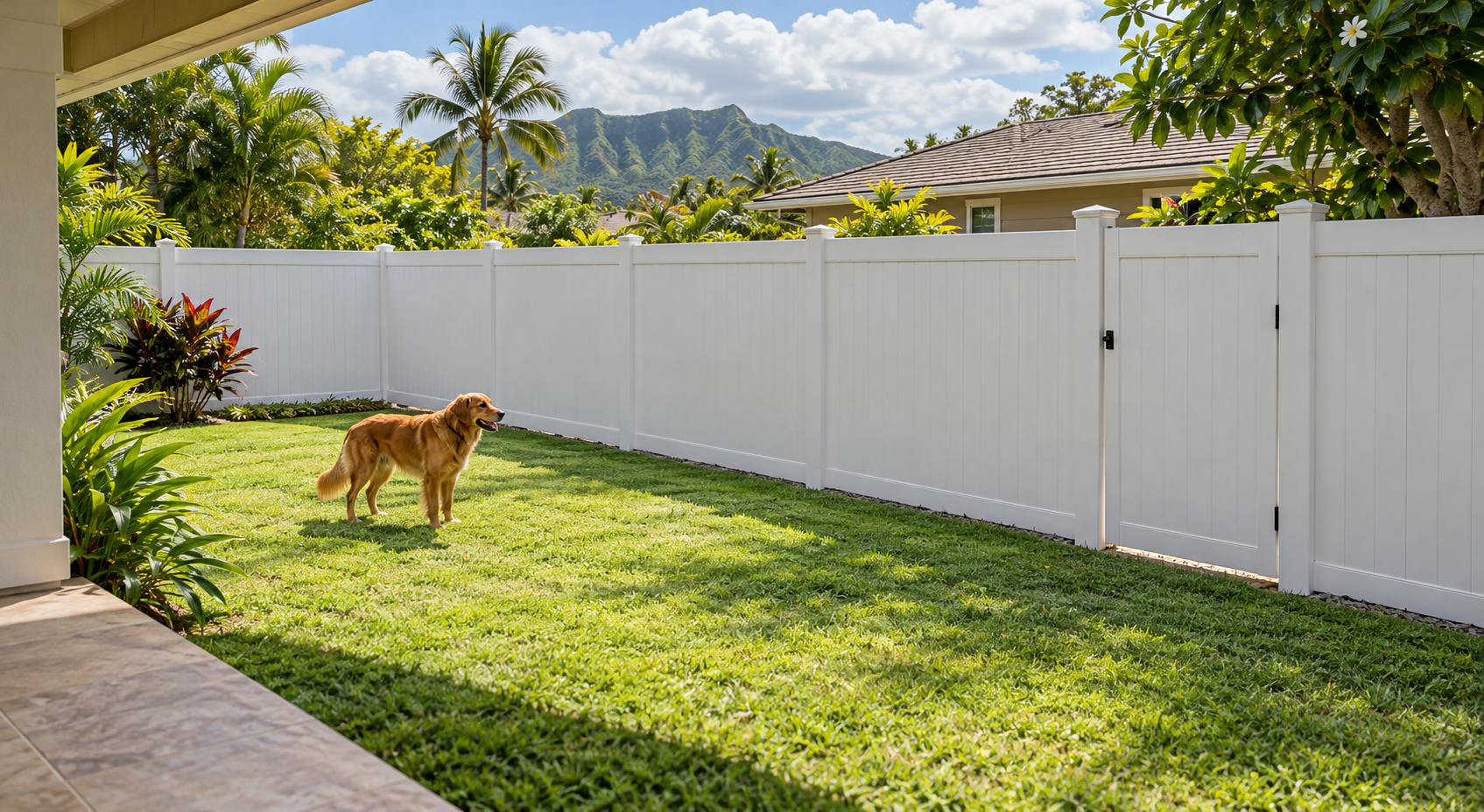
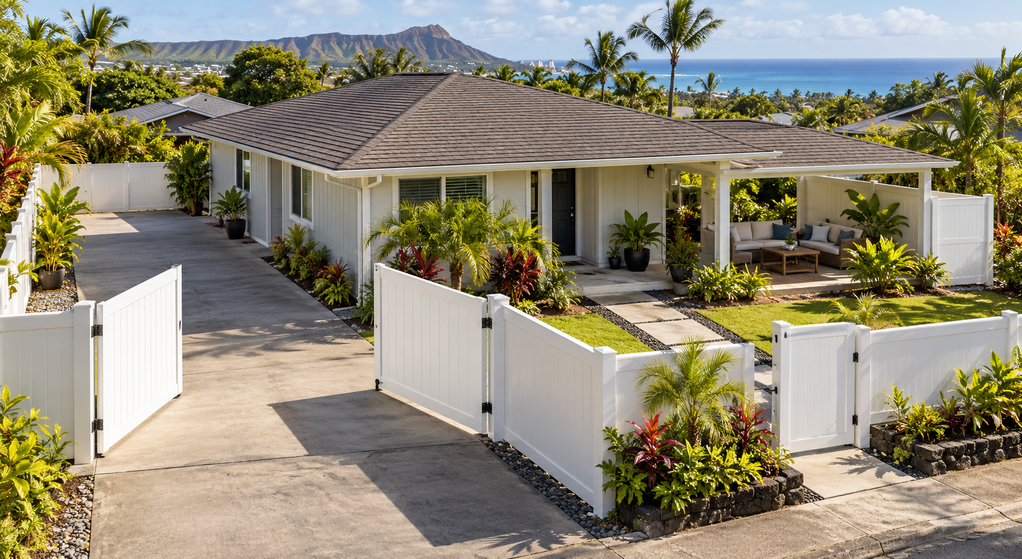
- Service and storage areas: Solid panels may provide useful screening where visibility through the enclosure is unnecessary.
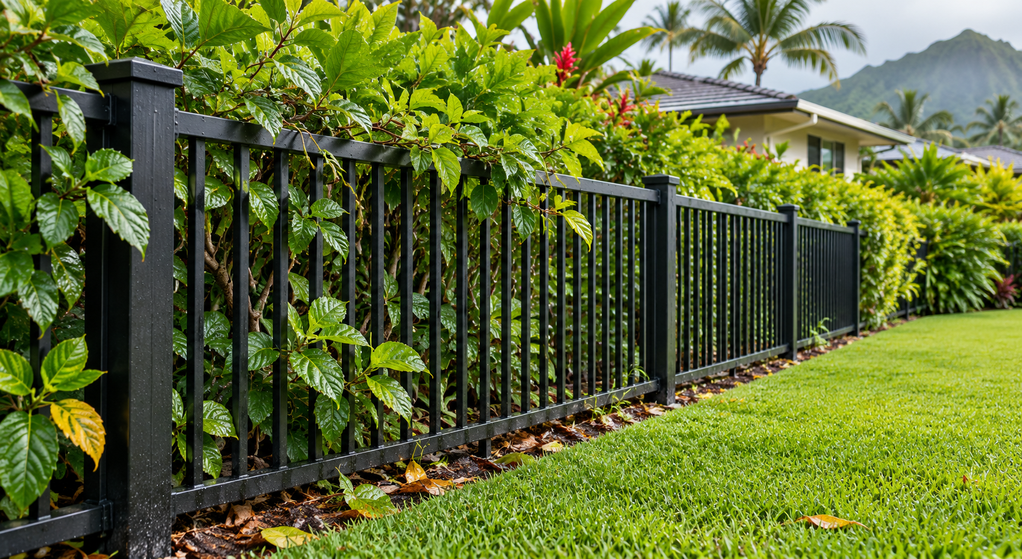
On coastal Oahu sites, ask suppliers to document suitability for the actual exposure and provide care instructions for panels, fasteners, hinges, and latches. Avoid treating the panel material as a promise that every component needs little attention.
Specify Gates Around People, Not Just Openings
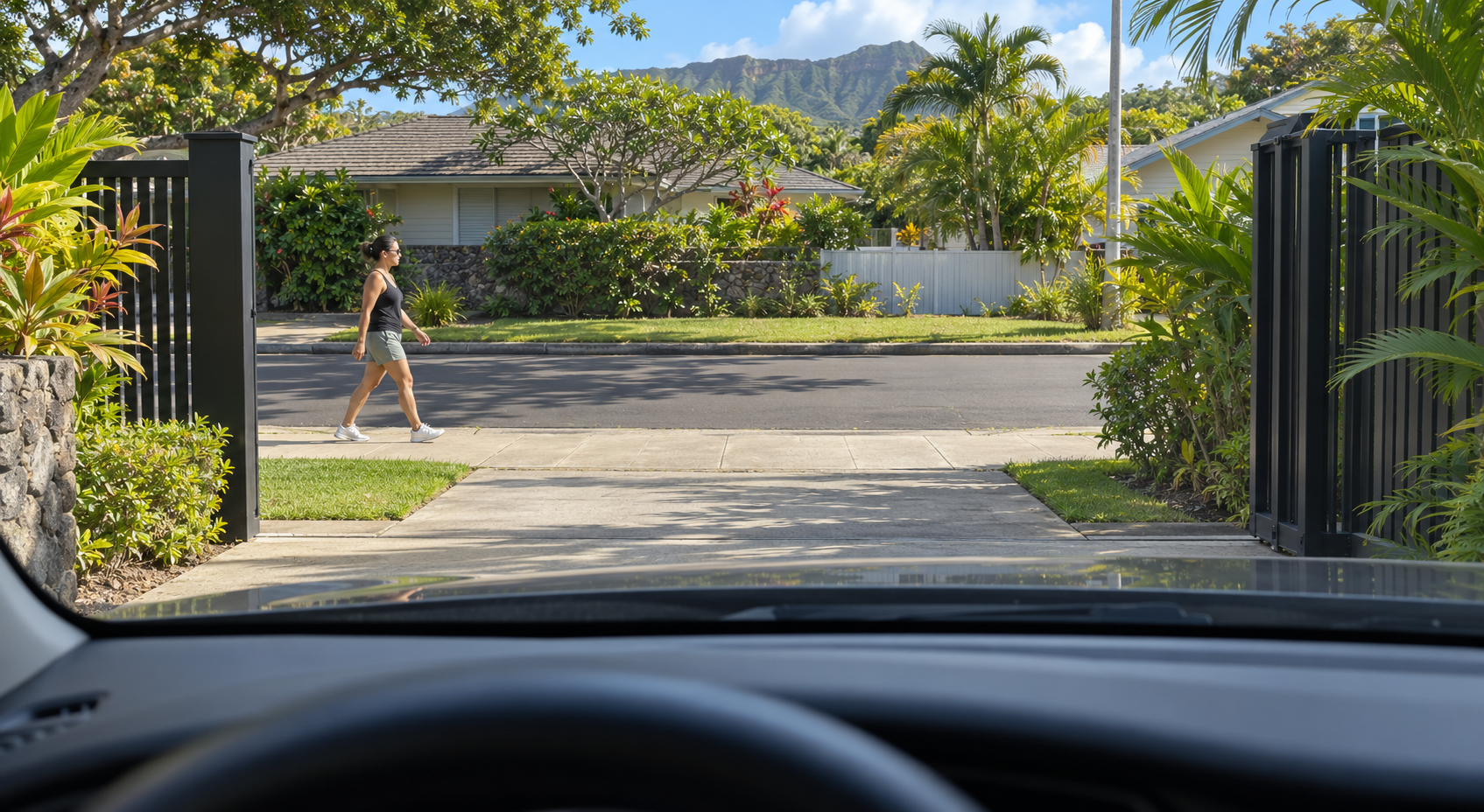
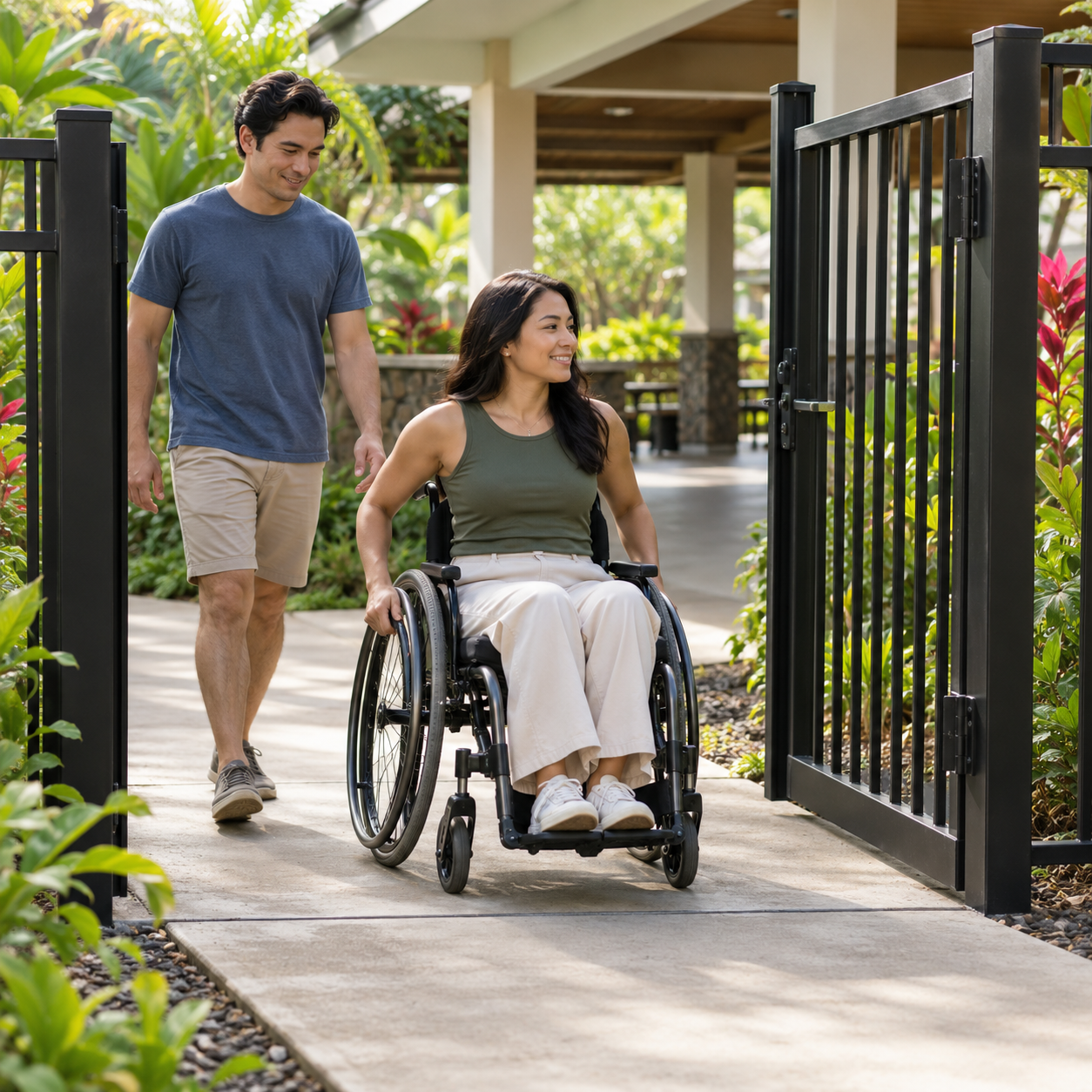
A gate schedule should identify each gate's purpose, users, operating hours, hardware, and responsible person. Separate everyday pedestrian access from vehicle servicing wherever the layout allows, and examine where people wait while a gate opens.
At a school, consider arrival queues and family pickup. At a church, consider visitors unfamiliar
with the grounds and simultaneous arrivals before services. At a community hall, include mobility devices, catering deliveries, and equipment carts in the layout discussion.
Review accessibility, emergency exit arrangements, and responder access with the appropriate design professionals and reviewing authorities before finalizing locks or automation. Child access control and emergency escape need coordinated decisions rather than an improvised latch change after installation.
Put Installation and Handover Into the Scope
Ask each bidder to work from the same marked plan and gate schedule. The scope should identify fence runs, gate assemblies, ground preparation, removal work, surface restoration, and any exclusions. Existing walls and changing ground levels need assessment before deciding how new fencing will connect.
Keep construction planning tied to the activity calendar. Identify temporary boundaries, delivery
routes, work-area separation, and the entrances that must remain usable while sections are replaced.
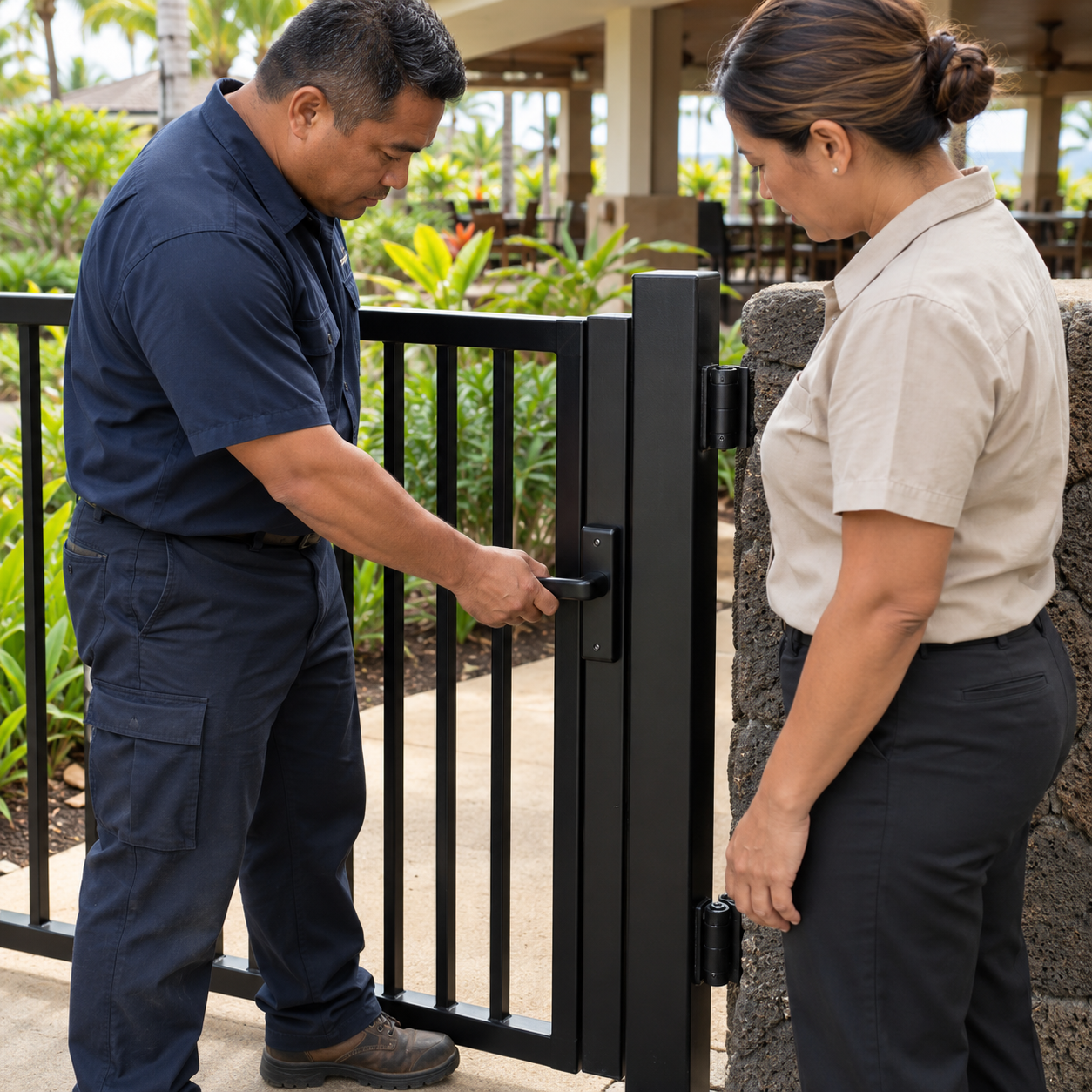
At handover, walk every gate with the people who will operate it. Confirm that the agreed hardware works, users understand access arrangements, and maintenance instructions and warranty terms are available. Assign a person to record defects and arrange repairs when a gate drags, fails to latch, or develops loose hardware.
A practical community fence plan accommodates both the ordinary weekday and the crowded event. Clear zones, usable entrances, and assigned operating responsibilities give the finished boundary a purpose that extends beyond its appearance.

written by
Kurt Manalastas
Property Security & Exterior Improvement Journalist
Kurt creates research-based content focused on fencing solutions, property security, and outdoor boundary improvements. By combining industry best practices, material insights, and practical property protection strategies, he helps homeowners and business owners make informed decisions about building safer, more secure, and visually appealing outdoor spaces.