Planning a Fence Around Driveways, Walkways, and Outdoor Living Areas in Hawaii
Summary
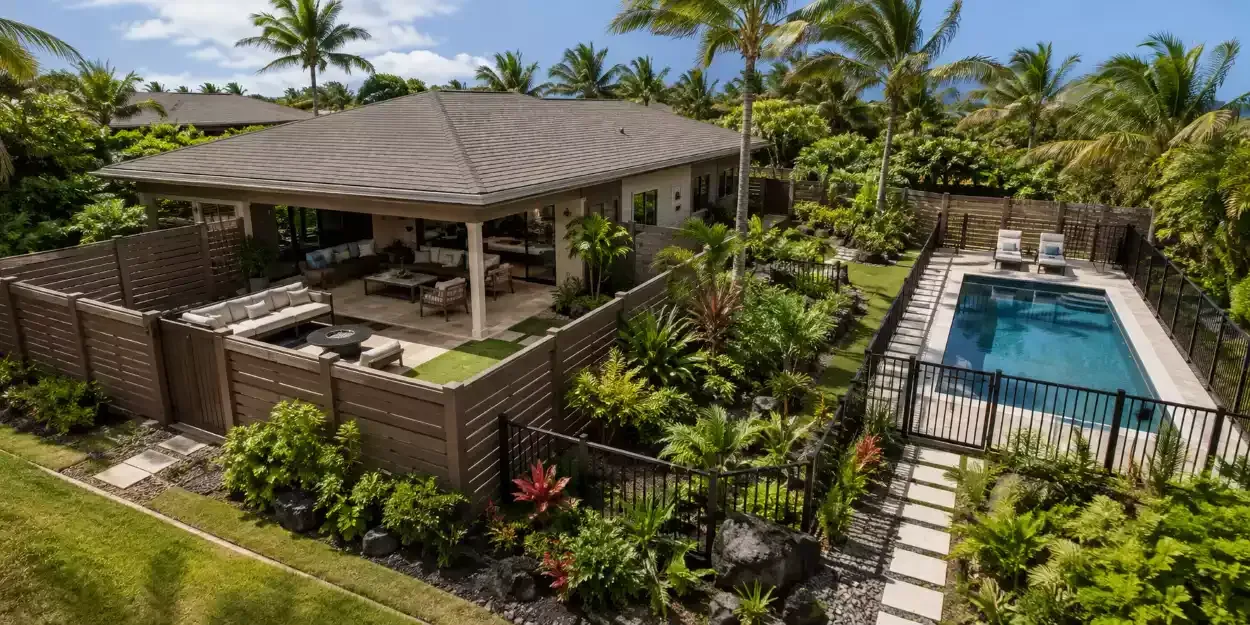
A practical fence layout keeps vehicles, walking routes, and outdoor activities working together. For Hawaii homeowners, planning should account for gate movement, driveway visibility, privacy, airflow, and drainage. Test the proposed layout with parked cars and patio furniture before committing to post locations, gate openings, or a continuous privacy fence.
A fence can look right on a drawing yet make everyday routines awkward. A post might narrow the driveway turn, a gate might open into the path to the front door, or a privacy panel might crowd a favorite seating area. These conflicts are easier to resolve before installation.
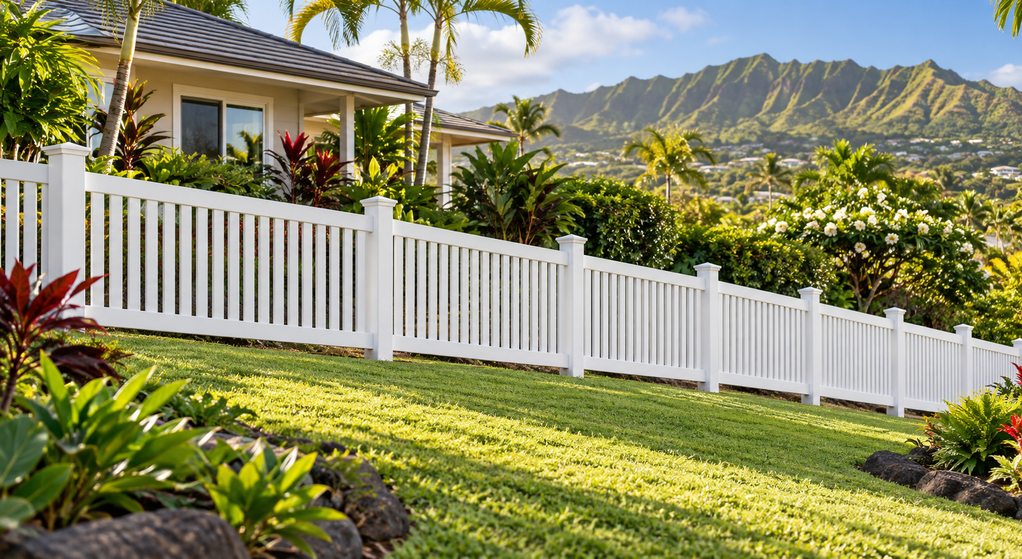
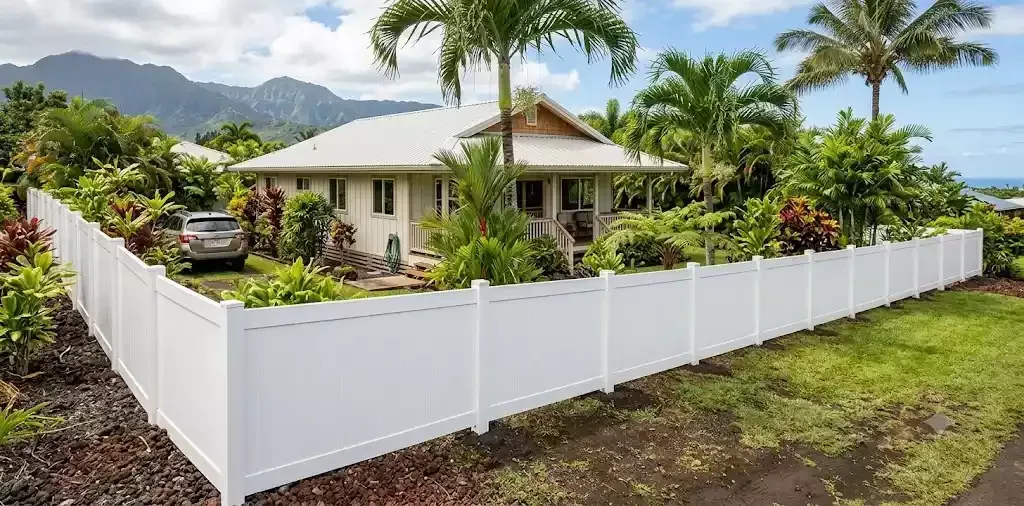
Vinyl fence design and installation services in Oahu include options worth comparing when privacy and easy upkeep are priorities.
Sunset Hawaii Fencing Company provides residential and commercial fencing services across Oahu. When discussing a proposed fence, bring a sketch showing how people, vehicles, and equipment move through the property, alongside your preferred style.
Map Everyday Routes Before Drawing the Fence Line
Start with a simple plan showing the driveway, front entrance, side passages, lanai, outdoor dining space, and storage areas. Add the routes used for trash bins, bicycles, gardening equipment, and deliveries.
Then mark where access must remain available. A seldom-used side yard may still be the only route for replacing an outdoor appliance or bringing large furniture into the backyard. Planning only for daily foot traffic can leave an opening too narrow for those occasional jobs.
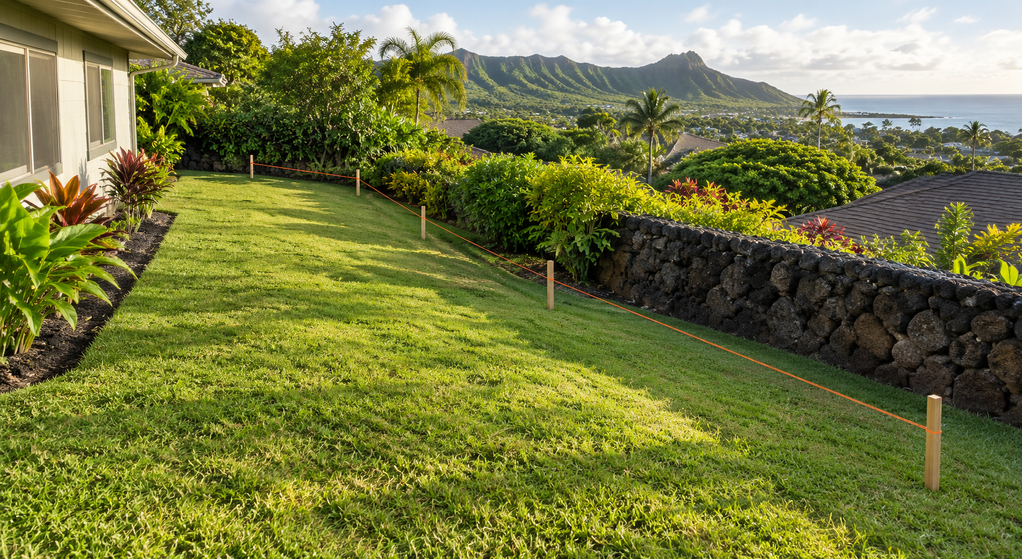
Use removable tape or other temporary surface markers to outline proposed fence corners and gates. Walk the routes while carrying groceries or rolling out a bin. Note places where a person must turn sideways, step into parking space, or move furniture to pass.
Confirm the property boundary separately. The edge of an existing driveway or planting bed should not be treated as proof of the boundary.
Give the Driveway Enough Working Space
Measure the usable opening between the finished posts and hardware, rather than relying on the advertised gate width. Consider the approach angle as well as vehicle width. A driveway entered at an angle may need more maneuvering room than a straight approach.
With vehicles parked normally, check whether doors and tailgates can open comfortably. Include the largest vehicle regularly using the
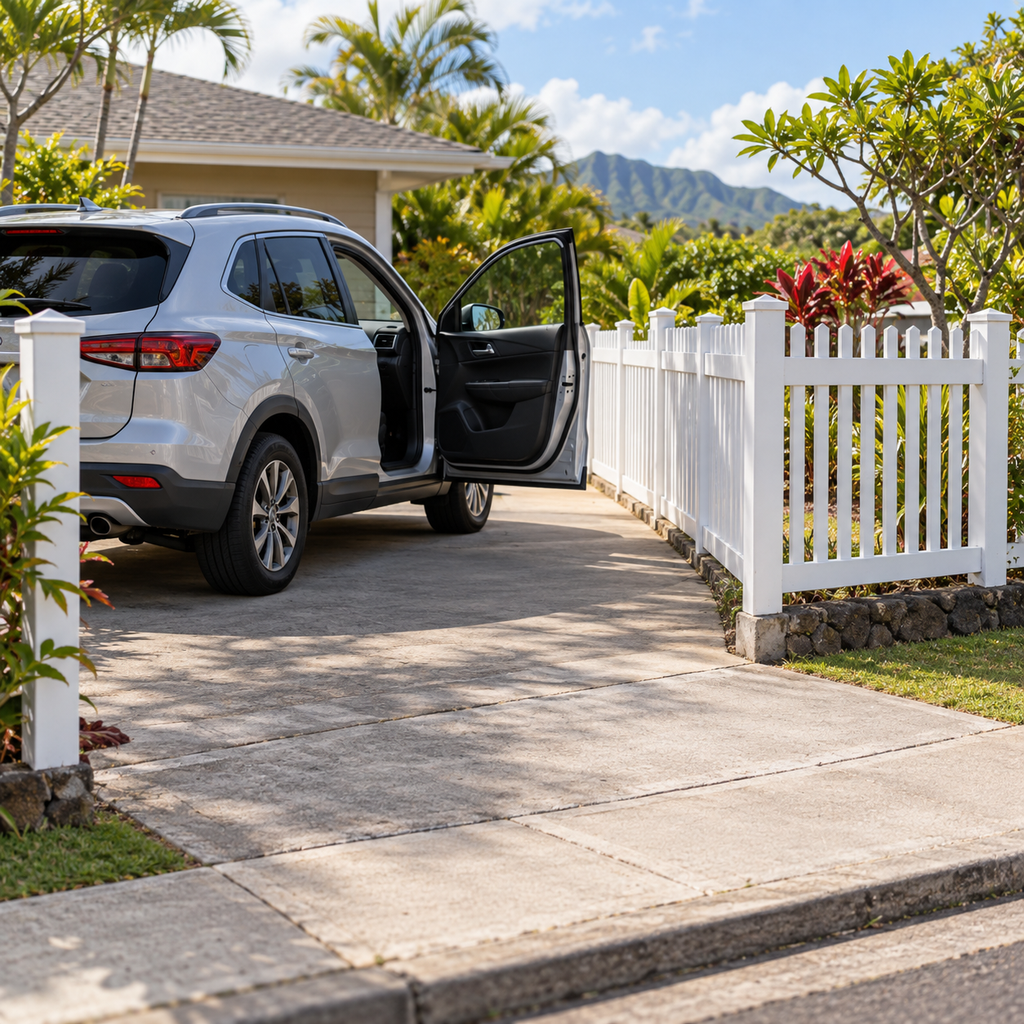
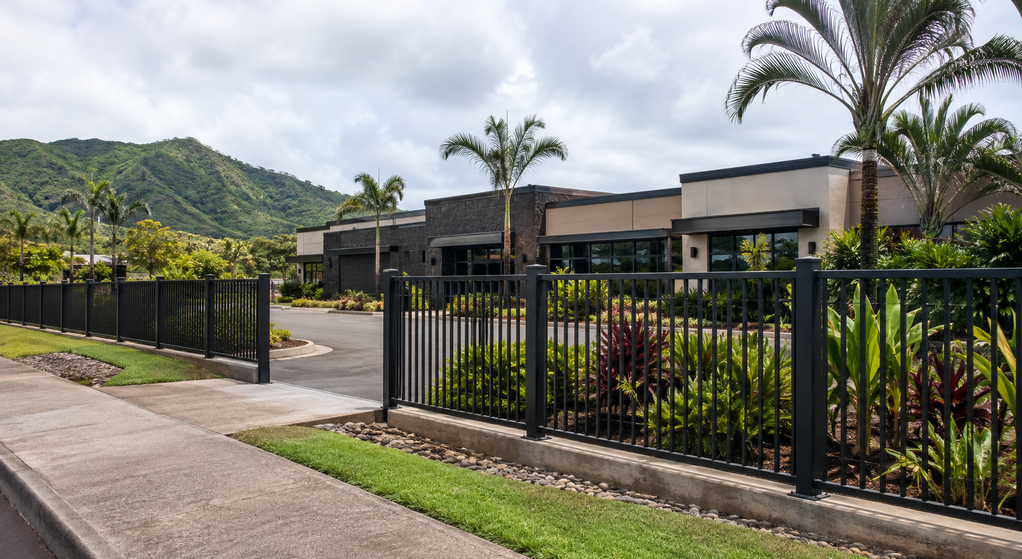
property, and identify how visitors or delivery vehicles will approach. Review visibility from the driver's seated position. A solid panel near the driveway entrance may obscure someone approaching along the sidewalk. Adjusting the fence location or considering a more open section can be part of the design discussion. Have the final frontage layout checked against applicable local requirements.
Plan the Gate Movement Before Setting Posts
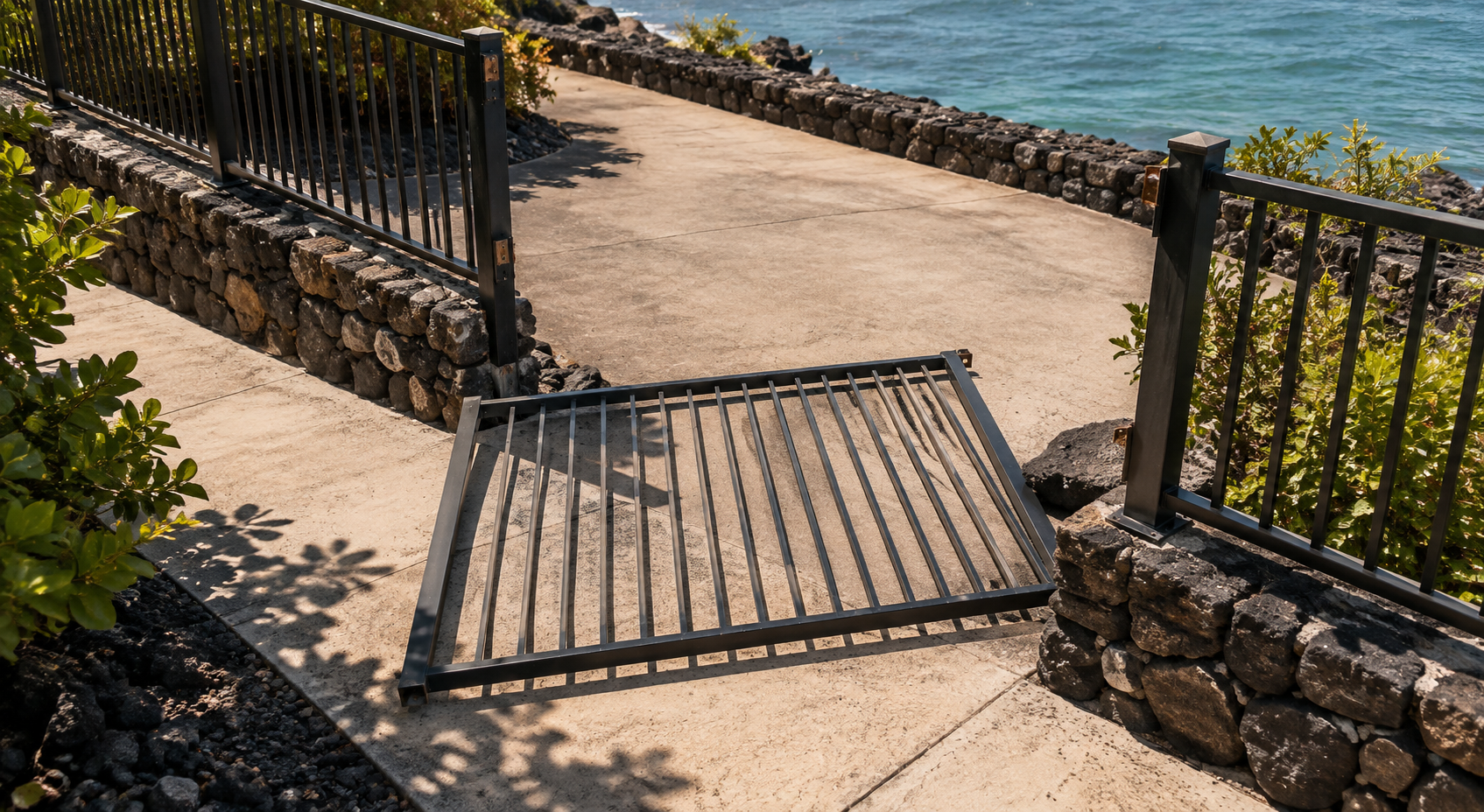
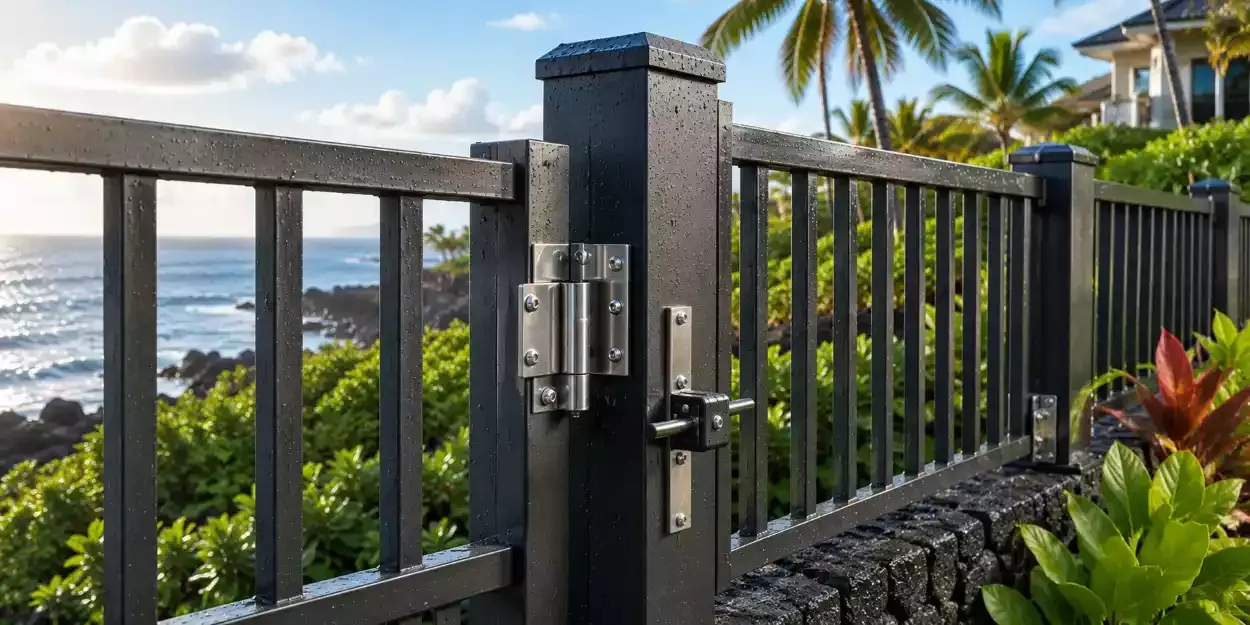
A swinging gate needs clear space throughout its travel. Check for rising pavement, steps, parked vehicles, planters, and the route to the house. A sliding gate needs room beside the opening for the gate to retract, together with space for its supporting equipment.
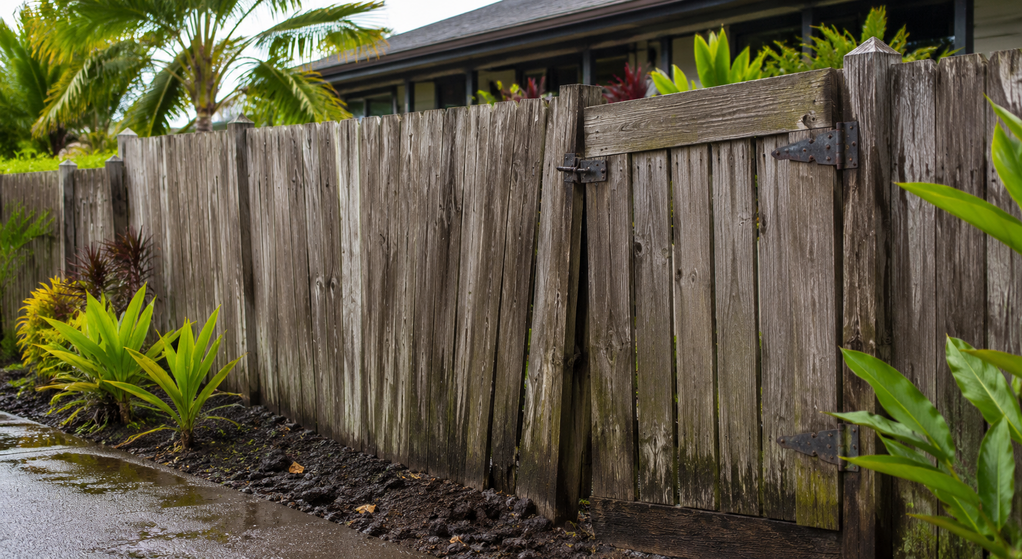
Do not assume a gate that fits between two posts will work on the existing slope. Ask the installer to show the proposed movement and ground clearance on the site before approving the position.
Post support, hardware, and alignment also deserve attention when choosing a wider opening. The guide to common gate installation mistakes homeowners make in Oahu expands on these installation considerations.
Where practical, provide a separate pedestrian entrance so walking to the front door does not depend on opening the driveway gate. If automation is planned, have a qualified gate installer assess pedestrian separation and the required safety measures.
Keep Walkways and Outdoor Seating Comfortable
Position a pedestrian gate where people naturally approach, with enough space to pause, operate the latch, and move through. Avoid a layout that forces someone to stand on a step or back into a vehicle route while opening it.
Check the passage with the equipment your household actually uses. A stroller, mobility
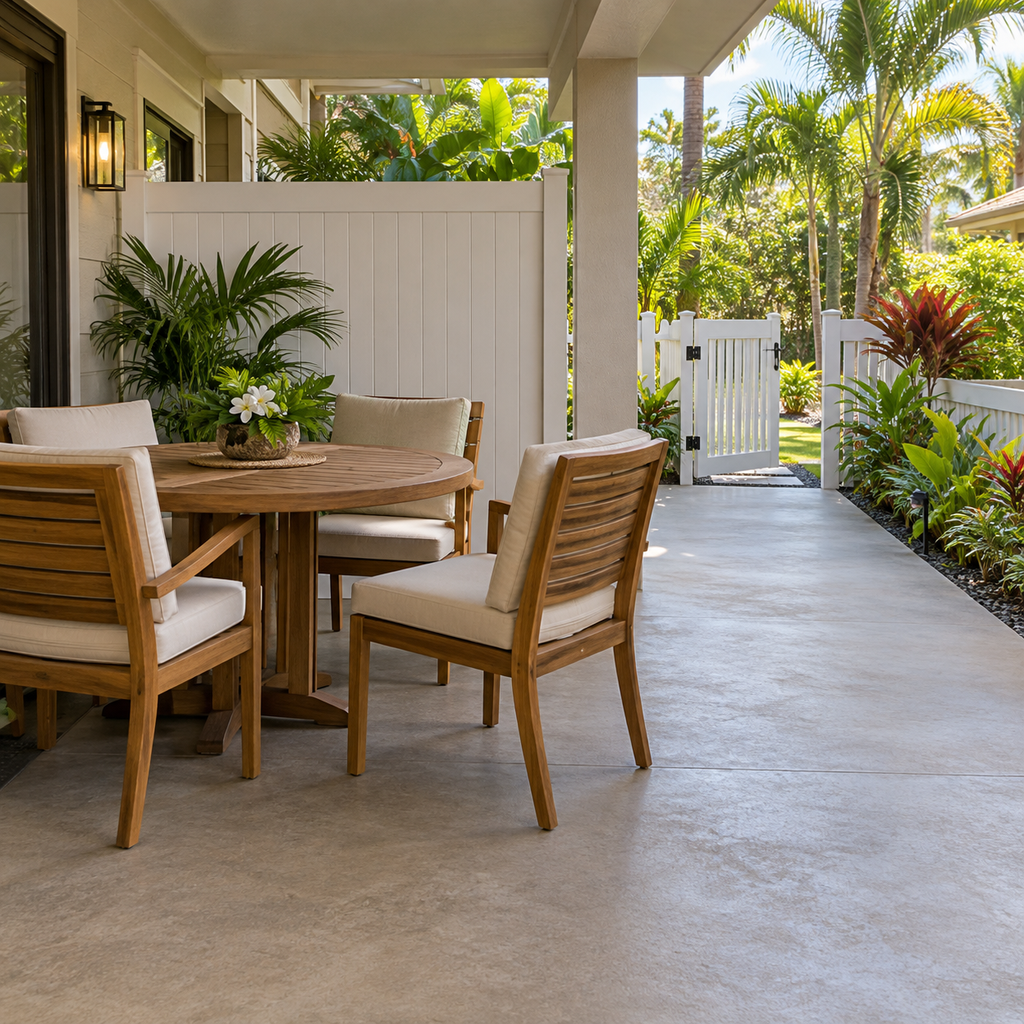
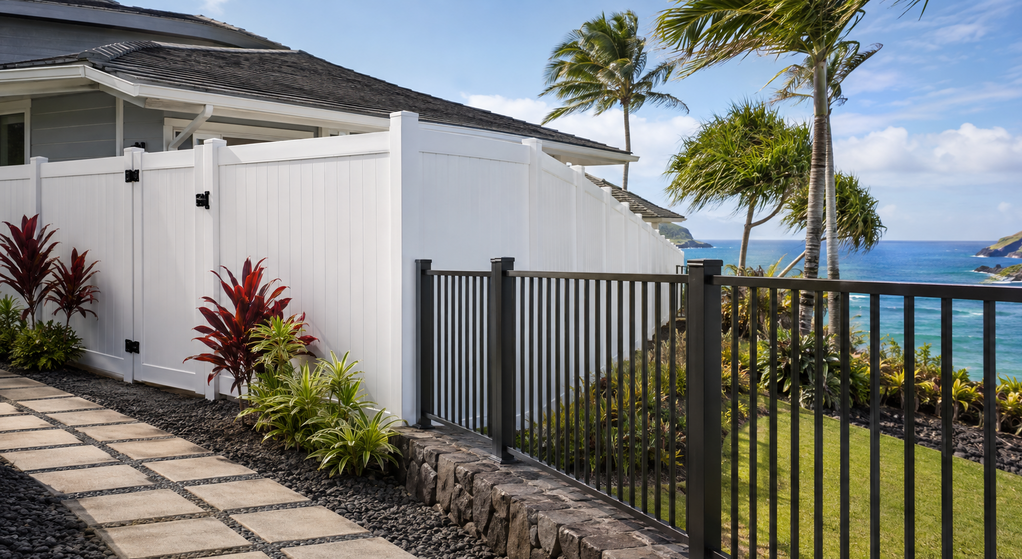
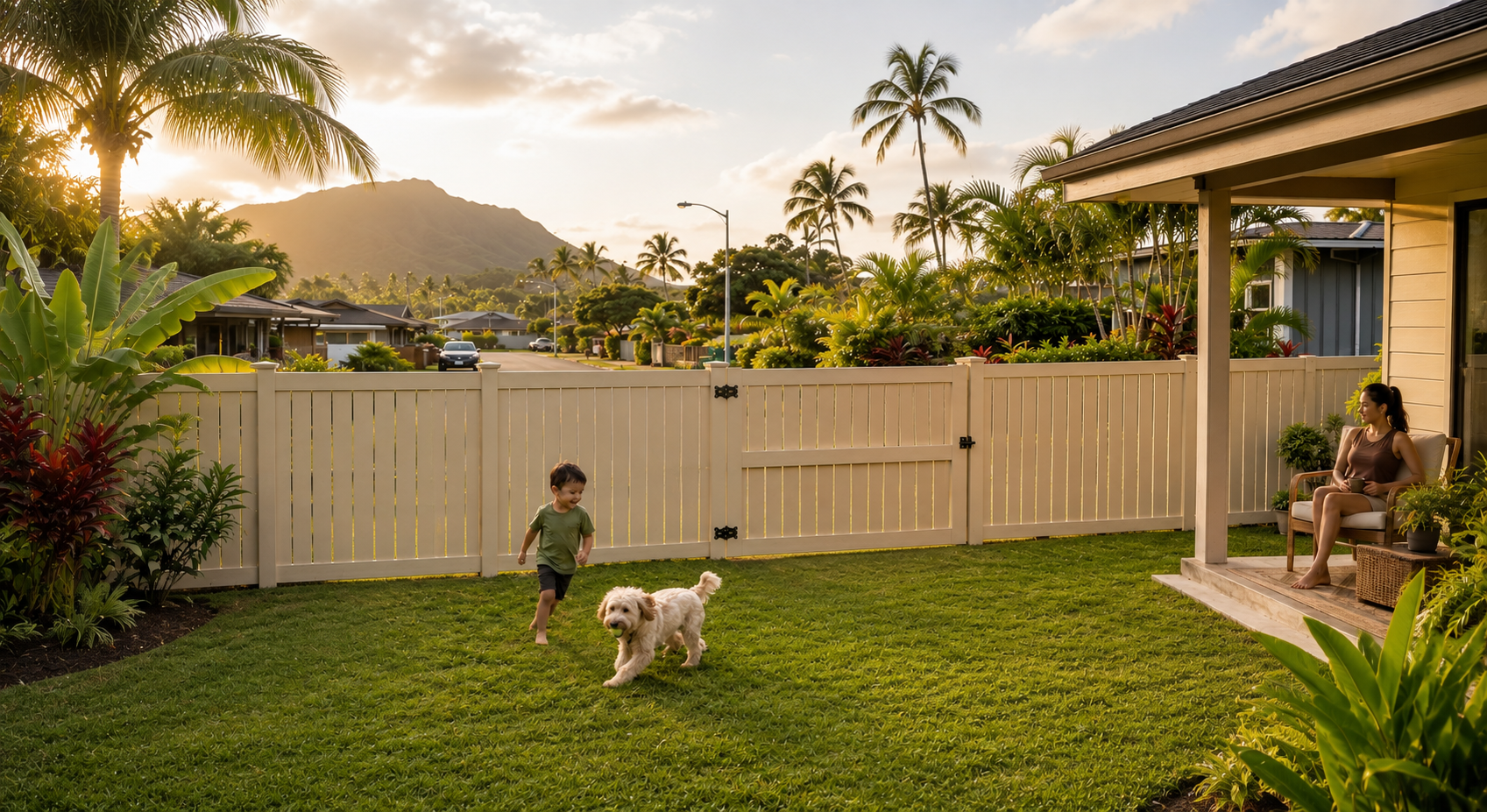
aid, cooler, or garden cart may reveal a restriction that is not obvious when walking empty-handed. Around a lanai or patio, test privacy from a seated position. Identify the specific view you want to screen rather than automatically enclosing every side with solid panels. A targeted privacy section may preserve more openness elsewhere.
Leave room behind dining chairs when pulled out, and keep gate movement clear of occupied seating. In Hawaii, where outdoor comfort is part of the layout decision, consider whether the proposed panels would interrupt a breeze you currently enjoy. Keep cooking equipment at the clearances specified by its manufacturer.
Coordinate Drainage and Construction Access
Observe where rainwater travels across the driveway and beside walkways. Mark drain grates, low spots, and channels before locating posts or adding a continuous base beneath the fence. Ask how the proposed work will preserve those drainage routes.
If paving or patio work is also planned, coordinate finished surface heights with gate clearance. A gate positioned for today's ground
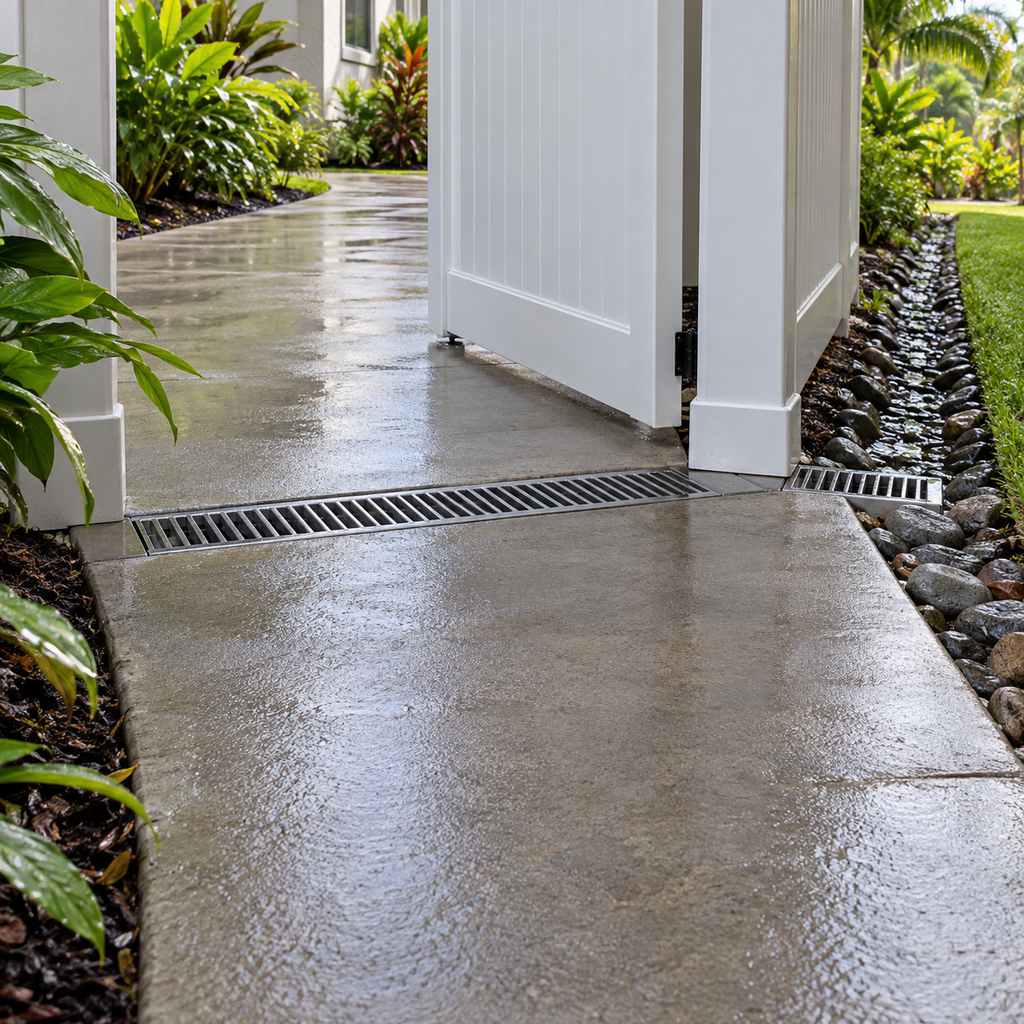
level may drag after new paving is installed. Decide which work happens first and how installation crews will reach the area.
Before post-hole excavation, arrange utility locating and confirm who is responsible for the request. The Common Ground Alliance's 811 guidance for preparing to dig safely advises contacting 811, waiting the required period, and confirming that all utilities have responded before digging begins.
The guide to site preparation for fencing in Hawaii covers additional preparation considerations for the fence line.
Review the Layout Before Installation
Walk through the marked layout once more with cars parked and patio furniture in use. Record the agreed gate openings, swing directions, fence transitions, drainage provisions, and future access needs on the plan. Resolve questions about boundaries and local approvals before work starts.
A successful layout should make ordinary movement feel easy. Getting those details settled early helps the fence provide privacy and separation while keeping the driveway, walkways, and outdoor living areas useful.

written by
Kurt Manalastas
Property Security & Exterior Improvement Journalist
Kurt creates research-based content focused on fencing solutions, property security, and outdoor boundary improvements. By combining industry best practices, material insights, and practical property protection strategies, he helps homeowners and business owners make informed decisions about building safer, more secure, and visually appealing outdoor spaces.