What Makes One Vinyl Fence More Expensive Than Another?
Summary
Vinyl fence prices reflect more than panel appearance. Product specifications, reinforcement, gates, ground conditions, freight, and installation scope can all change the total. For Oahu properties, compare matching layouts and documented systems before judging a quote. Separate necessary performance features from decorative upgrades and costs left outside the estimate.
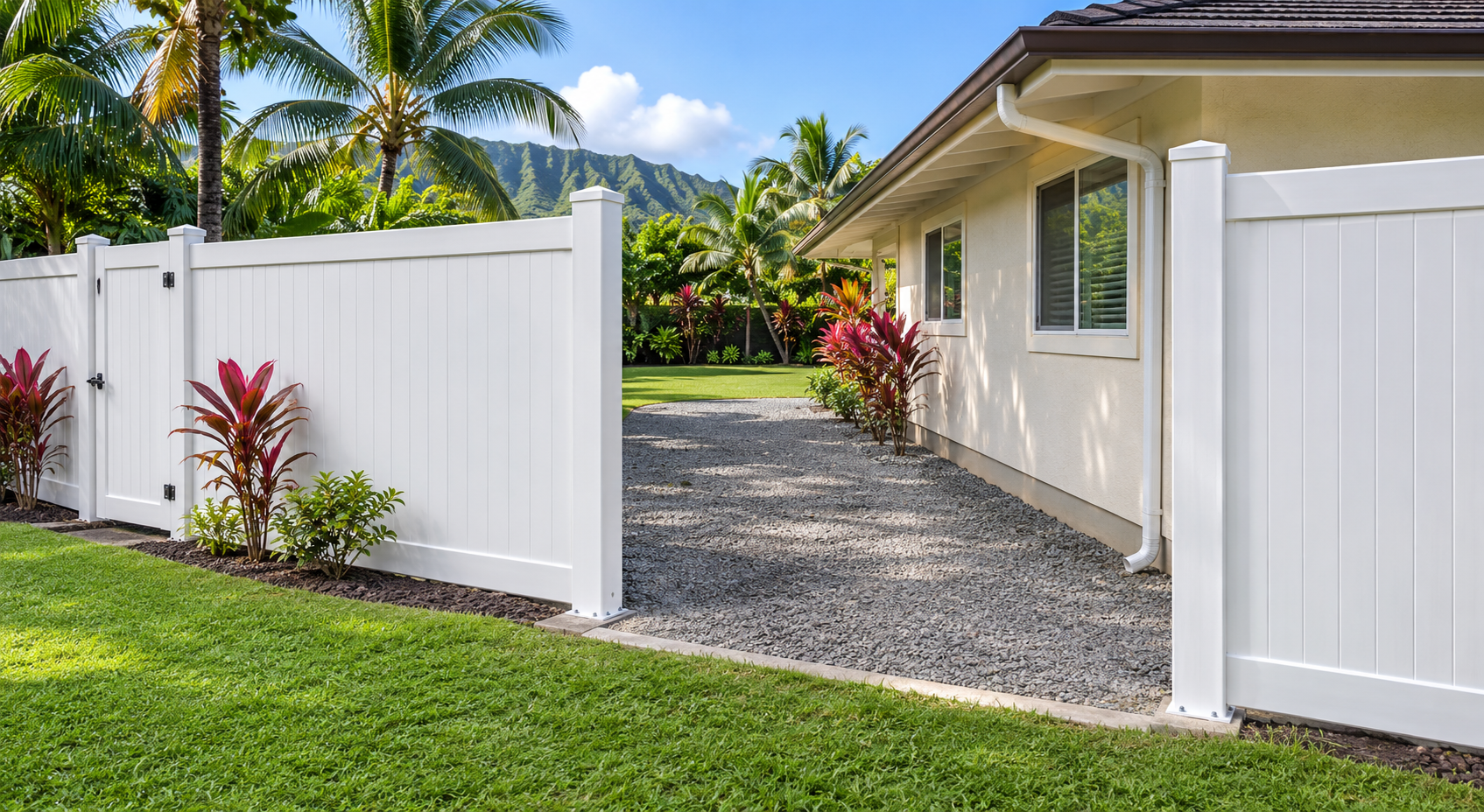
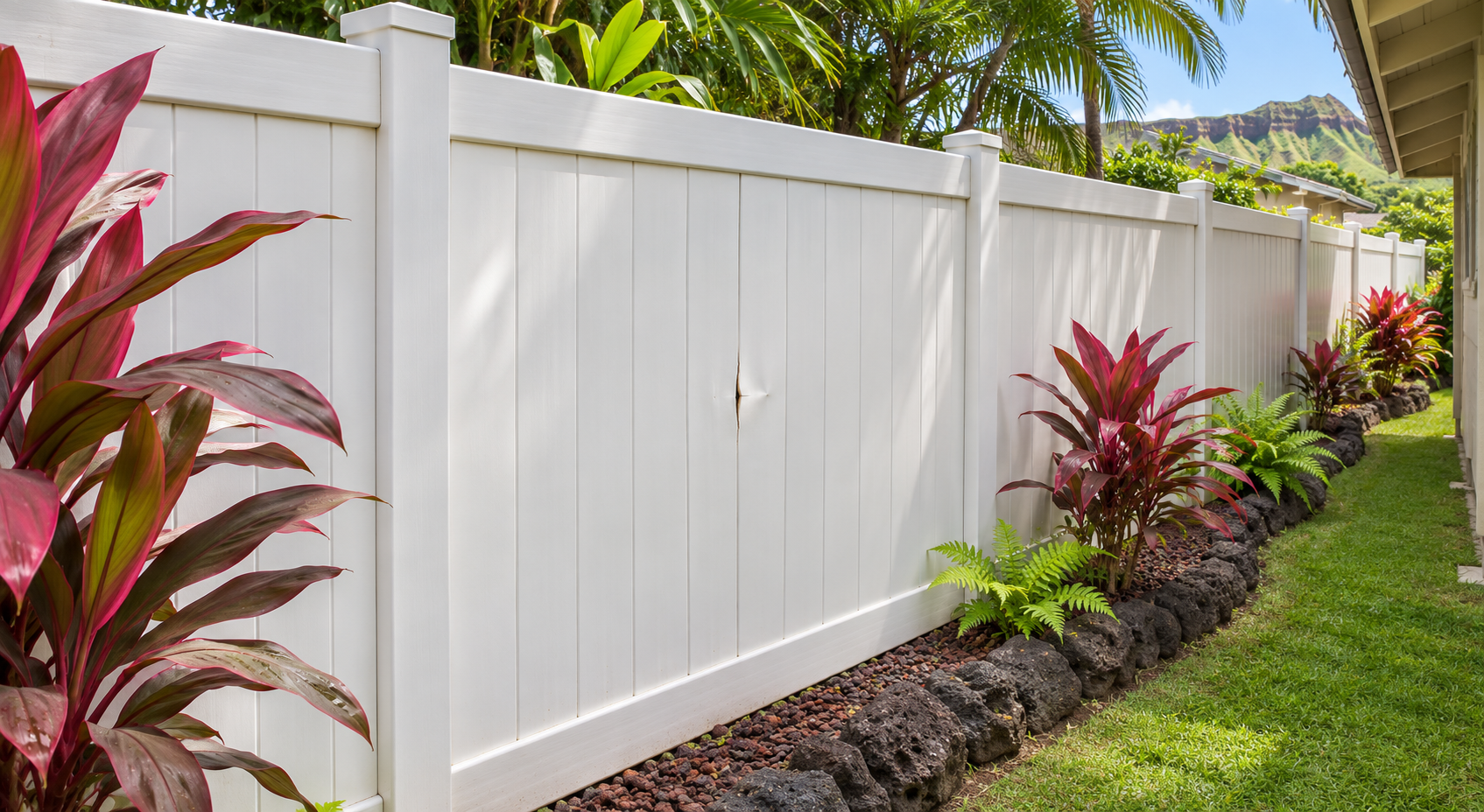
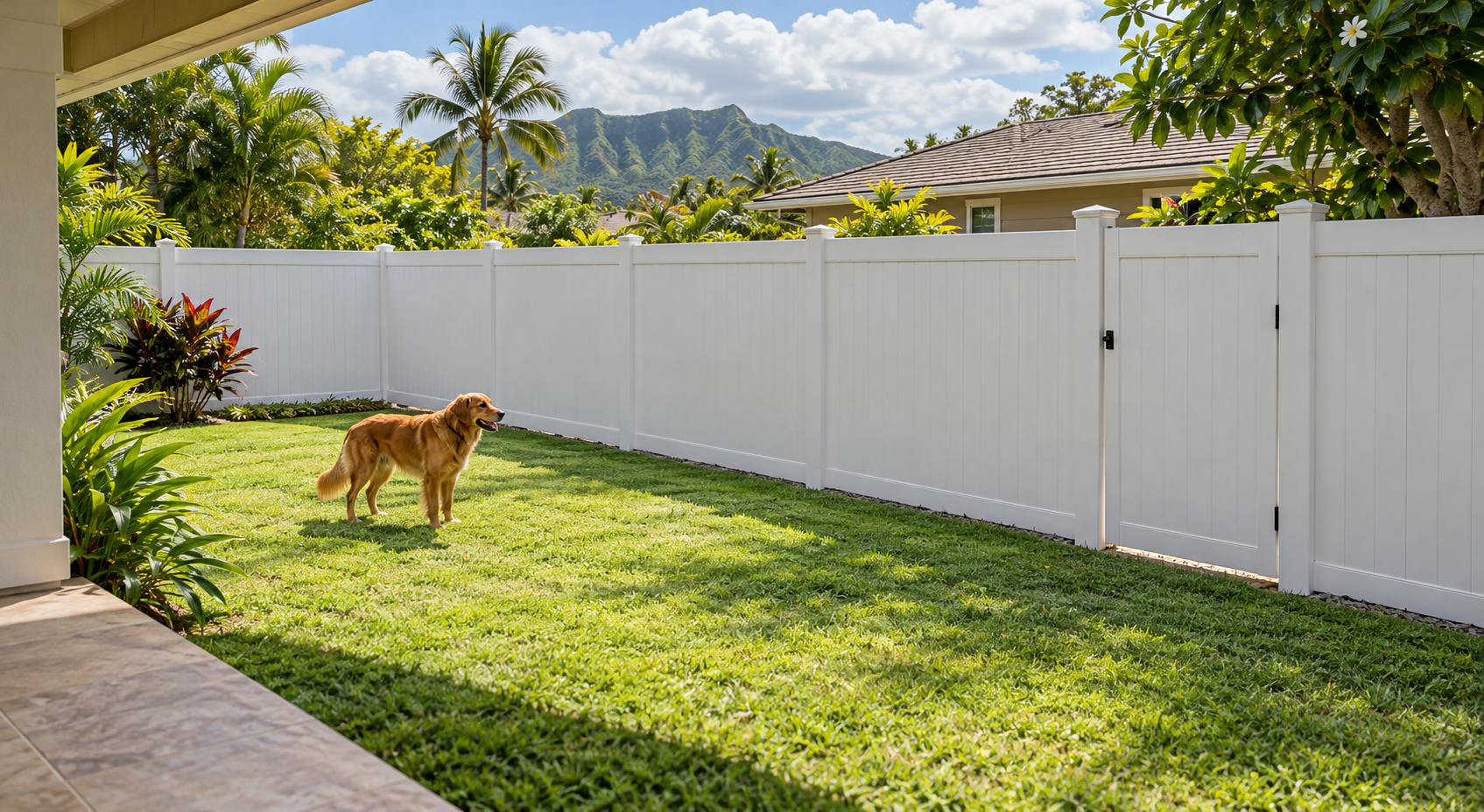
Two white privacy fences can look nearly identical in a photograph and carry very different installed prices. The difference might buy a better-documented product, more demanding installation work, or simply a decorative finish. It might also reflect work missing from the cheaper proposal.
When comparing vinyl fence installation services on Oahu, begin with the same measured layout, height, and gate openings. A price per linear foot becomes useful only after those details match.
Sunset Hawaii Fencing Company, founded by third-generation mason and fencer Londene Manu, installs vinyl fencing across Oahu. Whatever installer you consider, request enough detail to identify what each price actually buys.
A panel upgrade accounts for only part of an installed price. How fence posts and footings should be planned on sloped Hawaii properties explains why the ground can change the scope. Why fence hardware and coatings matter in Hawaii helps identify the hinges, fasteners, and finishes included with the visible vinyl.
Start With What the Price Includes
A panel-only retail price cannot be compared directly with a completed installation. Posts, caps, reinforcement, concrete, gates, delivery, demolition, and disposal may sit outside the advertised figure.
Even two installed quotes can use different assumptions. One might include removing old post foundations and restoring disturbed ground; another might cover only taking down the visible fence. Ask how concealed obstructions will be priced before accepting an estimate.
Have both bidders show the fence length separately from gate openings. Confirm whether tax, freight, unloading, and cleanup are included. On Oahu, establish whether the selected product is stocked locally or requires an order from elsewhere, and whether the delivered price is fixed. Freight should be an identifiable allowance or inclusion, not an unexplained “island premium.”
What a Material Upgrade Actually Buys
“Premium vinyl” is not a complete specification. Request the manufacturer, product line, profile dimensions, and required reinforcement. A cross-section sample can reveal internal chambers and wall thickness that a finished display conceals.
Thickness can influence performance, but it is
not a reliable quality ranking by itself. Rail
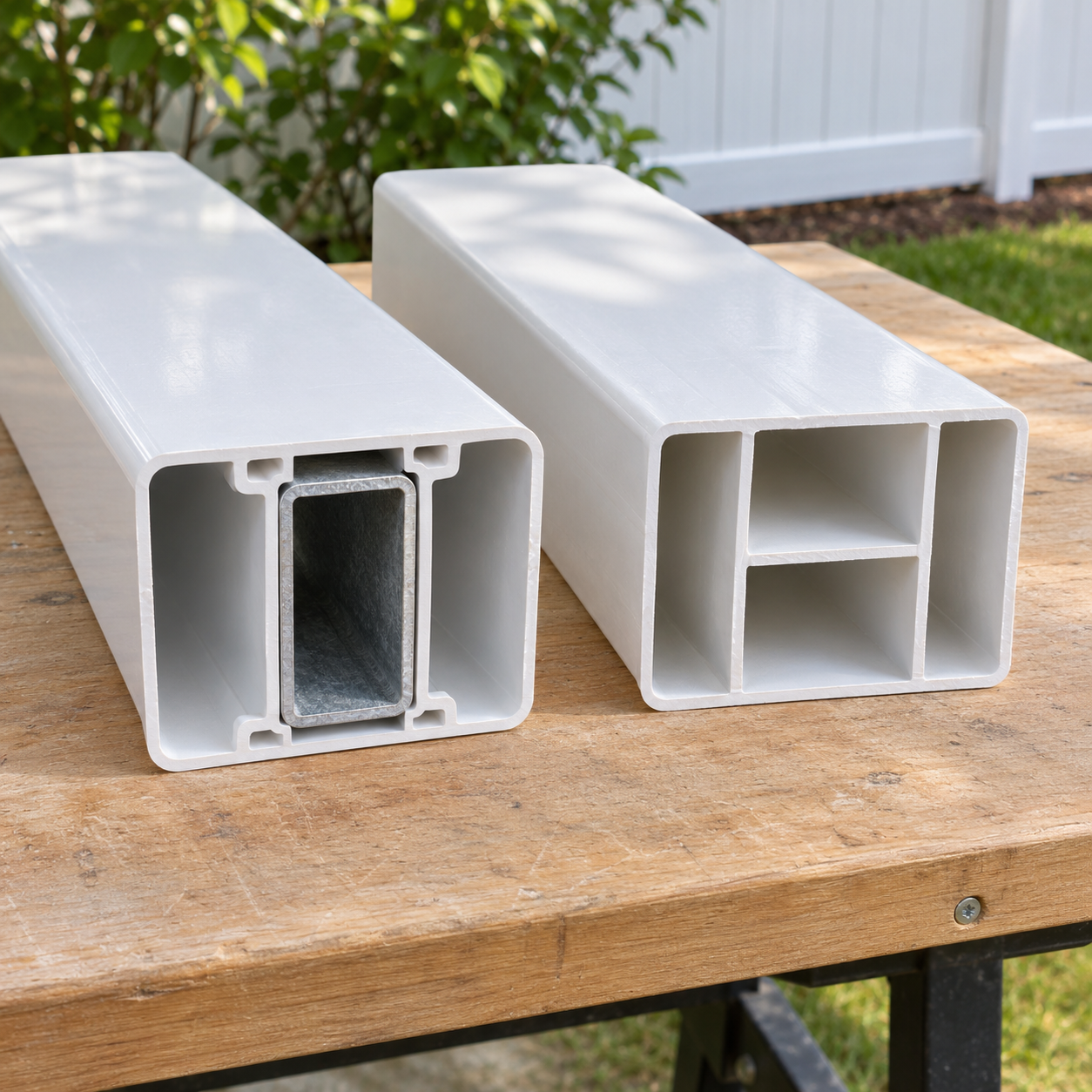
geometry, span, connections, and reinforcement also matter. Compare complete systems rather than assuming the heaviest sample is automatically the best choice.
ASTM F964 requirements for rigid PVC fencing profiles address material and physical properties, including weatherability, dimensional tolerances, and impact testing. The specification explicitly excludes assembly loadbearing performance, including wind loads. Documented conformity therefore answers a different question from whether a particular installed fence suits an exposed property.
For a wind-performance claim, ask which height, panel configuration, post spacing, reinforcement, and installation details the documentation covers. A rating without its installation conditions gives you little basis for comparing bids.
The Ground Can Cost More Than the Upgrade
A straight run with accessible digging locations presents a different job from a boundary beside paving, across changing grades, or behind a house with narrow access. Extra labor and equipment can explain a higher quote even when both contractors specify the same panels.
Ask what the installer has allowed for excavation, existing foundations, and changes in
elevation. If posts will attach to existing masonry, establish how that support will be assessed and whether any necessary modifications are included.
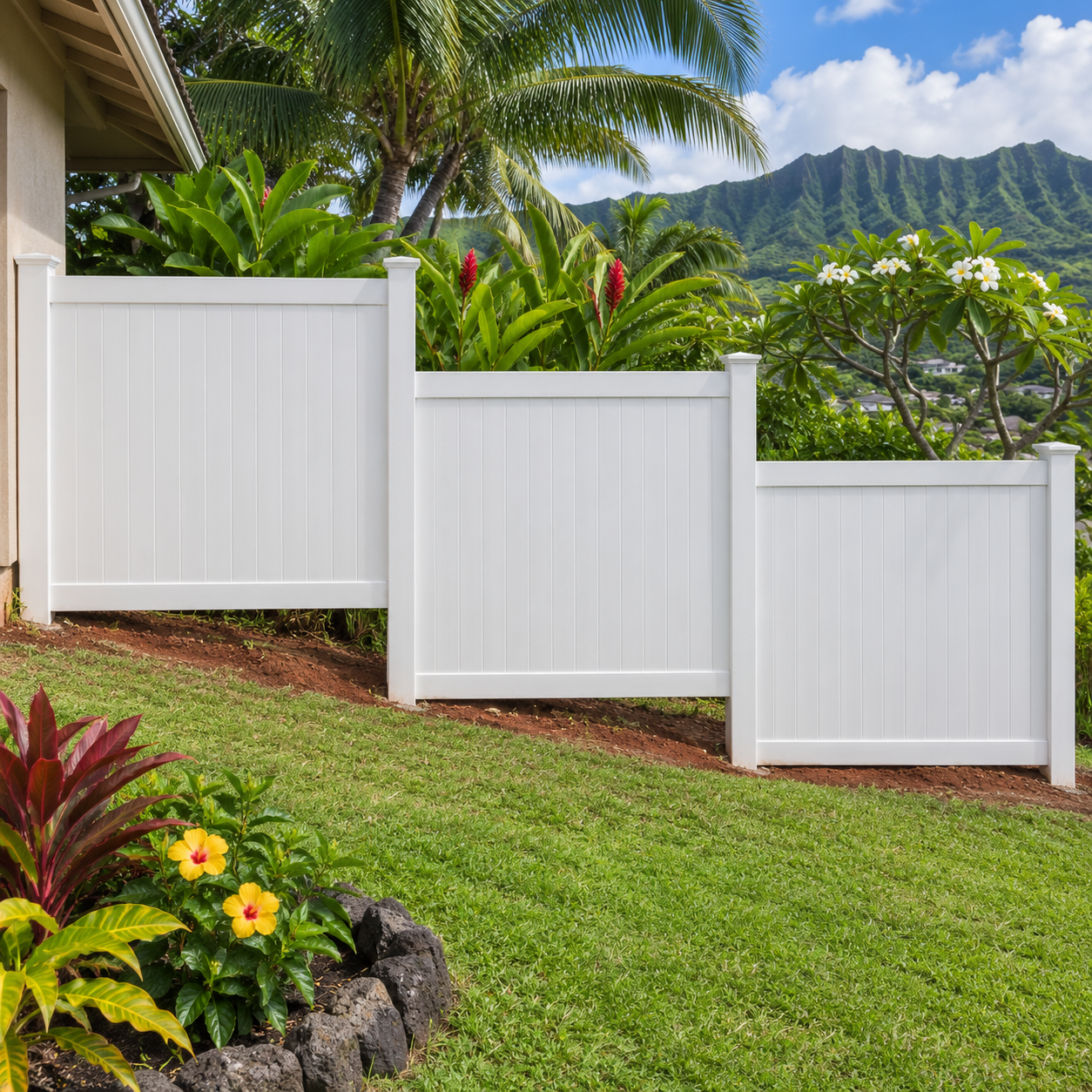
On sloping lots, compare the proposed layout as well as the panels. Stepped sections and systems that follow an incline can require different components and leave different bottom clearances. Ask the bidder to show the method and its installation requirements before accepting an additional charge.
Ask for uncertain ground conditions to be identified explicitly, with a written process for approving extra work.
Gates Deserve Their Own Price Line
A gate is a moving assembly, so its cost should not disappear into the fence’s average price per foot. Compare opening width, frame construction, post reinforcement, hinges, latch, and any double-gate hardware separately.
Two quotes for “one gate” may describe very different products. Specify the clear opening needed for bins, garden equipment, or other regular access, then ask how the gate is supported and adjusted.
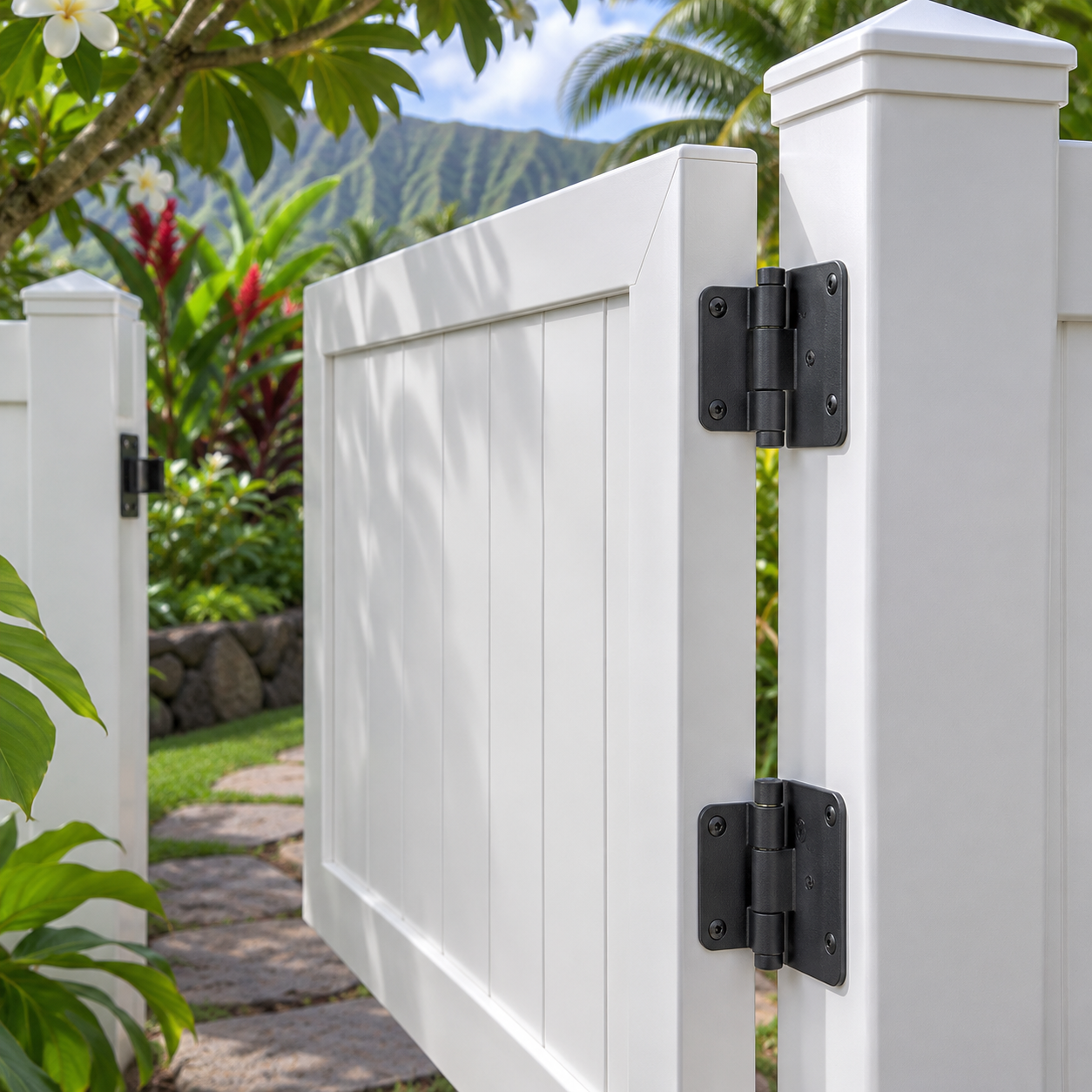
Near salt exposure, identify metal components and their finishes even though the visible fence is vinyl. A premium panel does not establish the suitability of its hinges or fasteners. Ask which components are included and how their finishes should be maintained.
Separate Appearance From Warranty Value
Woodgrain finishes, specialty colors, decorative tops, and custom detailing can add cost. They may be worthwhile for appearance without providing a corresponding increase in structural performance. Request the price difference for the same layout in a standard finish so you can judge that choice independently.
Read product and workmanship warranties separately. Check the covered defects, exclusions, transfer rules, and claim procedure. Establish whether removal, replacement labor, and shipping are covered or remain your responsibility. A long warranty headline is less informative than its actual remedy.
Also ask whether matching replacement parts are available individually. A lower initial price loses some appeal if a damaged rail requires buying an entire section or waiting for a special shipment.
Ask Each Bidder to Explain the Difference
Before choosing, request three written distinctions: what is required for the proposed installation, what is an optional upgrade, and what remains excluded or uncertain. Have each contractor identify the product and installation detail responsible for any substantial price premium.
Choose a price premium only when the quote identifies what it buys: a suitable documented system, necessary site work, better-supported gates, or an appearance you prefer. Ask for any substantial unexplained difference to be itemized before signing.

written by
Kurt Manalastas
Property Security & Exterior Improvement Journalist
Kurt creates research-based content focused on fencing solutions, property security, and outdoor boundary improvements. By combining industry best practices, material insights, and practical property protection strategies, he helps homeowners and business owners make informed decisions about building safer, more secure, and visually appealing outdoor spaces.