What Can You Do When Replacement Panels for Your Vinyl Fence Are Discontinued?
Summary
When a vinyl fence panel is discontinued, identify the damaged part and check how it connects to the existing rails and posts. Original stock or a matching donor section may solve an isolated problem. If neither fits, replacing one continuous run can preserve the rest of the fence and put the visible transition at a natural break.
A cracked board in an older privacy fence can send you looking for a complete panel that no longer exists. Start with the piece that failed. A fence bay, the section between two posts, may contain separate boards, rails, and trim. Finding one compatible piece can save the bay. If a post has shifted or a rail has split, the repair scope changes even if you find an exact panel.
When comparing vinyl fencing services on Oʻahu, ask for separate prices for a component repair and a replacement run if both are feasible. The quotes should show which posts, rails, and gates each option would keep.
Identify the Fence by Its Connections
Look for an invoice, installation quote, product label, or part number. If the paperwork is gone, photograph an intact bay and the damaged area. Include the top and bottom rail profiles, how the rails connect to the posts, and the edge of an exposed board if one is visible. Record the distance between the inside faces of the posts as well as the height of the panel. A supplier can use those details to narrow the search.
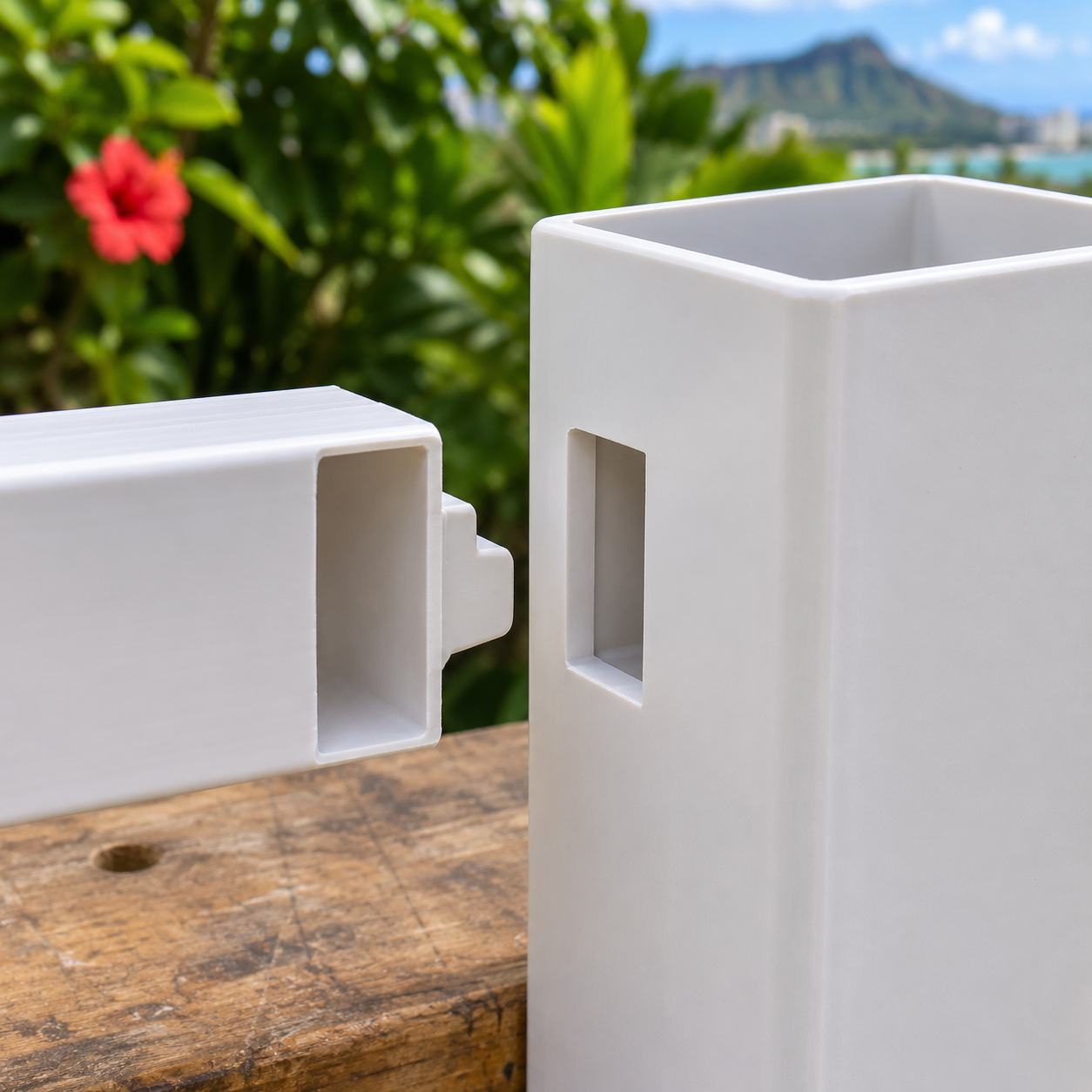
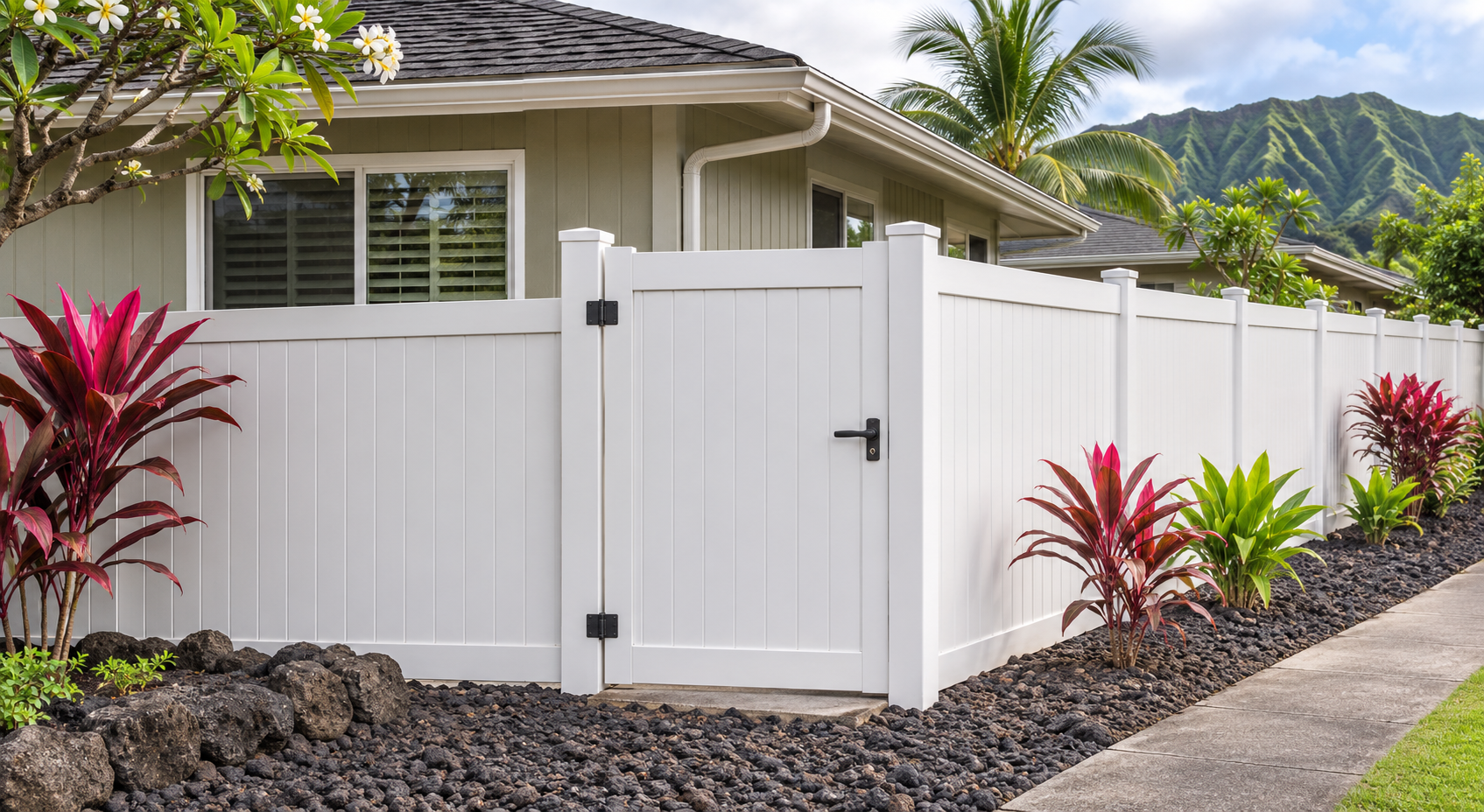
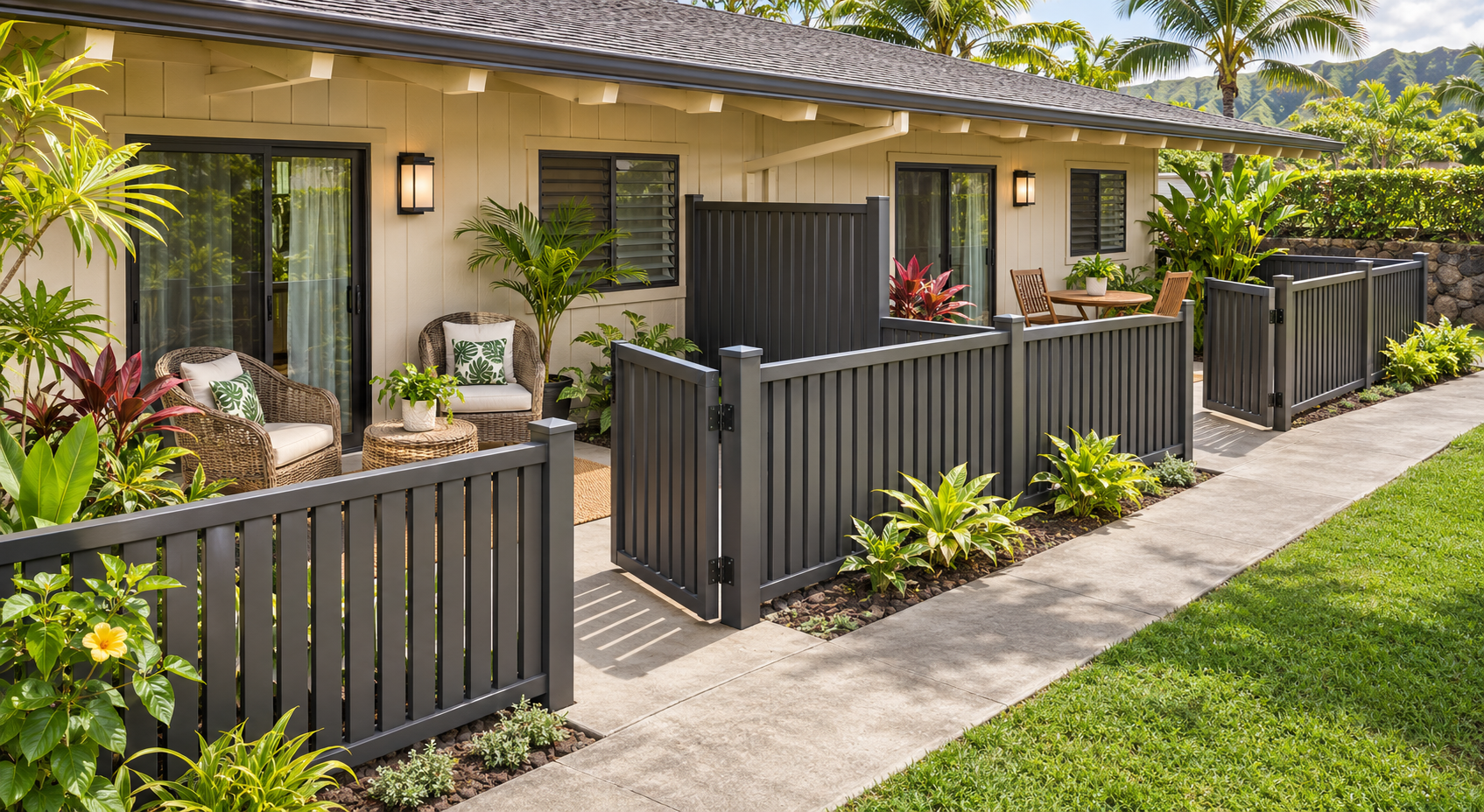
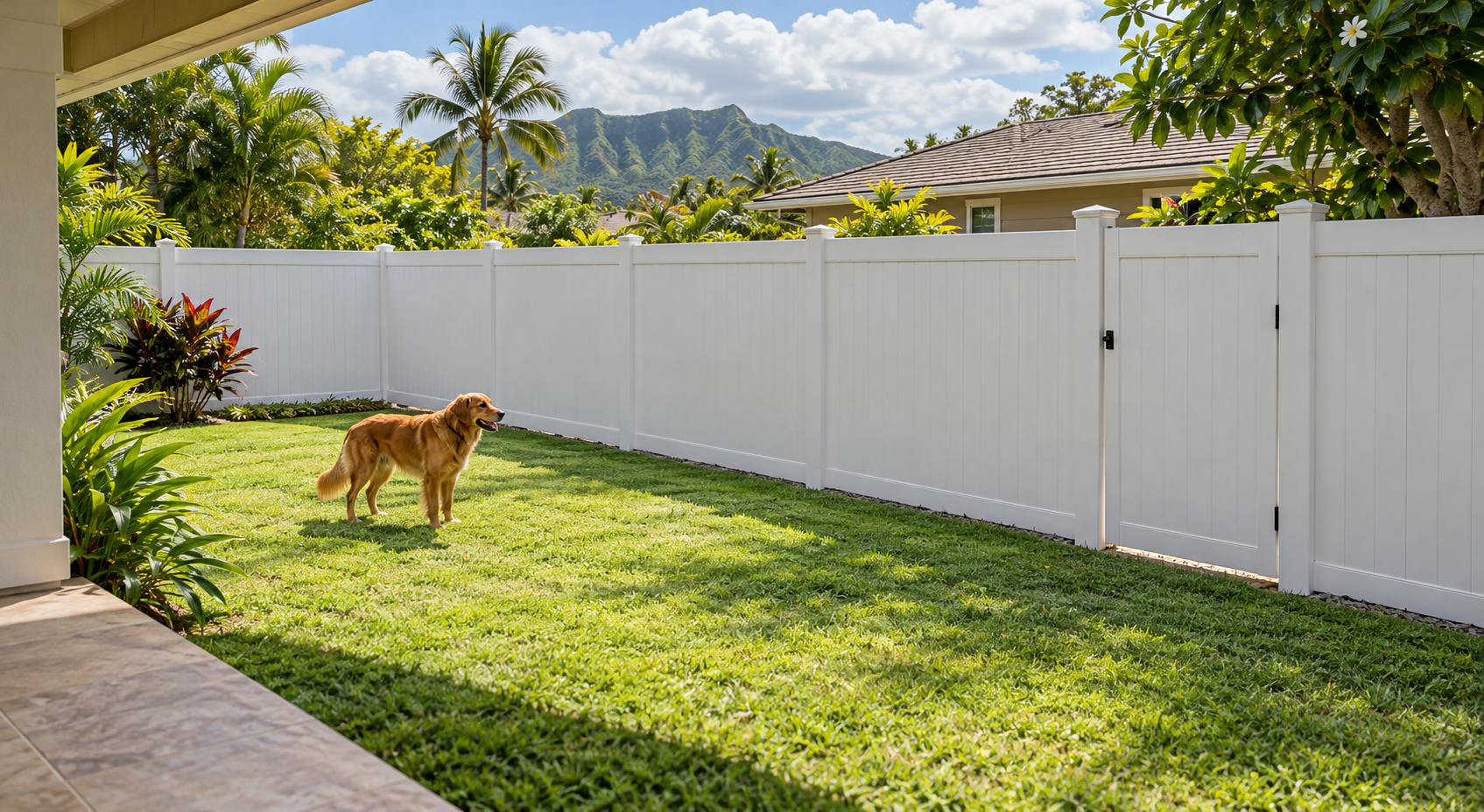
Sunset Hawaii Fencing Company installs several vinyl fence styles on Oʻahu, including solid privacy, lattice-top, and picket fencing. Within a style, two panels with the same advertised height and width can use different rail ends, board profiles, or brackets.
Use the guide to repairing a leaning or damaged fence to check whether the post or rail also needs work. The guide to comparing white and tan vinyl fencing can help when a whole run needs a new finish. Check the actual match against an outdoor sample.
Compare the candidate part with the intact fence and the relevant product drawings before buying. For example, Barrette Outdoor Living’s vinyl fence installation instructions provide separate guides for different panel and mounting systems. If a seller proposes a successor model, ask for written confirmation that it fits the original system or for the manufacturer’s approved transition detail.
Look for One Part or One Donor Bay
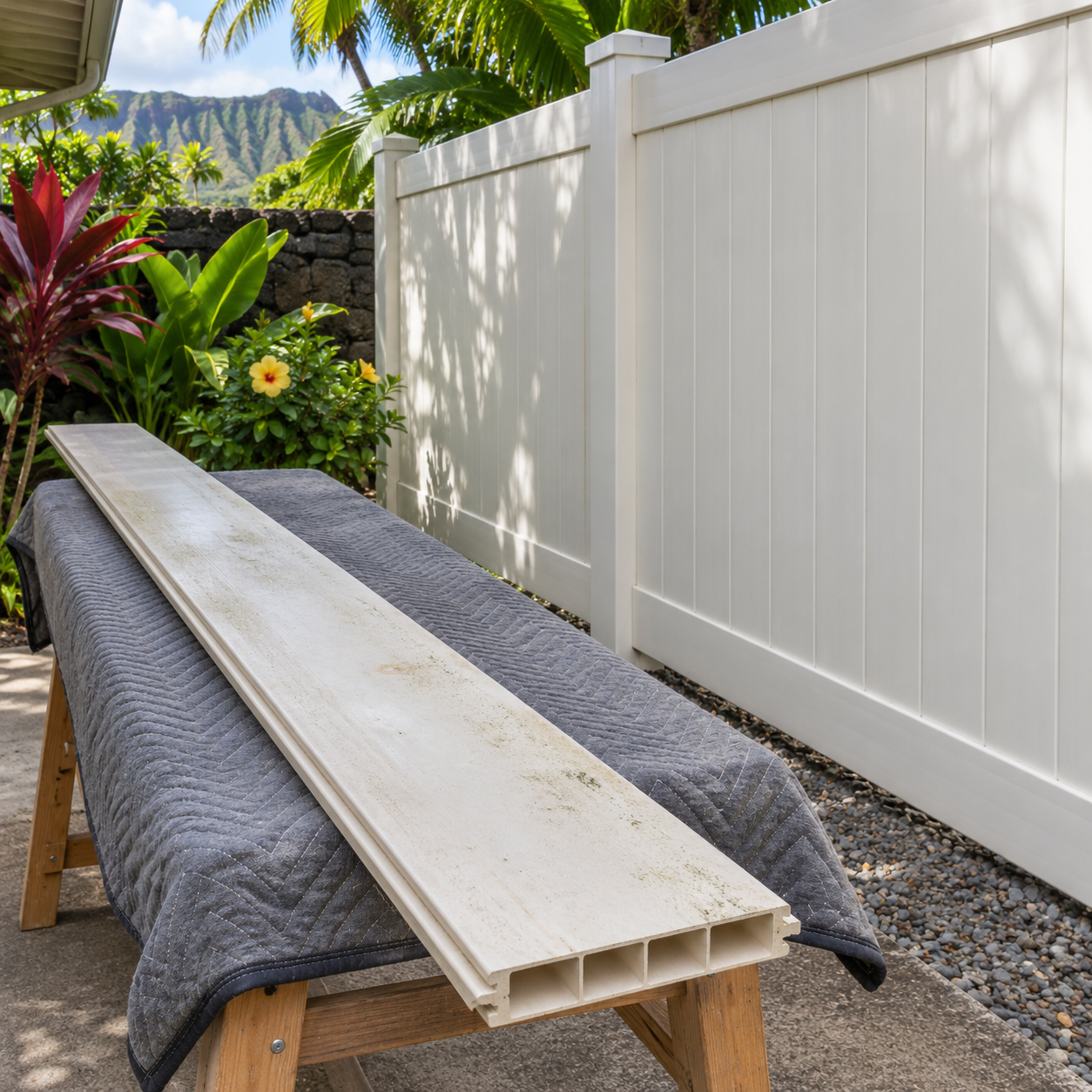
Once you have the product name or part number, ask the original installer, manufacturer, or distributor about leftover stock, individual components, and compatible successor parts. Check whether “discontinued” applies to the assembled panel, its color, or every part in the series. On Oʻahu, verify stock on the island before committing to a mainland order. For a special shipment, ask about freight, lead time,
and whether the seller accepts returns if the part fails to fit.
A sound section elsewhere on the property can also serve as a donor. If the damaged bay is beside the driveway and an identical bay is tucked behind the house, moving the original material to the visible location may make sense. Decide how you will close the donor opening first. Moving the problem to a side yard works only if the new section still provides the privacy or enclosure you need there.
Before paying for salvage, check rail ends, locking tabs and board edges for cracks or distortion. If a post moves at its base, include its condition in the repair scope before ordering replacement parts.
Put a Visible Change Where the Fence Already Breaks
Even leftover stock in the original color can look different beside vinyl that has spent years outdoors. Compare a sample against a cleaned, dry section in daylight. Step back to the driveway or patio, wherever you normally see the fence. A small shade difference may be acceptable around a corner and obvious halfway along a straight run.
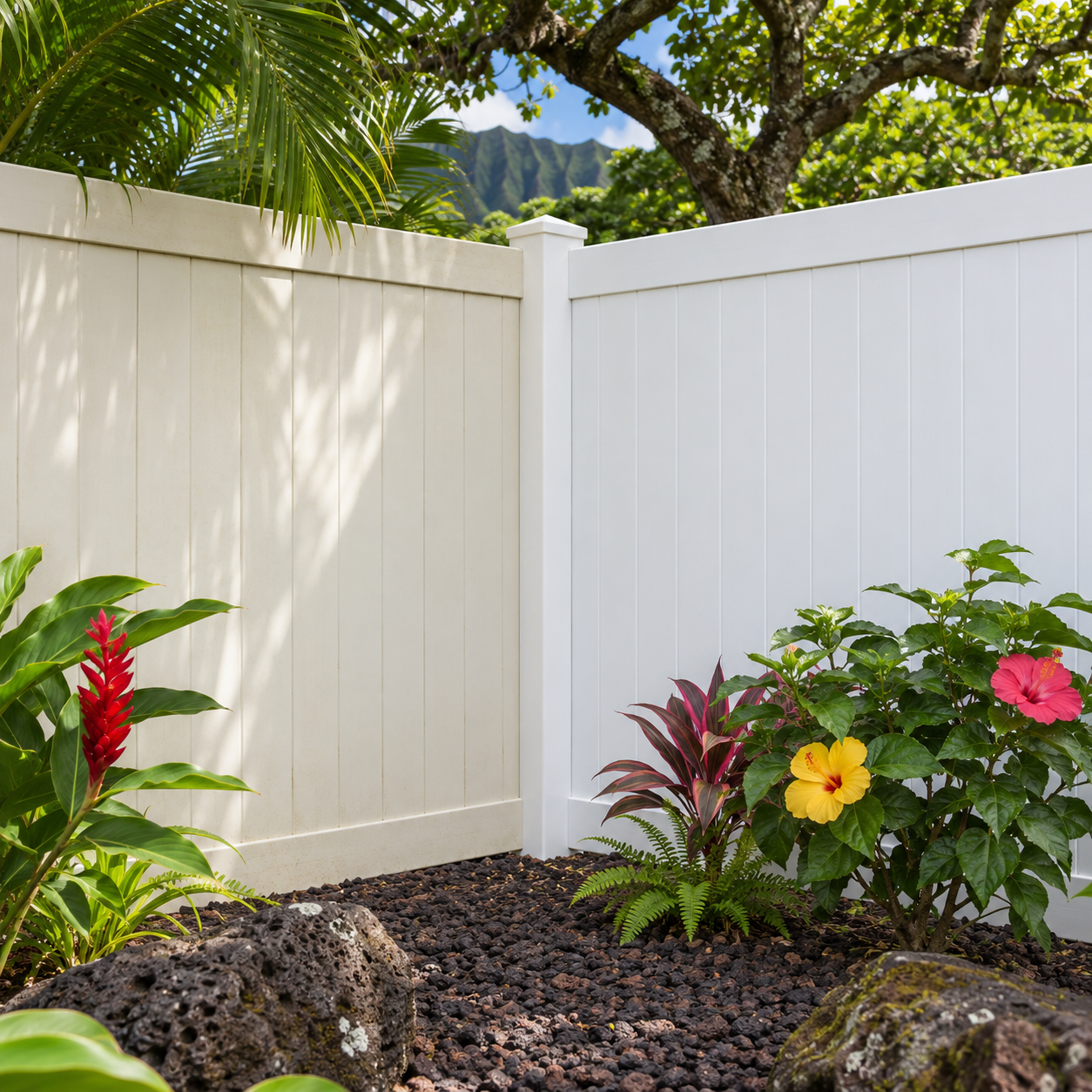
If an exact match is unavailable, price replacing the stretch from one natural break to another, such as a corner to a gate. Decide whether the existing gate stays and how the new run meets its posts.
Compare Repair Scope Before Ordering
Ask each bidder to mark the bays they would remove and identify any transition posts, gate changes, and freight charges in writing. A single-bay repair makes sense when the neighboring posts and rails are sound and the replacement fits. A full run is easier to justify when the mismatch would be obvious or the new system needs different post spacing. Consider a broader replacement if damage or movement affects several runs and compatible parts are scarce.
Arrange temporary containment for pets before the bay comes out. After the work, keep the product series, color code and parts list with your invoice. If the repair uses the last available stock, consider keeping a spare rail or matching boards.
For a fence that serves a pool, confirm the repair plan with Honolulu’s Department of Planning and Permitting and maintain an effective barrier while the bay is open.

written by
Kurt Manalastas
Property Security & Exterior Improvement Journalist
Kurt creates research-based content focused on fencing solutions, property security, and outdoor boundary improvements. By combining industry best practices, material insights, and practical property protection strategies, he helps homeowners and business owners make informed decisions about building safer, more secure, and visually appealing outdoor spaces.