Fencing Solutions for Multi-Unit and Shared Residential Properties in Hawaii
Summary
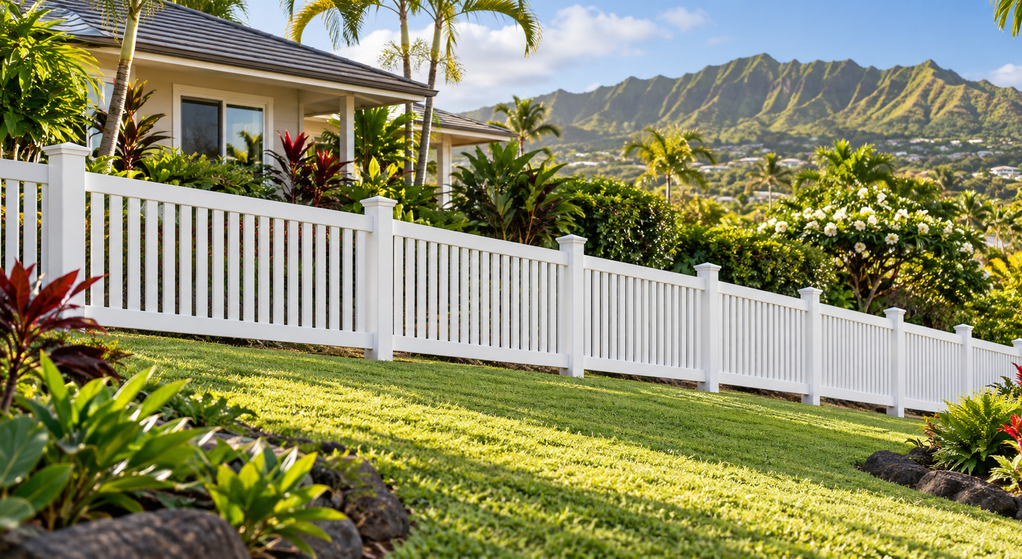
Fencing for shared residential properties must balance privacy, everyday access, security, and maintenance responsibilities. For Oahu duplexes, apartment buildings, and homes sharing outdoor areas, a useful design starts with how residents use the property, then matches fence styles and gates to each space.
A fence can solve one household’s privacy problem while creating another household’s access problem. A panel beside a patio might block someone else’s view of the driveway. A locked gate might complicate deliveries or access to shared laundry.
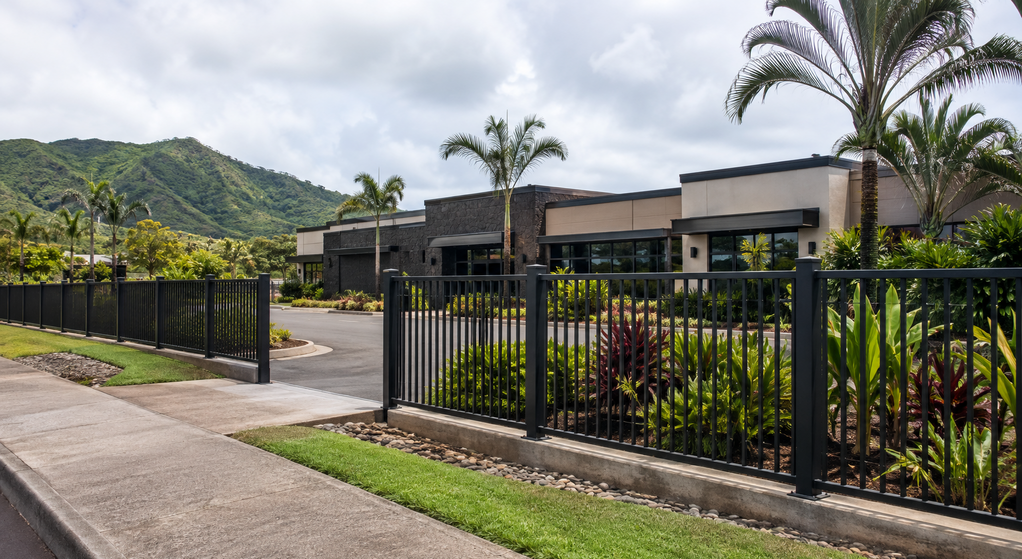
For owners comparing aluminum fencing options for residential properties in Hawaii, the first decision is where visibility is helpful and where screening is needed. Choosing one fence style for the entire property may overlook those differences.
Sunset Hawaii Fencing Company provides residential and commercial fencing services on Oahu, including aluminum fencing and gates. A useful brief for this type of project should explain who uses each space and who has authority to approve the work.
For screening tradeoffs, Understanding the Benefits and Drawbacks of Privacy Fencing compares visibility and privacy. For shared-gate maintenance, Preventing Rust, Warping, and Wear on Gates in Hawaii’s Climate explains hardware and upkeep considerations.
Establish Who Controls Each Space
Before selecting materials, mark private yards, shared walkways, parking stalls, storage areas, and service access on a simple site plan. Distinguish the property boundary from internal divisions between households.
An existing fence or hedge is not enough to establish ownership. Review the relevant survey, property documents, and any shared-access arrangements before finalizing the layout. For condominium or association-managed properties, identify who can approve changes to common areas.
Resolve these questions early:
- Does a proposed divider affect another resident’s route to parking or laundry?
- Who needs access to meters, drainage areas, and landscaping?
- Who will pay for installation, cleaning, and future repairs?
- Can maintenance workers reach both sides without entering a private yard?
- Documenting the answers helps prevent disputes after installation.
Match Privacy to the Activity Behind the Fence
Privacy needs rarely remain constant along a shared property. A ground-floor bedroom facing a common walkway presents a different problem from a boundary beside parking.
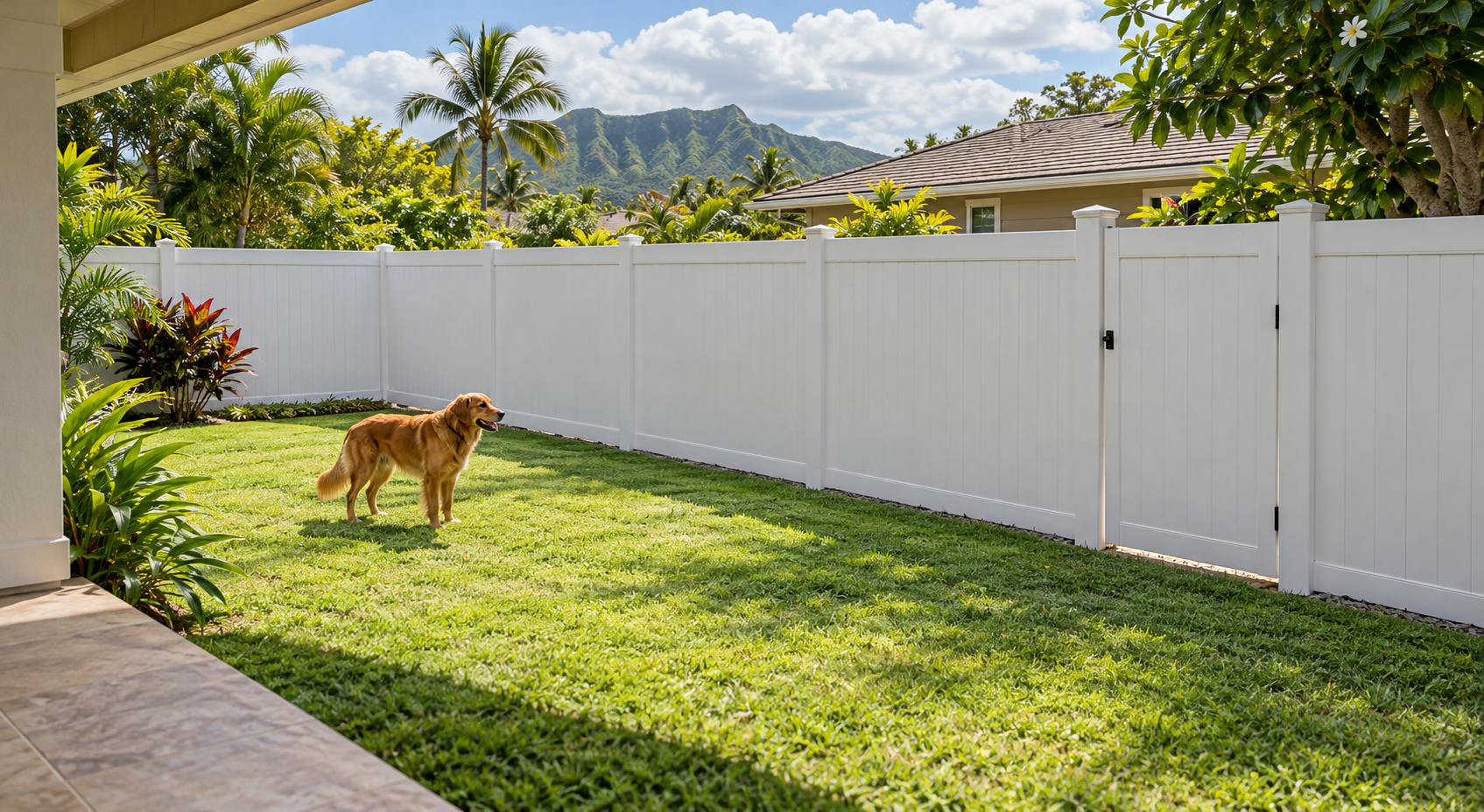
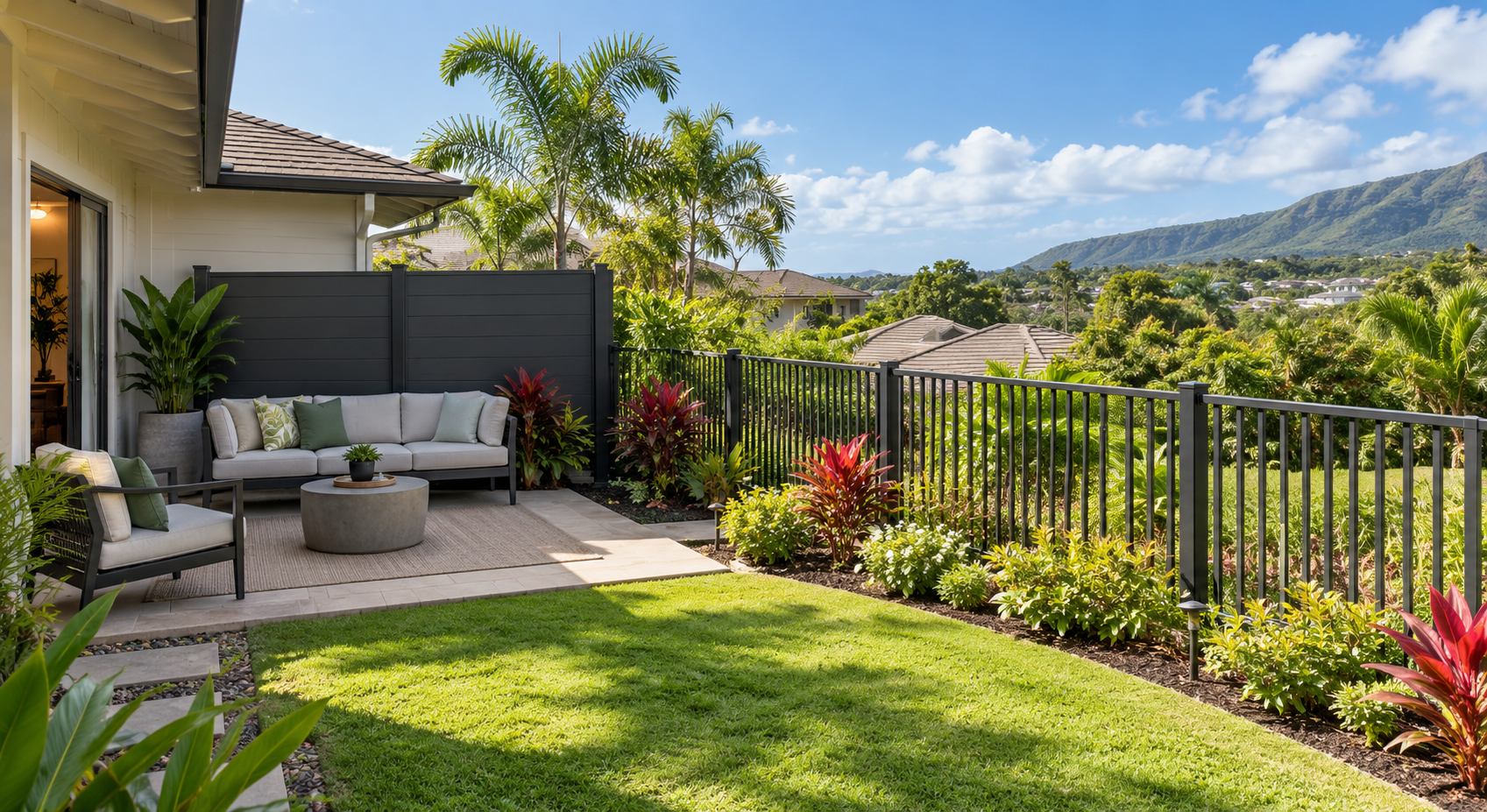
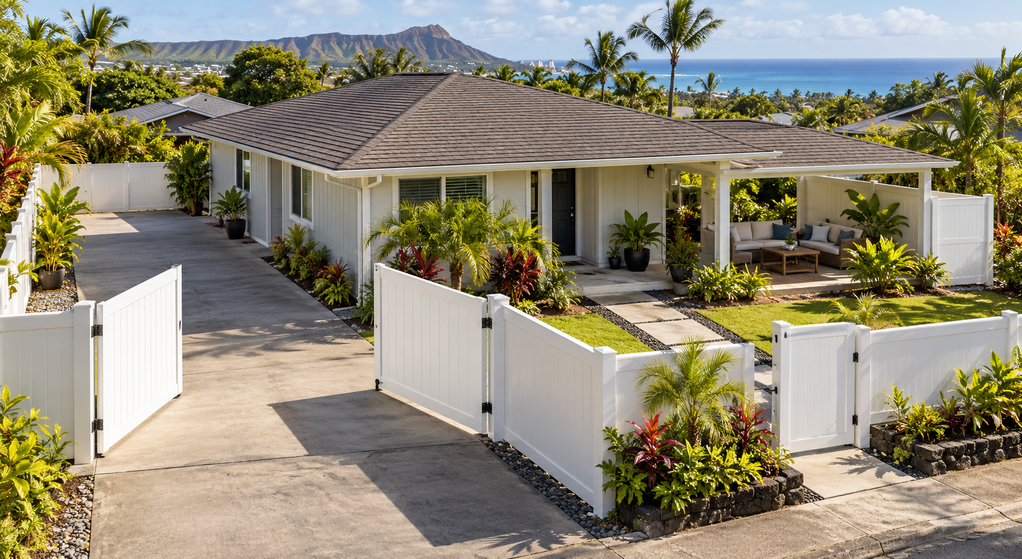
Solid screening may suit a private seating area. Open-picket fencing may be more useful where residents need to see approaching pedestrians or vehicles. A combination can provide
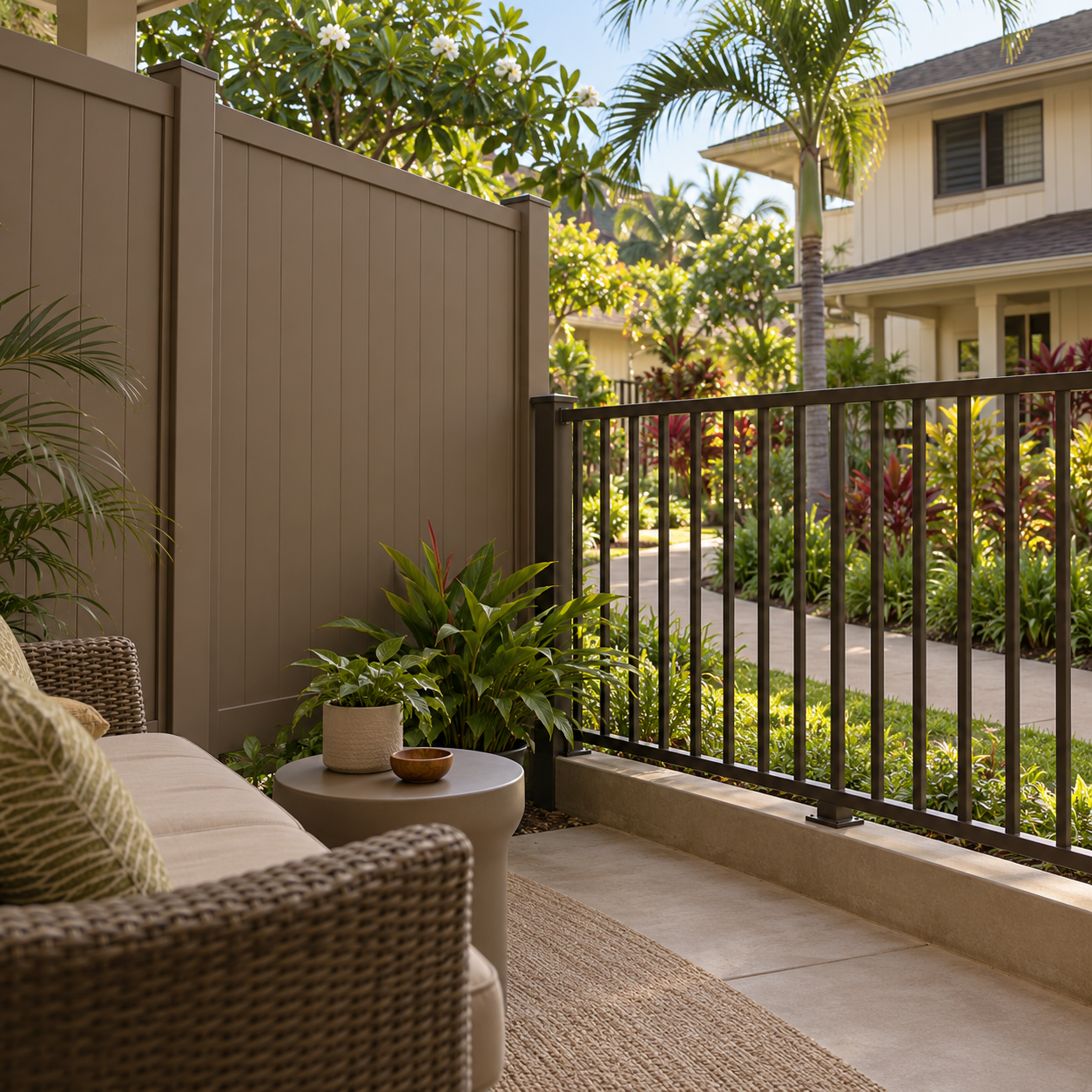
separation without enclosing every outdoor space.
Before choosing panel height, check sightlines from actual positions: seated on a lanai, standing at a kitchen window, and walking toward an entrance. Taller panels may still leave upper-floor views unchanged.
Avoid treating a standard privacy fence as a soundproof barrier. If noise between households is the main concern, discuss that objective separately instead of assuming visual screening will resolve it.
Treat the Shared Gate as a Daily-Use Entrance
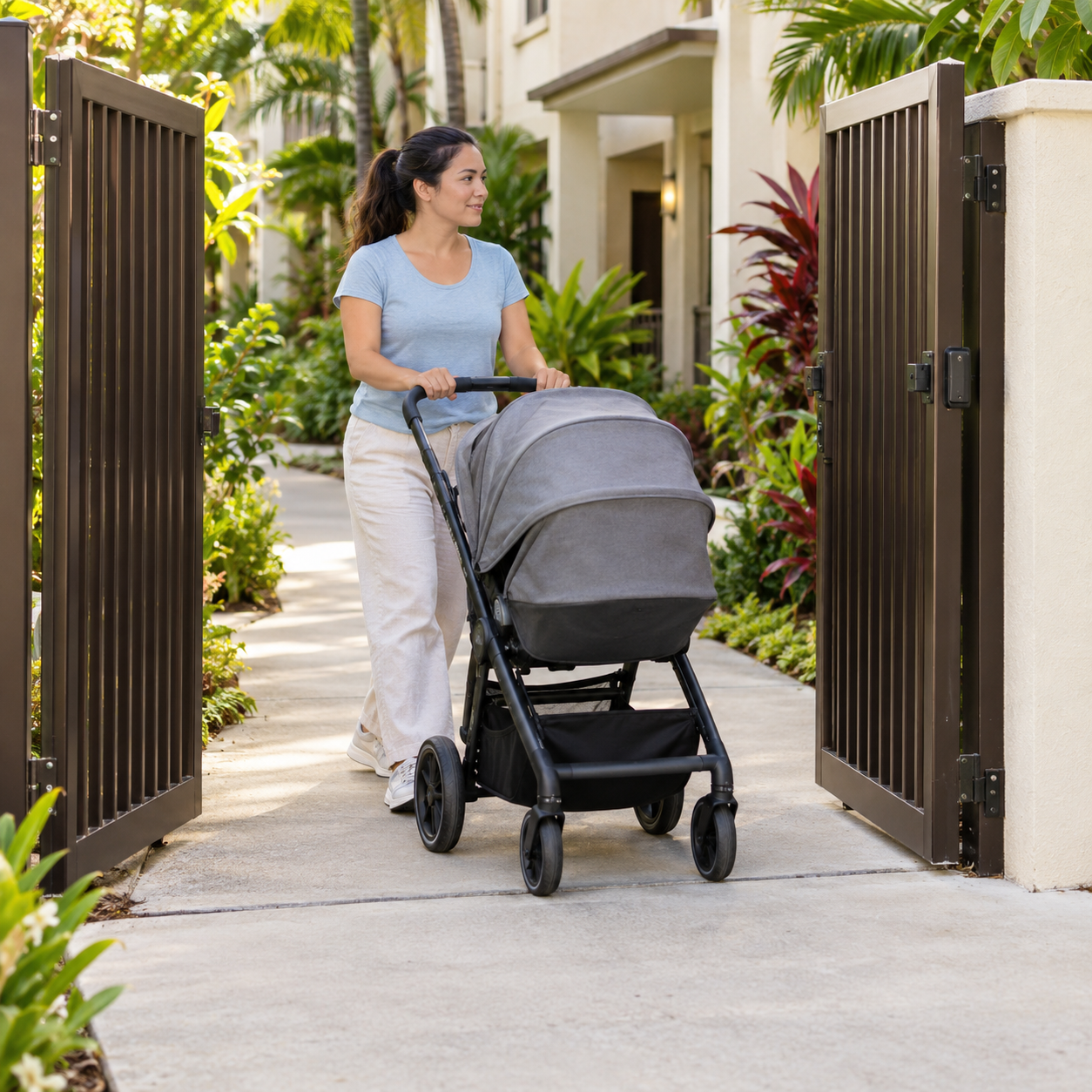
A gate serving several households needs planning around repeated use. Residents may approach with groceries, bicycles, strollers, mobility aids, or rubbish bins.
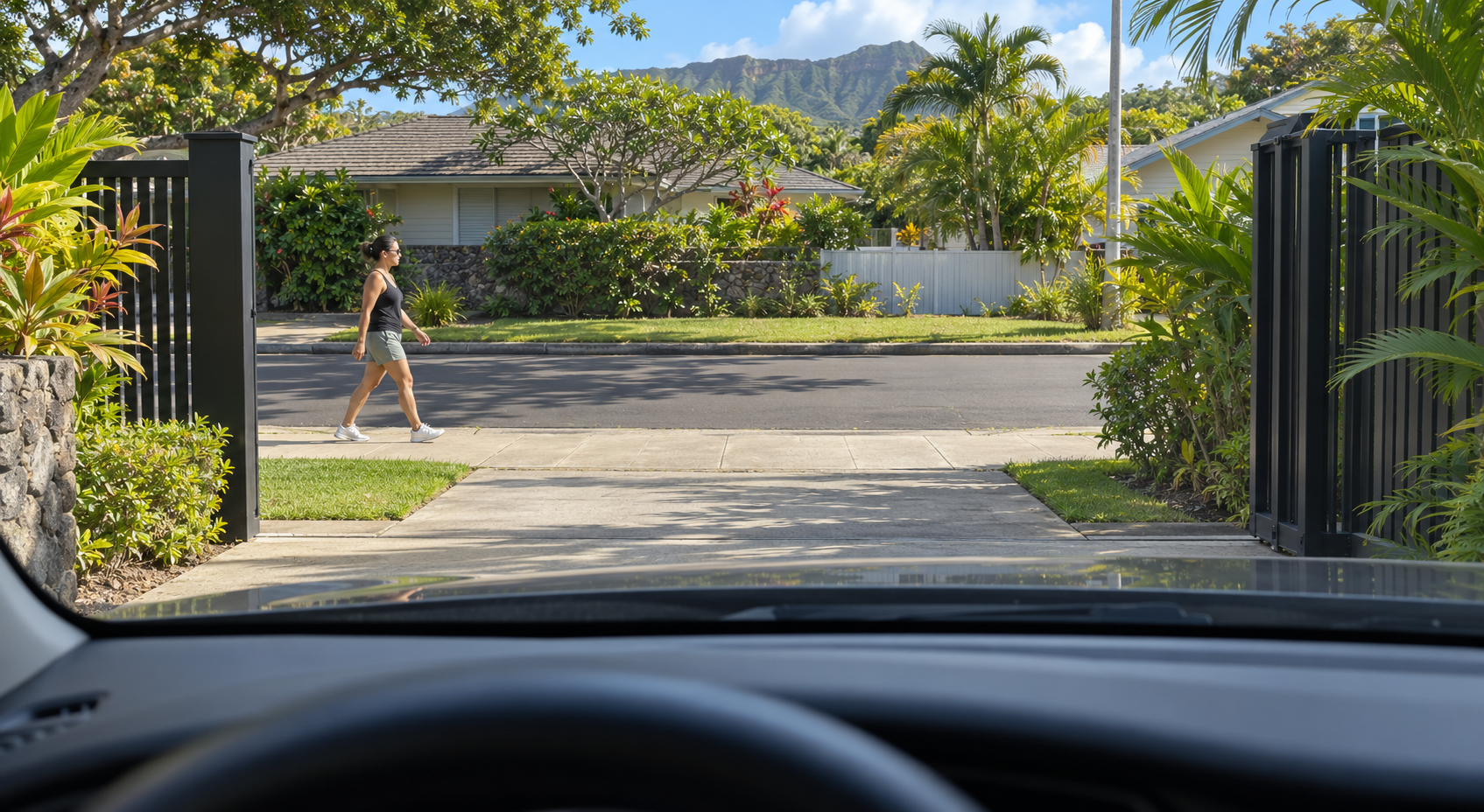
Map those movements before choosing the opening location. A gate should not swing into a parking space or leave someone waiting in a vehicle’s path. Provide a practical pedestrian
route rather than expecting everyone to use the vehicle entrance.
Accessibility involves more than opening width. Approach space, thresholds, hardware operation, and closing behavior also matter. The U.S. Access Board’s guide to accessible entrances, doors, and gates explains these features under the ADA Standards. Confirm which accessibility requirements apply to the particular residential property rather than assuming every building has identical obligations.
Access management deserves equal attention. Decide how residents receive credentials, how visitors enter, and how lost keys or tenant turnover are handled. For powered gates, have the installer explain power-loss operation and emergency access before approving the system.
Specify Materials Around Exposure and Responsibility
Material selection should reflect the specific Oahu site and the people responsible for maintaining it. Tell bidders whether the fence faces ocean spray, receives irrigation overspray, or sits beside dense planting.
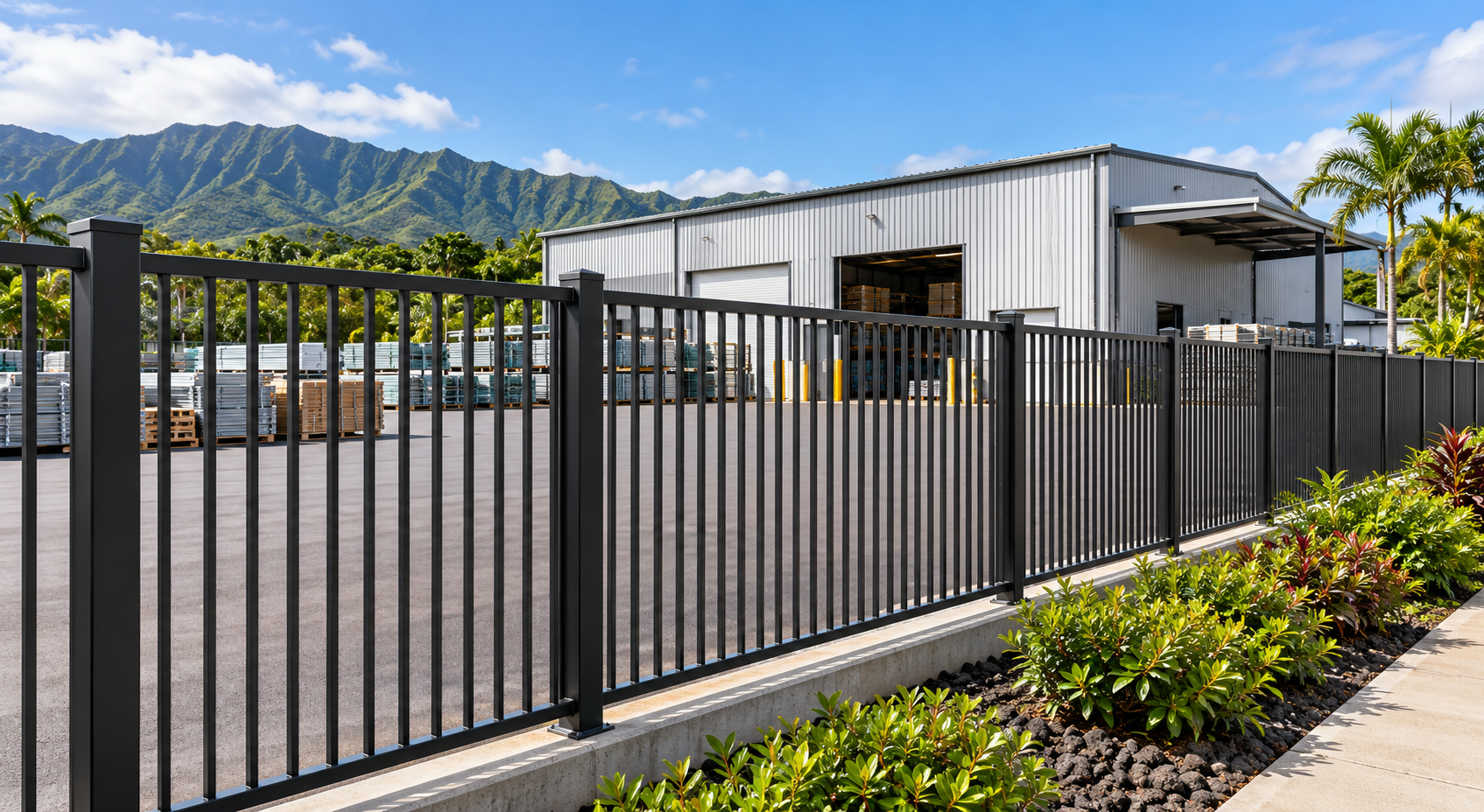
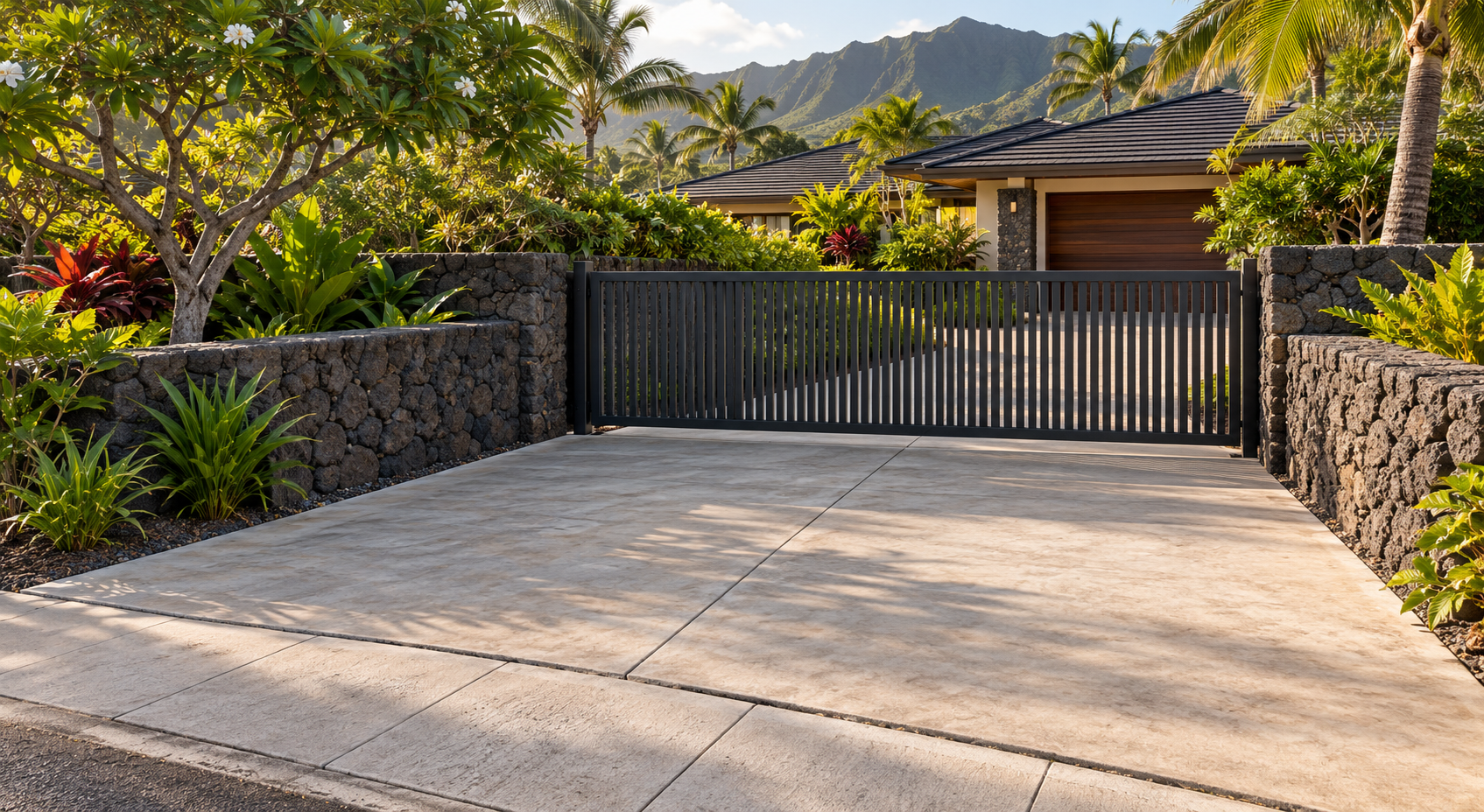
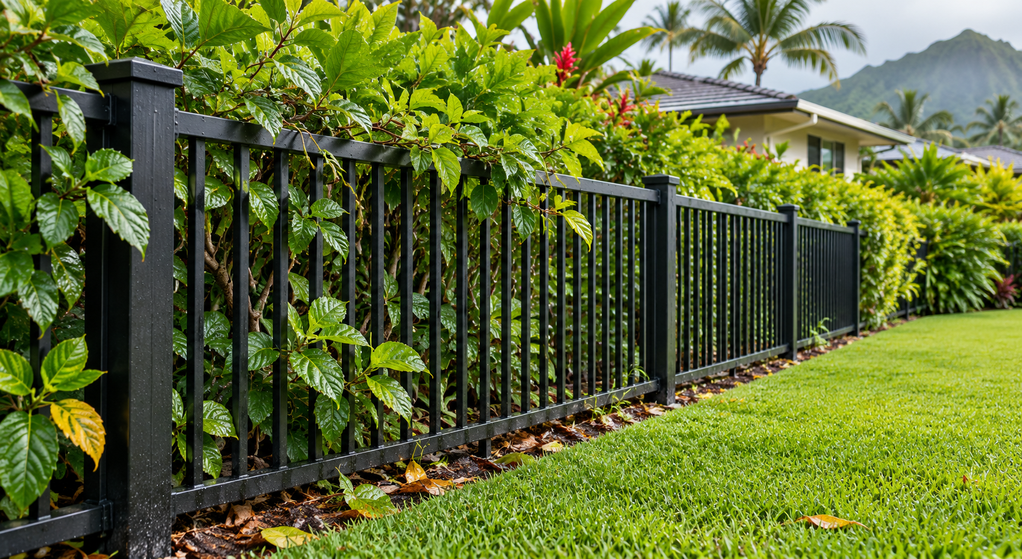
Open aluminum pickets provide separation while preserving views through the fence. Solid panels provide screening. Wood may suit a
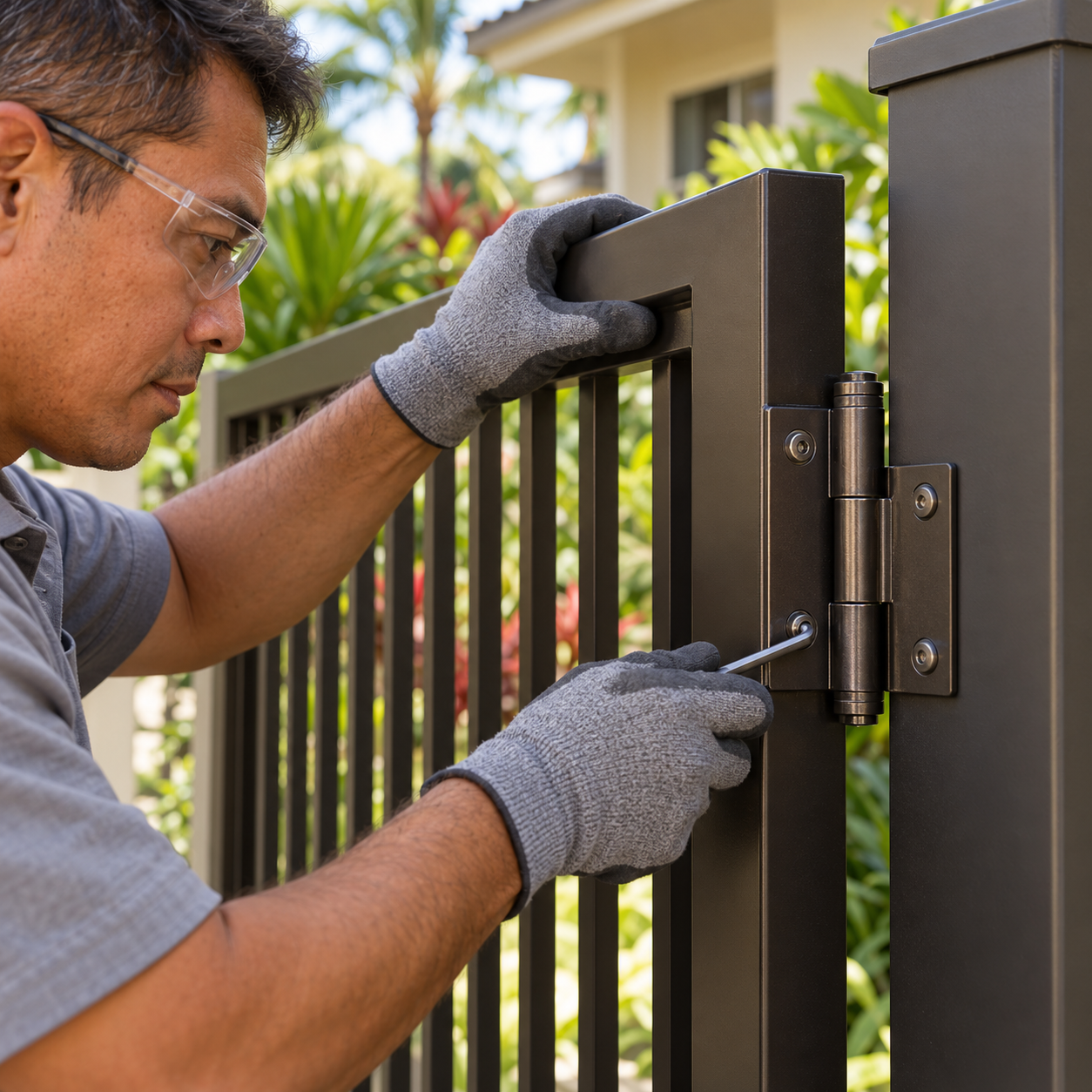
particular architectural appearance, while chain-link may suit a less visible service boundary. Compare the complete installed systems rather than relying on the material name alone.
Request product-specific information about:
- Finish and hardware suitability for the site.
- Cleaning and inspection requirements.
- Availability of replacement panels and gate components.
- Warranty exclusions and required maintenance.
- A shared property benefits from components that can be repaired without replacing a long run of fencing. Standardizing hardware can also simplify maintenance.
Assign a named person or management role to receive reports of dragging gates, loose hardware, or damaged panels. “Everyone is responsible” can leave problems unattended.
Prepare One Scope Before Comparing Quotes
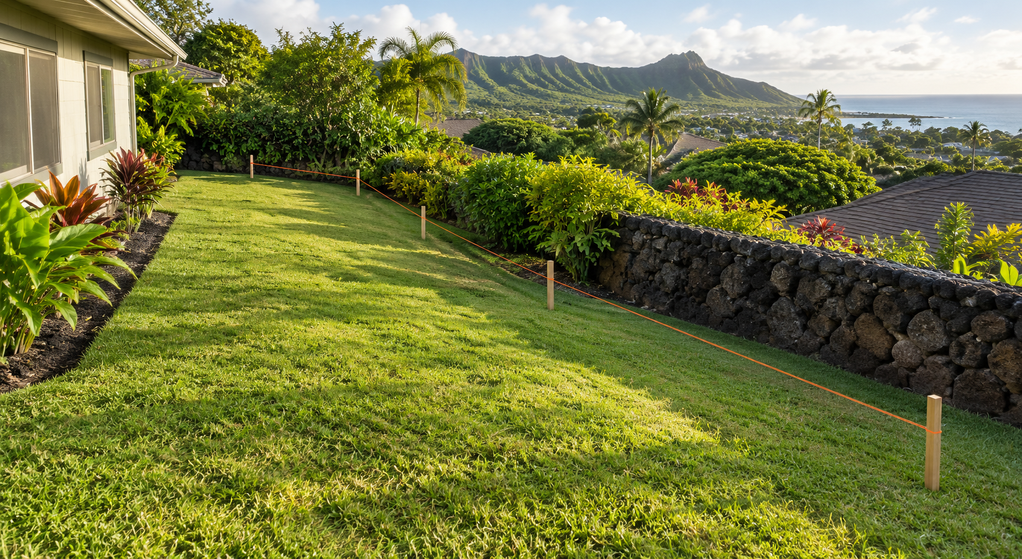
Ask each contractor to price the same marked plan. Include fence lengths, screening locations, gate openings, existing structures, access arrangements, and removal work.
Request separate allowances for uncertain work so differences between quotes remain visible. Clarify who will check applicable approvals and permit requirements before construction.
Also plan how residents will move around the property during installation. Set expectations for parking interruptions, temporary access, pet containment, and advance notices.
At handover, test gates from both sides and collect maintenance instructions, warranty documents, and access-system details. Keep those records available for future owners or managers.
A successful shared-property fence gives residents clear boundaries and dependable access. The strongest starting point is agreement about how the property functions, followed by a design that supports those daily needs.

written by
Kurt Manalastas
Property Security & Exterior Improvement Journalist
Kurt creates research-based content focused on fencing solutions, property security, and outdoor boundary improvements. By combining industry best practices, material insights, and practical property protection strategies, he helps homeowners and business owners make informed decisions about building safer, more secure, and visually appealing outdoor spaces.