Durable Fence Solutions for Hawaii Commercial Properties
Built for Island Conditions
Durable commercial fencing in Hawaii requires materials, coatings, posts, footings, hardware, and gates matched to salt exposure, wind, rainfall, security demands, and daily traffic. Aluminum, chain-link, vinyl, composite, and steel can all perform well when the entire system is properly specified, installed, and maintained.
Commercial fences in Hawaii face conditions that expose weak materials and poor workmanship quickly. Salt-laden air, humidity, heavy rain, trade winds, vehicle traffic, and constant gate use all place pressure on the system. Property managers comparing vinyl or commercial aluminum fencing services in Hawaii should look beyond appearance and ask how the posts, coatings, fasteners, footings, and gates will perform after years of island exposure.
The strongest choice is rarely the cheapest proposal. Commercial properties need fencing designed for the site, required security level, and demands placed on entrances and perimeter lines.
Why Commercial Fences Fail Faster in Hawaii
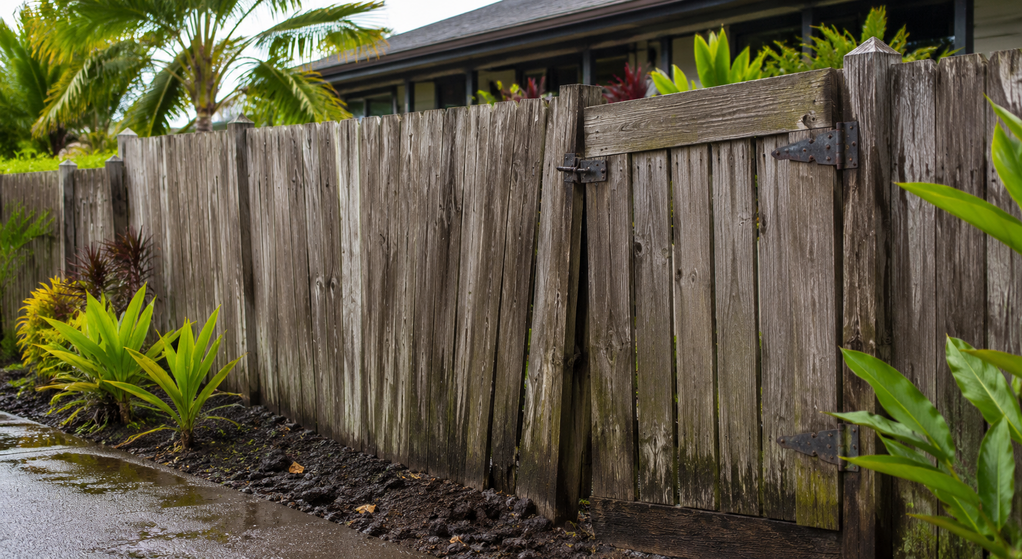
Based on project observations from Sunset Hawaii Fencing Company, many early failures begin with small specification mistakes. Thin posts, shallow footings, exposed welds, incompatible fasteners, and weak gate hardware may look acceptable at installation, but moisture, salt, and repeated wind loads eventually reveal those weaknesses.
Commercial fences do more than mark boundaries. They may protect equipment, guide customers, restrict vehicle access, screen service areas, or secure tenants. One shifting post or sagging gate can affect security, traffic flow, and property safety.
Why Commercial Fences Fail Faster in Hawaii
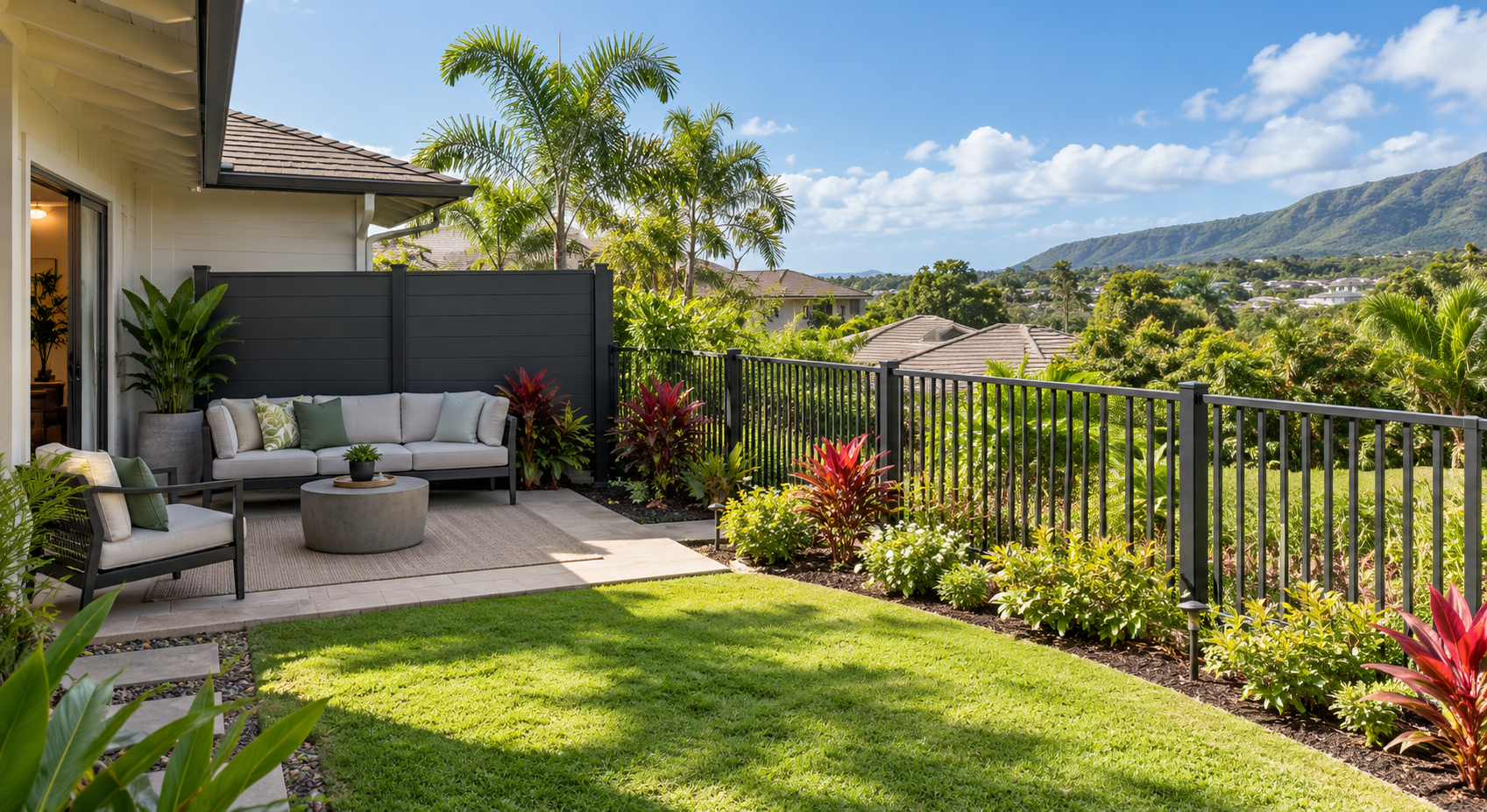
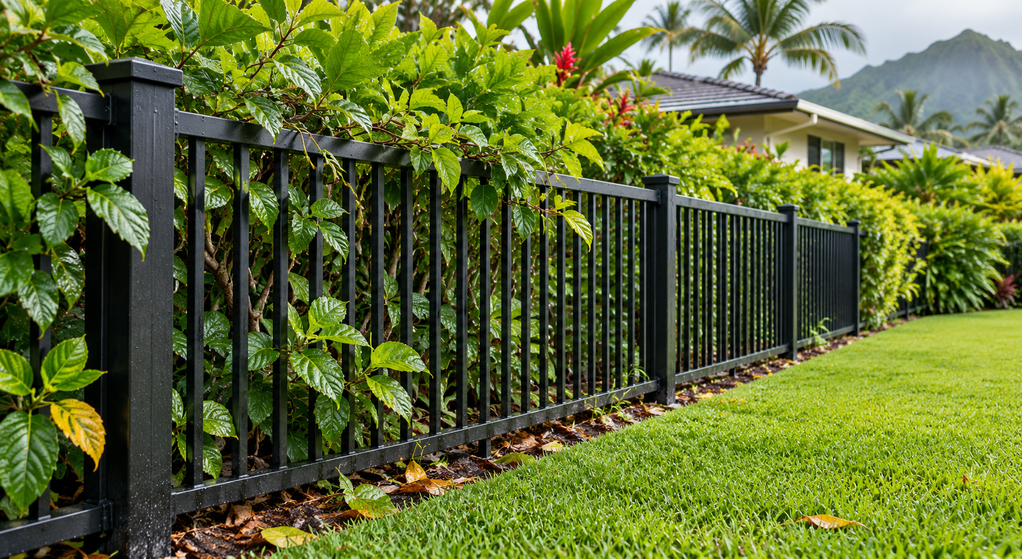
Aluminum is a practical fencing option for offices, retail centers, apartment communities, hotels, and other public-facing commercial properties. It provides a clean appearance, resists rust, and requires less routine maintenance than many traditional metal systems.
Commercial performance, however, depends on more than the material itself. Post size, panel strength, spacing, footings, fasteners, gate connections, and coating quality should reflect the property’s traffic, security requirements, wind exposure, and expected level of use. A system designed for a residential yard may not provide enough strength for a busy commercial perimeter or entrance.
Compatible hardware is also important. Pairing powder-coated aluminum components with poorly protected steel fasteners can create early corrosion at connection points, particularly in wet or coastal locations.
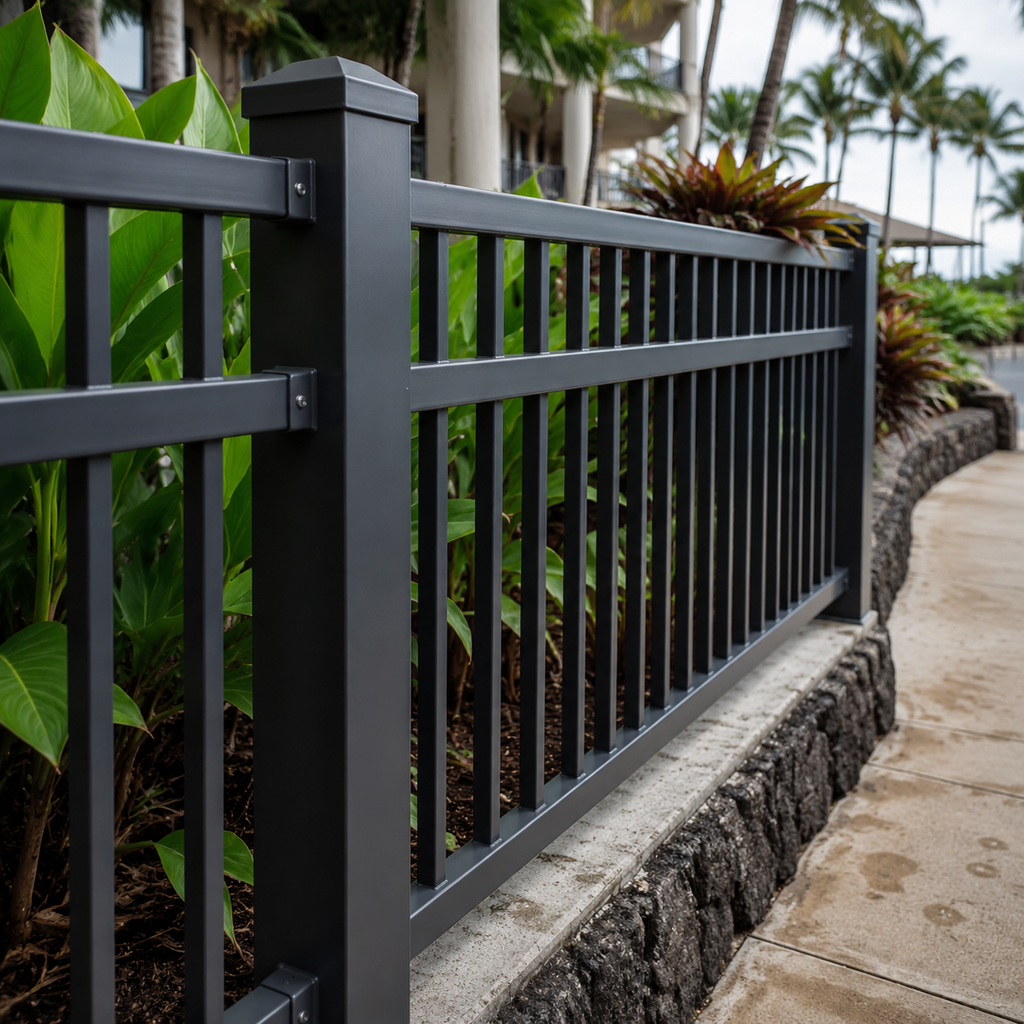
Properly selected hardware and careful installation help protect the fence from premature deterioration.
Aluminum may not be the right choice for every part of a commercial property. Areas exposed to vehicle impact, heavy equipment, or unusually high security risks may require reinforced steel or another more impact-resistant system.
Property managers comparing system requirements can review residential vs. commercial aluminum fencing solutions in Hawaii to understand how material strength, post construction, access control, traffic demands, and security expectations affect the final design.
Chain-Link, Vinyl, and Composite Options
Commercial-grade chain-link remains practical for warehouses, storage yards, utility areas, schools, and equipment enclosures. It covers large boundaries efficiently, allows visibility, and supports controlled access.
The mistake is assuming every chain-link system is commercial grade. Large properties need heavier fabric, stronger terminal posts, durable tension hardware, and corrosion-resistant coatings. Vinyl-coated or properly galvanized components generally perform better than lightly protected materials in Hawaii’s coastal environment.
Privacy slats can be added, but they increase wind pressure. The same fence may require stronger posts and larger footings once slats are installed.
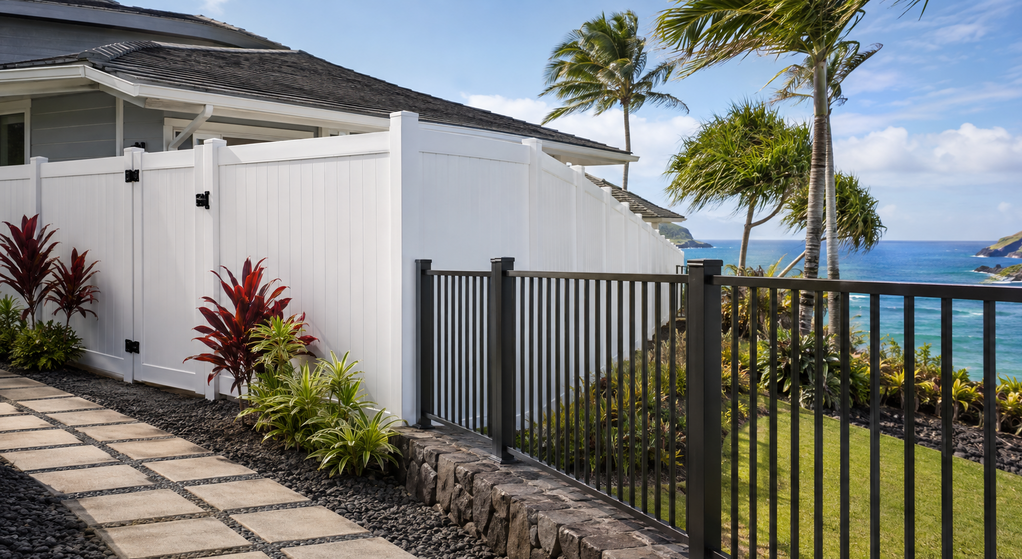
Vinyl and composite fencing work well around restaurants, multifamily properties, pool areas, and service zones requiring visual screening. These materials resist rot and avoid many corrosion concerns associated with metal panels.
Based on hands-on experience, poor privacy-fence performance often comes from oversized spans, weak posts, or solid panels installed without enough consideration for wind. Exposed locations may require closer post spacing, deeper footings, internal reinforcement, or a partially open design.
Steel Fencing for High-Security Properties
Steel is appropriate for industrial properties, equipment yards, controlled entrances, and sites requiring heavy-duty gates. It offers greater strength than aluminum but demands more attention to corrosion prevention.
Untreated or poorly coated steel is a poor long-term choice in Hawaii. Welds, cut edges, scratches, and damaged coatings often become starting points for rust. Galvanizing, suitable coating systems, sealed connections, and prompt touch-up work can extend service life.
Steel is the correct choice when strength is essential, but owners must accept its higher maintenance requirements.
Posts, Footings, and Drainage Determine Longevity
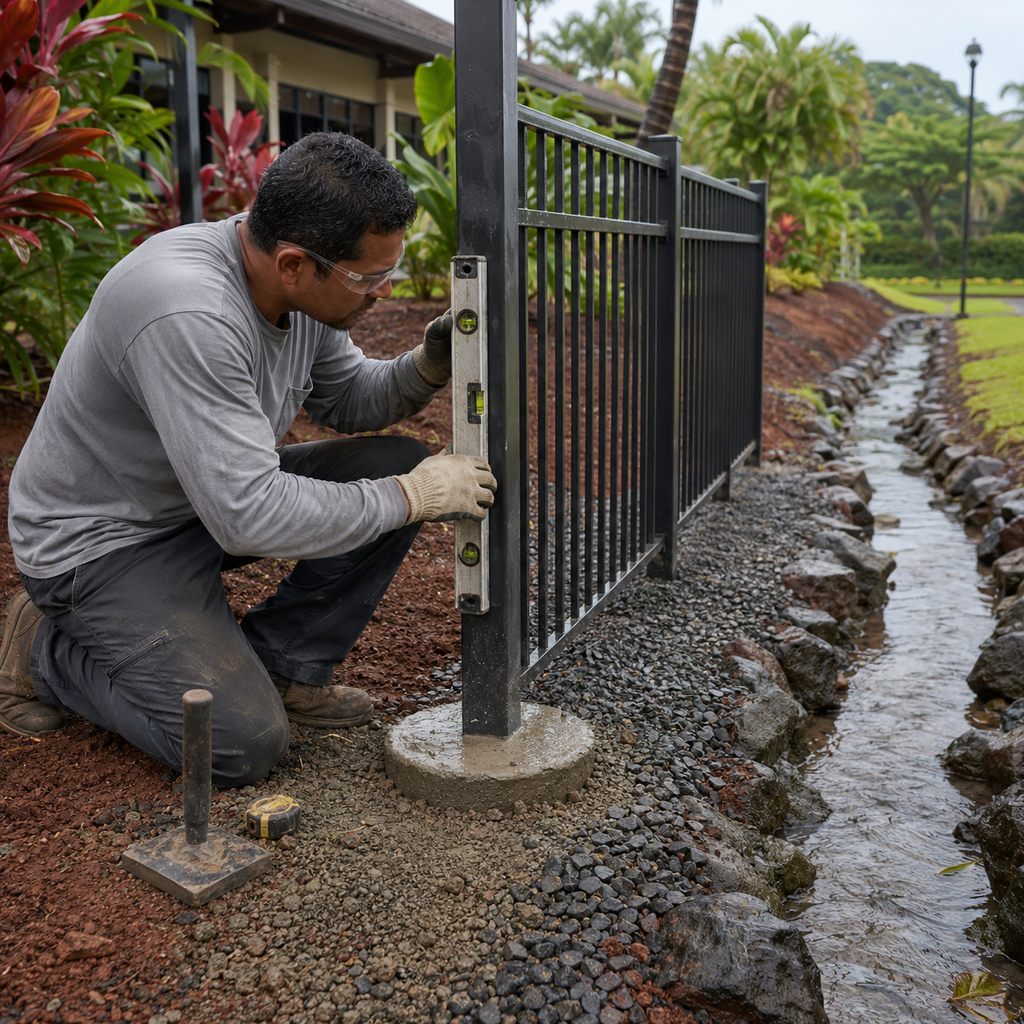
Premium fence materials still fail when posts are poorly supported. Footing dimensions, embedment depth, post spacing, alignment, and soil conditions determine whether a fence stays upright.
Hawaii commercial sites may include sloped ground, wet soil, fill material, and areas where runoff collects. Water should not remain around post foundations or sliding-gate tracks. Erosion should be corrected before it removes support from the fence line.
A sound installation process reviews grade changes, drainage paths, gate loads, wind exposure, and underground utilities before posts are set. This preparation strongly affects durability.
Commercial Gates Need Separate Planning
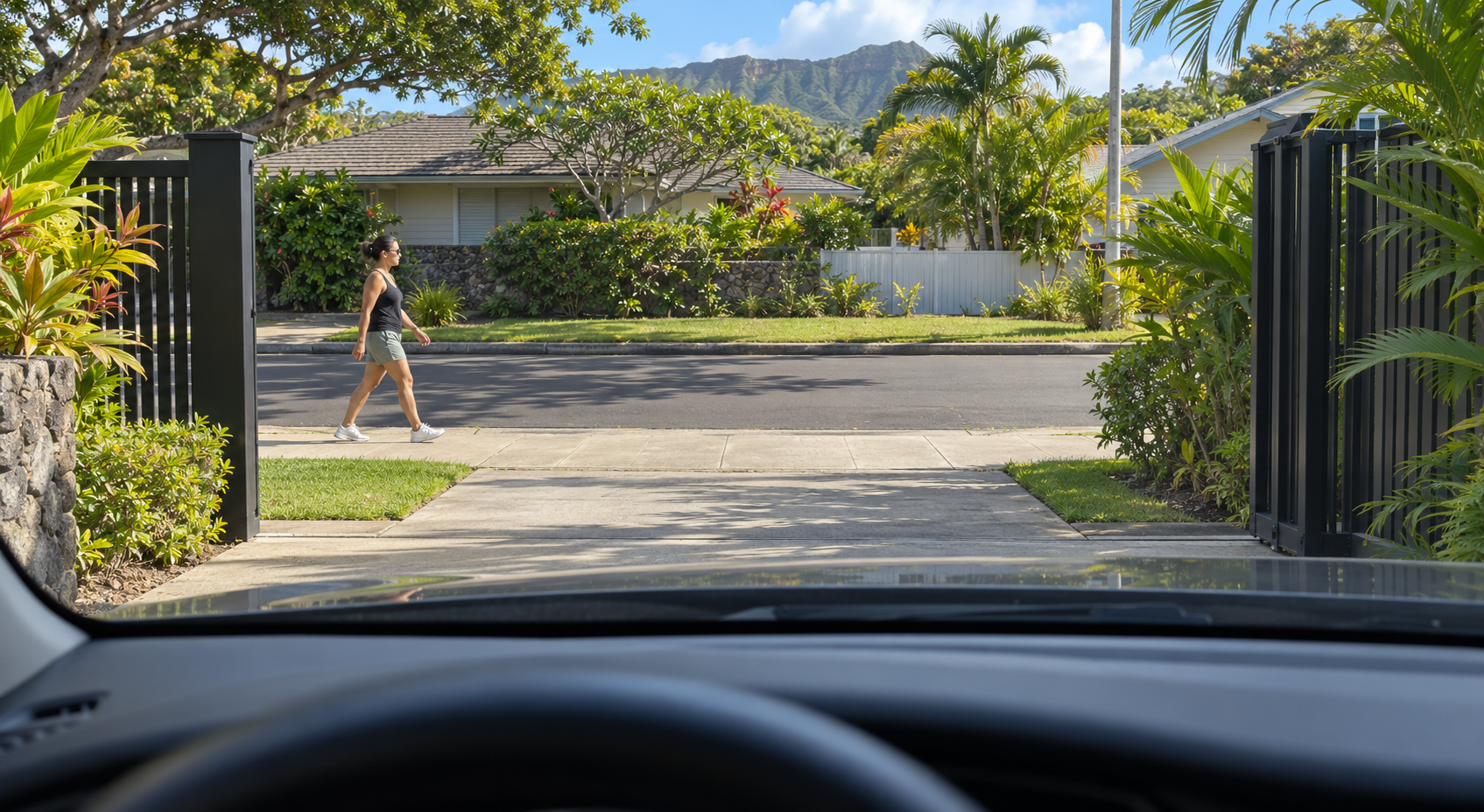
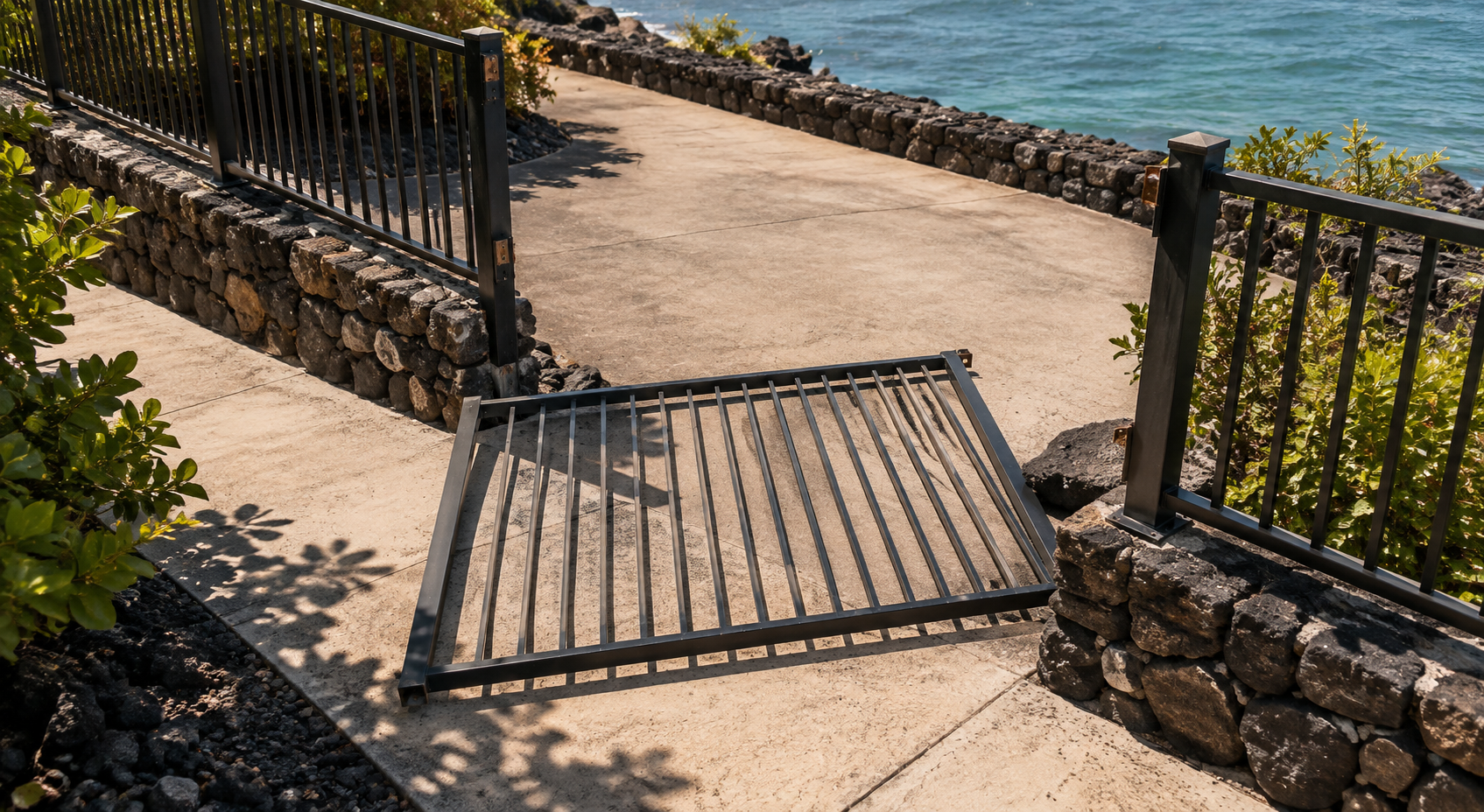
Gates are usually the hardest-working part of a commercial fence. They experience repeated movement, vibration, concentrated weight, accidental impact, and frequent contact with vehicles, employees, tenants, customers, and delivery crews. A strong perimeter can still become unreliable when the gate system is undersized or poorly matched to the site.
Hawaii’s salt air, humidity, rainfall, and wind add another layer of stress. Hinges, rollers, tracks, latches, welds, fasteners, and automated components can deteriorate faster when coatings are damaged or materials are not suited to coastal exposure.
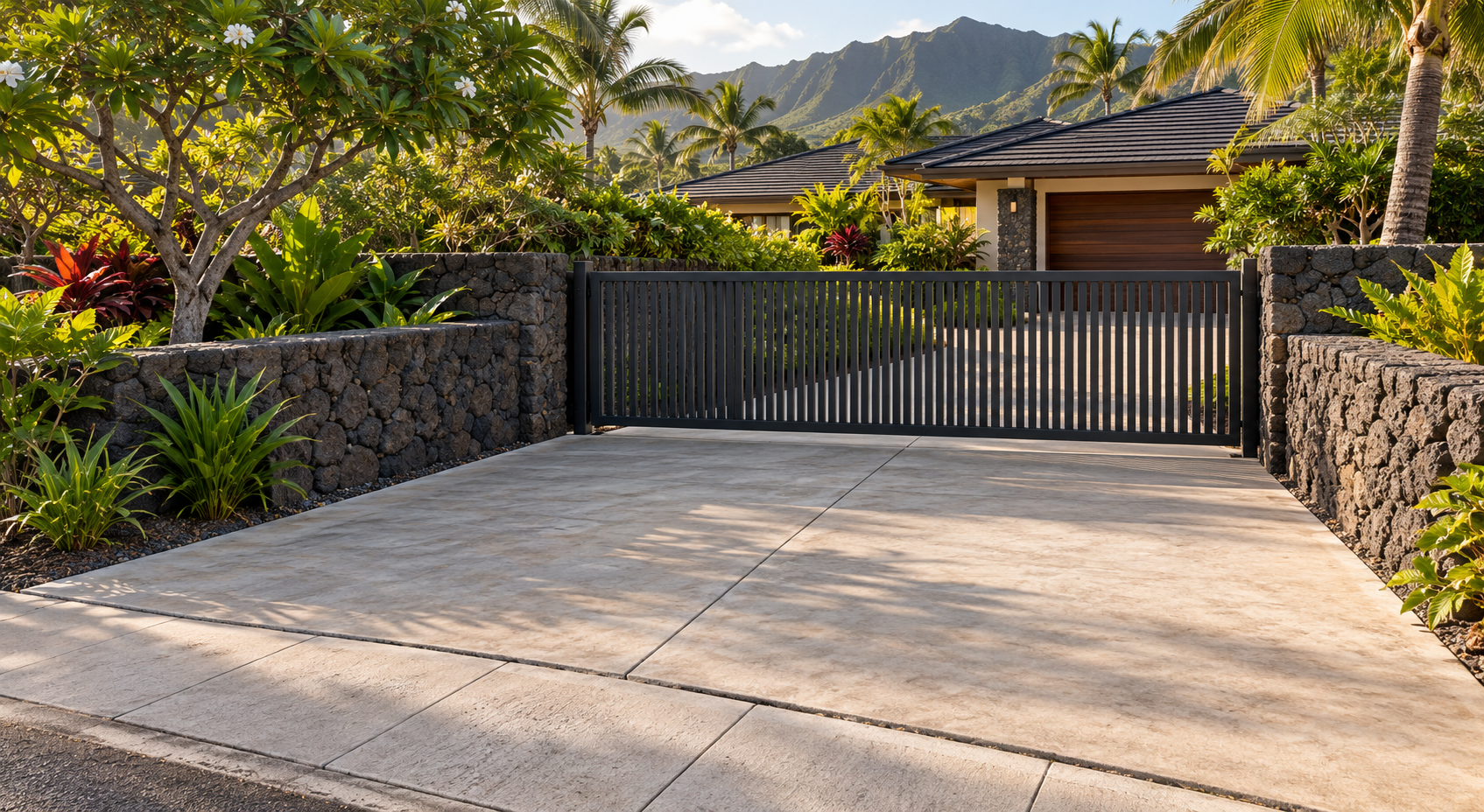
Sliding gates require stable tracks or cantilever support, durable rollers, adequate operating space, and protection from debris or standing water. Swing gates need heavy-duty hinges, braced frames, sufficient clearance, and posts capable of carrying the gate’s weight through repeated use.
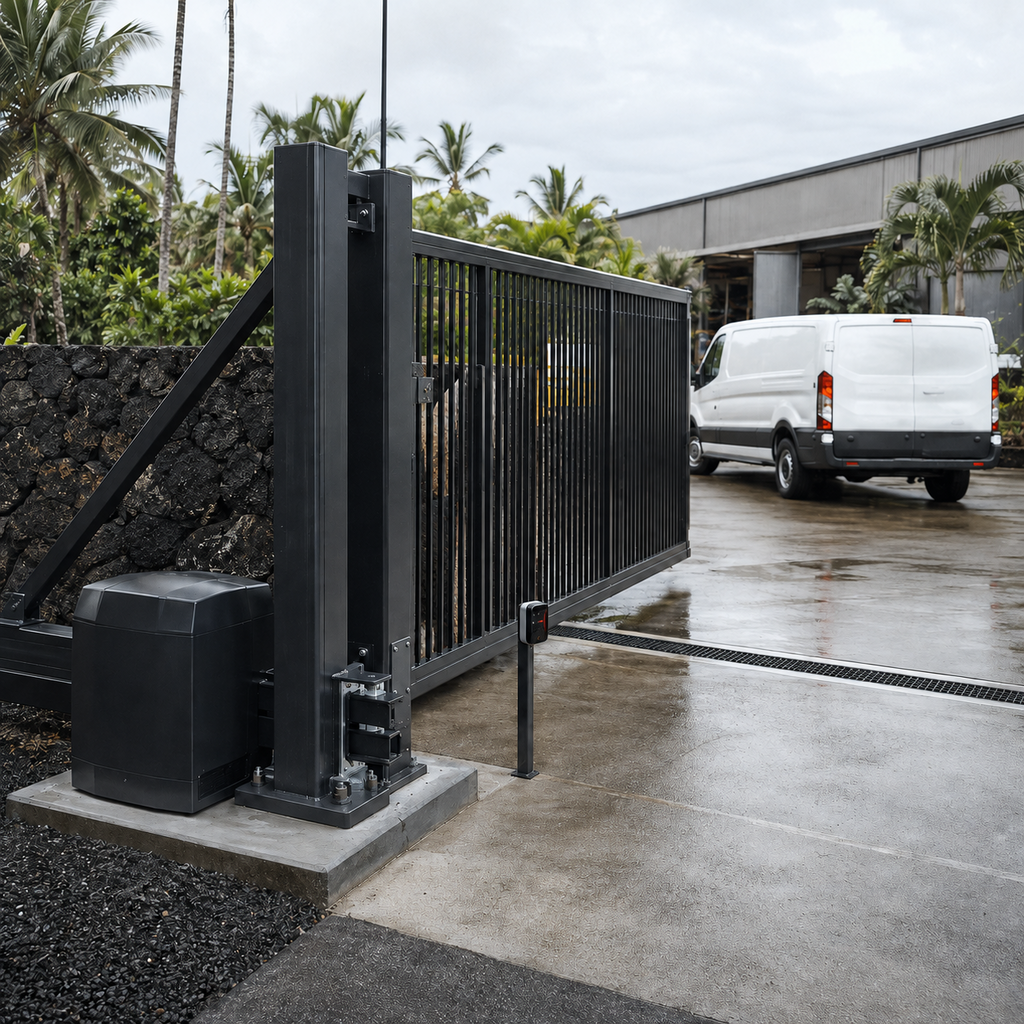
Automatic systems also require appropriate access controls, manual-release provisions, safety devices, and protection from vehicle contact. Residential-grade hardware should not be used for a busy commercial entrance. Every component should match the opening width, usage frequency, wind exposure, security requirements, and automation demands of the property.
Maintenance Should Be Planned
Salt residue should be rinsed from exposed surfaces, damaged coatings repaired, vegetation trimmed, and moving hardware cleaned and lubricated. Property managers should also inspect for loose fasteners, leaning posts, erosion, rust near welds, debris in gate tracks, and alignment changes.
Small problems are easier to correct before they weaken the entire system. Delayed maintenance often turns a minor issue into a structural repair.
Choose the Fence as a Complete System
The best commercial fence in Hawaii is the one matched to the property’s actual conditions. Aluminum suits sites where appearance and corrosion resistance matter. Chain-link is practical for large secure boundaries. Vinyl and composite provide privacy. Steel delivers greater strength for demanding locations.
Before installation, define the security level, privacy needs, gate traffic, wind exposure, drainage conditions, and maintenance expectations. Then evaluate the panels, posts, footings, hardware, and gates as one system. That approach gives commercial property owners a clear path toward fencing that remains stable, functional, and appropriate for Hawaii’s environment.

written by
Kurt Manalastas
Property Security & Exterior Improvement Journalist
Kurt creates research-based content focused on fencing solutions, property security, and outdoor boundary improvements. By combining industry best practices, material insights, and practical property protection strategies, he helps homeowners and business owners make informed decisions about building safer, more secure, and visually appealing outdoor spaces.