How to Improve Gate Visibility and Safety Near the Street in Hawaii
Summary
Improving street-side gate safety starts with clear views, enough room for vehicles to wait, and predictable gate movement. For Oahu properties, assess the driveway from the driver’s seat and the pedestrian approach, then address blocked sightlines, gate placement, lighting, vegetation, and maintenance before choosing decorative upgrades or automation.
A gate can look open and welcoming from the street while hiding approaching pedestrians from someone leaving the driveway. The critical question is whether you can see people and traffic before your vehicle crosses their path.
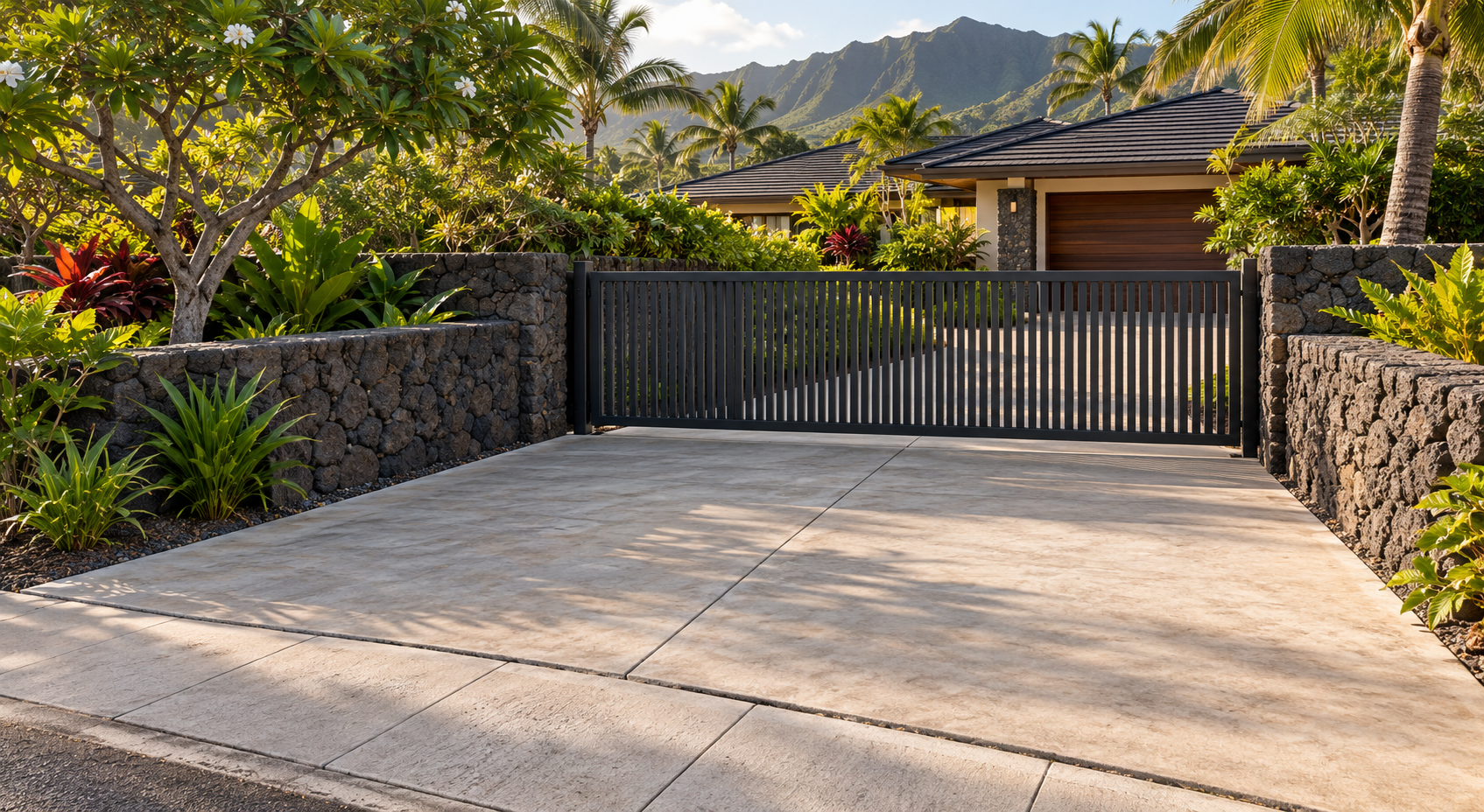
When comparing aluminum fencing and gate options in Hawaii, consider the adjoining fence and posts as carefully as the gate itself. An open gate panel cannot compensate for a solid wall beside the driveway.
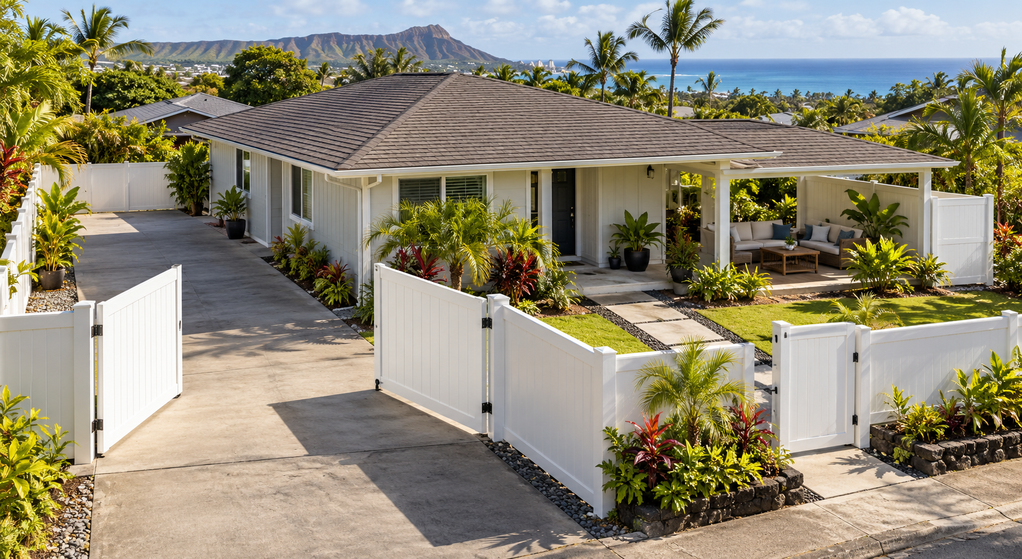
Sunset Hawaii Fencing Company offers aluminum fencing and swing and sliding gate options. Choosing among these configurations starts with the space available and the views that must remain clear.
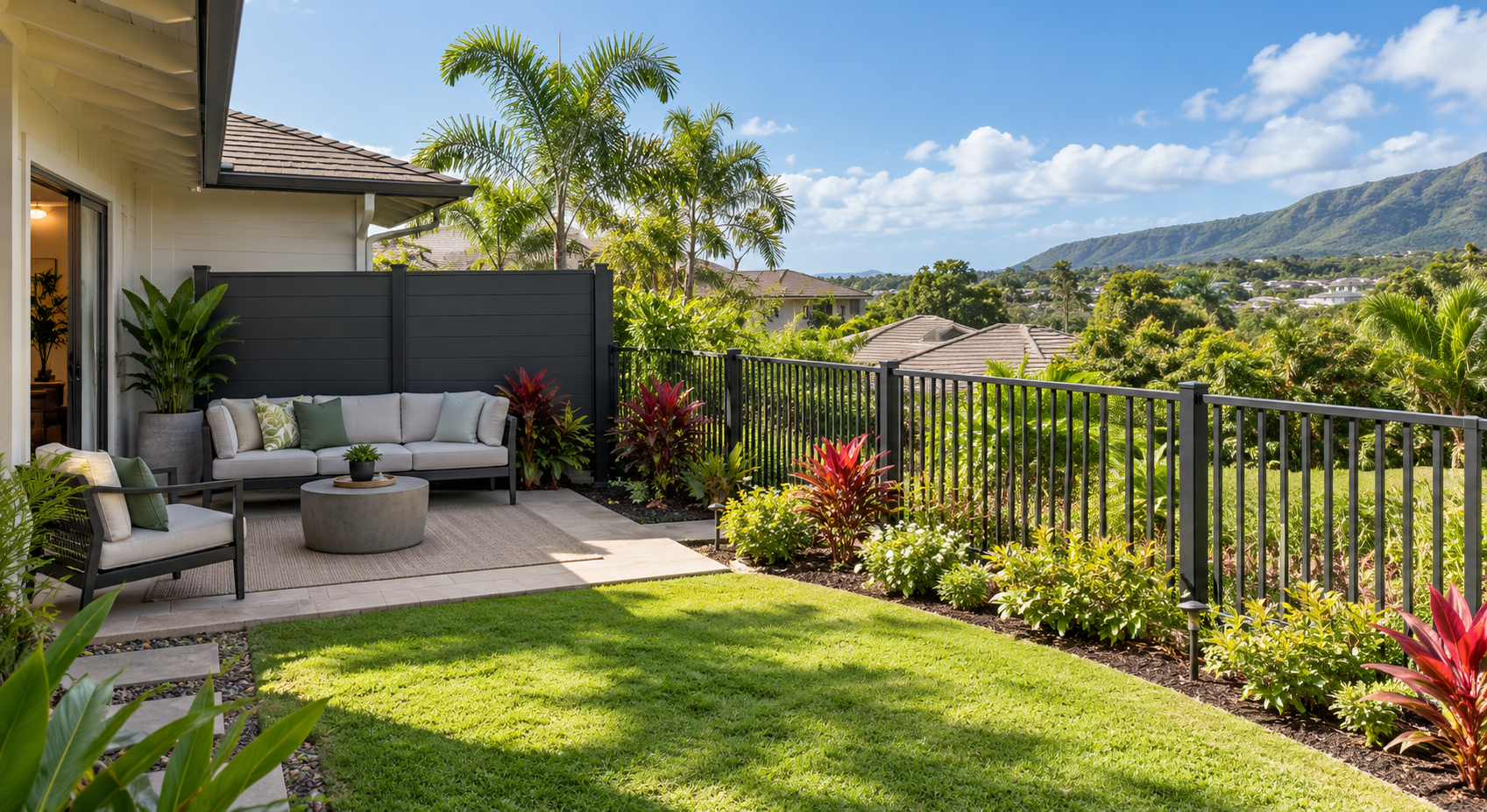
For a broader layout review, planning a fence around driveways, walkways, and outdoor living areas in Hawaii helps connect the entrance with the routes people use inside the property. Include a pedestrian route that does not require visitors to pass through a moving vehicle gate.
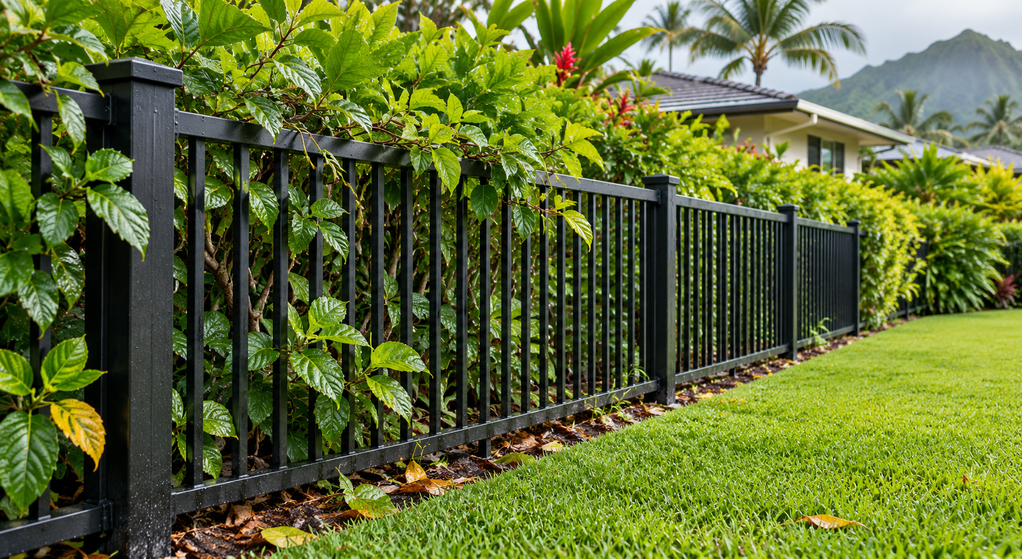
The guide to preventing rust, warping, and wear on gates in Hawaii’s climate explains how hardware condition can undermine alignment and dependable operation.
Check the View Before the Vehicle Reaches the Sidewalk
Park securely within your driveway and assess visibility from your normal seated driving position. Do this with the gate fully open, looking toward both pedestrian approaches and both directions of traffic. Keep the vehicle out of the sidewalk and roadway during the assessment.
Identify what blocks each view: a gatepost, hedge, mailbox, parked vehicle, neighboring wall, or the open gate leaf itself. A photograph from standing height can miss an obstruction that matters from a lower car seat.
Check more than the center of the driveway. Your position changes as you turn, and closely spaced bars may appear almost solid from an oblique angle. Sloped Oahu driveways also deserve attention because the vehicle’s angle changes the driver’s view.
If you must nose into the pedestrian route to see approaching traffic, treat that as a layout problem requiring professional assessment. A mirror may offer supplementary information, but it should not be the sole basis for deciding whether the way is clear.
Preserve Privacy Where It Does Not Block the Exit View
Full-height privacy panels near the driveway mouth can hide someone approaching along the property frontage. Consider whether privacy can be concentrated farther inside the property while the entrance uses a more open design.
Possible changes include repositioning planting,
narrowing oversized decorative columns, or
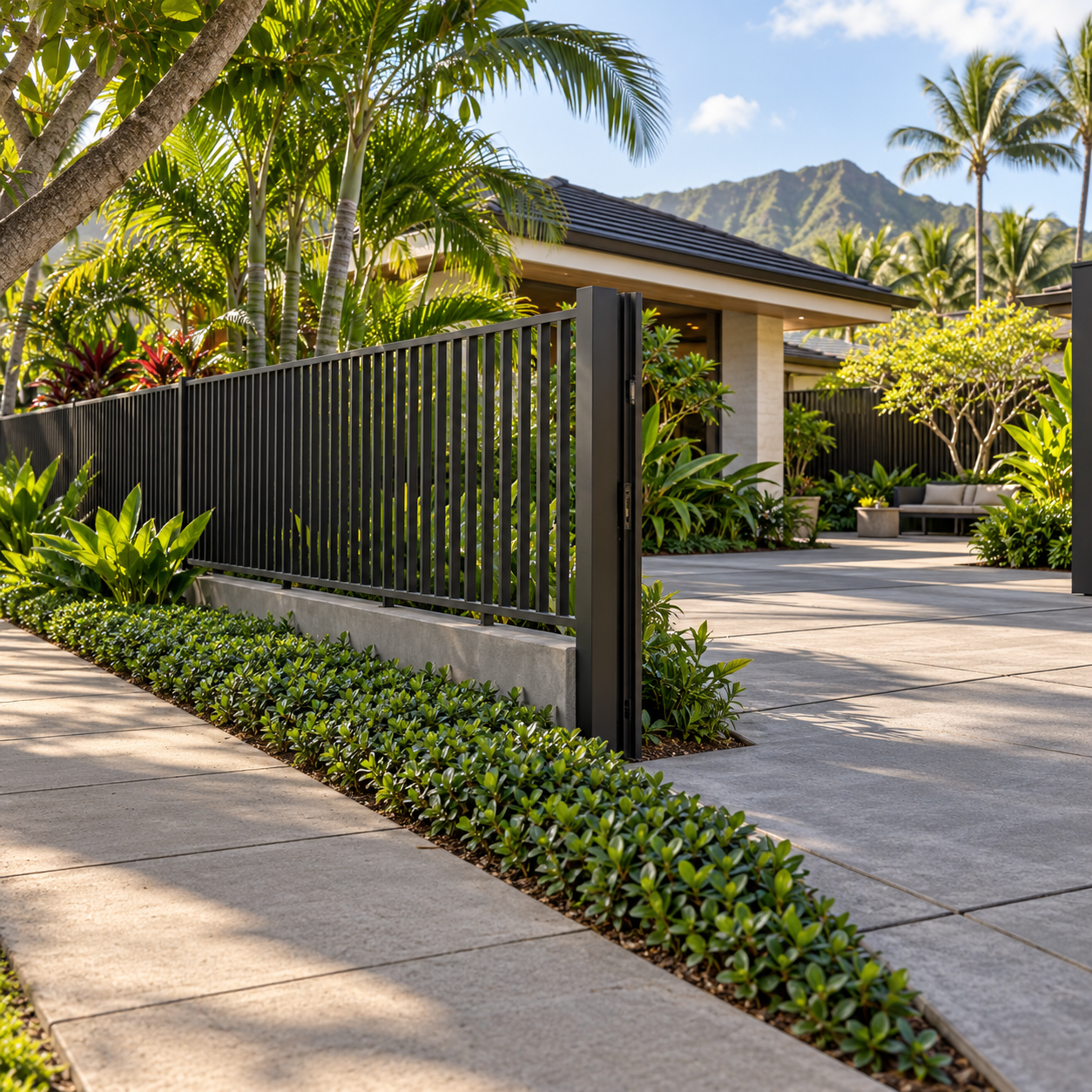
changing the adjacent fence section. Compare the actual viewing angles before selecting a replacement. Horizontal louvers, for example, can provide very different visibility depending on their orientation.
Avoid simply removing bars or widening gaps in an existing powered gate. Changes can affect containment, strength, and access to moving components. Have the complete assembly reviewed before modifying it.
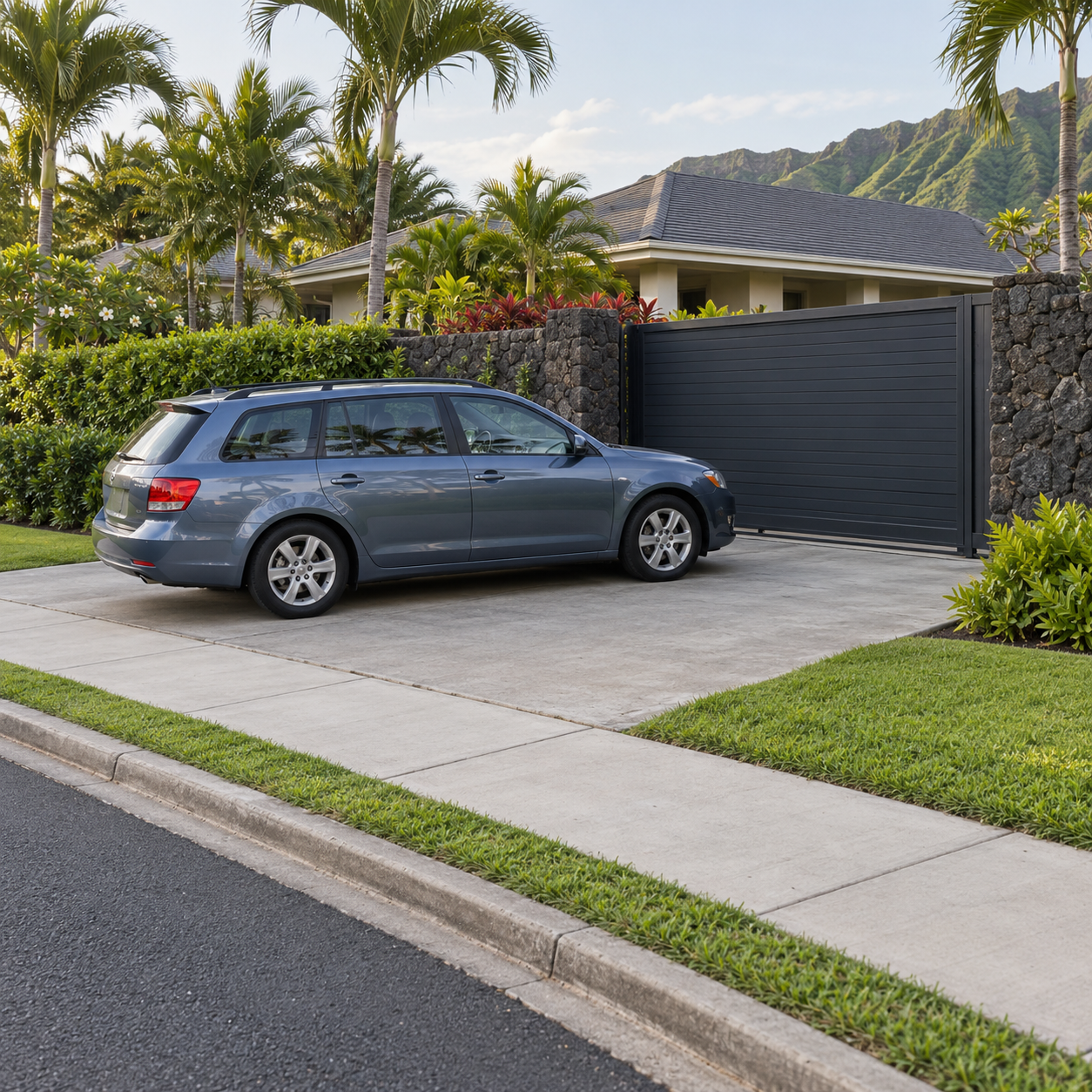
Make Room to Wait Without Blocking the Walking Route
A vehicle arriving at a closed gate needs somewhere to wait. Measure using the longest vehicle that regularly visits, including its rear overhang. Check whether it can stand fully clear of the sidewalk and street while someone operates the entrance.
Moving the gate inward may improve waiting
space, but the new location must also work with parking, turning, and the property’s grade. An inward-swinging gate needs a clear arc; a sliding gate needs suitable lateral space. Neither configuration automatically solves a cramped entrance.
Treat Powered-Gate Safety as a Separate Design Task
Clear street views do not protect someone from being trapped between a moving gate and a post, wall, or fence. The U.S. Consumer Product Safety Commission’s automatic security gate safety guidance highlights entrapment protection, guarded rollers, reduced pinch points, and controls positioned where users can see operation without contacting the gate.
Ask a qualified gate installer to assess the entire system against current applicable standards and the equipment manufacturer’s instructions. That includes the opening and closing paths, protective devices, control locations, and pedestrian access.
Keep people clear during operation. Do not test safety devices with your body or bypass a sensor because it repeatedly interrupts movement. Unexpected motion or unreliable stopping warrants stopping use and arranging service.
Light the Entrance From Both Sides
After dark, check whether someone approaching on foot can distinguish the gate, posts, and driveway edge. Then check the same area from a parked vehicle. A bright fixture facing the driver can make the entrance harder to read.
Aim shielded lighting toward the walking
surface, latch, and entrance rather than into
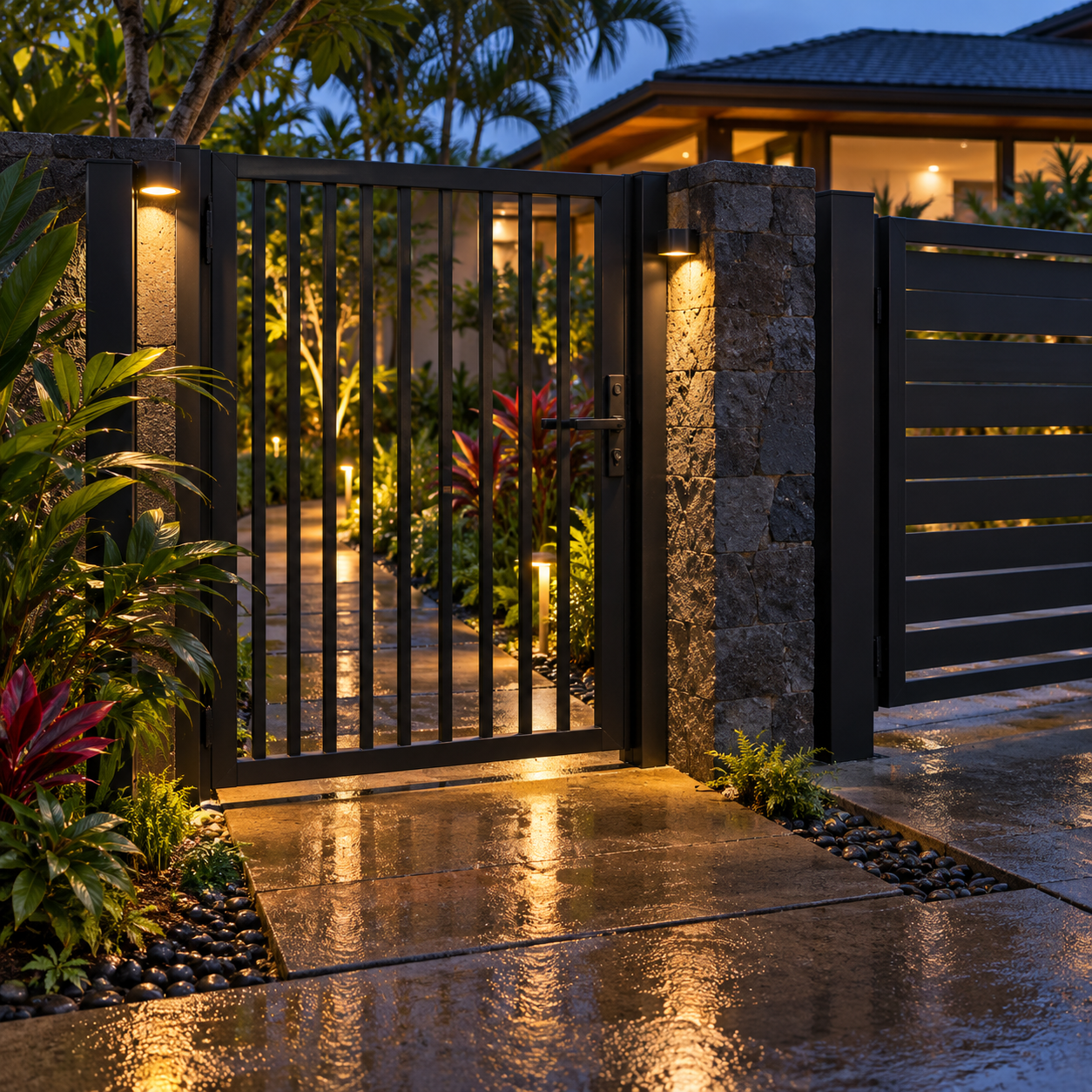
approaching eyes. Observe how wet paving reflects the light after rain, and whether an opening gate creates a deep shadow across the pedestrian route.
Sagging, scraping, loose hinges, or a latch that no longer catches cleanly deserve attention. Follow manufacturer care instructions.
Use clear address numbers and visible gate edges where appropriate. These help visitors identify the entrance, but do not replace adequate sightlines or lighting.
Keep the Original Clearances Clear
Recheck the entrance after vegetation growth, landscaping changes, and new parking arrangements. On exposed coastal properties, include hardware condition in the review rather than concentrating only on the gate panels.
Before requesting changes, prepare a simple sketch showing obstructions, vehicle waiting space, pedestrian routes, and the gate’s full travel. Photograph the driver’s view in daylight and after dark. Use those observations to prioritize the entrance: clear views first, workable movement and waiting space next, then finishes and appearance.

written by
Kurt Manalastas
Property Security & Exterior Improvement Journalist
Kurt creates research-based content focused on fencing solutions, property security, and outdoor boundary improvements. By combining industry best practices, material insights, and practical property protection strategies, he helps homeowners and business owners make informed decisions about building safer, more secure, and visually appealing outdoor spaces.