Fence Materials in Hawaii: What Lasts Best Near Salt Air?
Best Coastal Choices
High-quality vinyl generally lasts best near Hawaii’s salt air when privacy and low maintenance are priorities, while powder-coated aluminum is the stronger choice for open fencing and airflow. Long-term durability still depends on corrosion-resistant hardware, secure posts, proper drainage, quality coatings, and installation suited to the property’s exposure.
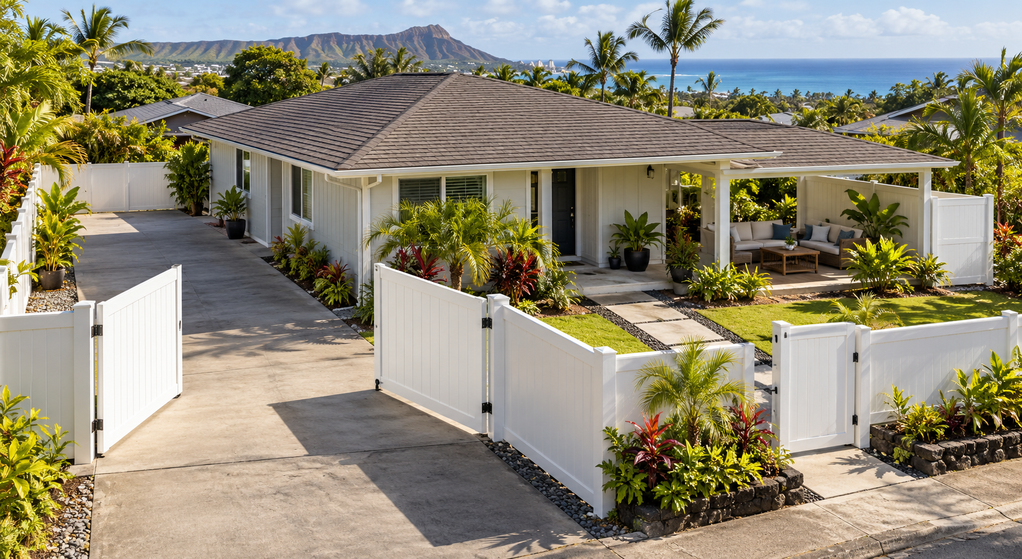
A fence that performs well in a dry mainland climate can deteriorate quickly near Hawaii’s coastline. Salt carried by ocean air settles on panels, posts, screws, hinges, and welds, while humidity keeps those deposits damp. Homeowners considering vinyl fencing services in Hawaii can benefit from a material that resists moisture and corrosion when privacy and lower maintenance are the main priorities. Powder-coated aluminum remains the stronger option where visibility and airflow matter more.
For most residential properties near salt air, high-quality vinyl is the strongest all-around choice. Powder-coated aluminum is better when visibility, airflow, or an open design matters. Ordinary steel and poorly protected wood rank lower because they require more maintenance and tolerate coastal exposure poorly.
Why Hawaii’s Salt Air Changes the Material Decision
Based on hands-on fencing and masonry experience across Oʻahu, Sunset Hawaii Fencing Company has seen that coastal fence failure often begins at cut edges, scratched coatings, fastener holes, gate hinges, post bases, and connections where moisture collects. The fence must be treated as one complete system rather than a collection of panels.
Hawaii’s Department of Land and Natural Resources has noted that traditional galvanized fencing and T-posts may not withstand corrosion from coastal salt air. Exposure also varies by property. Buildings, vegetation, elevation, prevailing wind, and distance from the ocean can change the severity of chloride exposure.
Vinyl Is the Best Overall Choice for Privacy
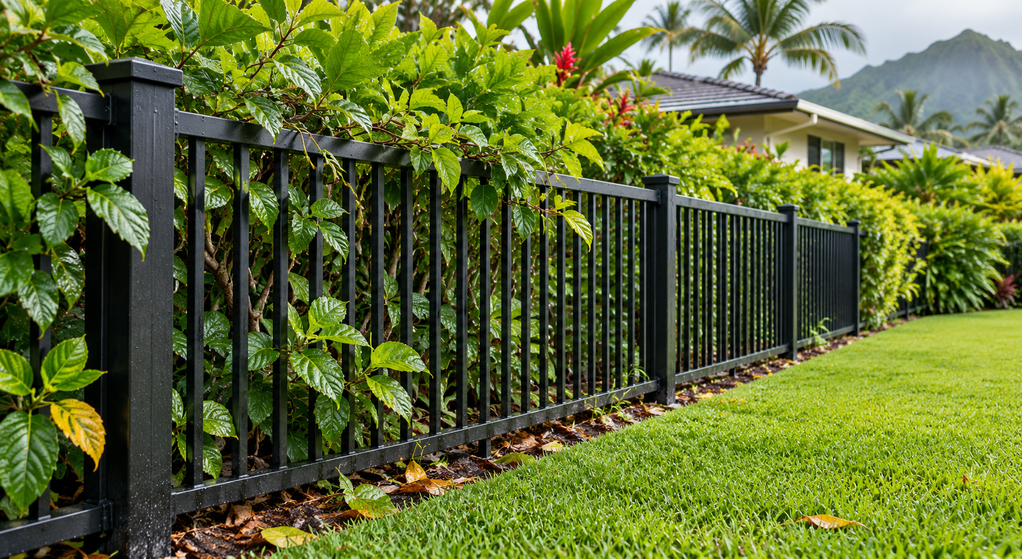
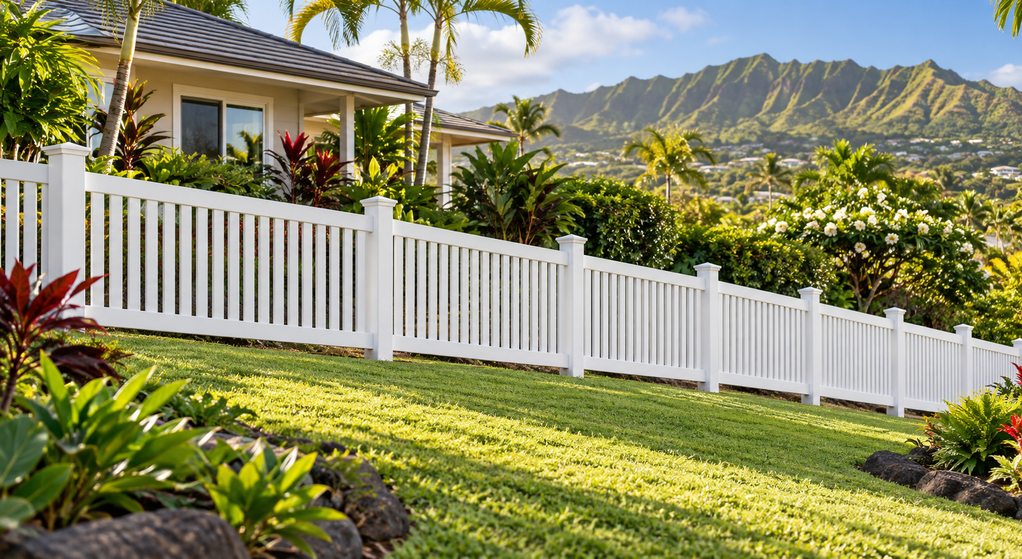
Vinyl deserves the top recommendation for Hawaii homeowners who want privacy with limited maintenance. It does not rust, absorb water like unfinished wood, or require routine repainting. Salt deposits and dirt can usually be removed with freshwater and mild cleaner.
However, vinyl alone does not guarantee durability. Thin panels, weak rails, excessive post spacing, shallow footings, and poorly reinforced gates can still cause leaning or sagging.
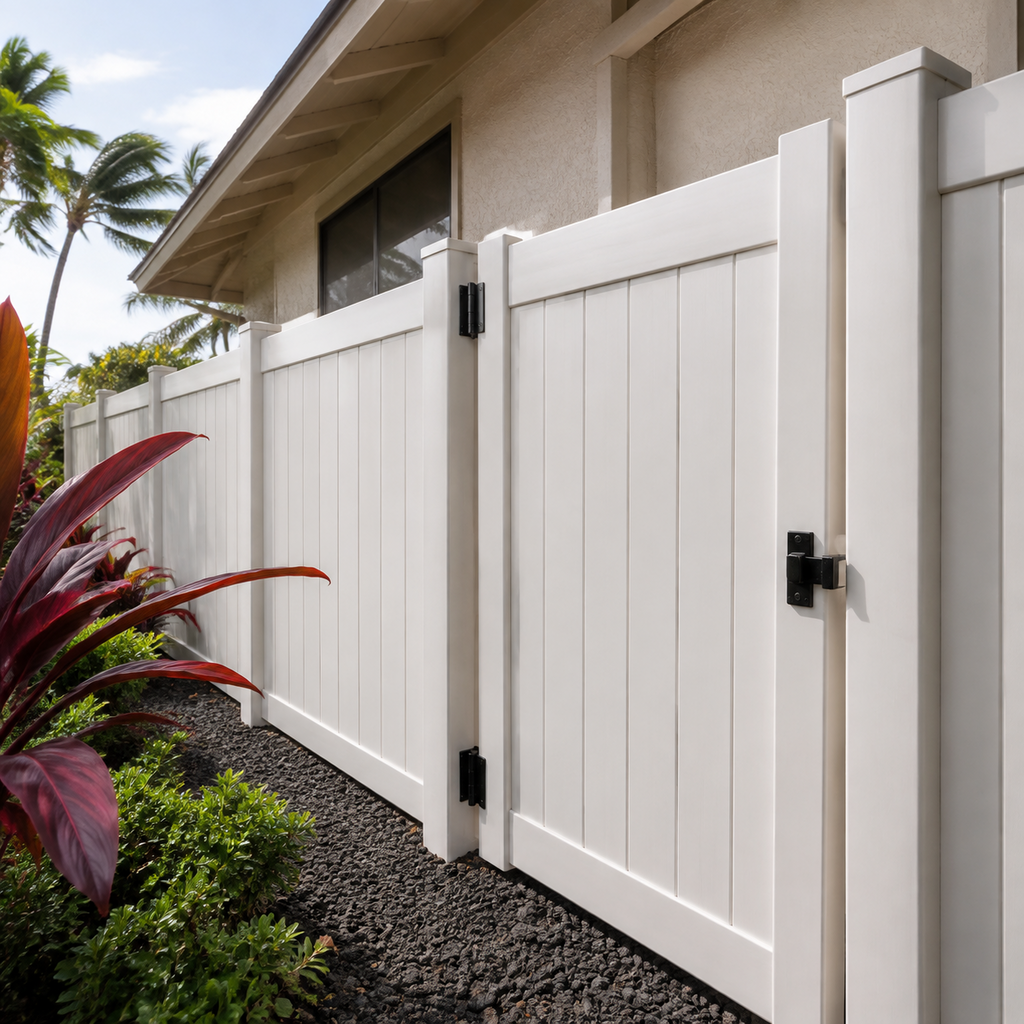
Strong ultraviolet exposure can also reveal the difference between quality exterior vinyl and bargain-grade material.
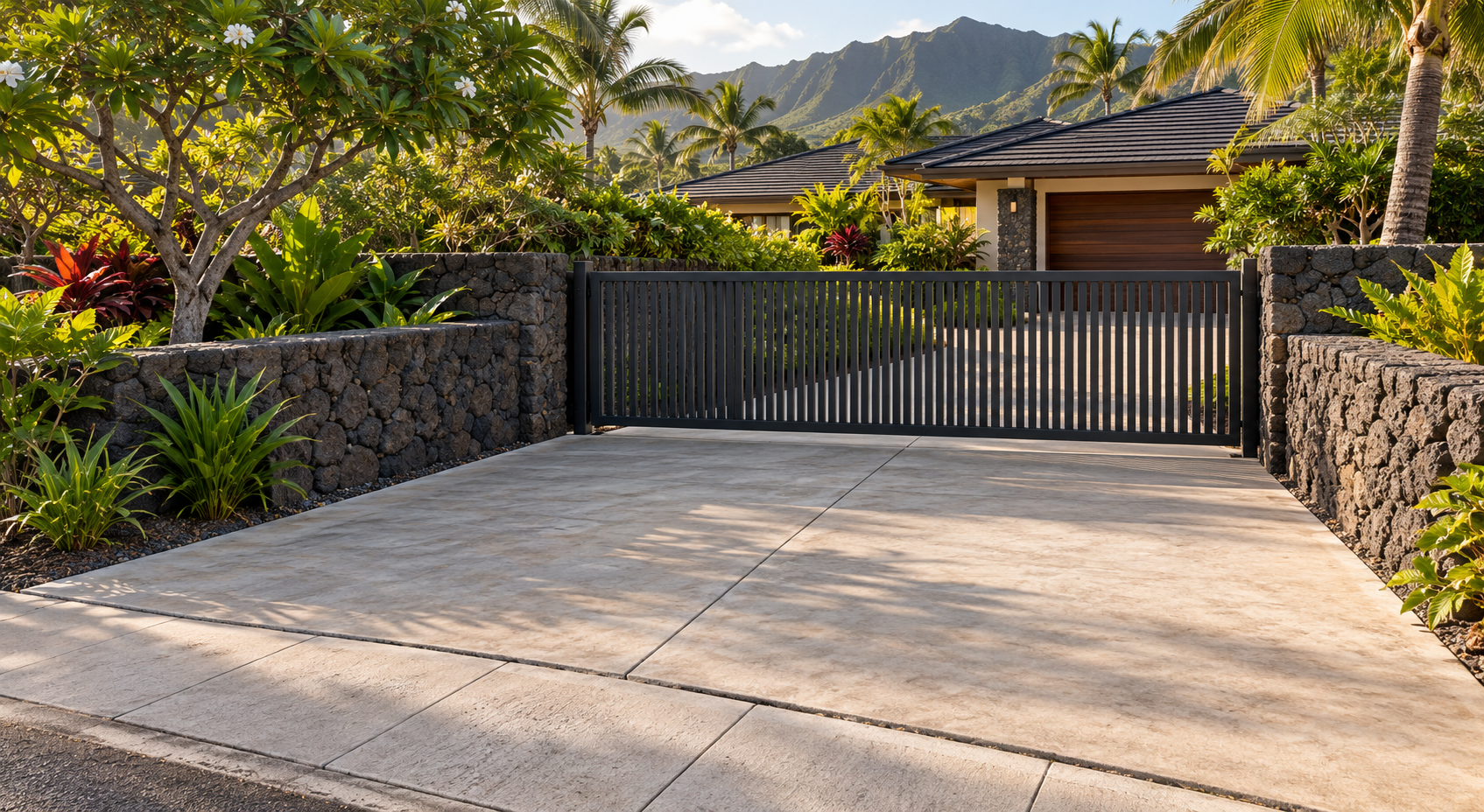
The smarter choice is heavy-duty, UV-resistant vinyl supported by properly sized posts and corrosion-resistant hardware. Gate posts need particular attention because they carry repeated moving loads. Vinyl is the best coastal privacy material only when the supporting structure is equally dependable.
Homeowners can explore why vinyl fencing is a practical choice for Hawaii homes when comparing privacy, maintenance, and coastal durability.
Powder-Coated Aluminum Is Best for Open Fencing
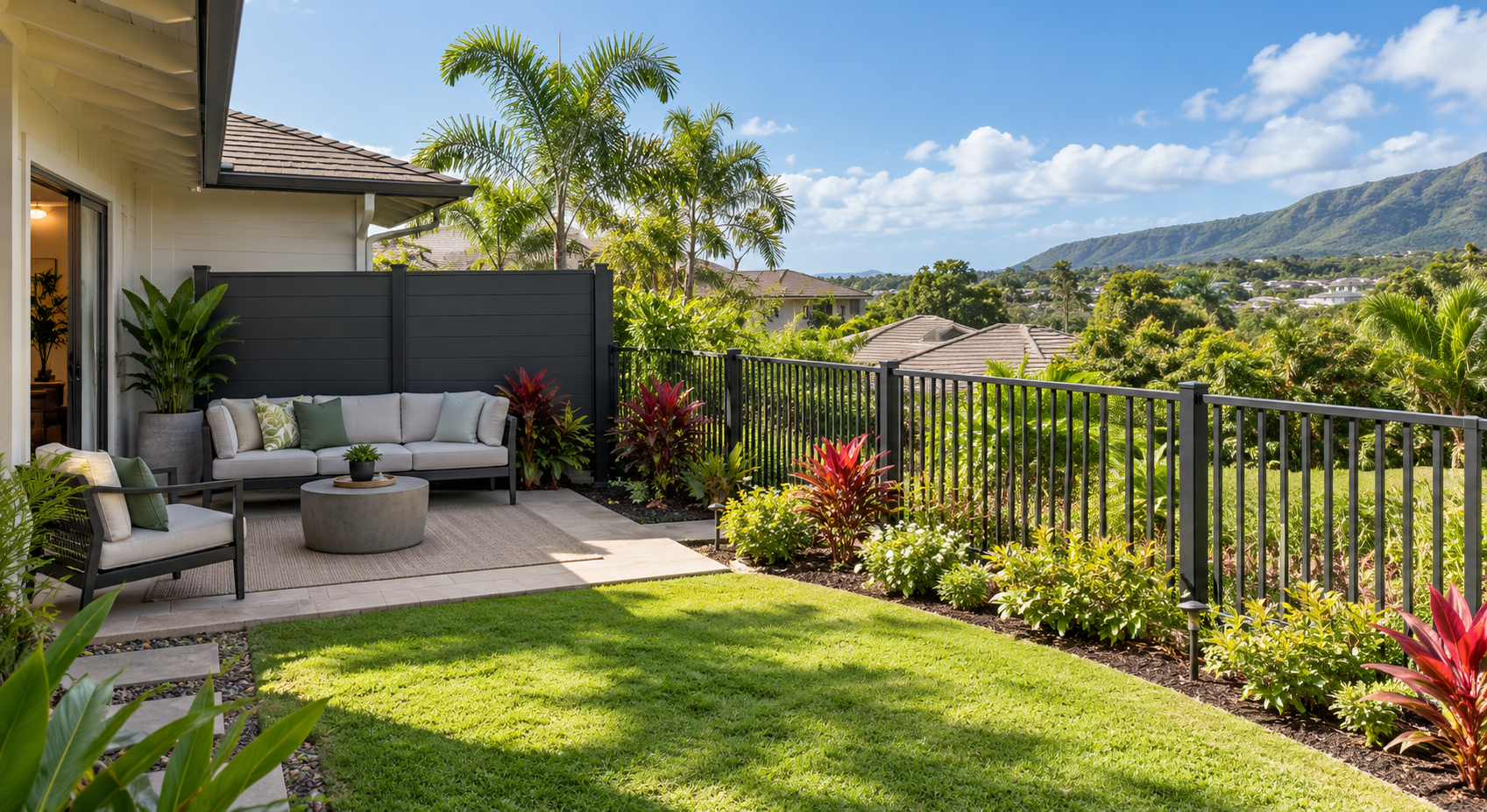
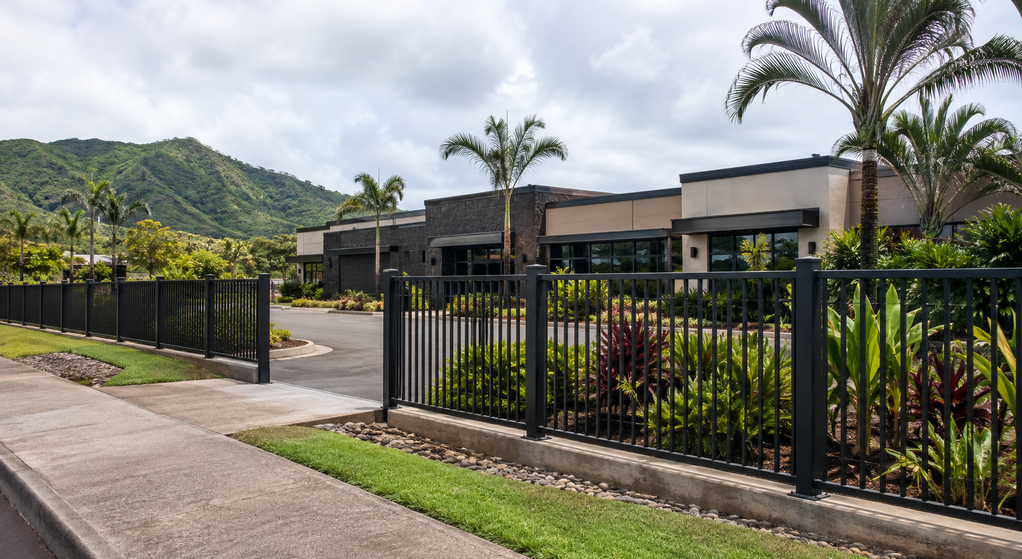
Aluminum is excellent for pool areas, decorative boundaries, and properties where owners want airflow and visibility. It does not rust like ordinary carbon steel, while a properly prepared powder-coated finish adds another protective barrier.
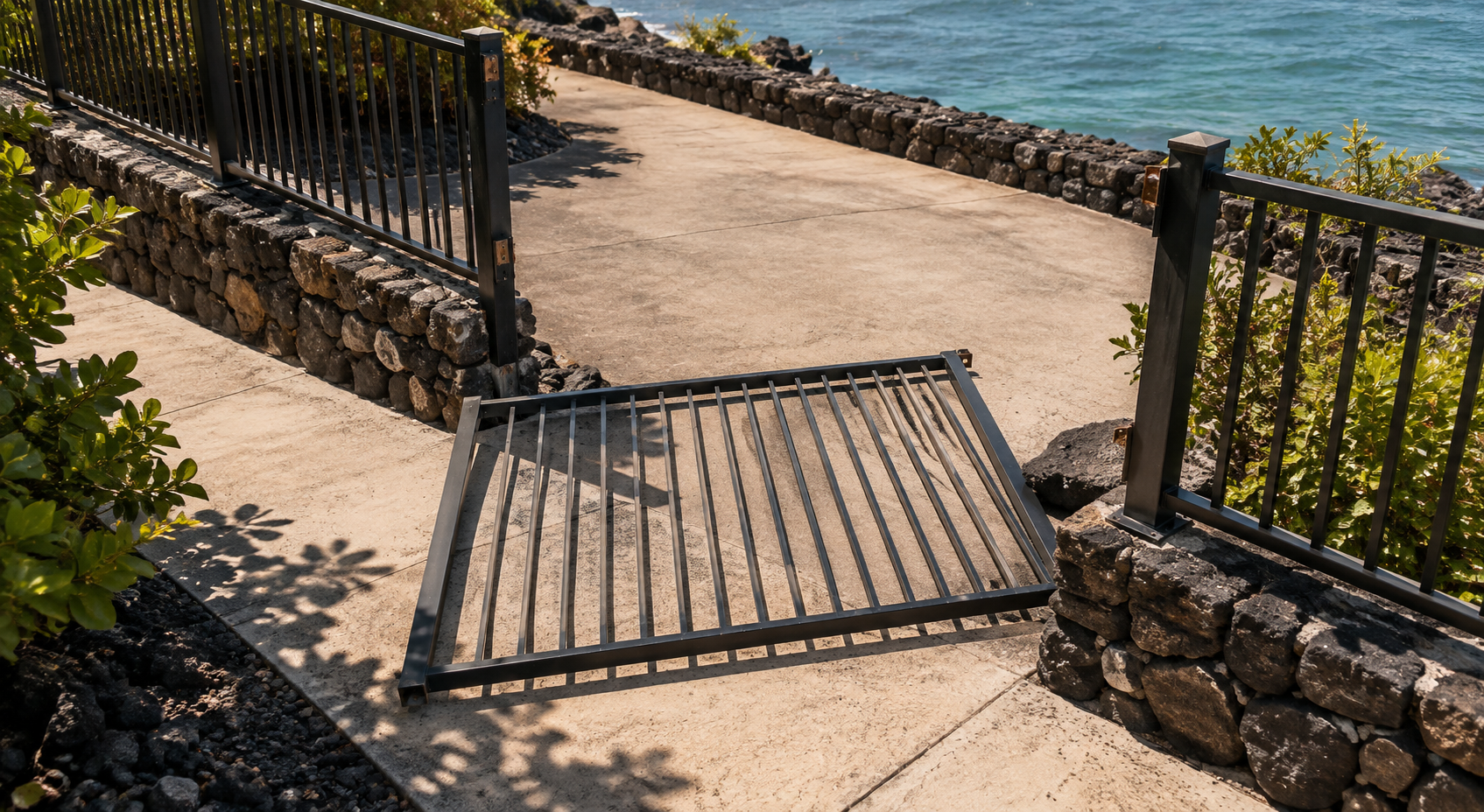
Aluminum is not immune to coastal damage. Scratches, exposed cuts, poor coating preparation, and contact with incompatible metals can create localized corrosion. Hawaii State Parks guidance recognizes that metal railings and fencing in marine environments can be vulnerable and recommends protective painting or powder coating.
It performs best when the finish is factory applied, cut edges are protected, fasteners are compatible, and salt buildup is rinsed away. For an open fence near the ocean, powder-coated aluminum is a better long-term decision than painted steel.
Homeowners can also compare powder-coated aluminum finishes in Hawaii when selecting a durable color and coating.
Composite Is Durable, but Quality Varies
Composite fencing can provide the appearance of wood without the same degree of decay, splitting, or refinishing. It is a legitimate privacy option for owners who dislike vinyl.
Its weaknesses are weight, heat movement, and inconsistent quality. Heavy panels require strong posts and well-designed footings. Dark surfaces may become hot in direct sun, while expansion allowances must follow manufacturer requirements.
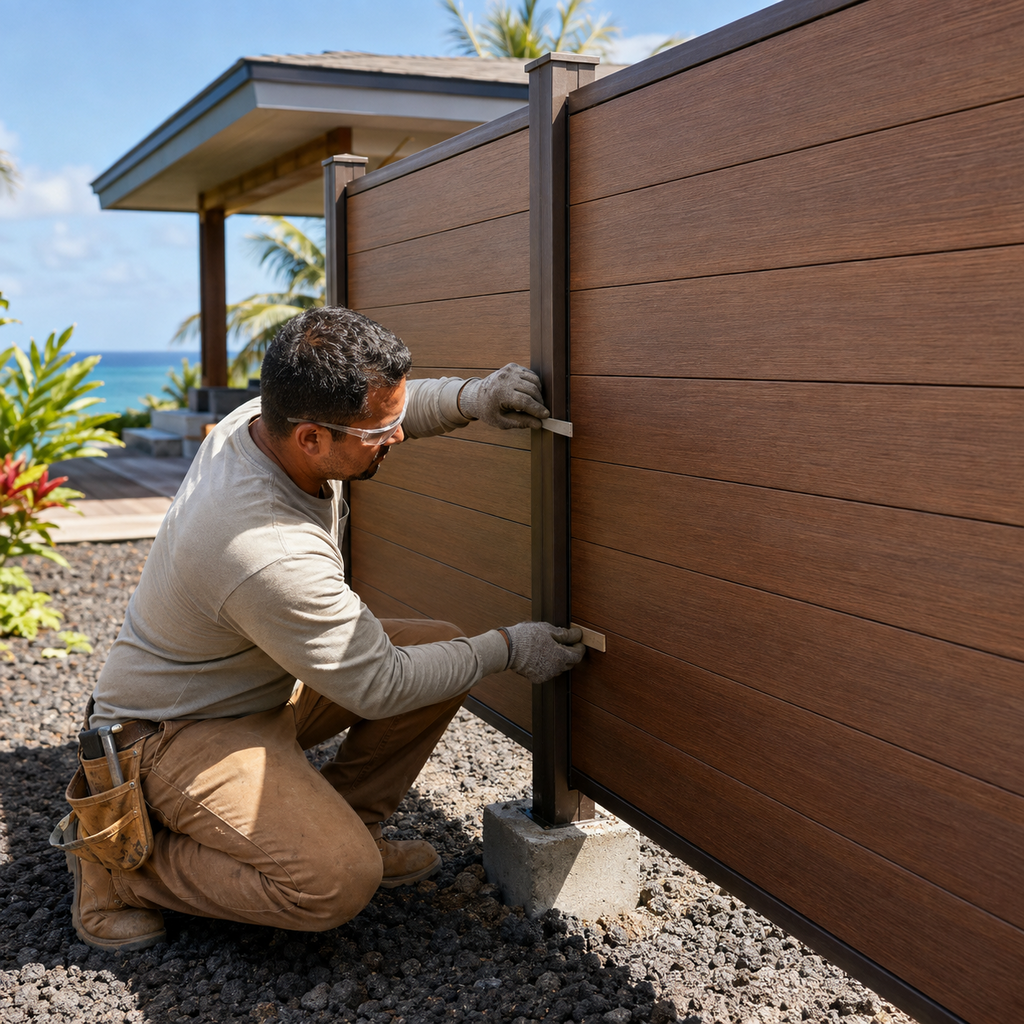
Coastal suitability and warranty terms should be confirmed before purchase. Composite ranks below vinyl because it costs more, places greater loads on the structure, and varies by manufacturer. A proven exterior-grade system can perform well, but an unknown product should not be trusted simply because it is labeled composite.
Wood Requires the Most Commitment
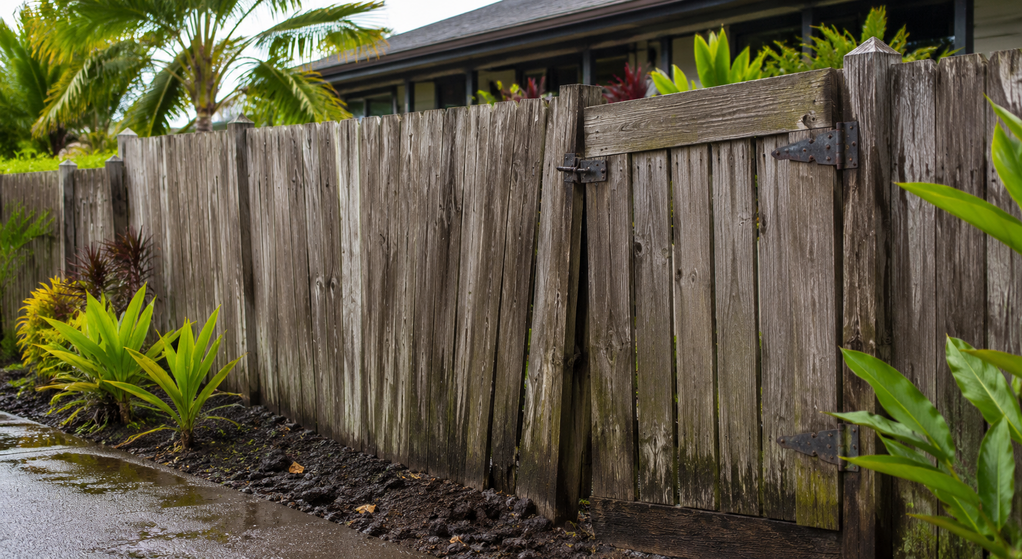
Wood can look natural and appropriate in Hawaii, but it is not the best low-maintenance material near salt air. Moisture, ultraviolet exposure, insects, end-grain absorption, and ground contact can shorten its life when treatment or upkeep is inadequate.
Posts should be pressure-treated for their intended exposure, especially when contacting soil. Cut ends and drilled holes also need protection. The American Wood Protection Association uses different treatment categories according to whether wood is above ground, in ground contact, or exposed to more severe conditions.
Common mistakes include burying unsuitable lumber, allowing irrigation to soak post bases, using interior-grade fasteners, and delaying resealing until boards split. Wood remains a reasonable aesthetic choice, but owners must accept regular inspection, cleaning, coating, and occasional replacement.
Galvanized Steel and Chain-Link Need Better Protection
Chain-link is practical for commercial enclosures, utility areas, pet containment, and long boundaries. The problem is that basic galvanized steel should not be assumed to last indefinitely near the shore.
Heavy hot-dip galvanizing protects better than bare or lightly coated steel, but severe salt spray still accelerates deterioration. The American Galvanizers Association advises additional evaluation for structures within about 250 feet of the coast because marine splash and heavy salt spray are aggressive exposures.
Polymer-coated chain-link, heavy galvanized framing, sealed cut areas, and upgraded hardware justify their added cost. Rust often begins at fittings, tension bands, welds, and damaged surfaces, so those areas deserve close inspection.
Hardware Can Undermine the Entire Fence
A costly mistake is combining a corrosion-resistant panel with cheap screws, hinges, brackets, or latches. Once hardware rusts, gates sag, connections loosen, and staining spreads across otherwise serviceable material.
FEMA guidance for coastal construction recommends corrosion-resistant fasteners and connectors, including stainless steel or sufficiently protected hot-dip galvanized components. It also stresses compatibility between connectors and fasteners.
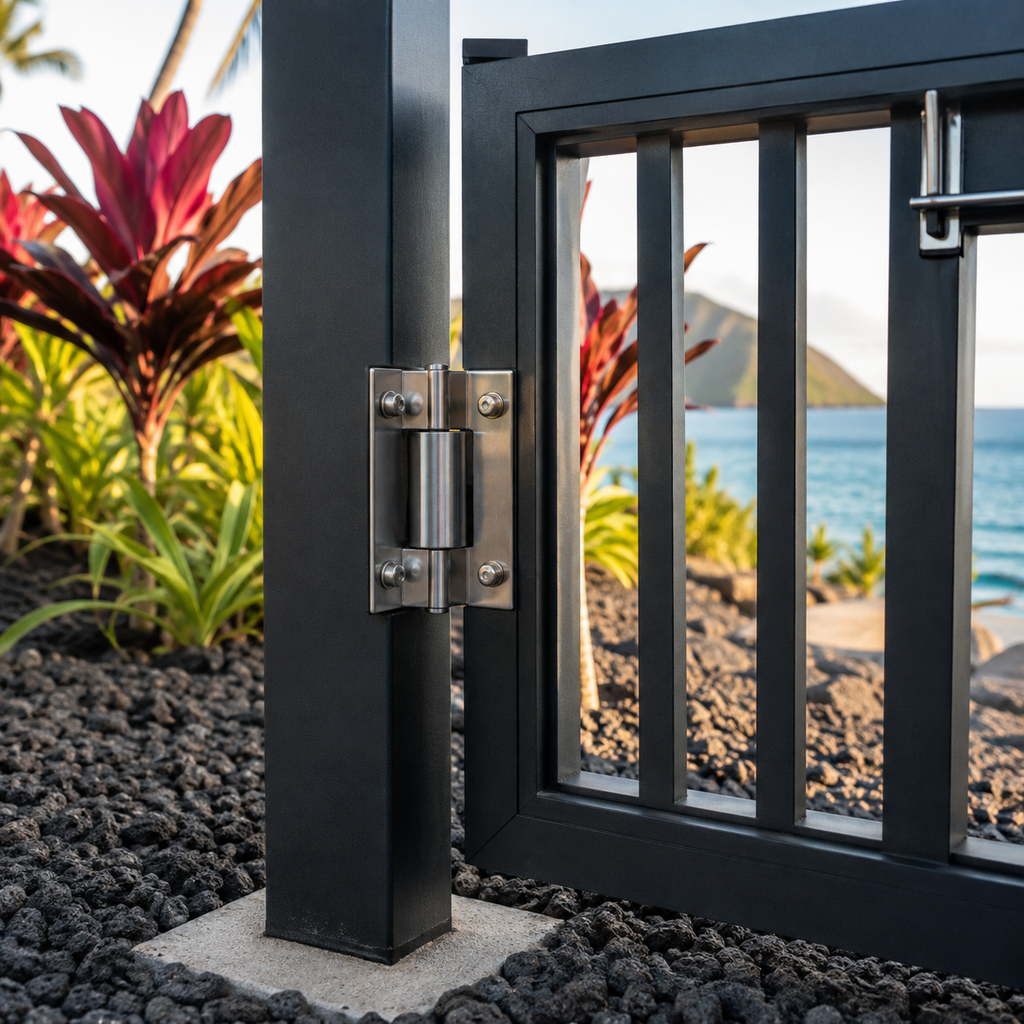
The best material decision is clear. Choose vinyl for low-maintenance privacy, powder-coated aluminum for open fencing, masonry for maximum permanence, and composite only when the product has a credible coastal record. Use wood only when regular upkeep is acceptable, and avoid ordinary steel near direct salt exposure.
Before selecting a fence, evaluate distance from the ocean, prevailing wind, drainage, soil support, gate frequency, security needs, and maintenance tolerance. A durable Hawaii fence should be designed for the harshest part of the site.

written by
Kurt Manalastas
Property Security & Exterior Improvement Journalist
Kurt creates research-based content focused on fencing solutions, property security, and outdoor boundary improvements. By combining industry best practices, material insights, and practical property protection strategies, he helps homeowners and business owners make informed decisions about building safer, more secure, and visually appealing outdoor spaces.