Signs You Need to Call a Fence Contractor in Hawaii
Repair Alert
A fence in Hawaii needs professional attention when leaning posts, soft wood, termite signs, sagging gates, rusted hardware, or widening gaps begin affecting safety and security. Because salt air, humidity, wind, rain, and termites accelerate damage, early inspection helps prevent small fence problems from becoming costly failures.
How do you know when a fence problem in Hawaii is still a simple repair and when it has become a warning sign you should not ignore? That question matters because fences here rarely fail in a quiet or predictable way. They stand against salt air, trade winds, heavy rain, intense sun, shifting soil, and termite activity. What begins as a slight lean, sticking gate, corroded fastener, or soft board may be the first sign that the fence is losing the strength needed to protect your privacy, pets, children, and property.
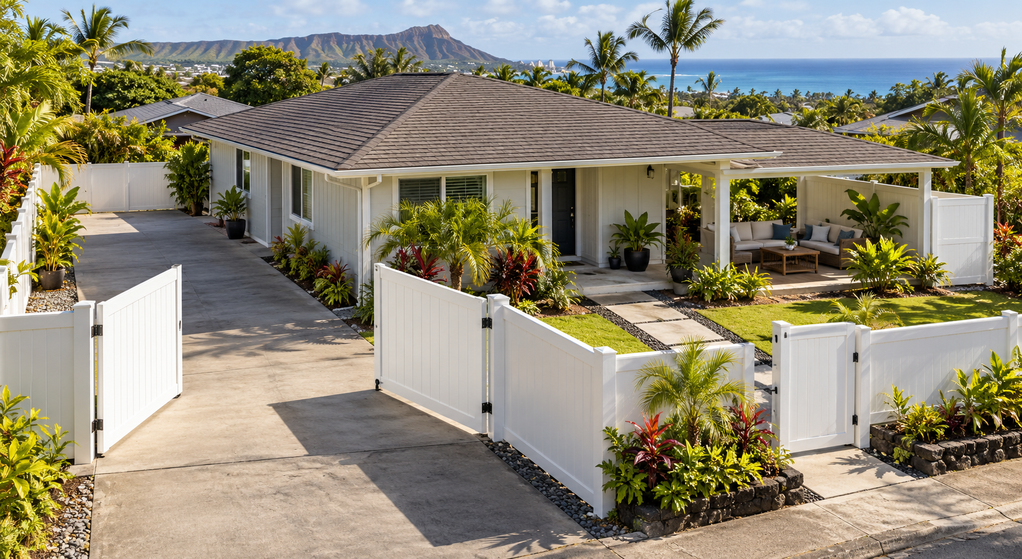
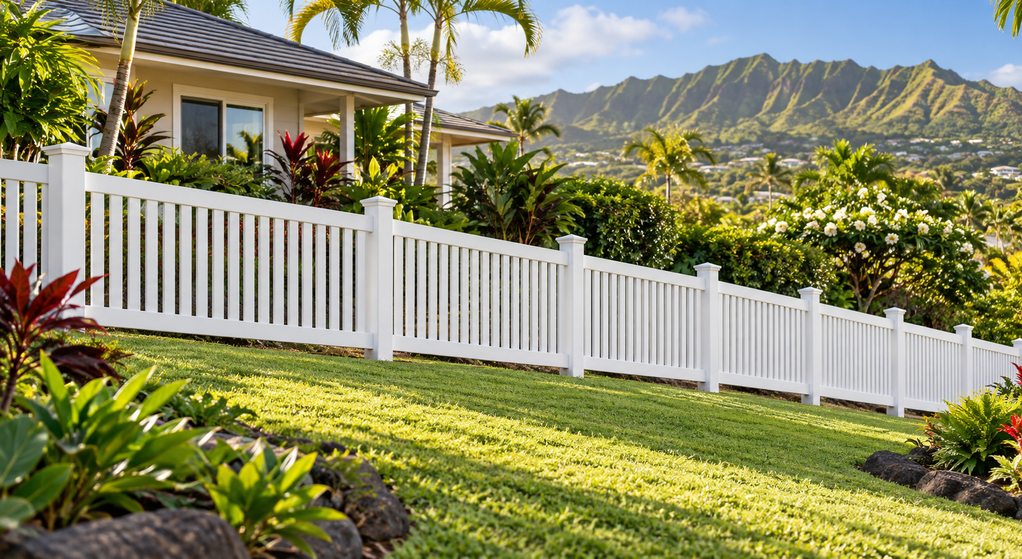
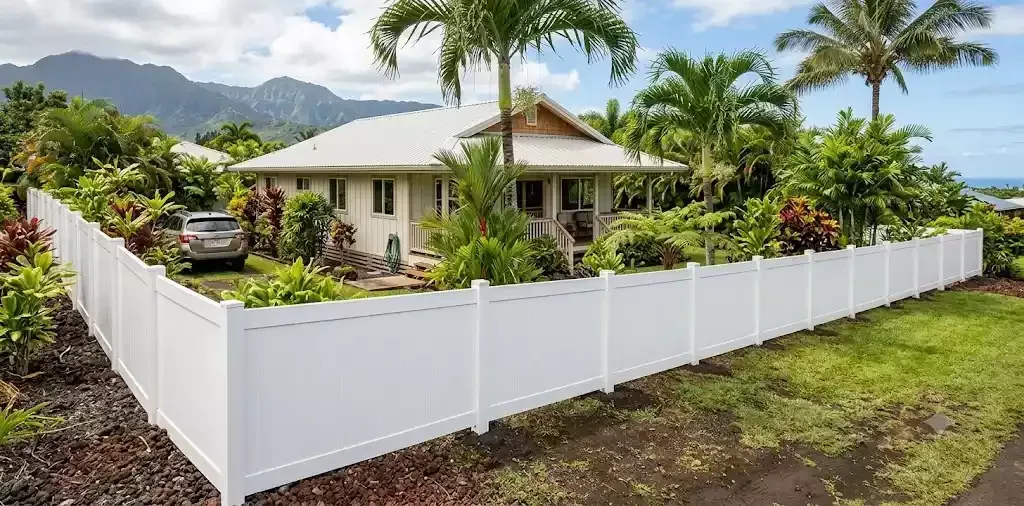
A fence often reveals the seriousness of a problem before a homeowner is ready to address it. When damage continues to spread or repairs become repetitive, homeowners may need to compare repair with replacement options such as vinyl fencing services in Hawaii, particularly when moisture, termites, salt exposure, or ongoing maintenance have shortened the life of the existing fence. Recognizing these warning signs early makes it easier to choose the right solution before a partial failure becomes a larger safety or property concern.
Your Fence Material Is Not Holding Up to Hawaii’s Climate
Hawaii’s climate is tough on fences. Humidity, heavy rain, intense UV exposure, salt air, and strong winds can wear down materials faster than many homeowners expect. At Sunset Hawaii Fencing Company, our team evaluates how each material responds to the property’s actual exposure conditions before recommending repair, reinforcement, or replacement.
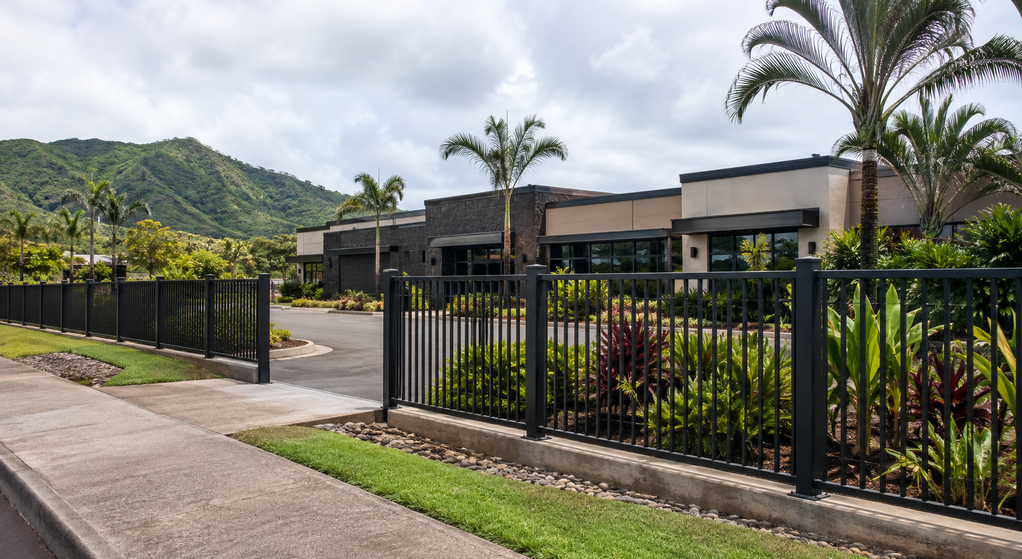
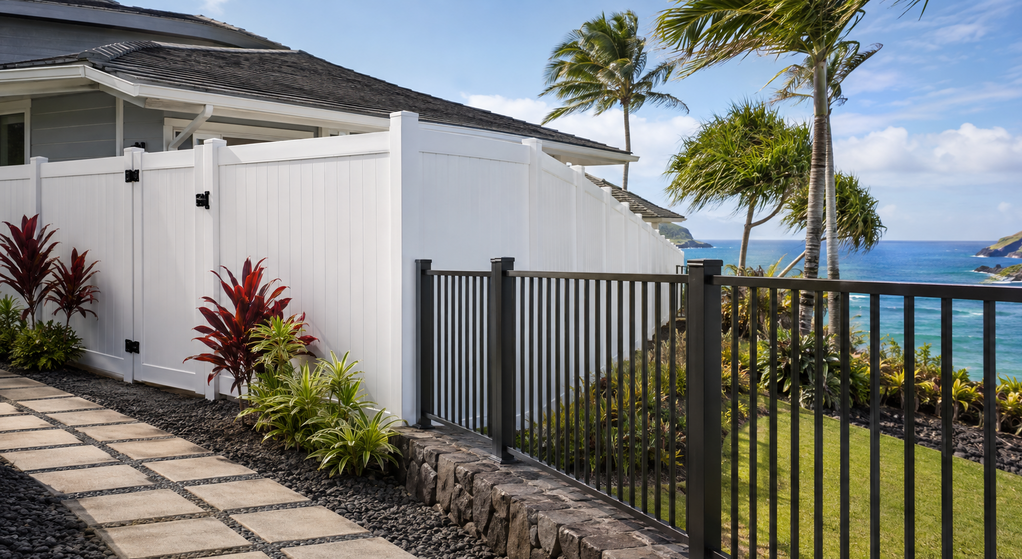
Material choice should never be treated as a style decision alone. Wood can provide a warm, natural appearance, but it requires consistent protection against moisture, rot, and termites. Metal can offer strength and visibility, but coastal corrosion becomes a concern when the wrong hardware, coating, or finish is used. Vinyl can provide a clean, lower-maintenance alternative, but it still depends on proper post depth, spacing, reinforcement, and installation to remain stable over time.
When a fence begins showing repeated movement, corrosion, softening, gaps, or weakened sections, the problem may reflect a poor match between the material and the property’s environment. Choosing a material based on local exposure, maintenance expectations, and installation requirements usually provides better long-term value than selecting the lowest-cost option upfront.
Your Fence Is Leaning or No Longer Feels Solid
A leaning fence is one of the most obvious signs that something is wrong. It may look like a simple visual issue, but it usually points to a deeper structural problem. The posts may be loose, the footing may be weak, the soil may have shifted, or the fence may be absorbing more wind pressure than it was built to handle.
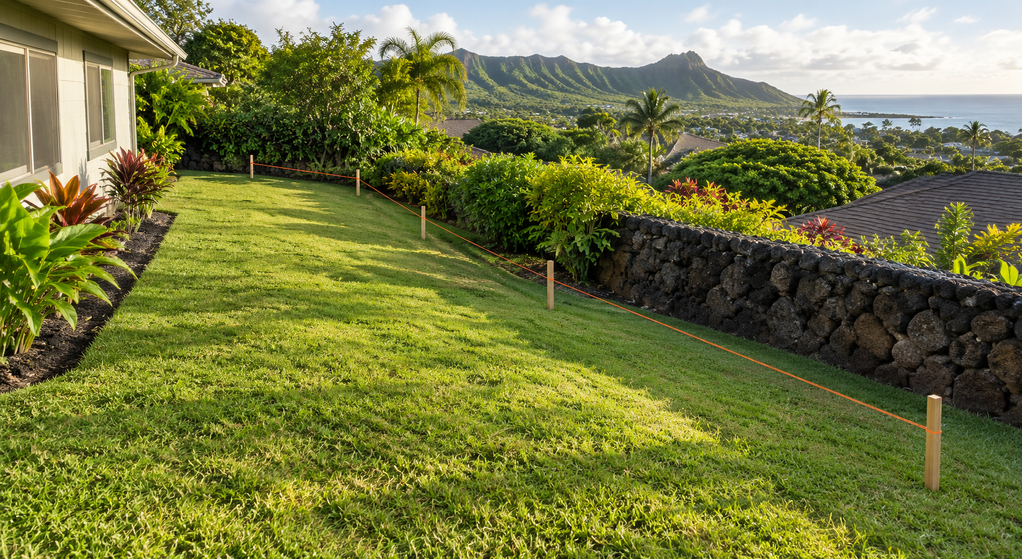
In Hawaii, this matters because soil and moisture conditions vary widely from one property to another. A fence near the coast may deal with sandy soil and salt air. A fence in a wetter valley area may deal with softer ground, drainage issues, and faster wood deterioration. A fence on a sloped property may need better footing or support than a flat-yard installation.
A homeowner may be tempted to push a leaning fence back into place or brace it temporarily, but that rarely solves the underlying problem.
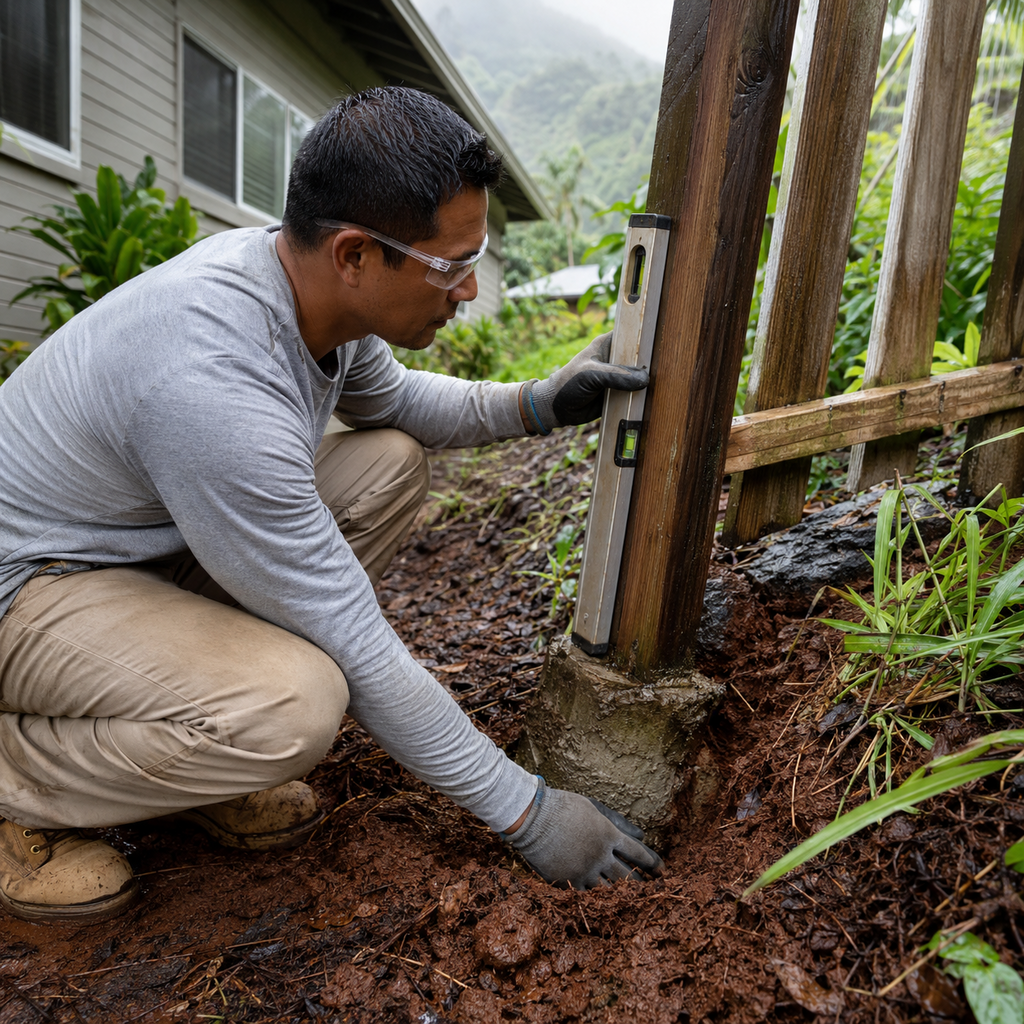
Our guide on how to fix a leaning or damaged fence explains what causes fence movement and when repair may be more practical than replacement.
You See Rot, Soft Wood, or Termite Warning Signs
Wood fence problems should be taken seriously in Hawaii. If boards feel soft, crumble when touched, split easily, or show hollow-sounding sections, the fence may already be losing strength. Rot often starts near the bottom of boards or posts because those areas stay damp longer. Once moisture gets inside the wood, the damage can spread faster than expected.
Termite activity is another major concern. Warning signs may include hollow wood, small holes, blistered-looking surfaces, fine pellet-like droppings, or wings near fence sections. Even if the damage looks minor, termites can weaken posts and boards from the inside before the outside looks severely damaged.
Termite control often involves prevention, inspection, and treatment strategies rather than waiting for visible destruction. That advice matters for fencing because once termites are active in wood structures, surface repairs may not be enough.
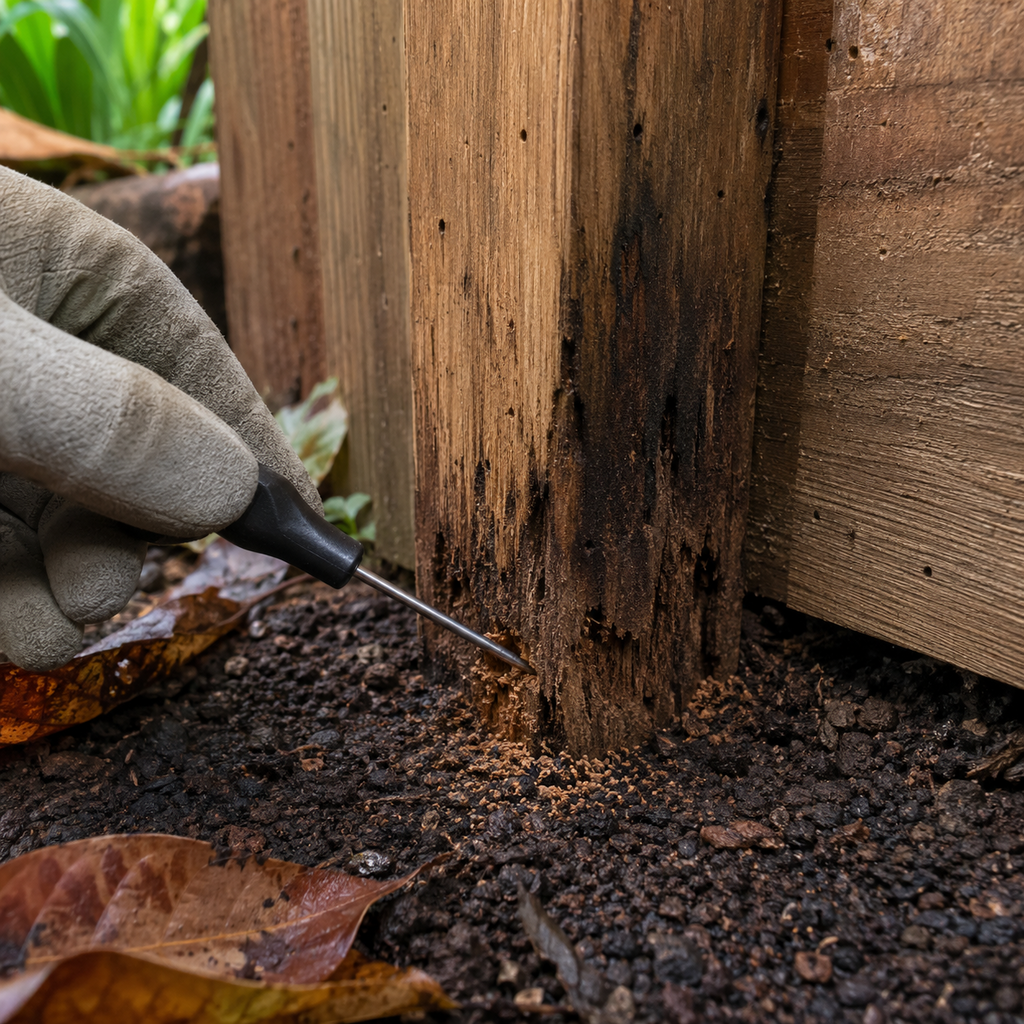
A common mistake is replacing only the visible damaged board while leaving compromised posts or nearby wood untouched. That can make the fence look better for a short time, but it does not address the underlying problem. A contractor can inspect the surrounding fence line and determine whether the issue is limited, spreading, or severe enough to justify replacement.
The Gate Is Sagging, Dragging, or No Longer Latches Correctly
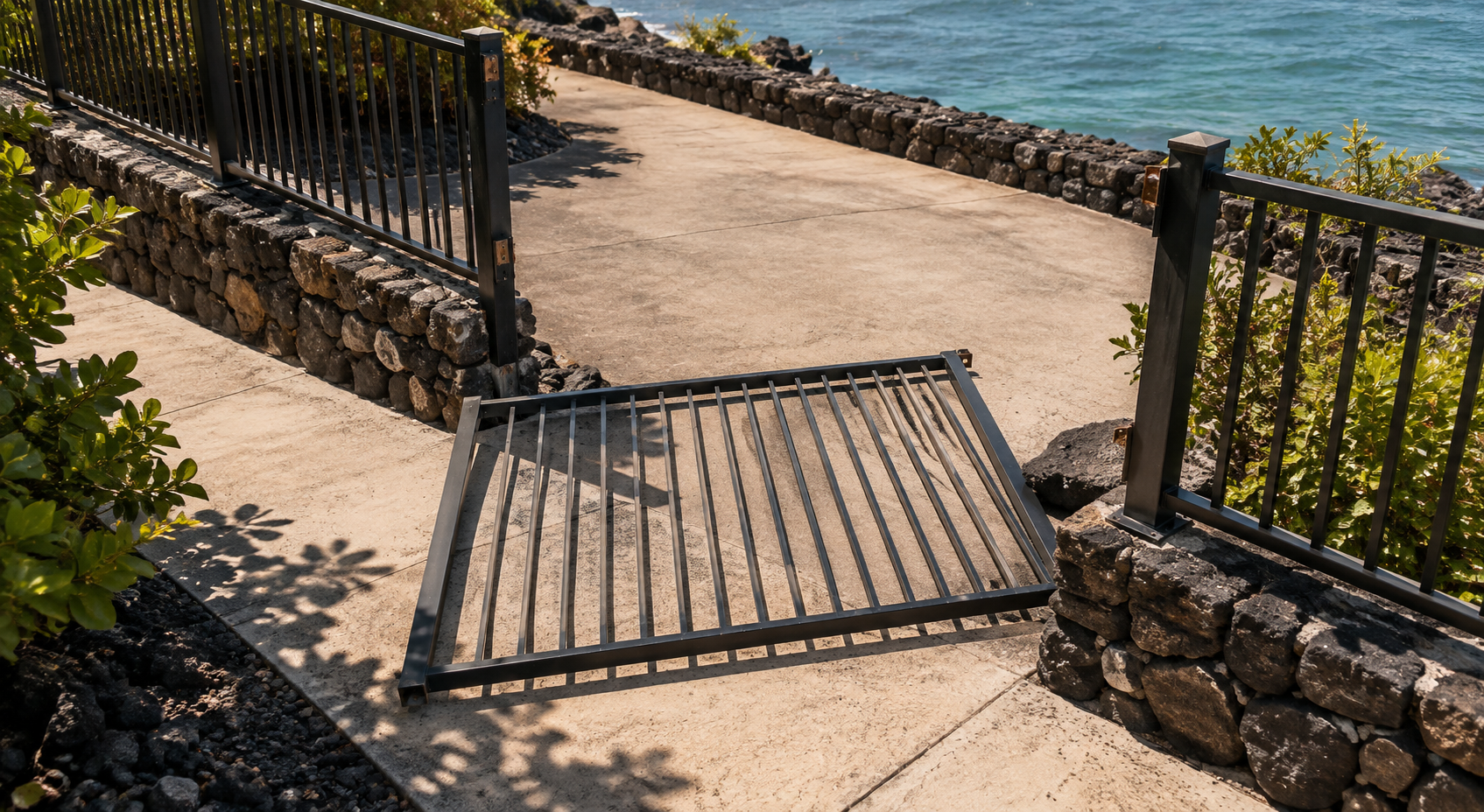
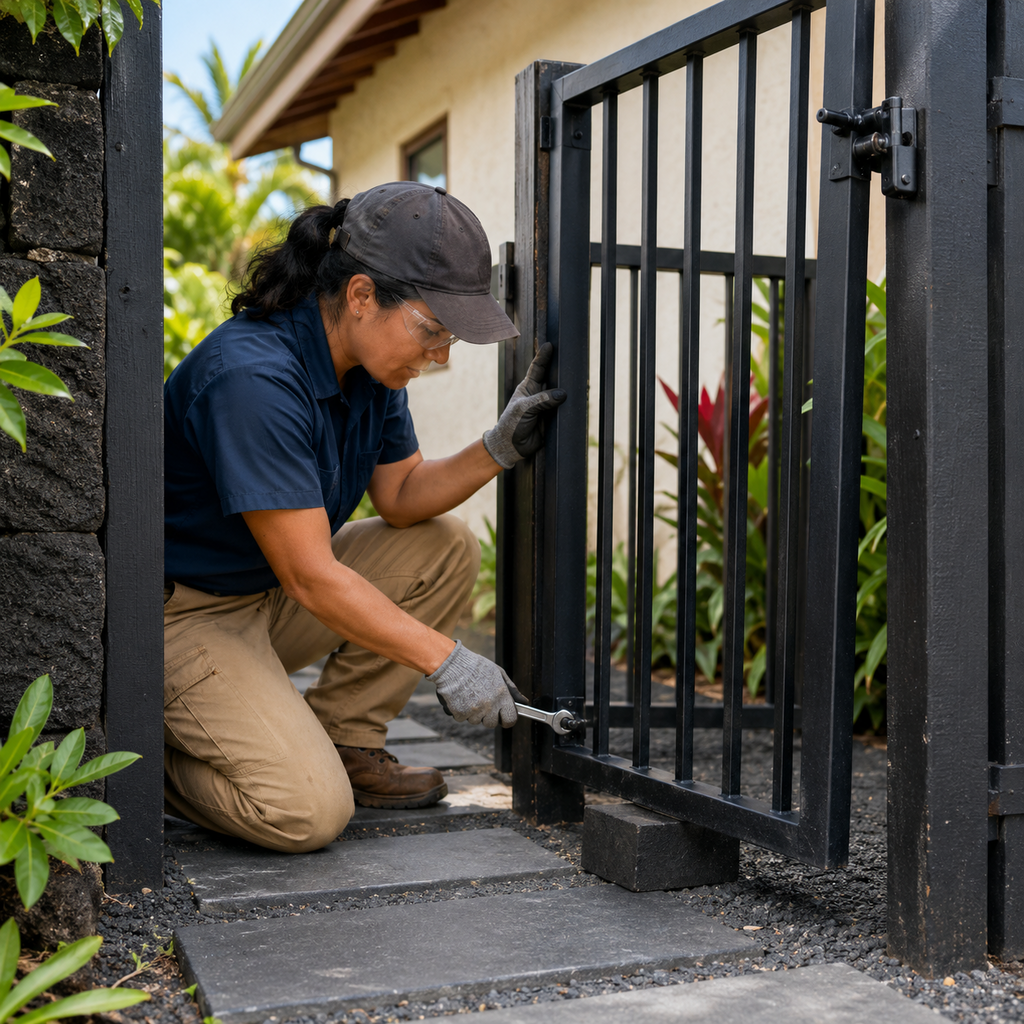
A failing gate is often one of the first signs that the fence system is under stress. If the gate drags on the ground, swings unevenly, sticks, or no longer lines up with the latch, the issue may be more than worn hinges. The post holding the gate may be shifting, the frame may be twisting, or the gate may be too heavy for the original hardware.
This is especially important for driveway gates, side-yard access gates, pool-area gates, and pet enclosures. A gate that does not close properly can create a security issue. It can also become a safety issue if children, pets, or visitors rely on that enclosure.
The right fix depends on the cause. Sometimes new hinges or latch hardware are enough. Other times, the post needs to be reset, the gate frame needs reinforcement, or the opening needs to be rebuilt. Guessing usually leads to repeated repairs. A fence contractor can check alignment, weight, hardware condition, and post stability before recommending a fix.
Metal Hardware Is Rusting or Corroding
A failing gate is often one of the first signs that the fence system is under stress. If the gate drags on the ground, swings unevenly, sticks, or no longer lines up with the latch, the issue may be more than worn hinges. The post holding the gate may be shifting, the frame may be twisting, or the gate may be too heavy for the original hardware.
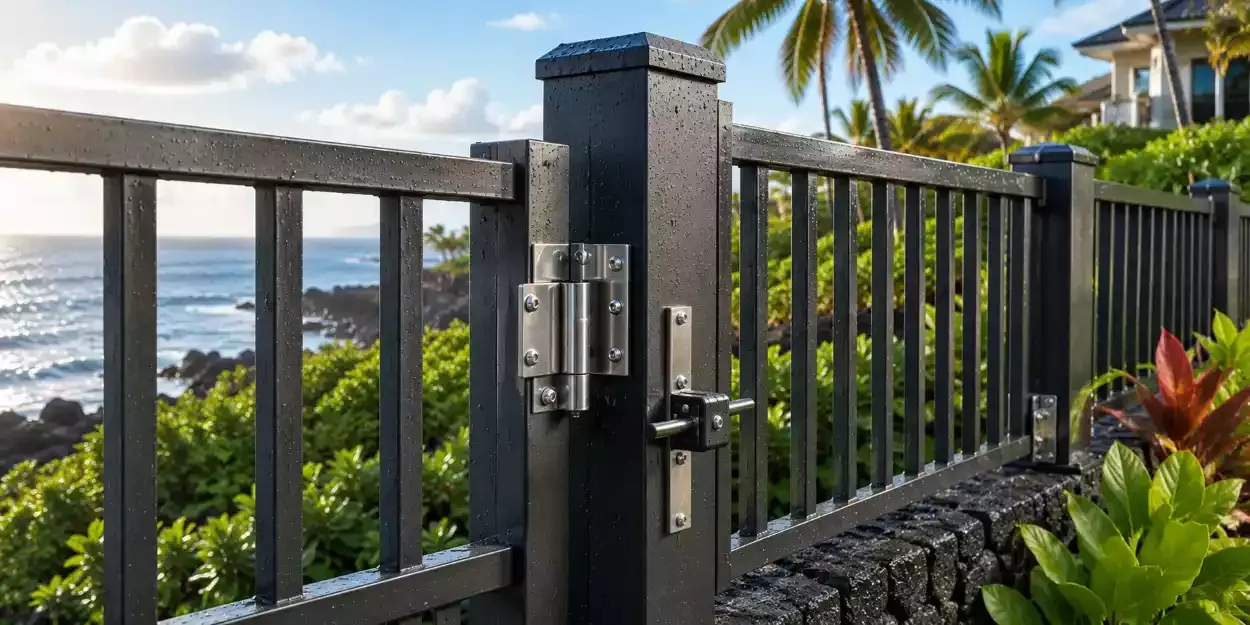
Even fences that are not fully metal often depend on metal parts. Screws, nails, brackets, hinges, latches, anchors, and fasteners all help keep the fence stable. In coastal parts of Hawaii, these parts can corrode faster because of salt exposure. Once hardware starts failing, panels may loosen, gates may sag, and sections may become unstable.
Rust is not only cosmetic. Heavy corrosion can weaken the connection points that hold the fence together. This is why a fence may suddenly feel loose even if the boards or panels still look usable.
A contractor can identify whether the issue is limited to replaceable hardware or whether corrosion has affected the structure more broadly. For coastal properties, choosing the right fasteners and hardware is just as important as choosing the fence material itself.
Sections Are Cracked, Warped, Missing, or Pulling Apart
A fence with cracked, warped, missing, or separated sections is no longer doing its job well. Gaps reduce privacy. Loose panels reduce safety. Warped boards can create pressure on nearby sections. Missing pieces expose the rest of the fence to more movement and weather.
Some homeowners delay repairs because only one area looks damaged. That is risky in Hawaii because moisture, wind, and sun exposure can turn a small weak point into a larger failure. If one section has pulled away, nearby posts or rails may already be stressed.
A professional inspection helps separate simple repairs from warning signs of a larger problem. If the fence was poorly installed, undersized for the property, or built with materials that do not fit the location, repeated small repairs may not be the best long-term decision.
The Fence No Longer Gives You Privacy, Security, or Confidence
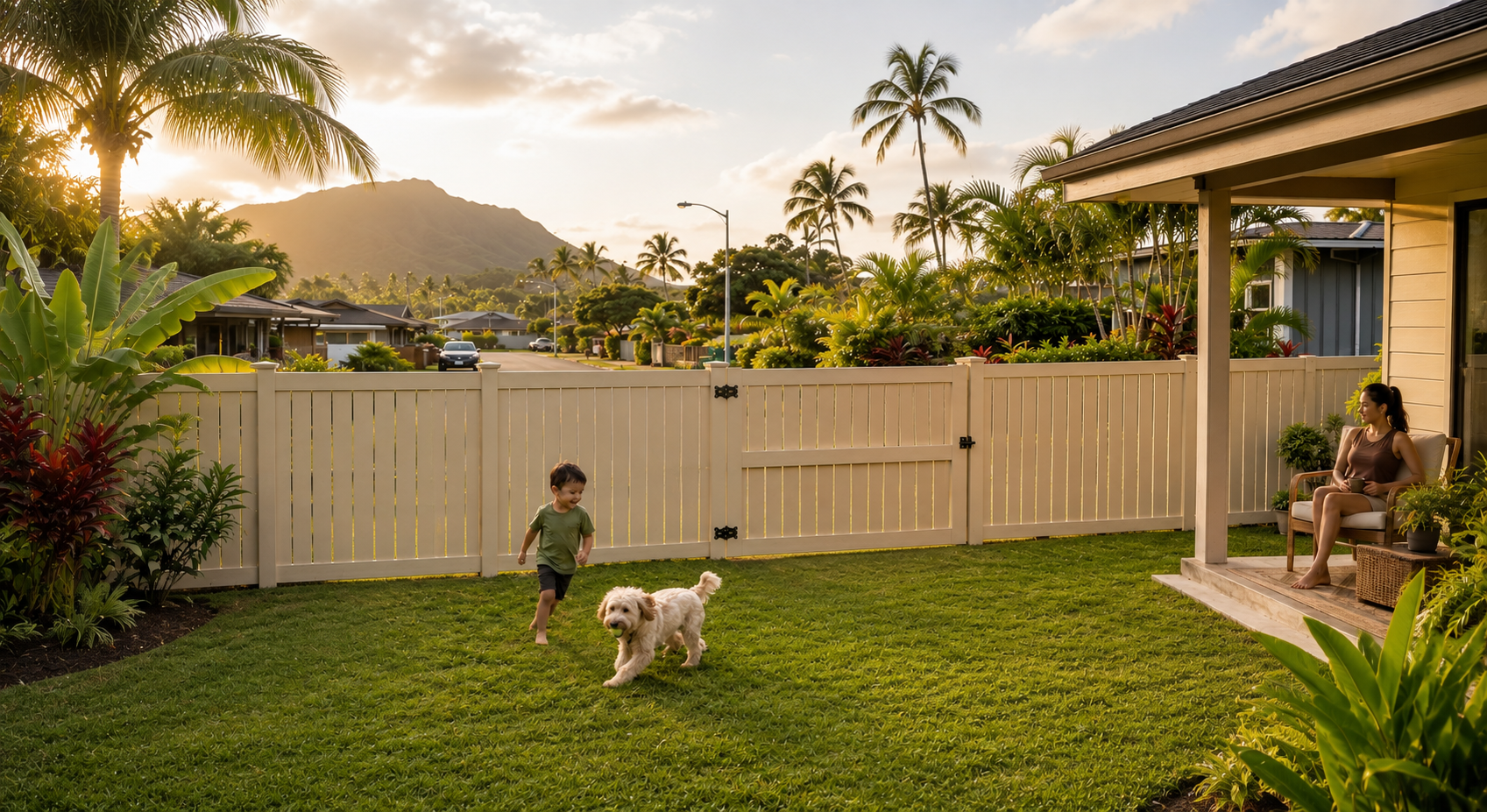
A fence should make the property feel secure, private, and fully usable. When large gaps, loose sections, leaning posts, damaged panels, or weak gates begin reducing that sense of protection, the fence is no longer serving its intended purpose.
Gate problems deserve particular attention because rusted hardware, warped materials, worn hinges, and poor alignment can weaken both security and daily access.
Our guide to
preventing rust, warping, and wear on gates in Hawaii’s climate explains how salt air, moisture, UV exposure, and repeated use affect gate materials and hardware over time.
A fence does not need to collapse before it deserves professional attention. If you are avoiding certain areas of the yard, worrying about pets getting out, struggling to open or close the gate, or noticing that the fence looks worse each month, the problem is already affecting how you use and feel about the property.
Final Takeaway: Call Before the Fence Becomes a Bigger Problem
The clearest signs you need to call a fence contractor in Hawaii are leaning posts, soft or rotting wood, termite warning signs, sagging gates, rusted hardware, cracked panels, widening gaps, and fence sections that no longer feel secure. Waiting usually favors the damage, not the homeowner.
Hawaii fences deal with conditions that demand better planning than basic installation. Salt air, humidity, termites, wind, rain, and uneven terrain all affect how a fence should be built and maintained. The smarter decision is to have the problem inspected early, understand the real cause, and choose a repair or replacement plan that will hold up to island conditions.

written by
Kurt Manalastas
Property Security & Exterior Improvement Journalist
Kurt creates research-based content focused on fencing solutions, property security, and outdoor boundary improvements. By combining industry best practices, material insights, and practical property protection strategies, he helps homeowners and business owners make informed decisions about building safer, more secure, and visually appealing outdoor spaces.