Choosing the Right Fence Style for Your Hawaii Home
Fence Style Fit Check:
Choosing the right fence style for a Hawaii home starts with purpose, site exposure, views, privacy needs, gates, wind, and long-term maintenance. Full-privacy vinyl fits many homes, semi-private styles balance screening and airflow, and aluminum works best where openness, visibility, and landscape views matter.
A fence can quietly change how a Hawaiʻi home looks, feels, and functions. It can make a yard feel more private, give the property a stronger sense of order, or frame the landscape like the finishing edge of a picture. But which style actually belongs with the home rather than simply surrounding it? Before comparing aluminum or vinyl fencing services in Hawaii, homeowners should consider how the fence will relate to the property, the outdoor space, and the way the yard is used every day.
Start With the Purpose of the Fence
Sunset Hawaii Fencing Company have seen some homeowners focus on panel color before deciding whether they need privacy, pet containment, pool safety, security, or a property boundary. That order creates avoidable compromises. A solid fence may solve a privacy concern, but it can also block views and make a compact yard feel smaller. An open aluminum fence preserves the landscape, yet it will not screen a neighboring lanai or busy road.
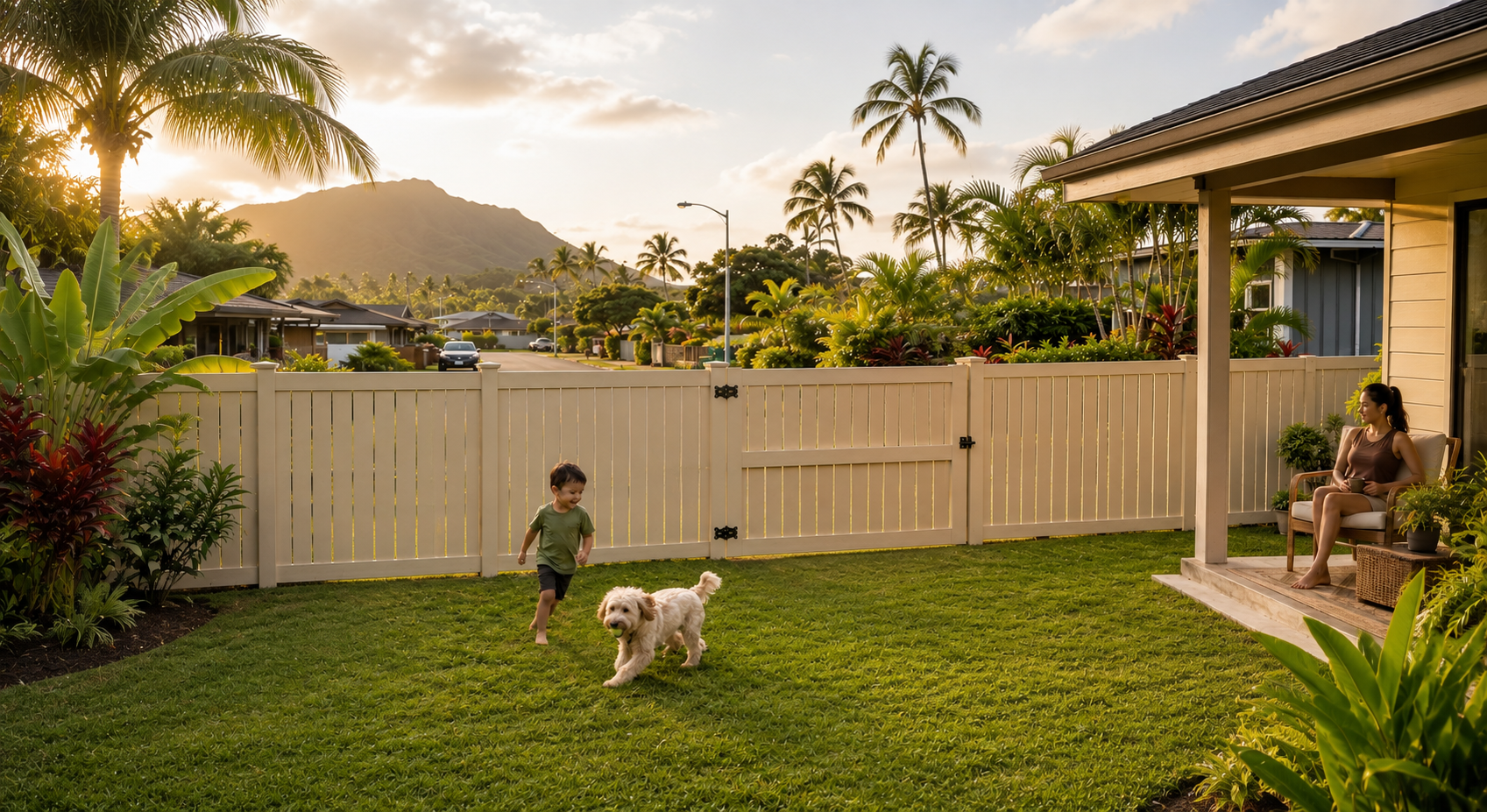
List the fence’s jobs in order of importance. A family needing privacy and a secure play area should prioritize solid panels, dependable gates, and limited gaps. A homeowner protecting an ocean or mountain view should consider an open or semi-private design.
Vinyl Privacy Fencing Is the Best All-Around Choice
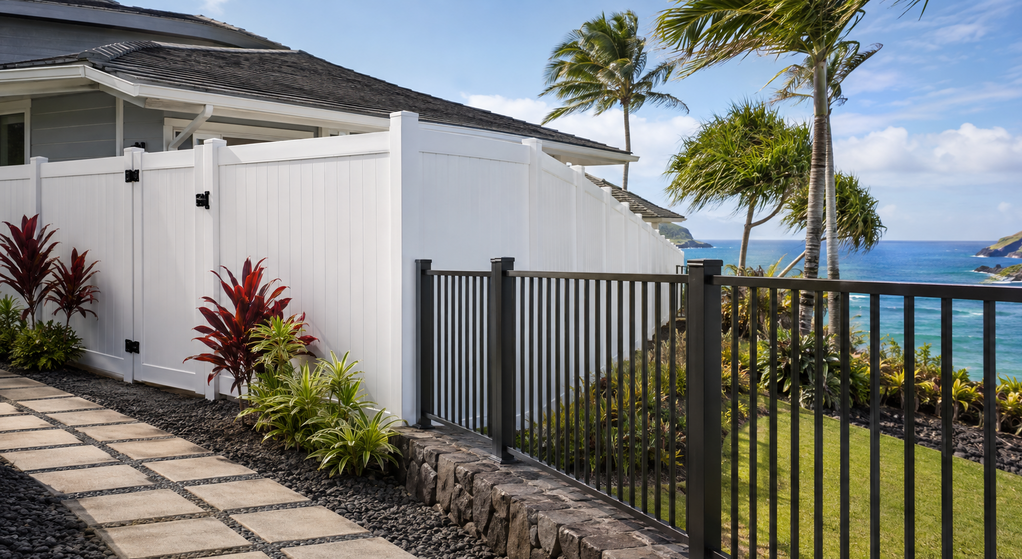
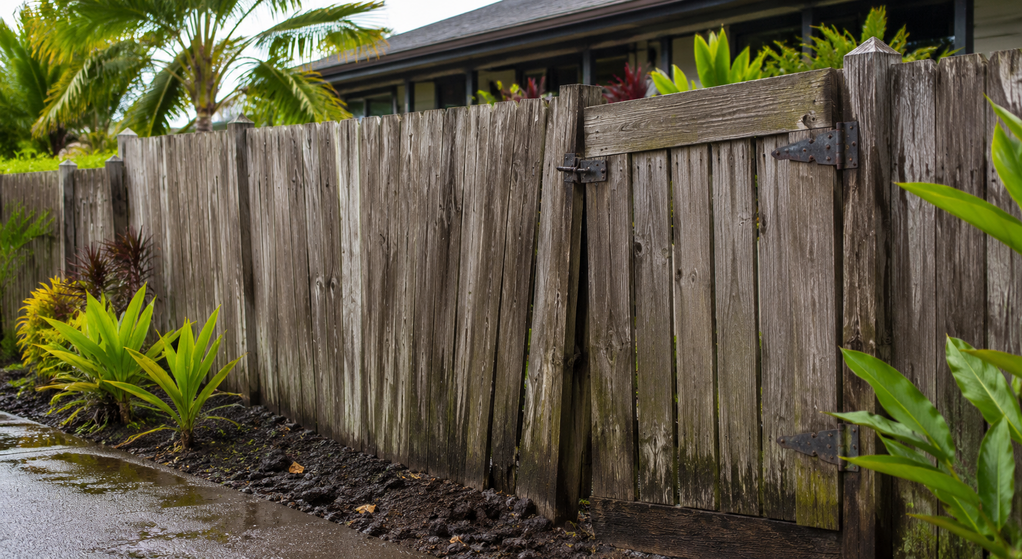
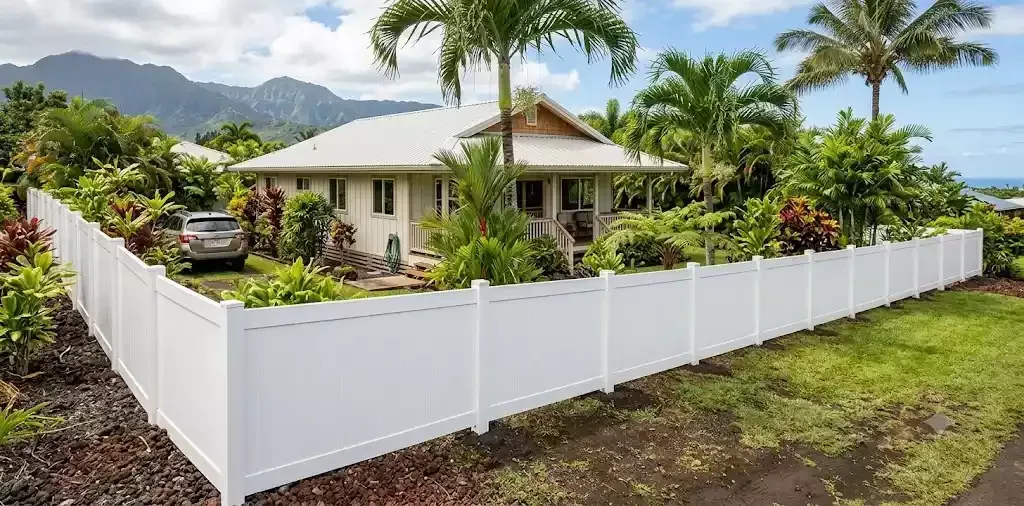
For many Hawaiʻi properties, full-privacy vinyl is the most practical option. Solid panels create a clean boundary, reduce sightlines, and avoid the routine staining or painting associated with wood. These features are among the key vinyl fencing benefits for homeowners seeking a durable, low-maintenance solution.
The tradeoff is wind exposure. Solid panels catch more wind than open styles, so post depth, footing size, alignment, and approved installation details matter. A common mistake is choosing the cheapest panel and assuming all vinyl performs the same. Homeowners should compare panel thickness, gate framing, reinforcement where required, UV-resistant components, and replacement-part availability.
Semi-Privacy and Lattice-Top Styles Balance Screening and Airflow
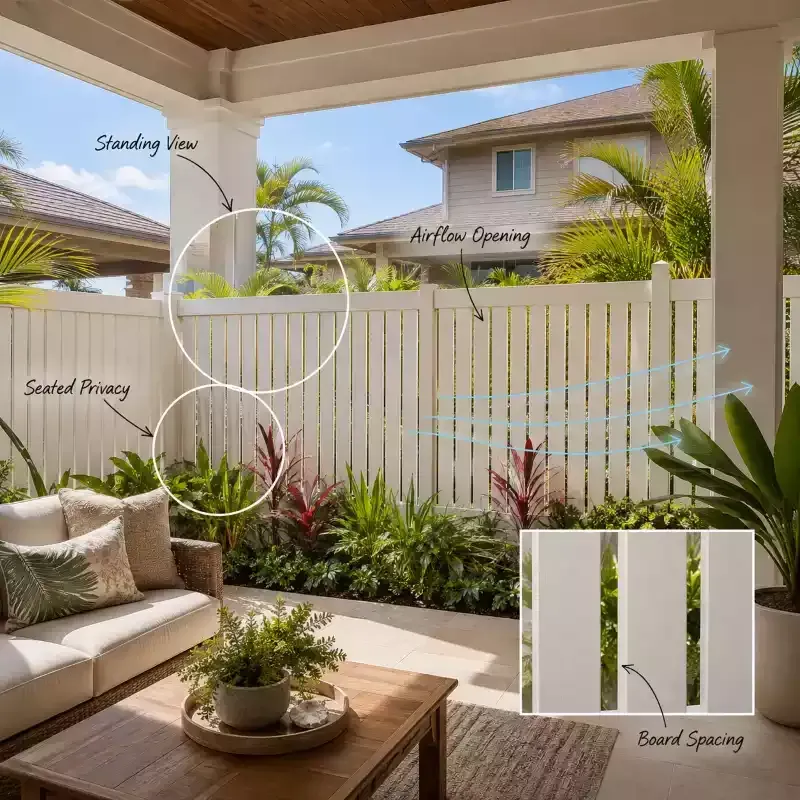
Semi-privacy vinyl uses narrow openings, spaced boards, or patterned sections to reduce visibility without creating a solid wall. Lattice-top fencing offers a similar compromise, with solid lower panels and an open section above.
These styles fit lanais, gardens, and side yards where a full wall would feel too heavy. Check privacy from standing and seated positions before choosing the spacing.
Aluminum Fencing Works Best for Views and Open Yards
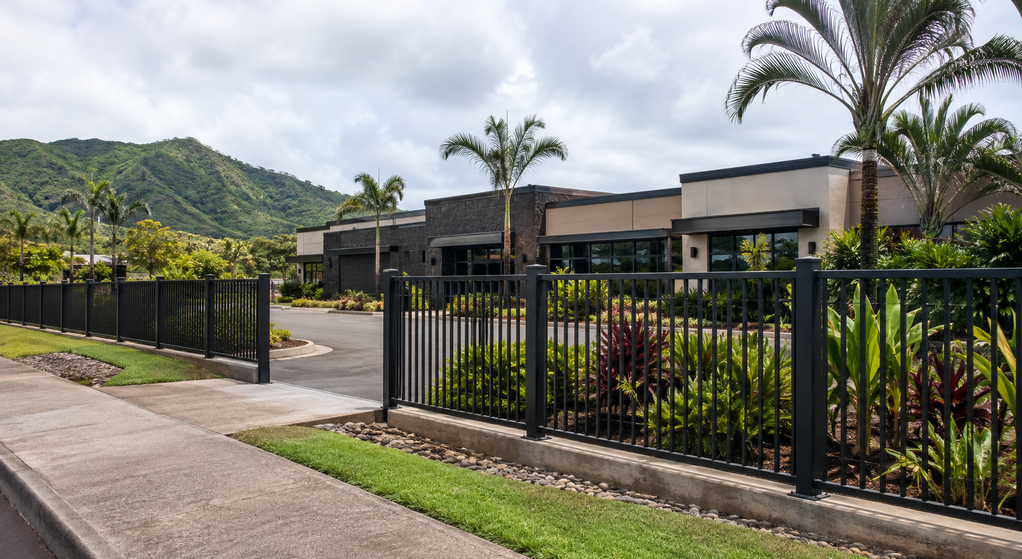
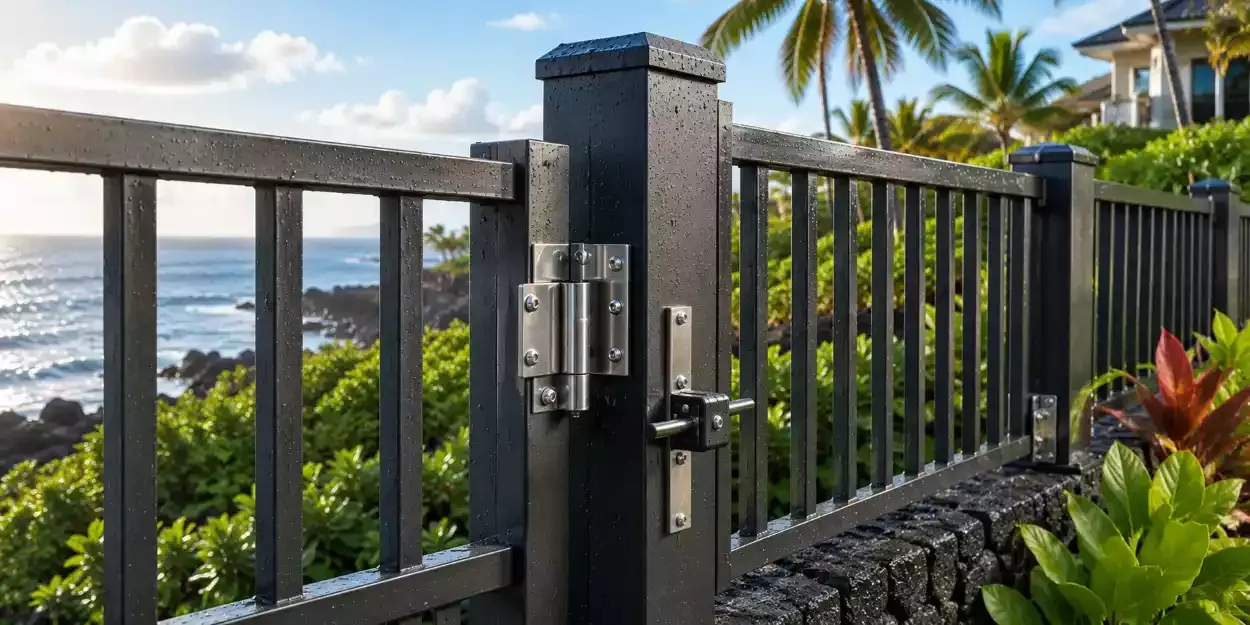
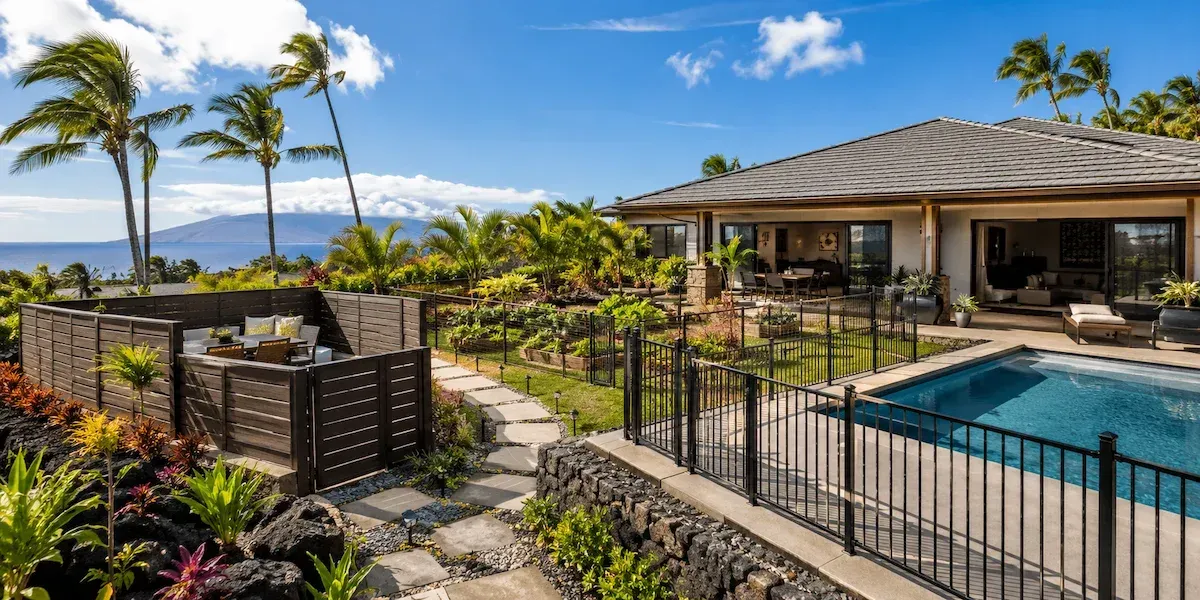
Aluminum fencing is the better choice when the property should feel open. Narrow pickets maintain sightlines, allow air movement, and define the boundary without visually shrinking the yard. It works especially well around pools, landscaped front yards, elevated lots, and homes with ocean, valley, or mountain views.
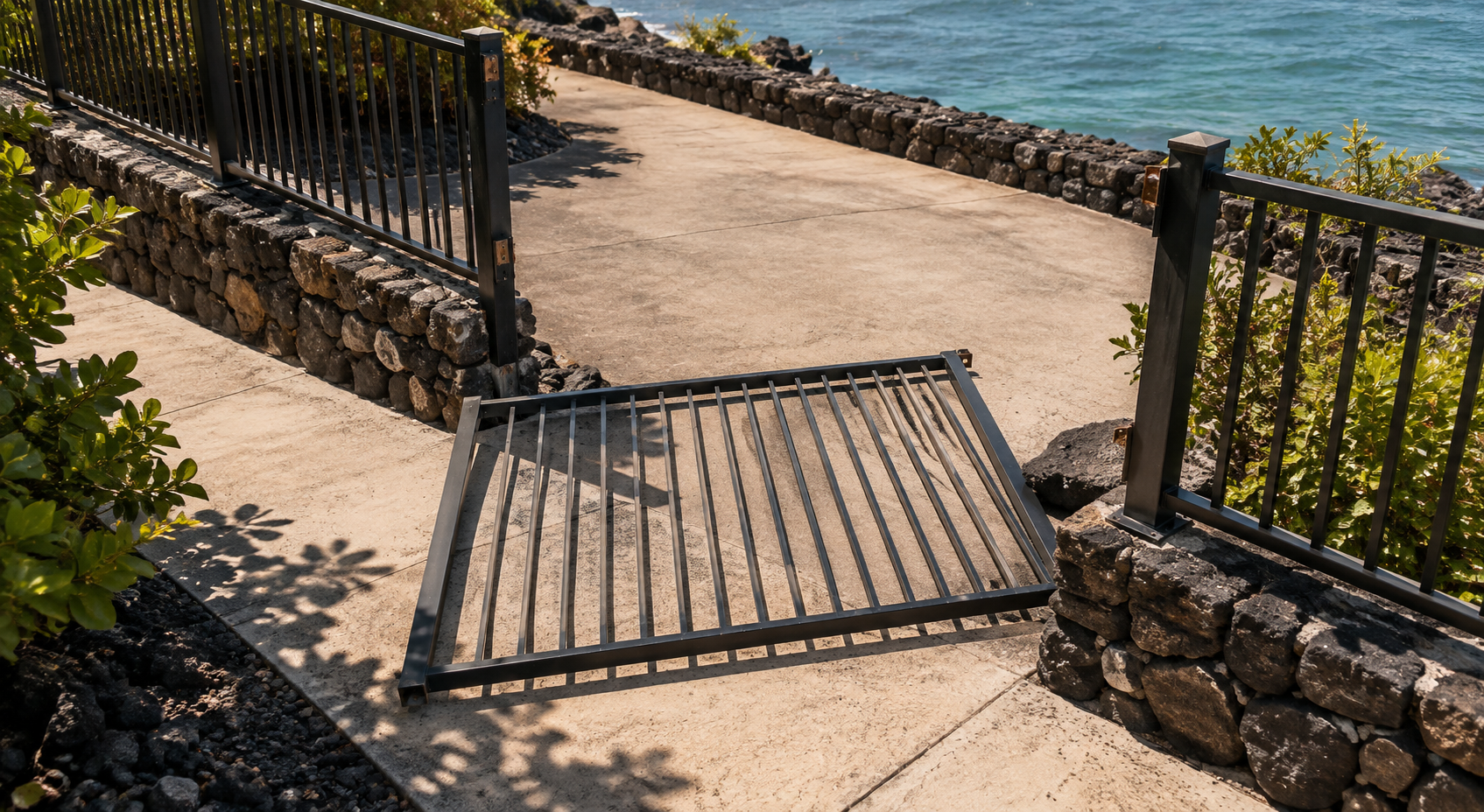
Clean vertical pickets usually complement island homes better than heavily decorative designs. Coastal exposure also makes hardware selection important. Oʻahu research has measured atmospheric chloride deposition on exterior infrastructure, with shoreline distance used as a factor in estimating exposure. Homeowners should ask about coatings, fasteners, gate hardware, and aluminum fence color and powder coating recommendations rather than judging the fence only by the panels.
Picket, Horizontal, and Ranch Styles Need the Right Setting
A vinyl picket fence gives a front yard a friendly, traditional appearance while keeping the home visually connected to the street. It suits gardens and decorative boundaries, but it does not provide meaningful privacy.
Horizontal fencing creates a modern look, yet it requires disciplined installation. Uneven posts or inconsistent spacing become highly visible because the eye follows the horizontal lines. On sloped Hawaiʻi lots, stepped or carefully transitioned sections must be planned.
Ranch and post-and-rail styles suit larger properties where the goal is boundary definition. Animal mesh should be integrated neatly rather than added as an afterthought.
Match the Fence to the House and Land
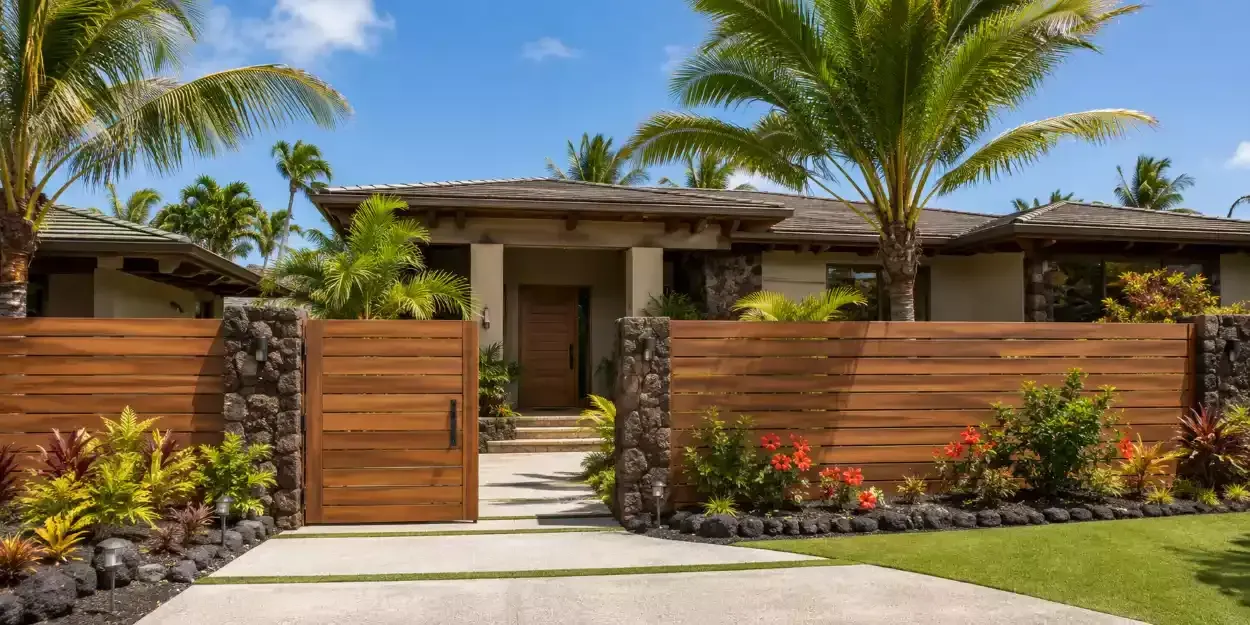
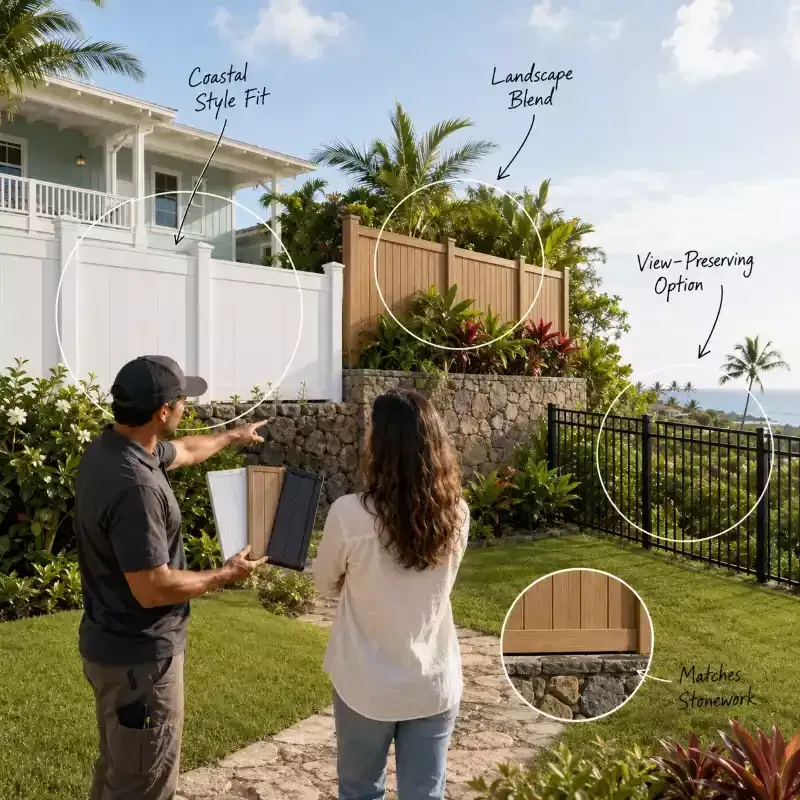
Fence style should support the home’s architecture. White privacy vinyl suits many residential exteriors, while tan or wood-look vinyl can blend with stonework and dense landscaping. Black aluminum often recedes against greenery and preserves the sense of depth in a yard.
Ground conditions matter just as much. Masonry and fencing experience often overlap in Hawaiʻi because posts may sit beside rock walls, retaining systems, concrete edges, or uneven terrain.
The rock wall at Puki Shopping Center, built by Londene Manu alongside his father, reflects a lesson that applies to residential fences too: an attractive finish cannot compensate for weak footing or poor alignment.Homeowners should also confirm local rules before finalizing height and placement. Honolulu’s Department of Planning and Permitting states that fences over six feet generally require a building permit, while all work must comply with applicable codes even when a permit is not required. County rules, corner-lot requirements, flood-zone conditions, easements, and association standards may differ.
Make the Decision in the Right Order
The smartest sequence is purpose, site exposure, height, openness, material, gate placement, color, and decorative details. Starting with appearance encourages homeowners to overlook access, wind, pets, maintenance, drainage, and footing requirements.
For most Hawaiʻi homes, full-privacy vinyl is the strongest general recommendation. Choose semi-privacy vinyl when airflow matters, and choose aluminum when views and openness are the priority. Picket, horizontal, and ranch styles work best when the property and the homeowner’s actual needs support them.
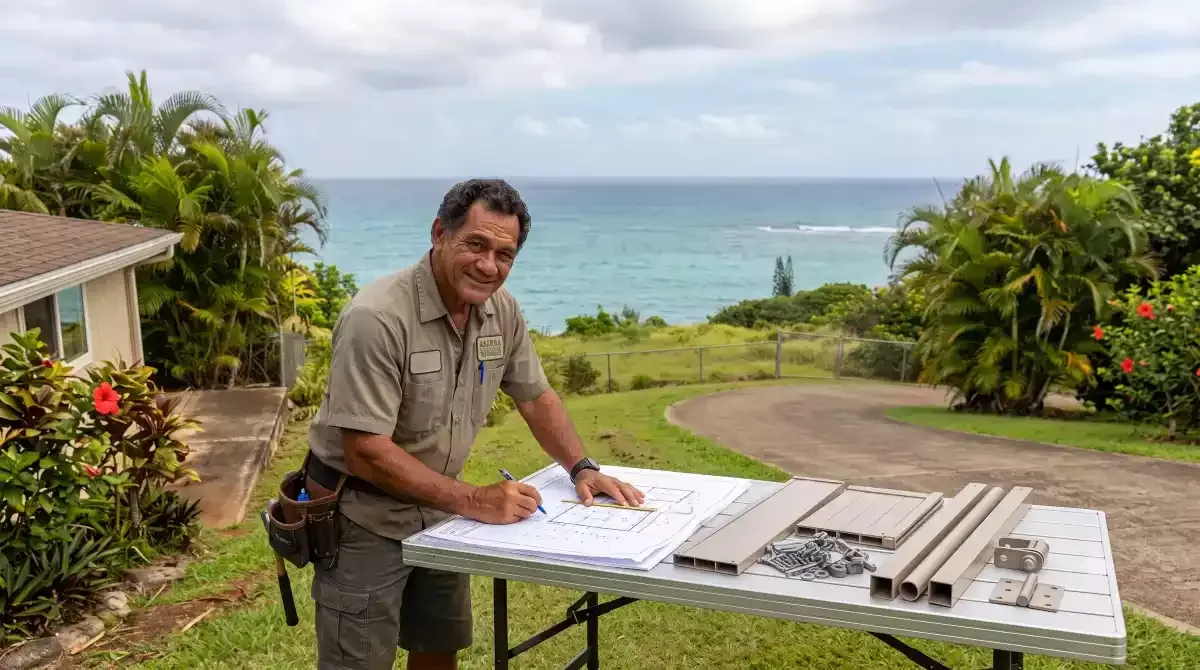
The next step is to walk the proposed fence line, identify grade changes and utilities, check sightlines from inside the home, and mark every gate location. That review gives homeowners clarity to compare designs and avoid paying for a fence that solves the wrong problem.

written by
Kurt Manalastas
Property Security & Exterior Improvement Journalist
Kurt creates research-based content focused on fencing solutions, property security, and outdoor boundary improvements. By combining industry best practices, material insights, and practical property protection strategies, he helps homeowners and business owners make informed decisions about building safer, more secure, and visually appealing outdoor spaces.