Is Vinyl Fencing a Good Choice for Hawaii Homes?
Fence Material Fit Check:
Vinyl fencing is a practical choice for many Hawaii homes because it resists rot, termites, moisture, and salt-air exposure better than many traditional fence materials. The best results depend on choosing quality vinyl, corrosion-resistant hardware, proper post installation, and a design that matches the property’s wind, soil, and climate conditions.
Vinyl fencing is a good choice for many Hawaii homes, and for most residential properties, it is one of the more practical fence materials available. Homeowners looking into vinyl fencing services in Hawaii are usually trying to solve real problems, such as privacy, security, curb appeal, pet containment, salt air, rain, termites, and long-term maintenance. In that setting, vinyl makes sense because it avoids several of the weaknesses that cause traditional wood and metal fences to age faster in island conditions.
Hawaii is not an easy place for exterior materials. Humidity stays high, rain can be frequent depending on the side of the island, salt air affects coastal areas, and strong sun exposure can wear down low-quality materials. A fence here does not simply need to look good when installed. It needs to hold its shape, stay upright, clean easily, and resist the environmental pressure that comes with living near the ocean.
Why Vinyl Works Well in Hawaii’s Climate
In our work with local properties, Sunset Hawaii Fencing Company often sees homeowners choose vinyl because they are tired of repainting, repairing, or replacing older fence materials. The biggest advantage is that vinyl does not rot like wood. It does not absorb water in the same way, and it does not become a food source for termites. That matters in Hawaiʻi, where termite activity is a serious concern for homes and outdoor structures.
The University of Hawaiʻi’s termite education resources identify the Formosan subterranean termite as one of the most damaging insect pests to homes and structures in the state. They also warn that direct wood-to-soil contact and consistent moisture create ideal conditions for termite infestation.
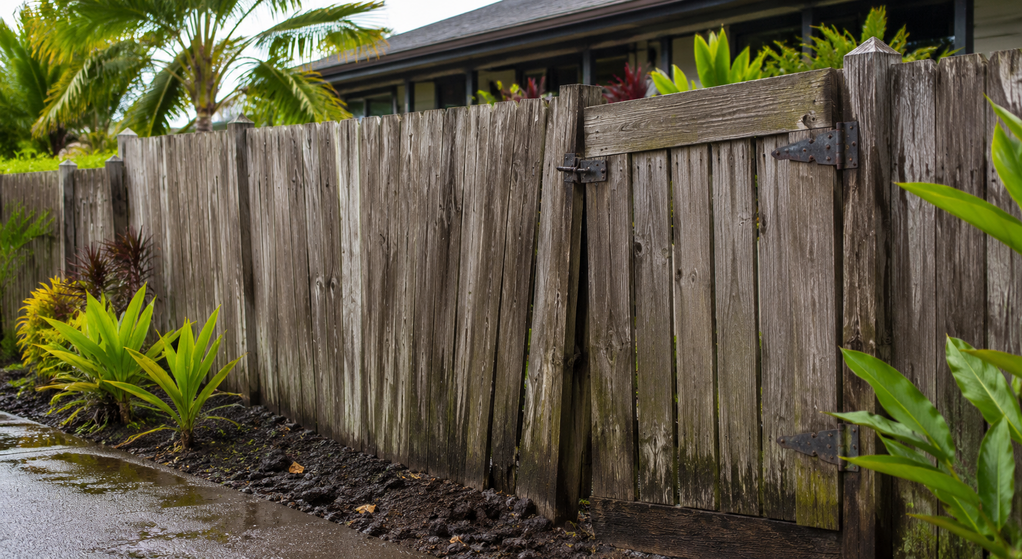
That is one major reason vinyl fencing deserves serious consideration. A wood fence can be beautiful, but in wet or termite-prone areas, it requires more attention. If the base of the post stays damp or untreated wood is exposed, deterioration can begin long before the fence looks bad from the street. Vinyl removes some of that risk because the material itself does not decay or attract termites as a food source.
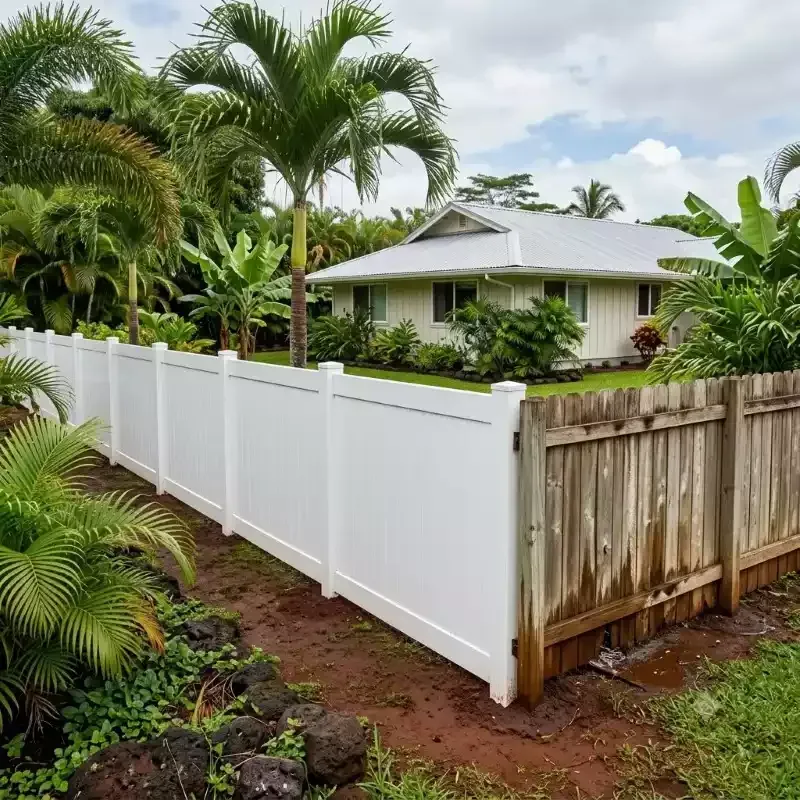
Vinyl Also Handles Salt Air Better Than Many Alternatives
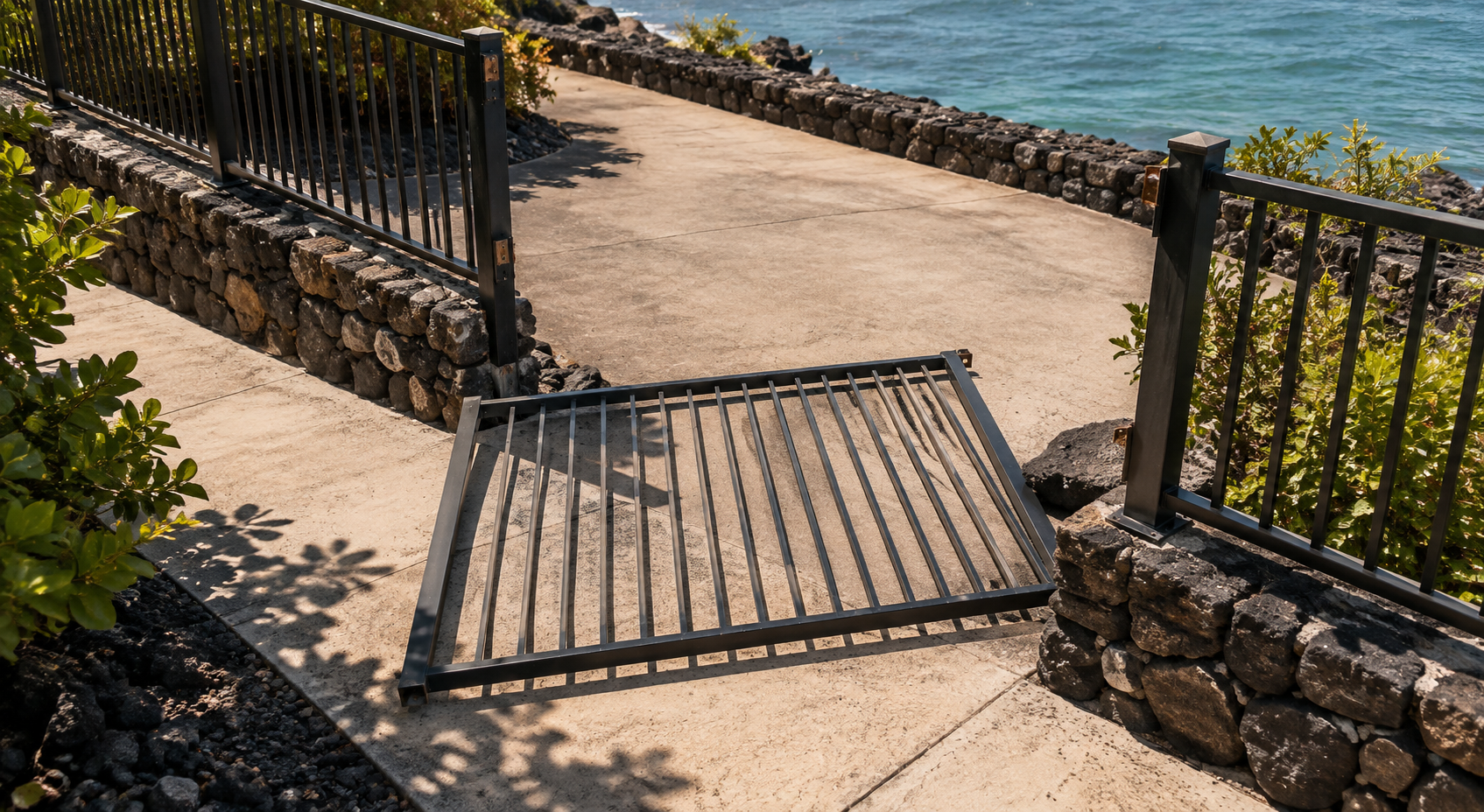
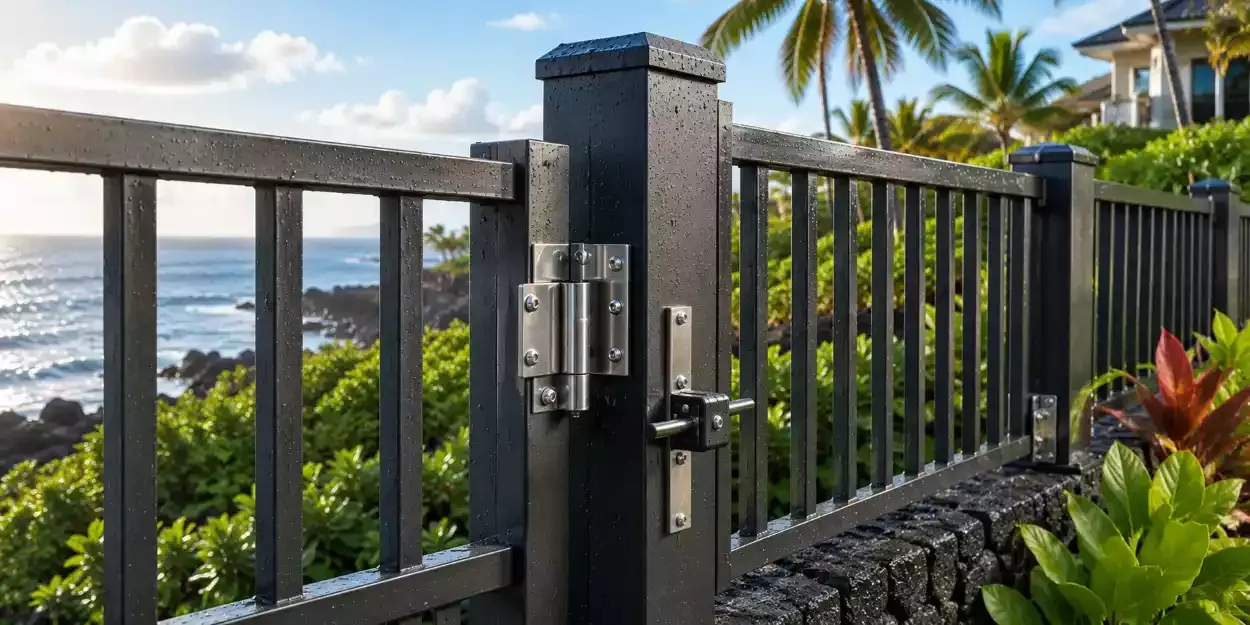
For homes near the coast, salt air is not a small detail. It can shorten the life of metal hardware, fasteners, brackets, gates, and exposed components. FEMA guidance on coastal construction notes that stainless steel is more resistant to corrosion in salt air and generally lasts longer than many other materials in highly corrosive oceanfront conditions.
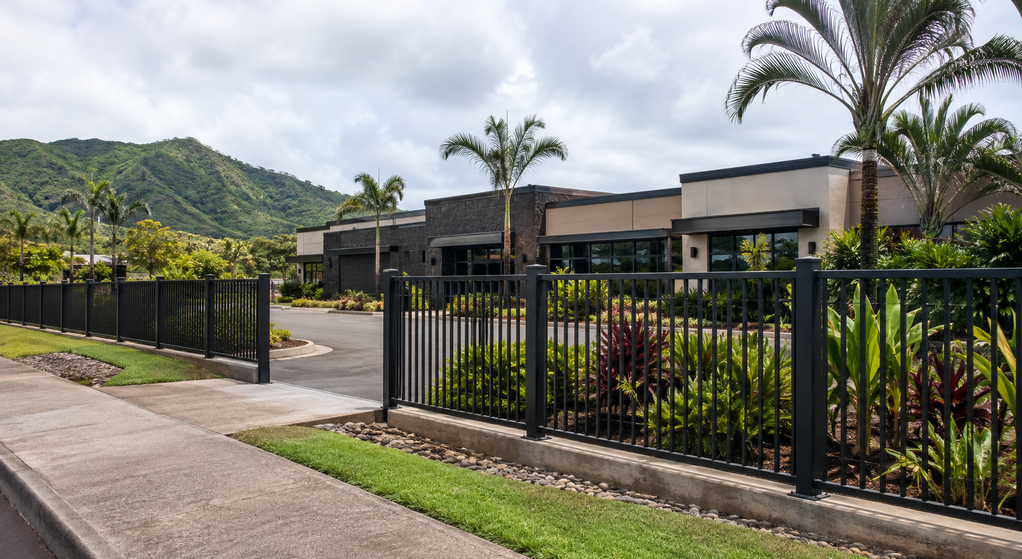
Vinyl has an advantage because the fence panels themselves do not rust. That makes it especially useful for homes in areas where metal fencing may require more maintenance or where painted surfaces break down quickly. Still, the hardware matters. Hinges, screws, gate frames, latches, and post reinforcements should be chosen carefully. A vinyl fence with weak or corrosion-prone hardware is still vulnerable, even if the panels are durable.
This is where
proper vinyl fence installation becomes especially important. A good vinyl fence in Hawaiʻi should be planned around exposure. A home in ʻEwa Beach, Kailua, Hawaiʻi Kai, or another salt-exposed area may need different hardware choices than a more protected inland property. Vinyl is strong, but the whole fence system has to be built for the location.
The Maintenance Advantage Is Real
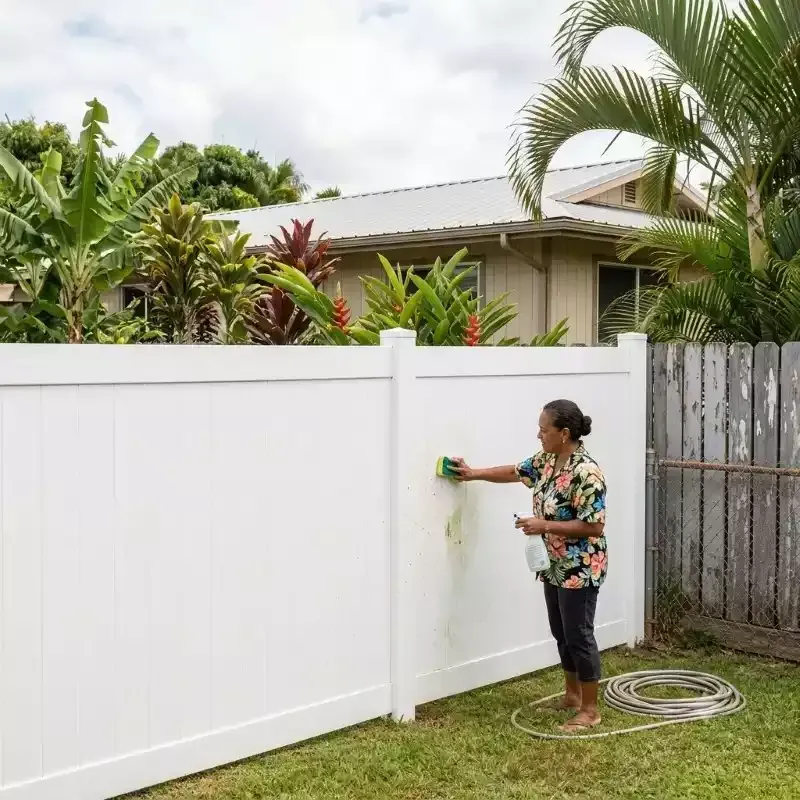
One of the strongest arguments for vinyl fencing is maintenance. Wood usually needs staining, sealing, painting, or periodic repair. Metal may need rust treatment or repainting. Vinyl is different. In most cases, cleaning involves rinsing the fence and occasionally scrubbing off dirt, mildew, algae, or sprinkler stains.
That does not mean vinyl is maintenance-free. In shaded or damp areas, surface staining can happen. Near landscaping, red dirt, grass clippings, and sprinkler overspray can leave marks. However, these are usually cleaning issues, not structural failures. A fence that needs washing is very different from a fence that is rotting at the post base.
For busy homeowners, rental properties, and homes with large yards, that difference matters. The less time spent repainting or repairing a fence, the more practical the material becomes. These are just some of the
key advantages of vinyl fencing in Hawaii, especially for homeowners looking for a durable, low-maintenance solution.
The Main Tradeoffs Homeowners Should Understand
Vinyl is a strong choice, but it should not be presented as perfect. The biggest tradeoff is quality. Cheap vinyl can look good at first and then fade, chalk, crack, or become brittle after years of sun exposure. In Hawaiʻi, strong UV exposure makes low-quality material a poor shortcut. Homeowners should ask about UV-resistant vinyl, wall thickness, post strength, and warranty terms before choosing a fence.
Another tradeoff is repair style. Wood can often be repaired board by board. Vinyl fence systems may require replacing a full panel or section depending on the damage and design. That is not always a problem, but it should be understood before installation.
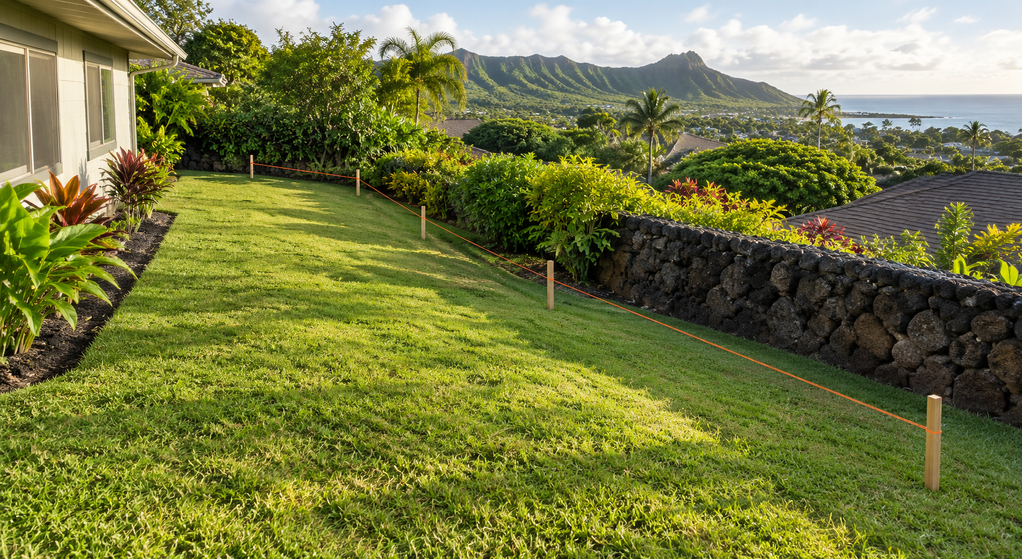
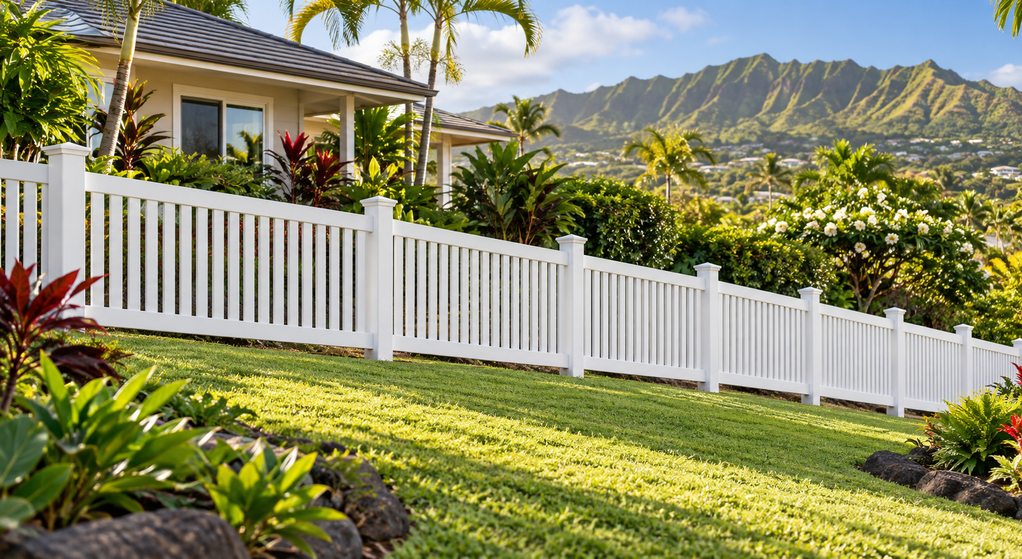
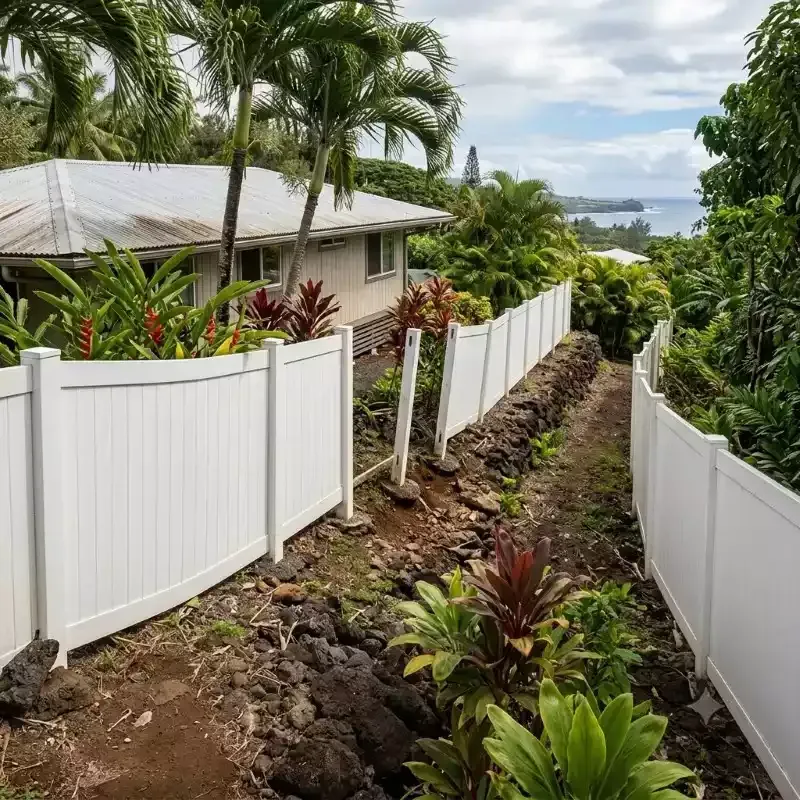
Wind exposure is another factor. A tall privacy fence catches more wind than an open picket or semi-private design. On properties with open exposure, slopes, or strong trade winds, post depth, spacing, concrete footing, and panel design need to be planned properly. A vinyl fence can perform well, but poor installation will shorten its life.
Common Mistakes With Vinyl Fencing in Hawaiʻi
The first mistake is choosing the cheapest panel without considering climate. A low-cost vinyl fence may save money upfront, but if it warps, yellows, or weakens early, the project becomes more expensive over time.
The second mistake is ignoring the posts. Posts are the backbone of the fence. If they are too shallow, poorly aligned, or set without proper footing, the fence can lean even if the panels are good. Hawaiʻi’s terrain can vary from level residential lots to sloped yards, rocky ground, and areas with drainage issues. A fence should be installed for the actual site, not just the product brochure.
The third mistake is treating all properties the same. A vinyl privacy fence around a dry, sunny inland yard is not the same as a fence beside a wet, shaded property line or a salt-exposed coastal lot. The design should match the exposure, soil, drainage, and purpose of the fence.
When Vinyl Is the Best Choice
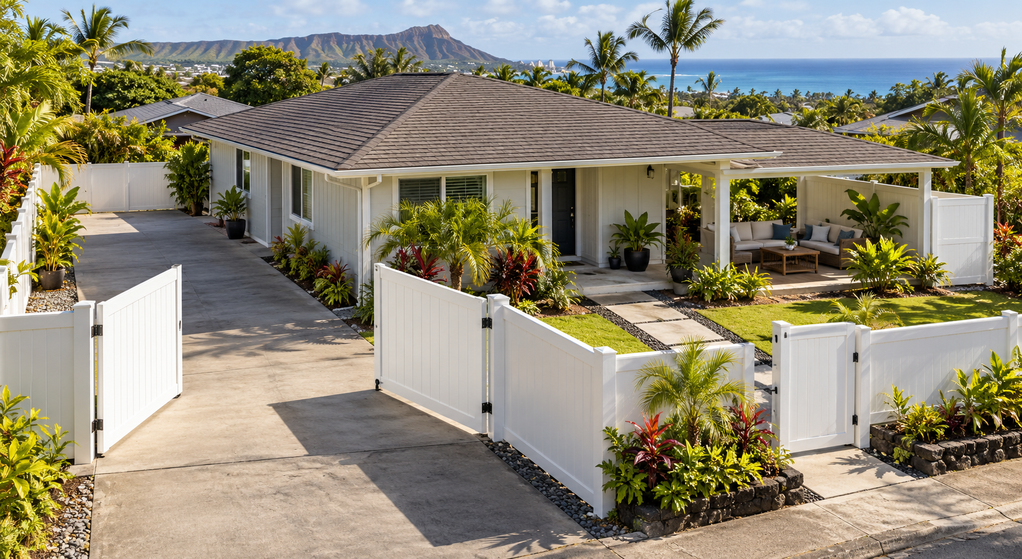
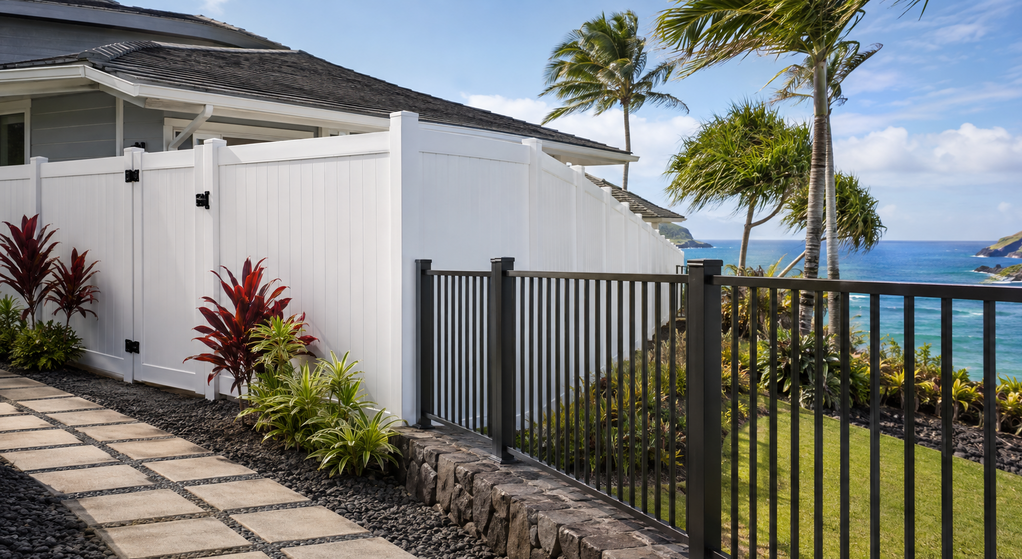
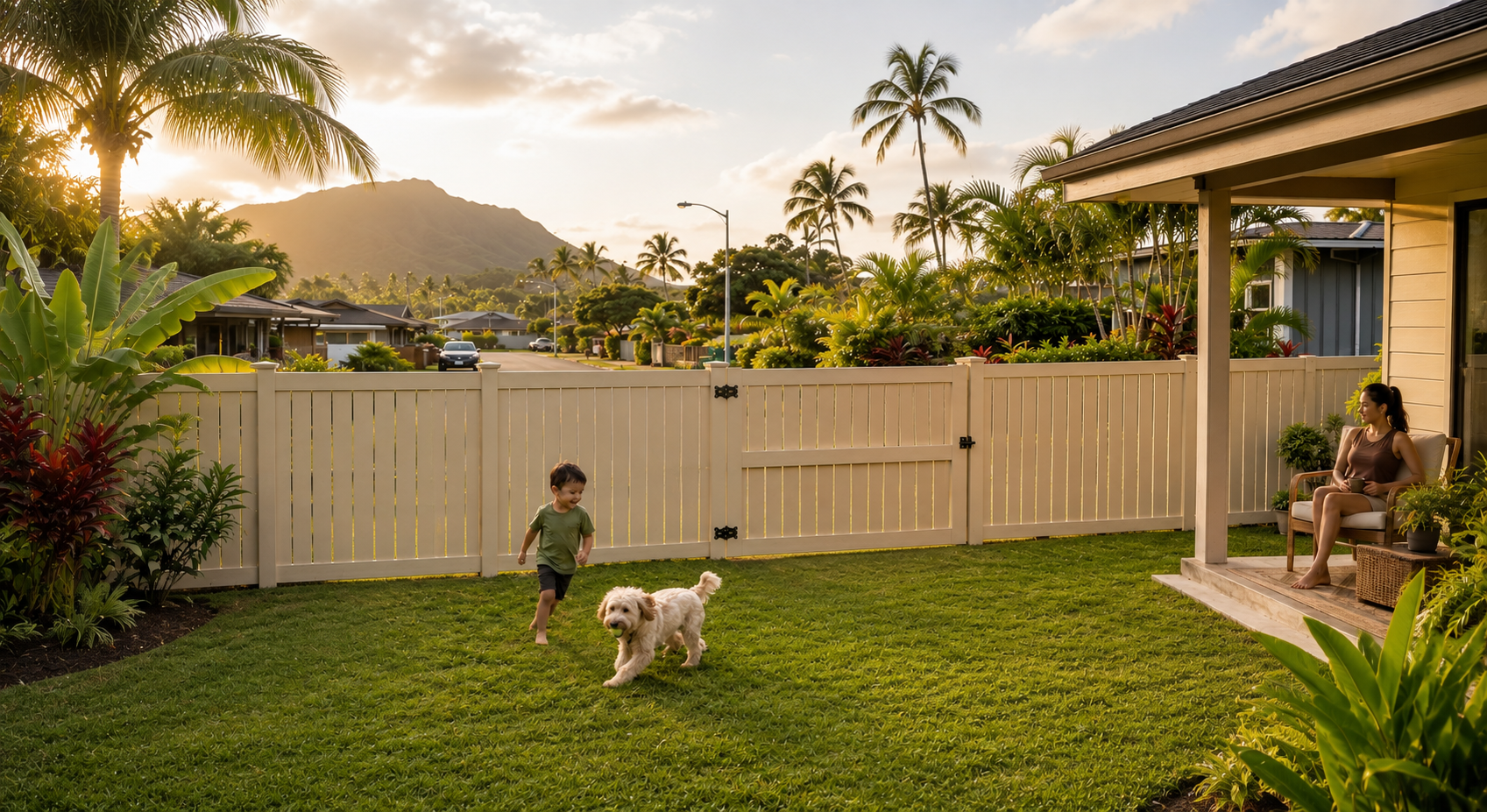
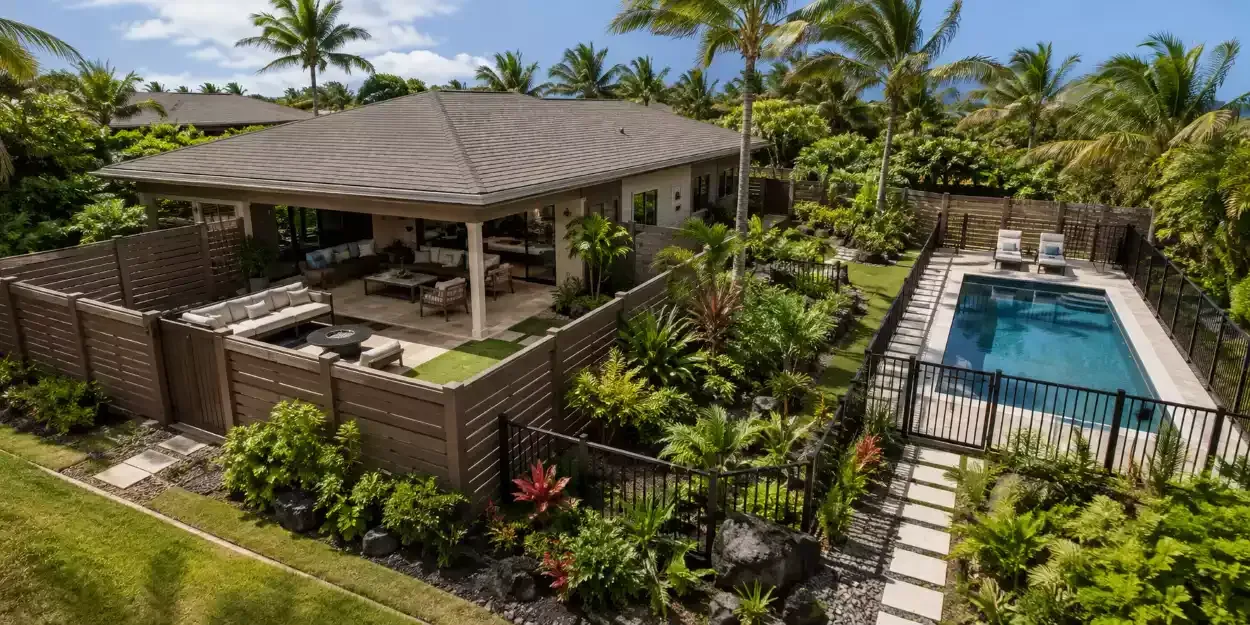
Vinyl is often a strong choice for Hawaii homeowners who want privacy, clean curb appeal, and lower maintenance. It works especially well for residential yards, pool areas, side yards, pet enclosures, and properties where homeowners want a neat, finished appearance without constant painting.
It is also a smart choice for homeowners who want a fence that fits modern island homes. White vinyl privacy fencing remains popular, but there are also tan, textured, and decorative styles that can soften the look. The right design depends on the home’s exterior, landscaping, neighborhood, and the amount of privacy needed.
Based on local project experience, the best results usually come from matching three things: the material, the site conditions, and the installation method. Vinyl is not just a panel choice. It is a full fence system, and every part should support the way the fence will actually be used.
Final Takeaway
Vinyl fencing is a good choice for many Hawaii homes because it handles moisture, termites, and salt-air exposure better than many traditional fence materials. It offers a clean look, strong privacy, and easier maintenance, which makes it practical for island homeowners who want a fence that does not demand constant upkeep.
The smarter decision is not simply choosing vinyl. It is choosing quality vinyl, proper hardware, strong post installation, and a design that fits the property’s exposure. For Hawaiʻi homes, that combination is what turns vinyl from a convenient option into a long-term fencing solution.

written by
Kurt Manalastas
Property Security & Exterior Improvement Journalist
Kurt creates research-based content focused on fencing solutions, property security, and outdoor boundary improvements. By combining industry best practices, material insights, and practical property protection strategies, he helps homeowners and business owners make informed decisions about building safer, more secure, and visually appealing outdoor spaces.