When Does a Removable Vinyl Fence Section Make Sense for Backyard Access?
Summary
A removable vinyl fence section makes sense when you rarely need backyard access wider than your everyday gate and have a clear route for equipment on both sides. A wider gate is usually easier for recurring trips. Before choosing, measure the usable opening, check how the section releases, and plan how it will be secured again.
A new shed can fit in the backyard and still be impossible to deliver through the side yard. The crew may need room for a loaded dolly to turn, or the fence opening may line up with an air-conditioning unit. Removing a fence section helps only if it opens a route the crew can actually use.
When comparing vinyl fence installation services on Oʻahu, ask for two dimensions on the drawing: the width of the fence section and the clear opening you get once it is removed. The second number determines what can pass.
How often will you need the extra width?
A removable section earns its place when the same route may be useful for occasional work over several years. You might need it for a shed delivery now and for equipment to replace a patio later.
Between those projects, a regular walk gate can handle people, trash bins, and routine yard care.
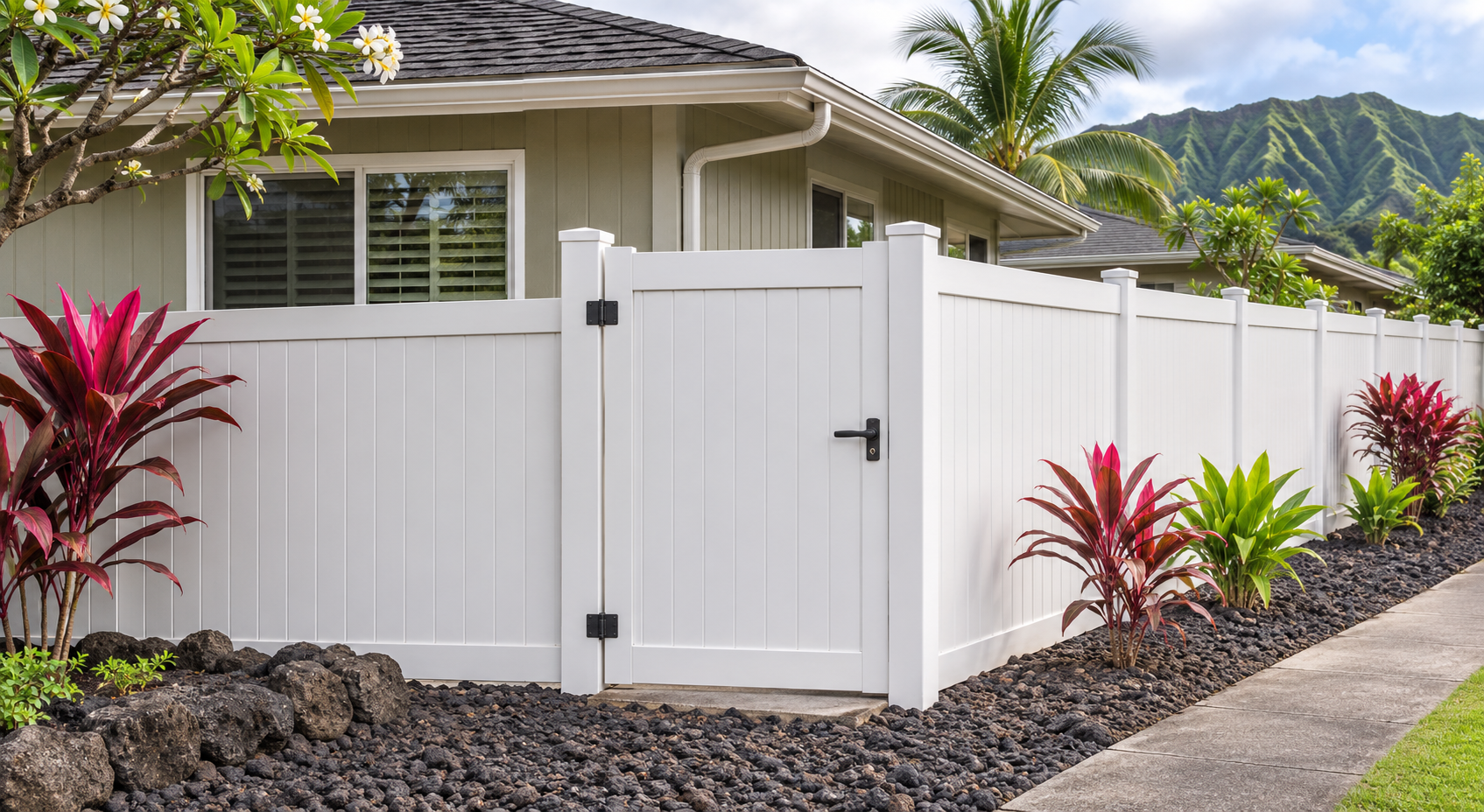
For weekly mower access or frequent trips with a utility trailer, price a wider or double-swing gate. Opening it takes less effort than unfastening, carrying, and reinstalling a panel each time. Check where both leaves can swing, especially if the ground rises just inside the fence. For a single confirmed delivery, ask what temporary removal and reinstatement would cost before paying for a permanent access feature.
Sunset Hawaii Fencing Company installs residential vinyl fencing on Oʻahu. If you are comparing quotes, give each installer the same expected opening width, access frequency, and equipment route so you can compare the proposed designs on equal terms.
Use the guide to planning a fence around driveways and walkways to check the whole equipment route. Review fence hardware and coatings for Hawaii when comparing fittings that will be removed, handled and secured again.
Walk the route with the delivery dimensions
Ask the delivery or excavation crew for the width and height of the equipment in its travel configuration, including the load, and the clearance it needs to turn. Measure from the drop-off point to the backyard work area. Check overhangs, tight corners, and narrow spots between the house and the property edge. On a sloping side yard, have the crew check whether the approach is usable, including any soft ground after rain.
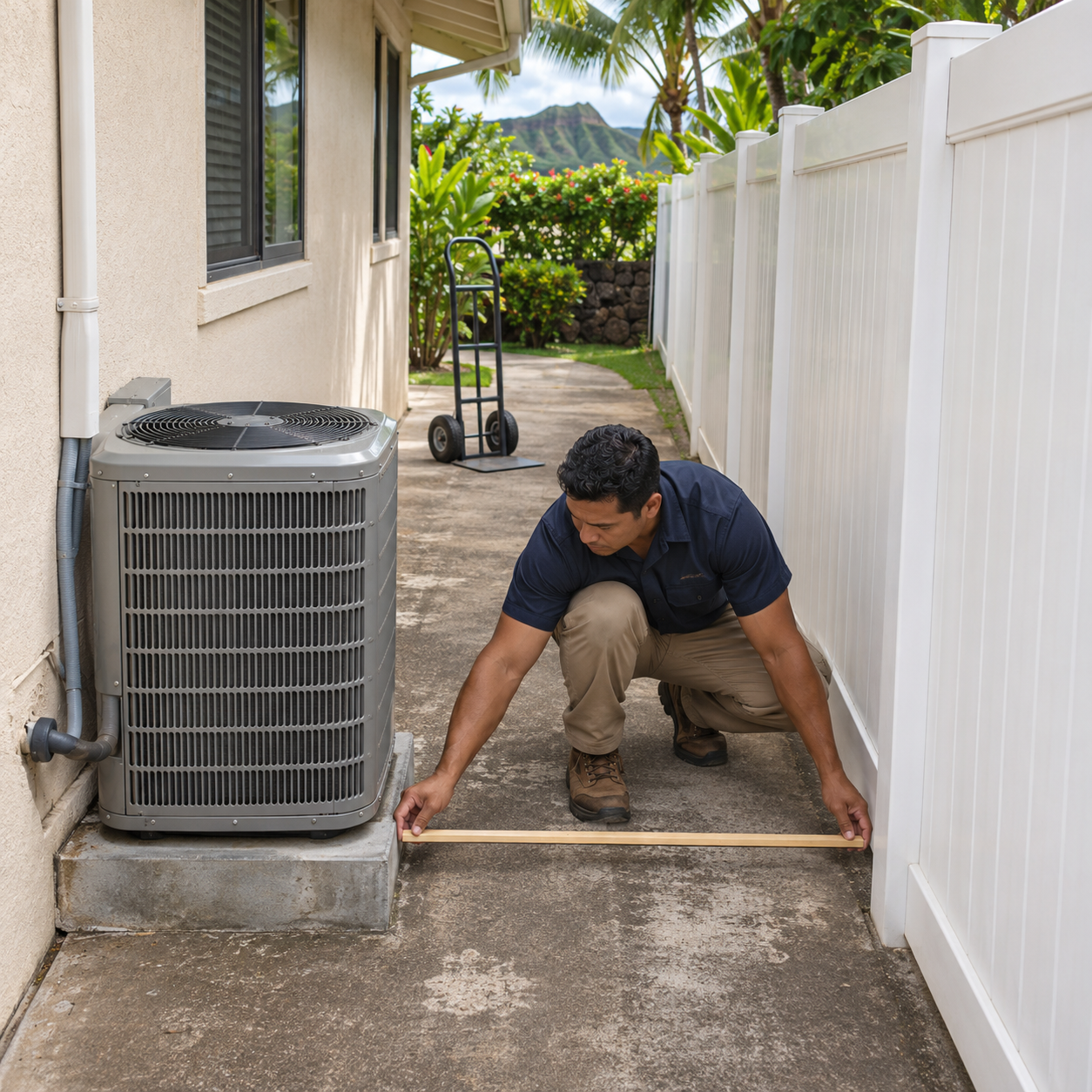
Mark the proposed opening and turning space on both sides. Measure between the faces of the posts or hardware that stay in place. A removable panel can still leave a post in the path of a loaded cart.
Find out exactly what comes out
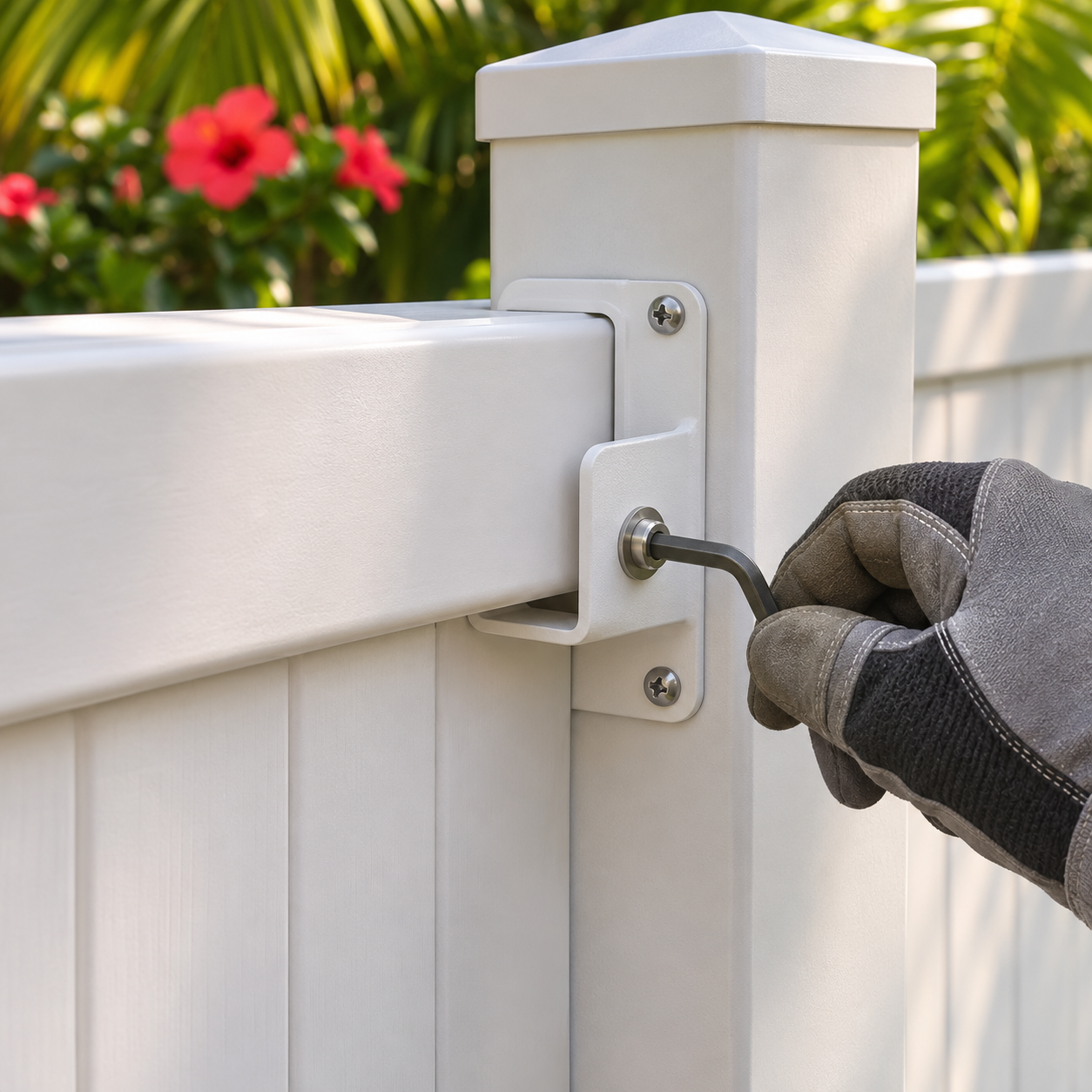
A standard vinyl section may be assembled with rail ends that lock inside the posts. The Bufftech fence installation instructions show how some systems use tabs to hold rails in place. For an existing fence, identify how the rails are held before assuming a section can lift out intact. Ask whether a retrofit can preserve the neighboring sections and whether the fence maker supports the proposed connections.
For a new opening, ask the installer to show which parts release and which stay anchored. If the route spans two bays, show what happens to the center post and how adjoining sections stay supported. On an exposed lot, have the installer explain how the closed section transfers wind loads to the posts and how the fittings will remain accessible.
Plan the day the fence comes down
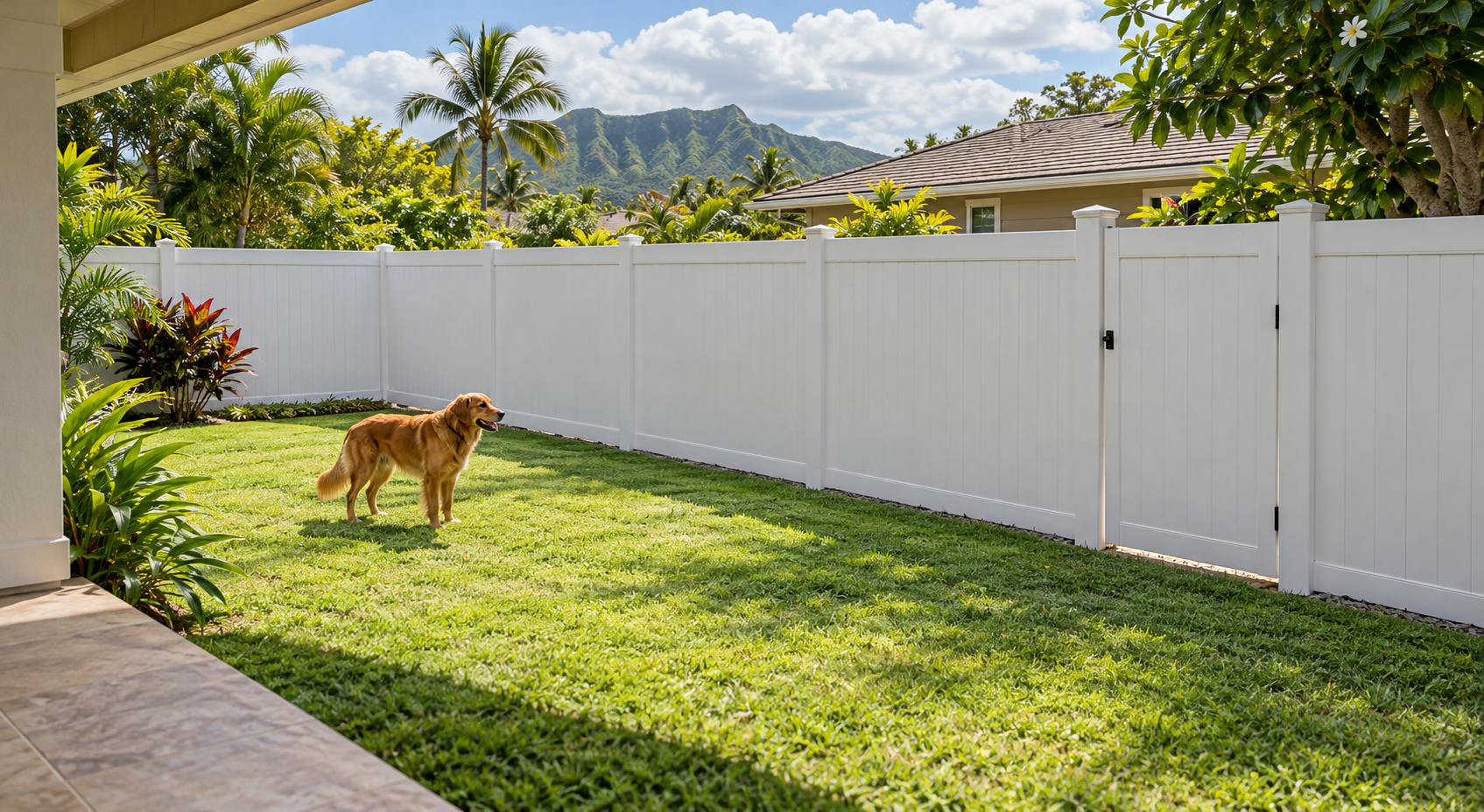
Agree who removes and reinstalls the section, what tools they need and how many people can carry it safely. Choose a secure storage spot out of the equipment route. For multi-day work, name who secures the opening at the end of each shift. Arrange separate containment for pets.
Ask for a demonstration at handover. Watch how the section comes out, how the hardware goes
back in, and how to tell that the connections are
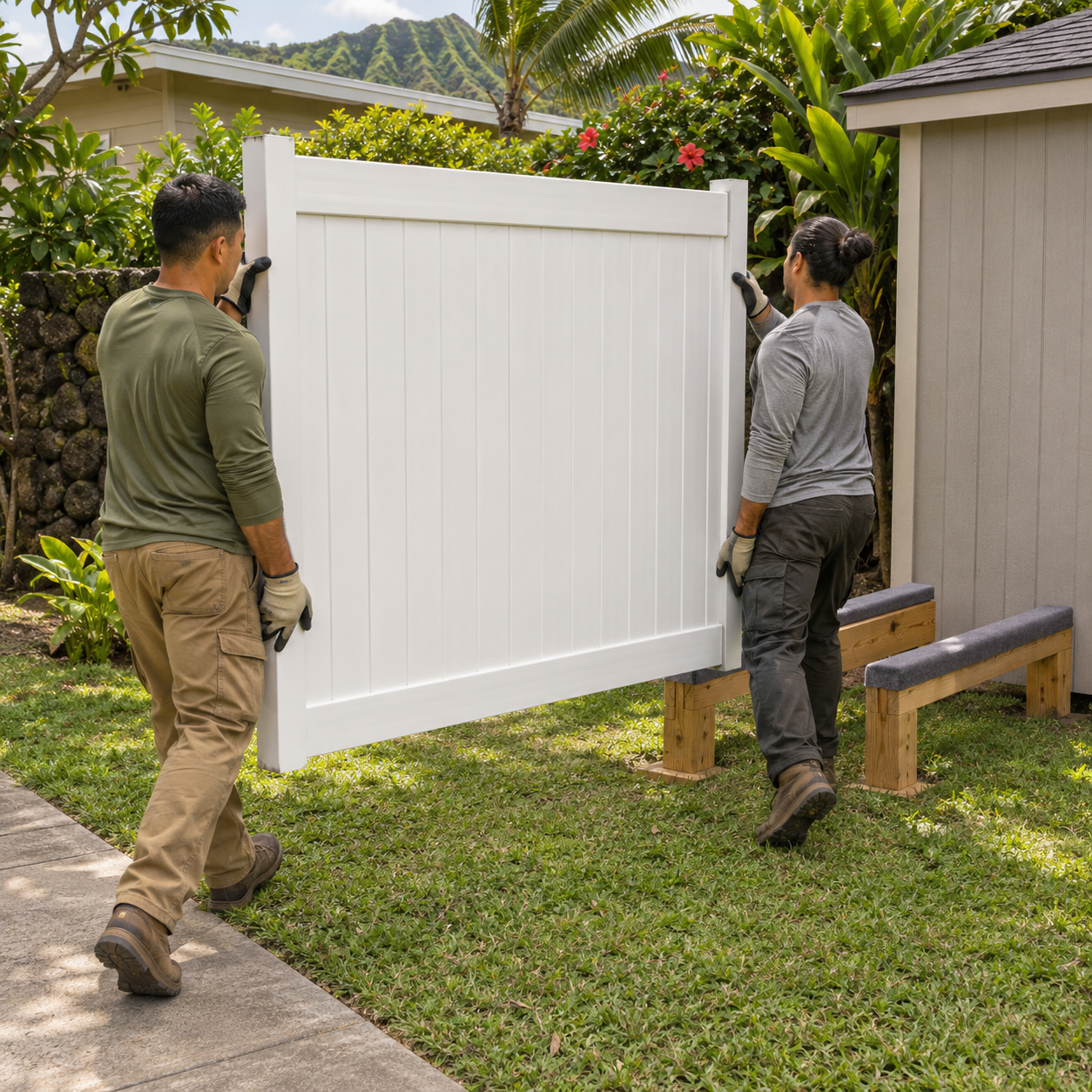
fully engaged. Record the fitting or replacement part names while you have the paperwork. For an existing fence, ask for this demonstration before relying on the opening for a scheduled delivery.
Choose the removable section if the route works, the extra width is only occasionally needed, and someone can reliably take the section out and secure it again. When a single project drives the decision, have the crew confirm the route before spending money on any fence changes.
For a pool enclosure, agree on how to maintain an effective barrier throughout the work and confirm the proposed alteration with Honolulu’s Department of Planning and Permitting.

written by
Kurt Manalastas
Property Security & Exterior Improvement Journalist
Kurt creates research-based content focused on fencing solutions, property security, and outdoor boundary improvements. By combining industry best practices, material insights, and practical property protection strategies, he helps homeowners and business owners make informed decisions about building safer, more secure, and visually appealing outdoor spaces.