Perimeter Fencing for Hawaii Warehouses, Storage Areas, and Work Yards
Summary
A useful commercial perimeter must support deliveries, protect stored materials, and keep everyday access manageable. For Hawaii warehouses and work yards, fence planning starts with how the site operates. Gate placement, storage setbacks, visibility, coastal exposure, and maintenance access matter as much as the material surrounding the property.
A warehouse boundary has several jobs during one shift. Drivers need room to arrive, employees need a clear entrance, and outdoor inventory needs protection after closing. A fence that interrupts loading or requires constant gate supervision can create operational problems even when its panels remain sound.
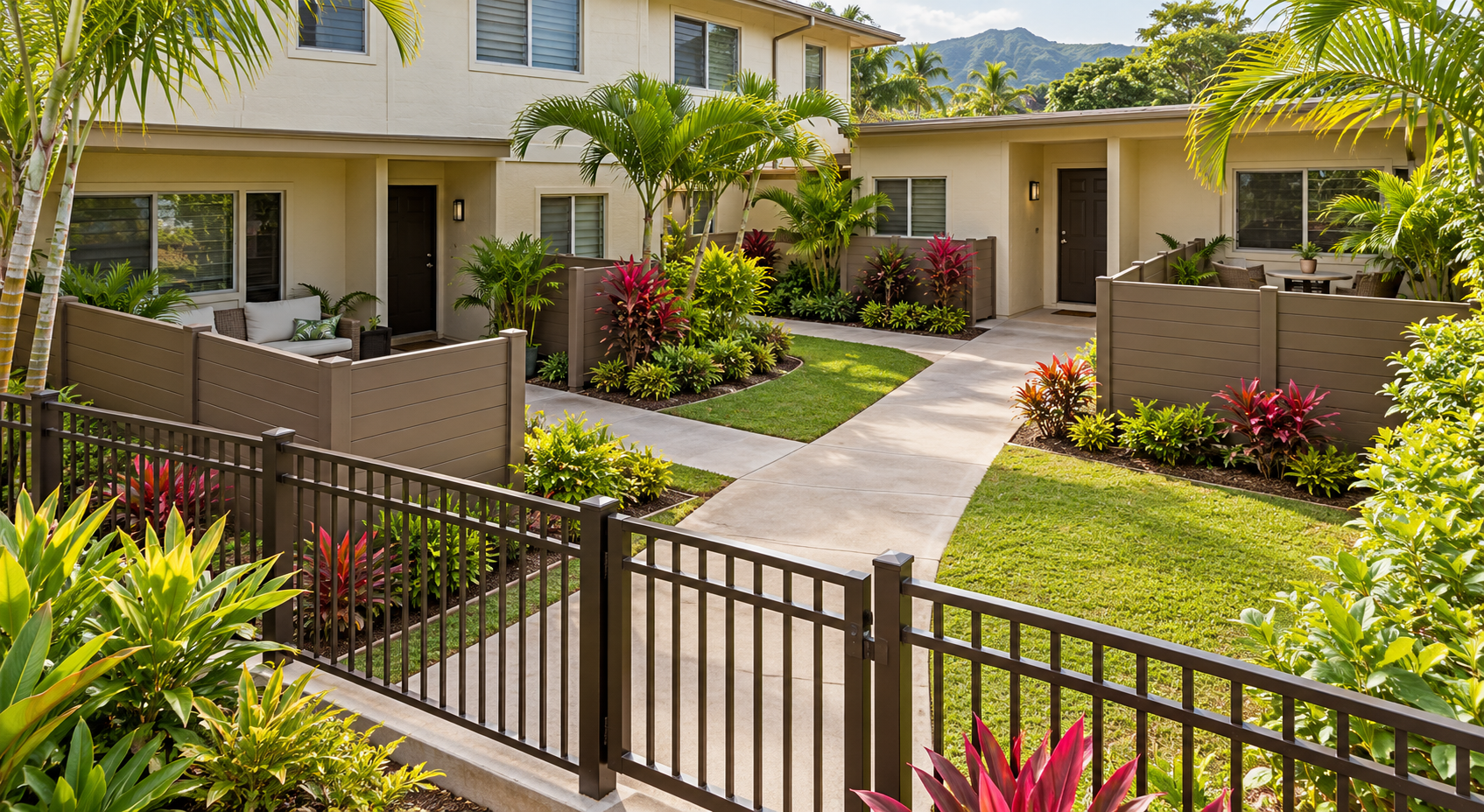
Owners comparing commercial aluminum fencing installation in Hawaii should first define what each part of the perimeter must accomplish. Sunset Hawaii Fencing Company offers residential and commercial fencing on Oahu, including commercial aluminum options. Selecting a suitable system still requires a site-specific discussion about access, exposure, and the goods being enclosed.
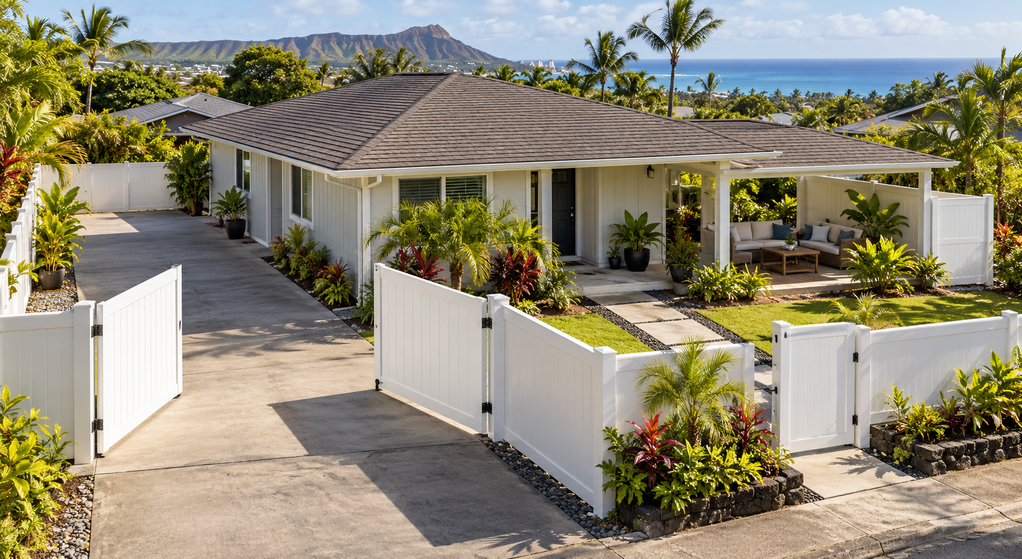
Use the driveway gate placement checklist for Hawaii properties to examine waiting space, turning movements, slope, and drainage. At a warehouse, apply those checks to actual delivery vehicles and collection equipment.
The guide to why fence hardware and coatings matter in Hawaii expands on coast-exposed fasteners, hinges, latches and protective finishes before a perimeter is specified.
Map the Yard During Its Busiest Hour
Begin with a sketch showing loading bays, parking, outdoor stock, waste collection, and vehicle routes. Then trace a busy delivery period: a truck arrives while another unloads, staff cross the yard, and a forklift moves material between storage and the warehouse.
That exercise reveals where a proposed boundary could remove useful maneuvering space. Check the largest vehicle that regularly visits, including its trailer, turning path, and unloading position. A gate opening wide enough for straight entry may still be awkward when the approach requires a tight turn.
Divide access by purpose. Visitors may need to reach an office without entering the stock yard. Employees arriving on foot need a clear route that does not depend on a loading gate being open. Shared premises also need agreement about which tenant controls each entrance and who can enter outside normal hours.
Resolve the Gate Before Pricing the Fence Run
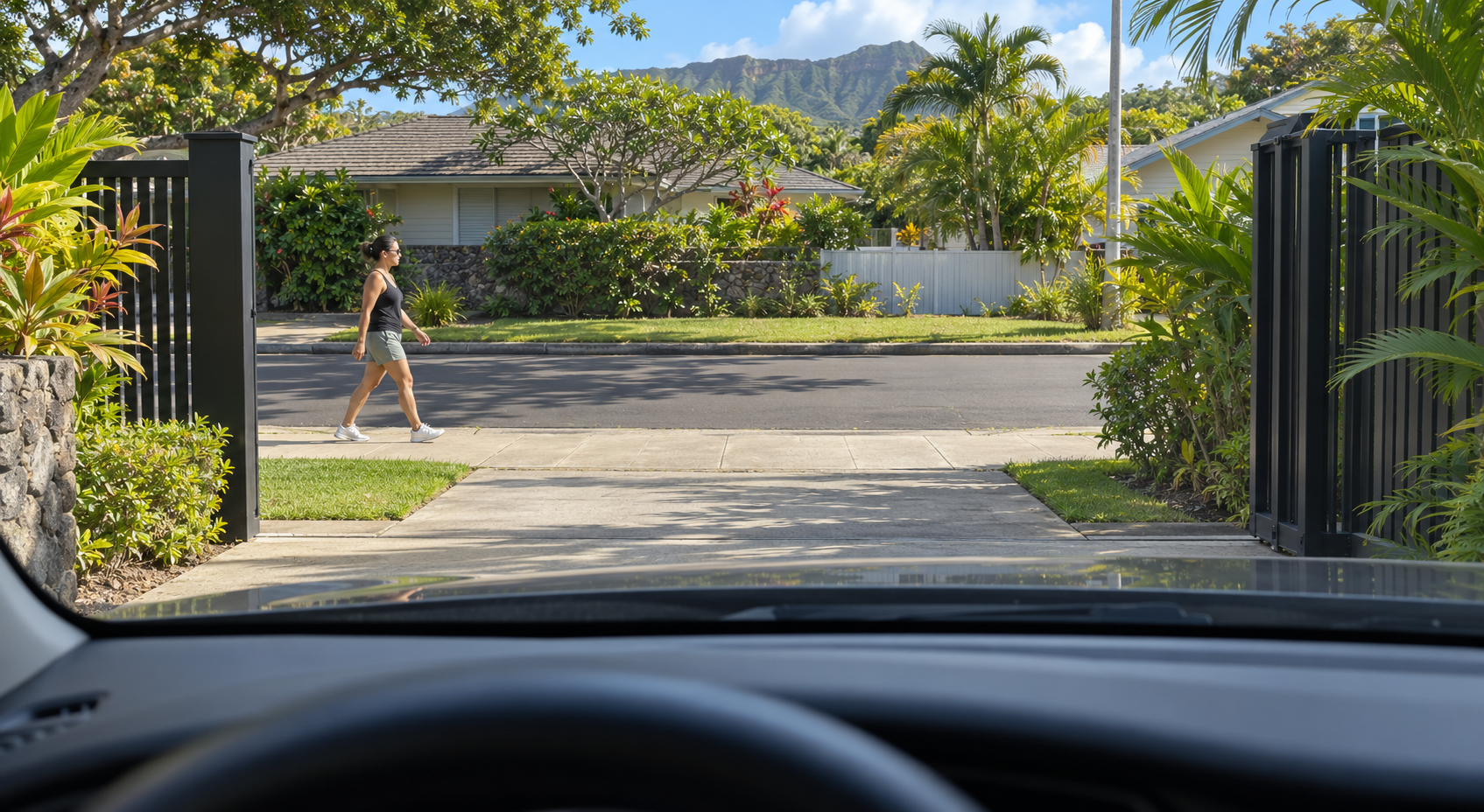
The entrance is where security and daily workflow meet. Decide where drivers wait, how they request entry, and whether someone must leave the building to admit them. Account for delivery peaks rather than only average traffic.
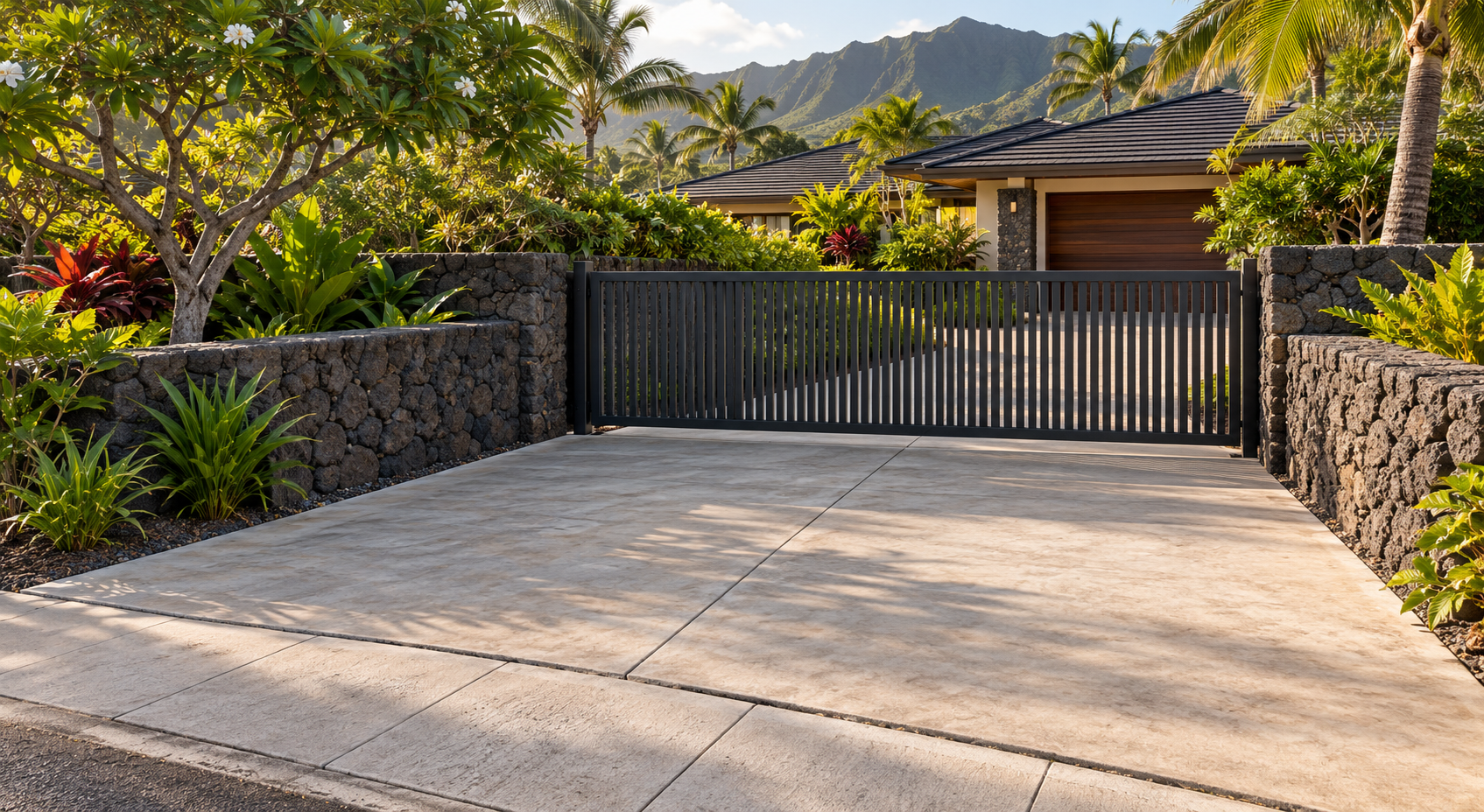
A sliding gate needs unobstructed space beside the opening for its travel. A swing gate needs a clear swing area that remains available even when the yard is full. Neither space should become an informal pallet-storage location.
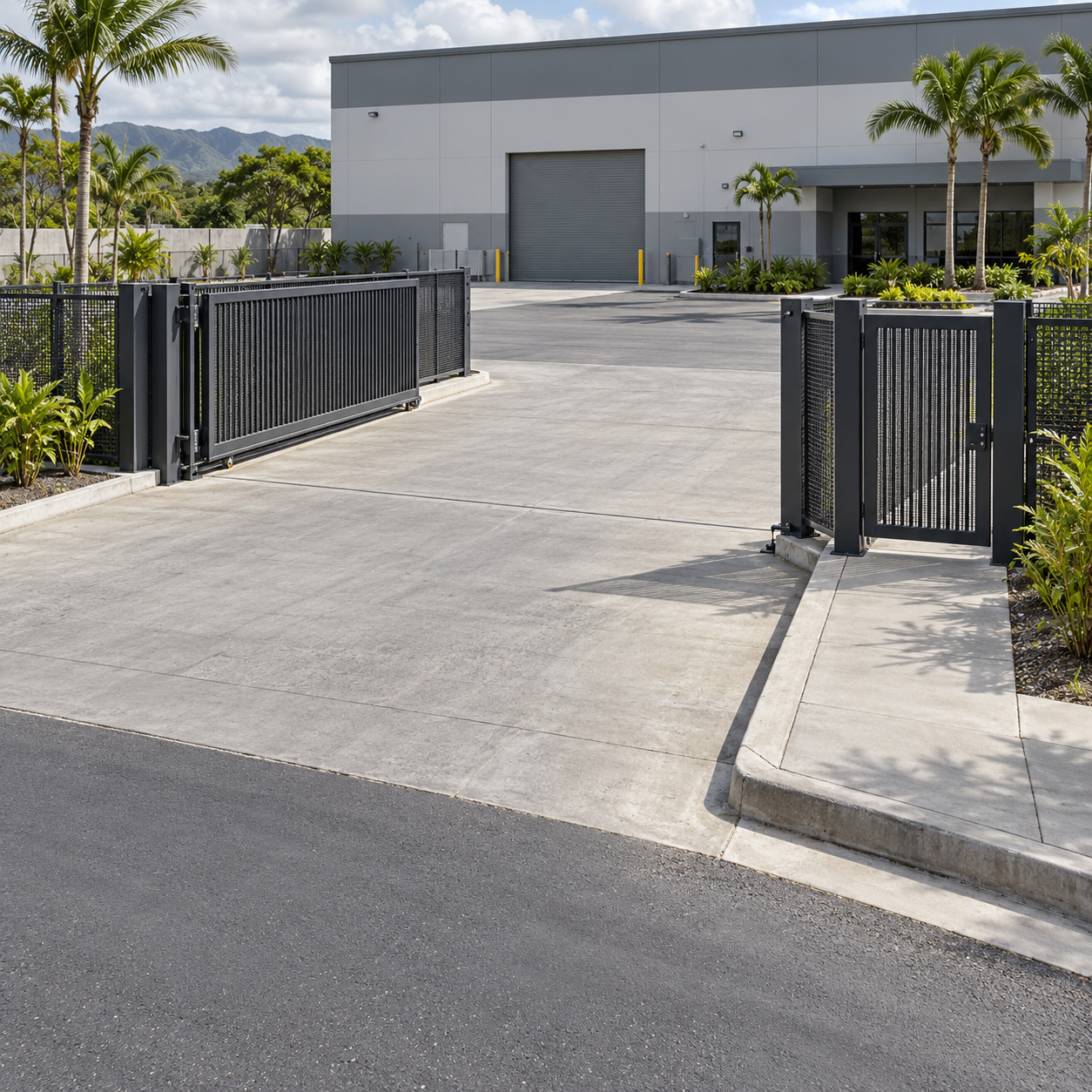
If the gate will be automated, separate pedestrian access is a safety consideration, not simply a convenience. The Door & Access Systems Manufacturers Association’s automated gate installation and maintenance safety guidance calls for a separate pedestrian entrance and appropriate entrapment protection. Have a qualified installer assess the complete gate system and explain safe operation, manual release, and maintenance before handover.
Match the Boundary to the Inventory Behind It
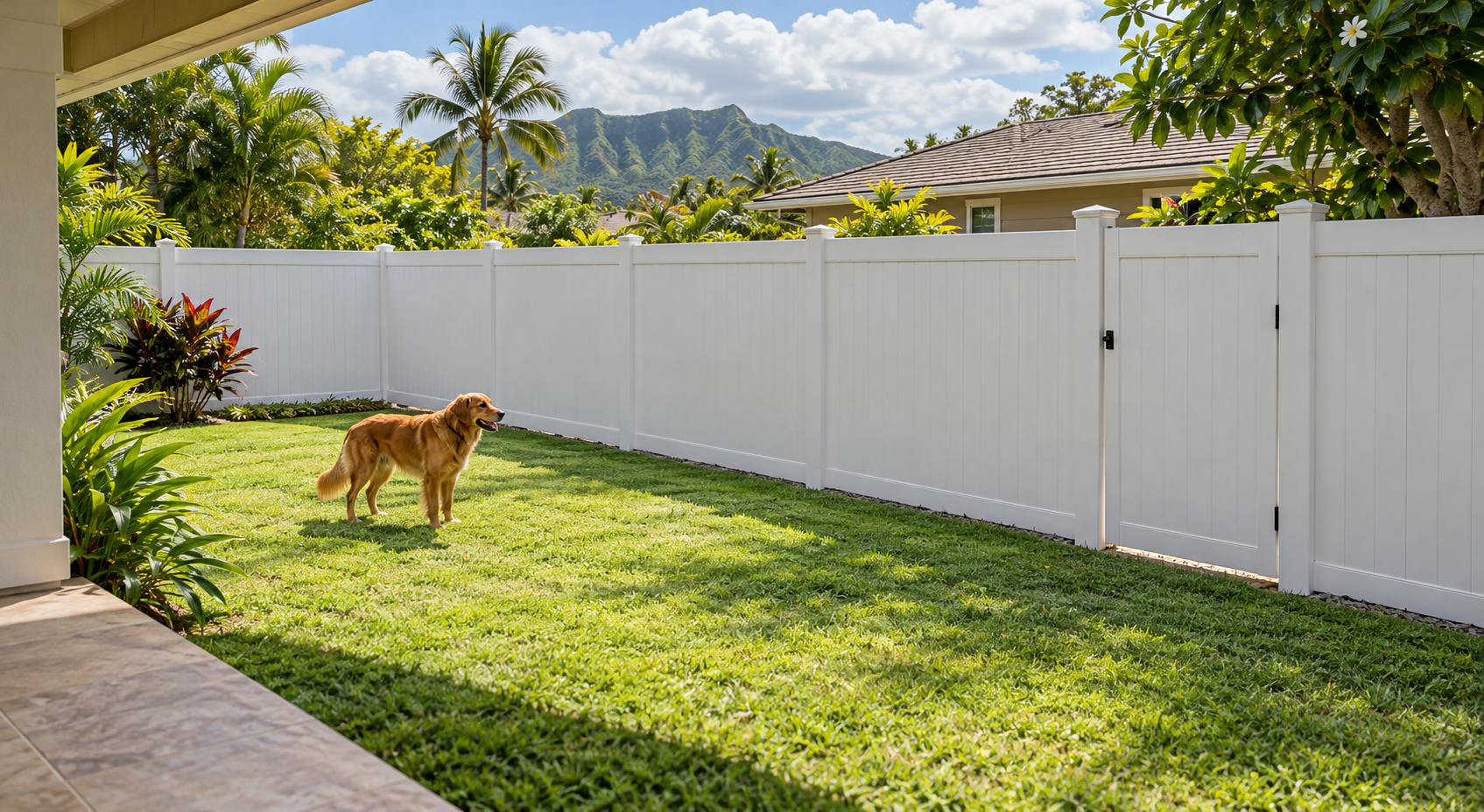
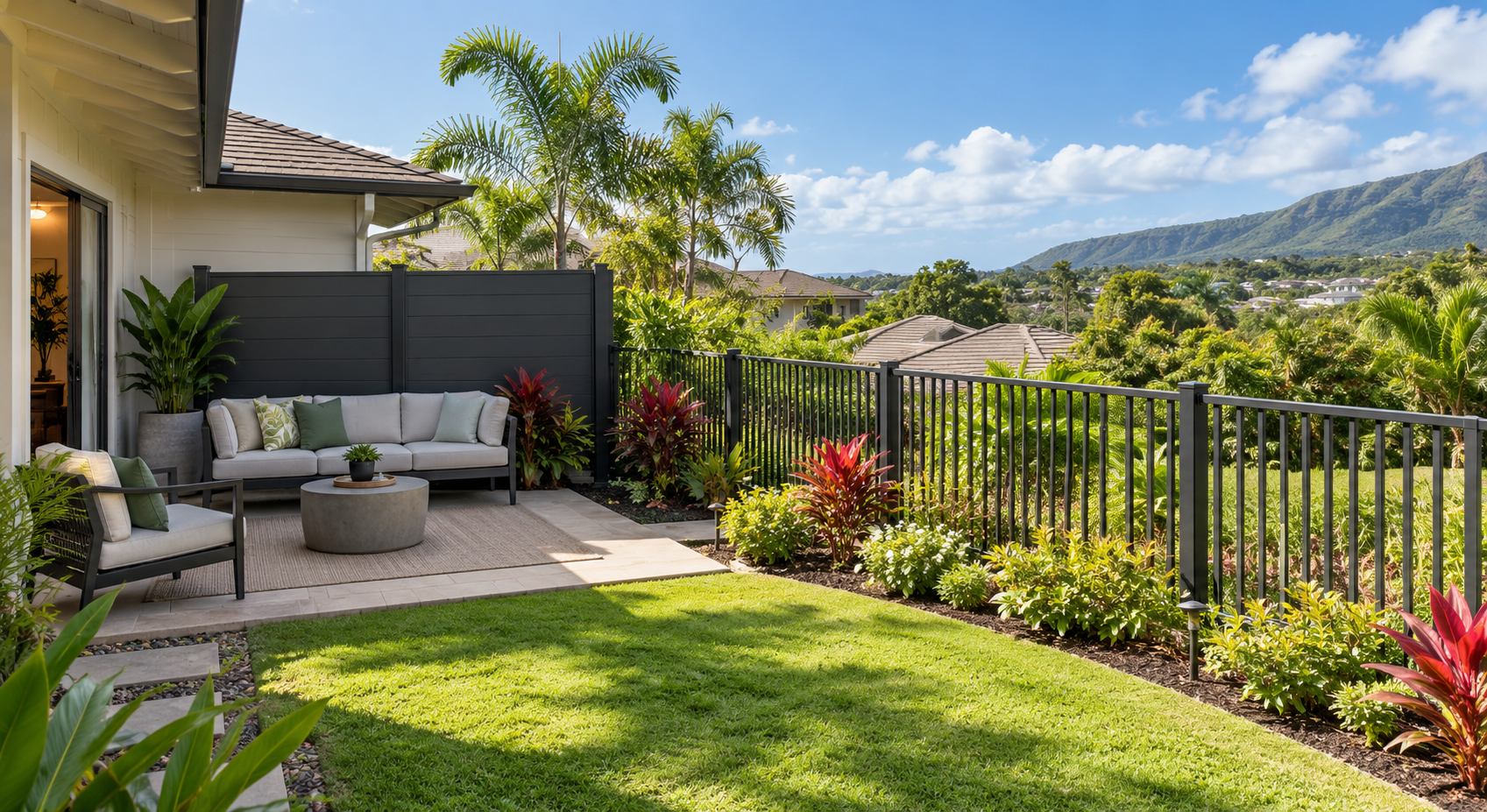
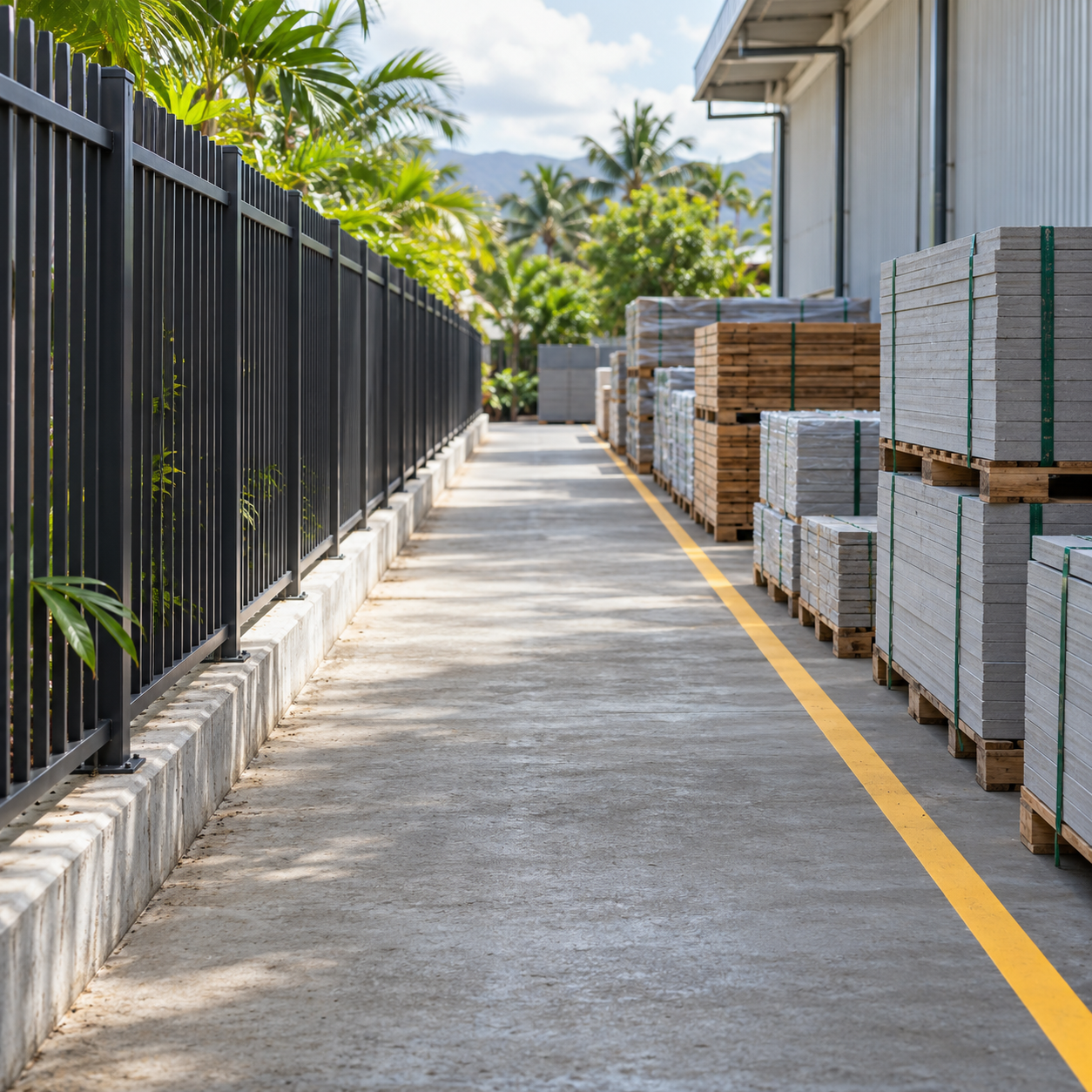
Different storage areas can justify different perimeter treatments. Open fencing can preserve views of approaching vehicles and activity along the boundary. Screening can conceal stock, but it can also obstruct observation from the office or street.
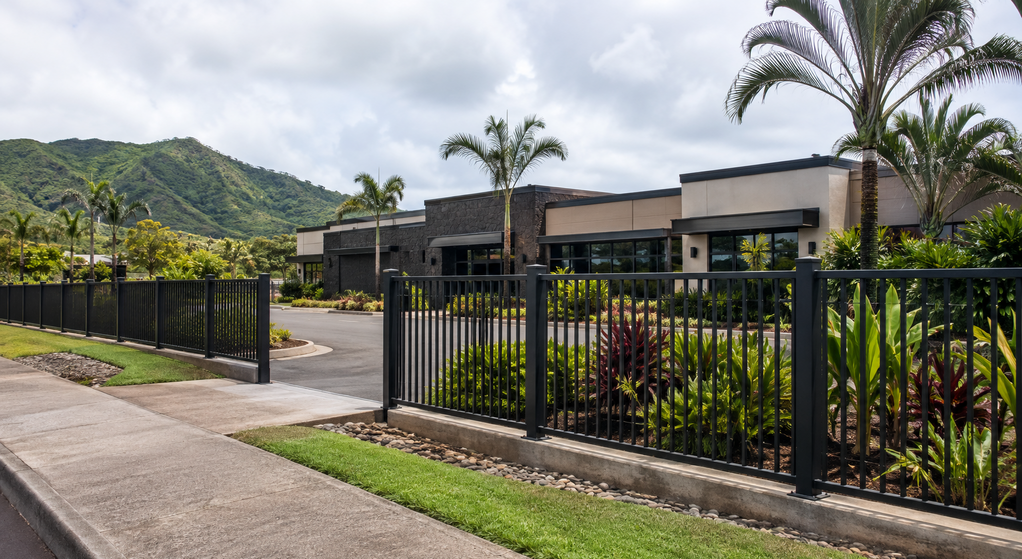
Choose deliberately between those outcomes. A customer-facing warehouse frontage may benefit from an open aluminum system, while a
screened waste-storage area serves a different purpose. Chain-link or welded-mesh systems may also warrant comparison where enclosure function takes priority over appearance. Compare actual panel, post, connection, and gate specifications rather than treating a material name as a security rating.
Consider how goods could be reached through or passed across the boundary. Keep portable stock away from accessible openings, and avoid stacking pallets or containers where they create a convenient climbing route. Establish a marked storage limit so usable perimeter clearance survives busy periods.
Ordinary perimeter fencing should not be assumed to stop a forklift or truck. Where vehicle impact is a foreseeable concern, assess separately designed protective barriers and their placement.
Specify the Small Components for the Exposure
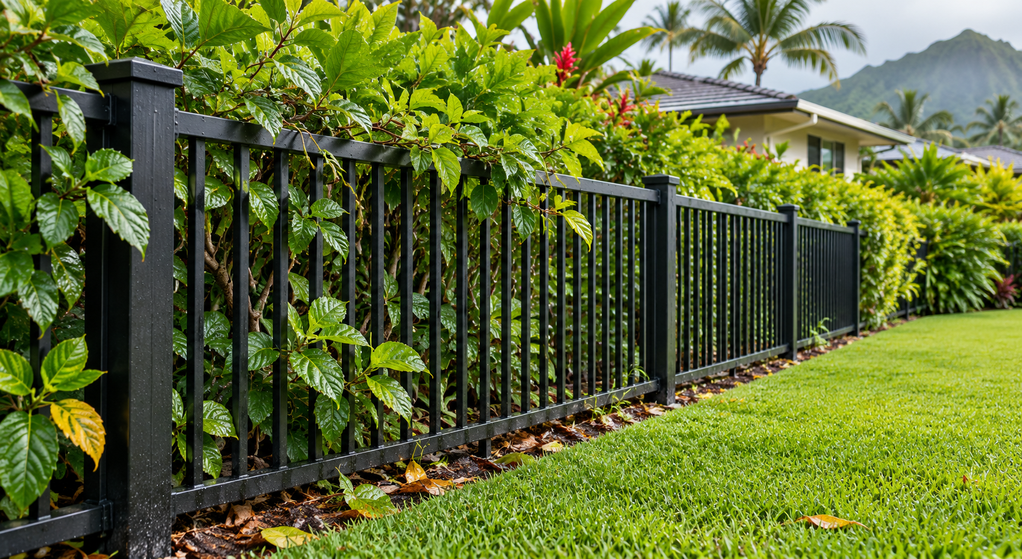
For an Oahu yard exposed to airborne salt or ocean spray, ask for the proposed finish, fasteners, hinges, and latch materials in writing. “Metal fencing” is too broad a specification to compare quotations meaningfully.
Aluminum does not develop iron rust, but that does not make every aluminum assembly immune to corrosion or finish damage. Connections, dissimilar metals, and damaged coatings deserve attention.
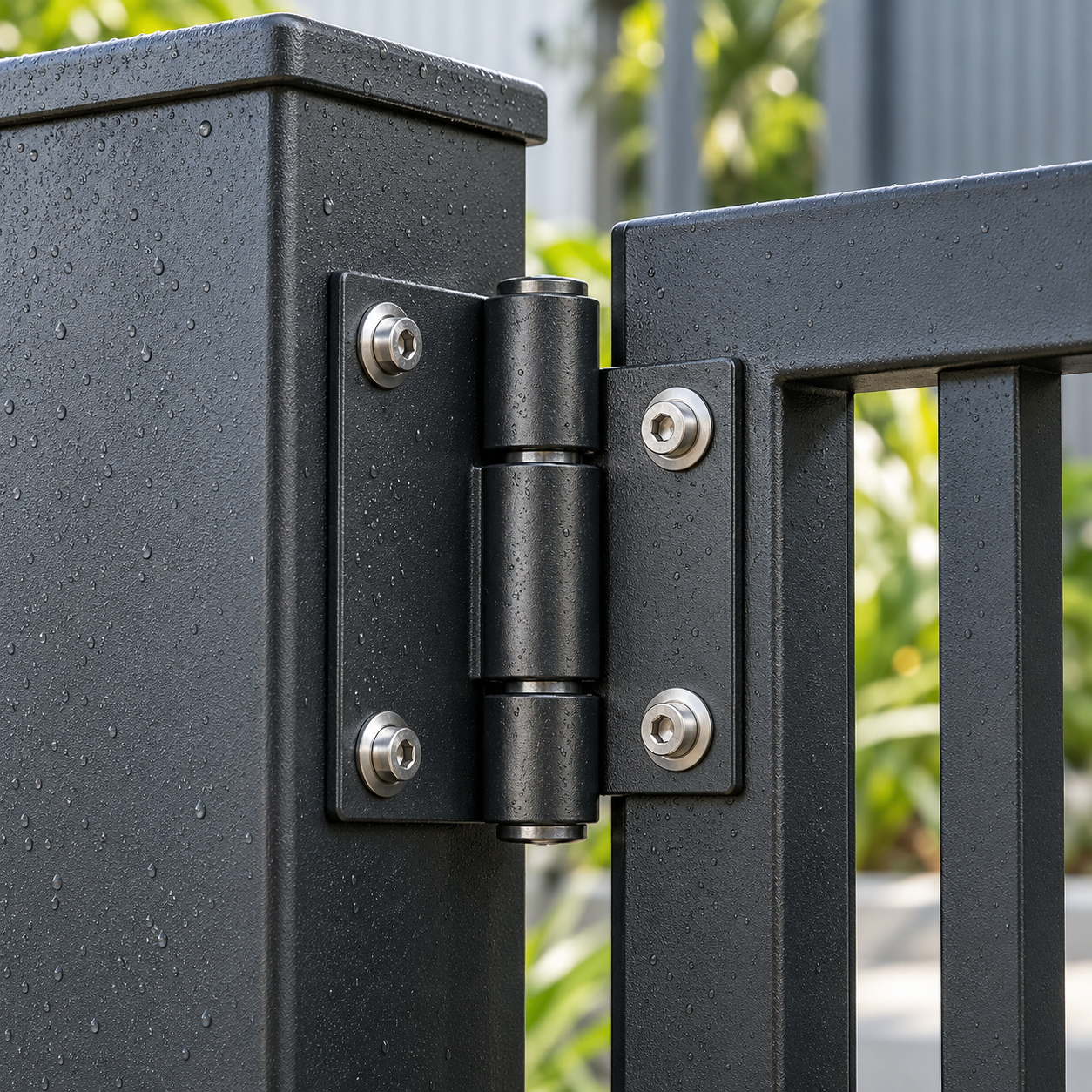
Describe how often the gate will operate and request hardware suited to its size, weight, and expected use. Also ask how replacement parts will be obtained. A serviceable gate with available components can be more useful operationally than a distinctive design that is difficult to repair.
Preserve access for cleaning and inspection. Stock pushed against the fence can hide loose connections, coating damage, or debris collecting at its base.
Turn the Site Walk Into a Comparable Scope
Before requesting final prices, assemble a marked plan, vehicle information, photographs, and an access schedule. Ask each bidder to address the same items:
- Fence layout, height, material specifications, and storage clearances.
- Gate openings, travel areas, controls, and pedestrian access.
- Ground conditions, drainage, underground services, and proposed post support.
- Applicable approvals, installation sequencing, and temporary security.
- Handover instructions, maintenance responsibilities, warranty terms, and exclusions.
- Plan how the yard will remain controlled while an old boundary is removed. Identify who receives deliveries during construction and who checks temporary closures at the end of each day.
A successful perimeter supports the work happening inside it. Settle movement and access first, match the enclosure to the stored goods, and compare complete systems before choosing the lowest price per foot.

written by
Kurt Manalastas
Property Security & Exterior Improvement Journalist
Kurt creates research-based content focused on fencing solutions, property security, and outdoor boundary improvements. By combining industry best practices, material insights, and practical property protection strategies, he helps homeowners and business owners make informed decisions about building safer, more secure, and visually appealing outdoor spaces.