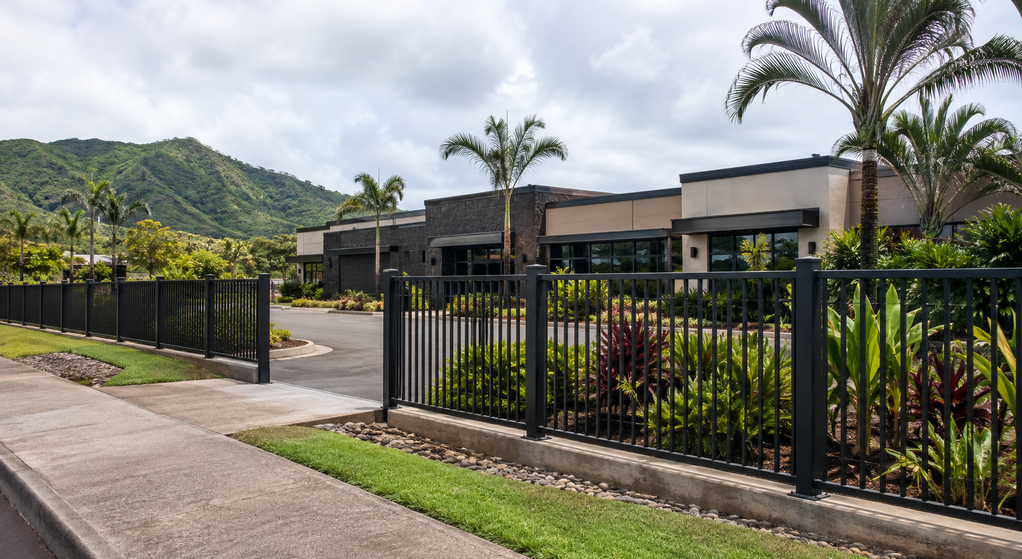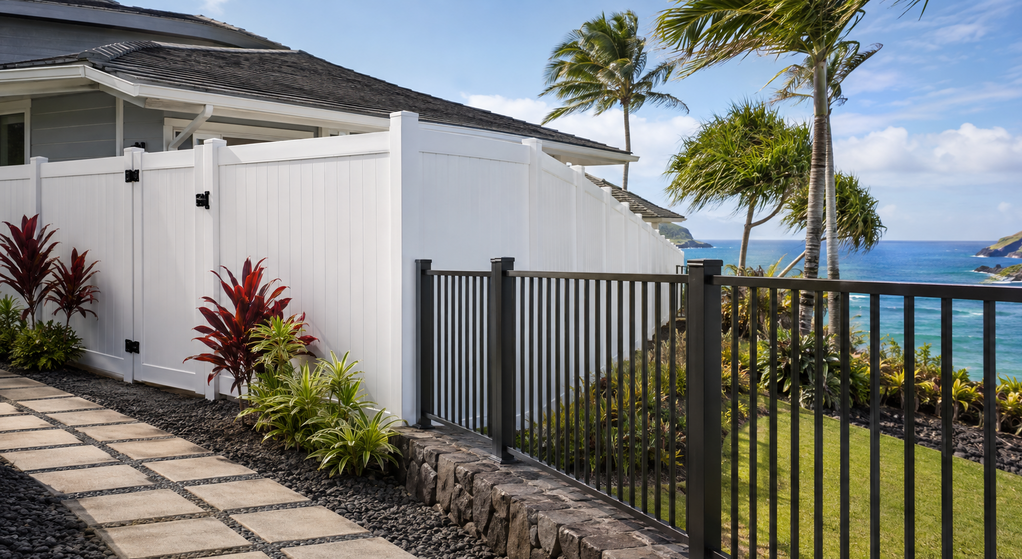
Why Fence Hardware and Coatings Matter in Hawaii
Fence Durability Check:
Fence hardware and coatings matter in Hawaii because salt air, humidity, and rain can corrode screws, hinges, brackets, and gates, while wind adds mechanical stress and UV exposure gradually degrades protective finishes over time. Choosing compatible corrosion-resistant hardware, durable coatings, proper surface preparation, and regular maintenance helps the entire fence system last longer.
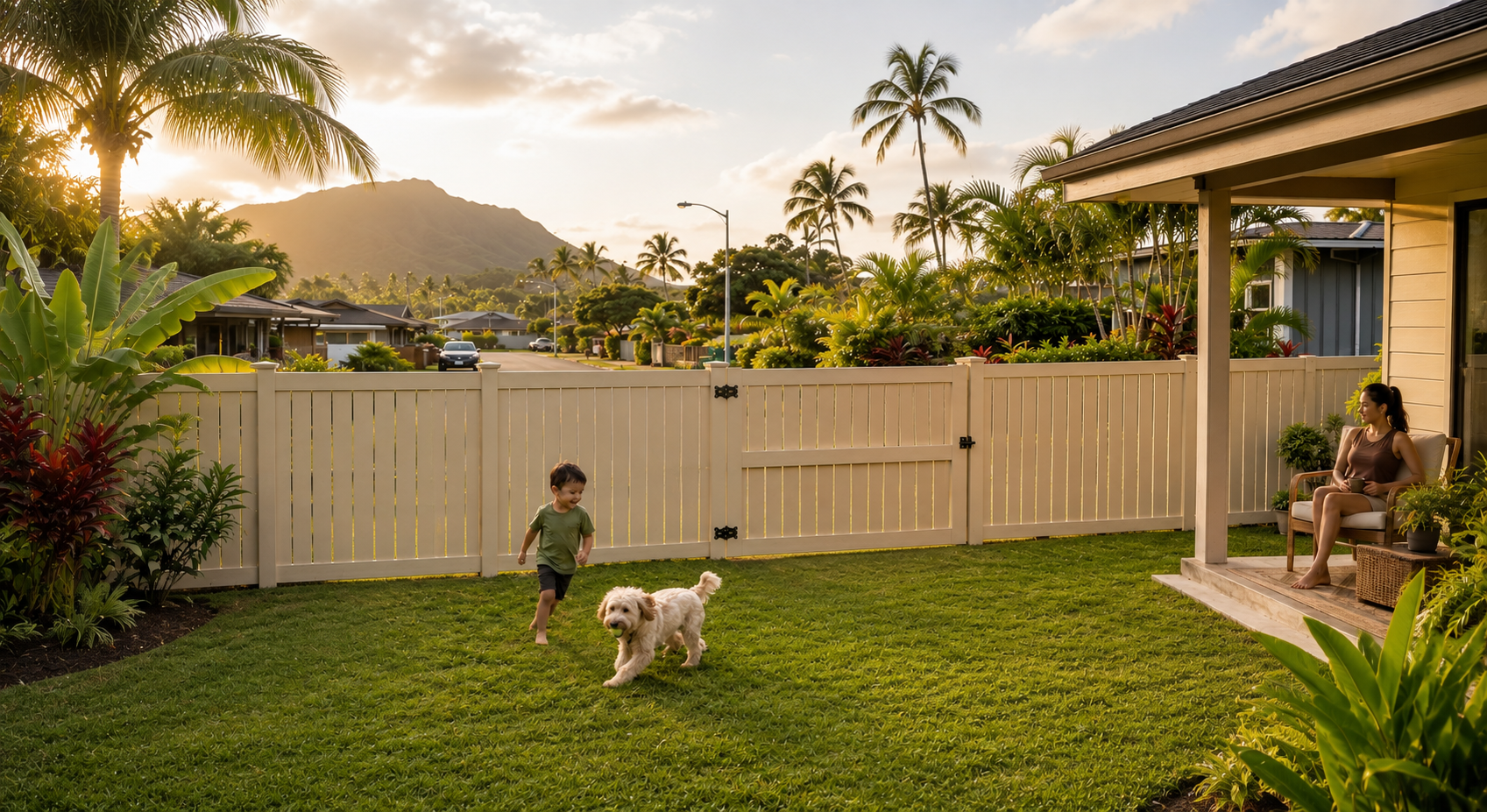
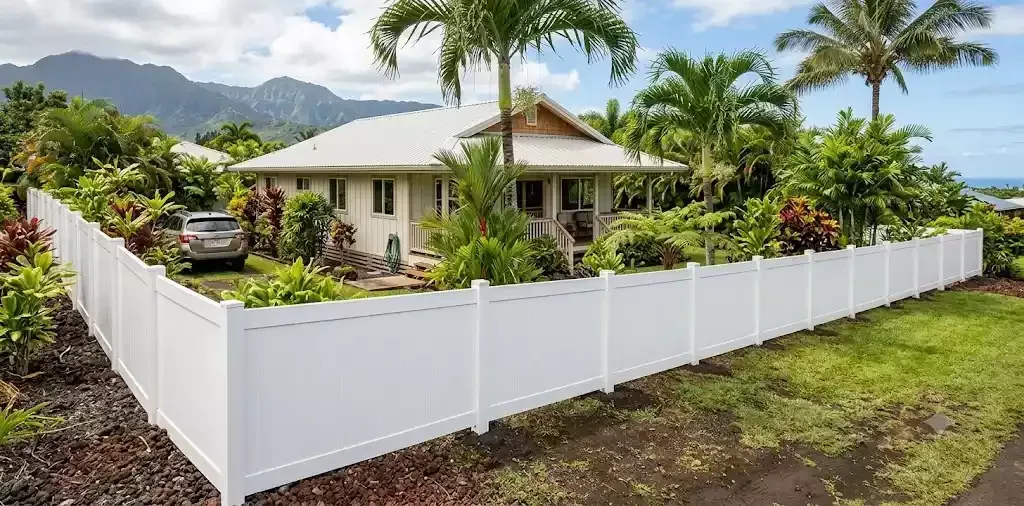
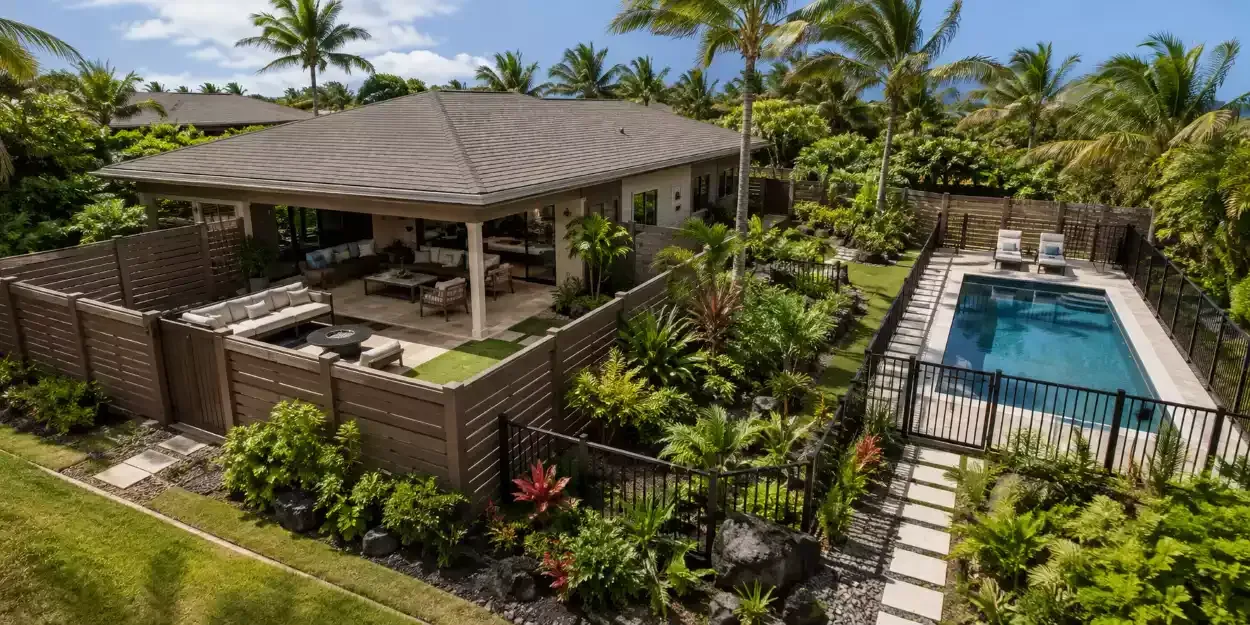
A fence in Hawaii faces harsher conditions than many homeowners realize. Salt carried by coastal winds, year-round humidity, frequent rain, strong ultraviolet exposure, and sudden weather changes can weaken fence components long before the damage becomes obvious. Homeowners considering aluminum fencing services in Hawaii should pay close attention not only to the fence panels and posts but also to the hardware and protective coatings that hold the entire system together. A fence may look attractive when first installed, but low-quality screws, hinges, brackets, and finishes can shorten its useful life and create avoidable safety problems.
Hawaii’s Climate Is Hard on Fence Materials
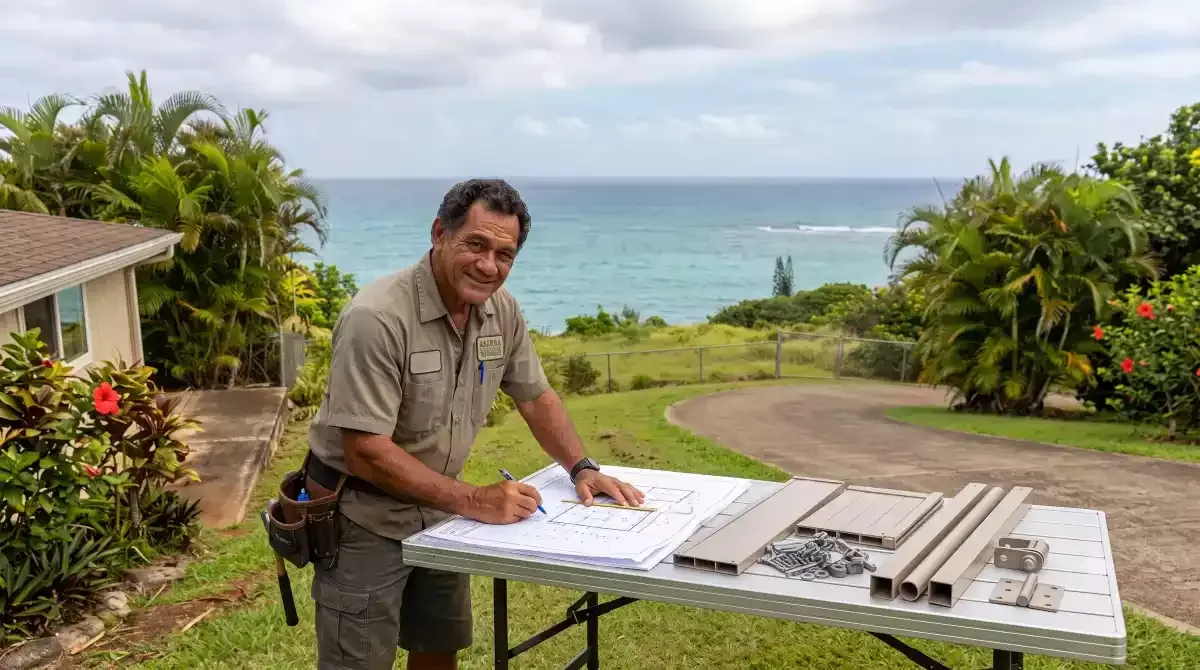
Sunset Hawaii Fencing Company have seen fences develop problems because the visible materials were chosen carefully while the smaller connecting components were treated as an afterthought. In Hawaii, every screw, latch, hinge, bracket, and post connection is exposed to moisture and airborne salt. These parts often carry the greatest loads, especially around gates, corners, and sections exposed to strong trade winds.
The Hawaiian Islands have a warm, humid climate that allows moisture to remain on outdoor surfaces for extended periods. Coastal communities may experience additional exposure to salt spray, while properties farther inland can still receive salt particles carried by wind. These conditions accelerate corrosion in untreated steel and poorly protected metal.
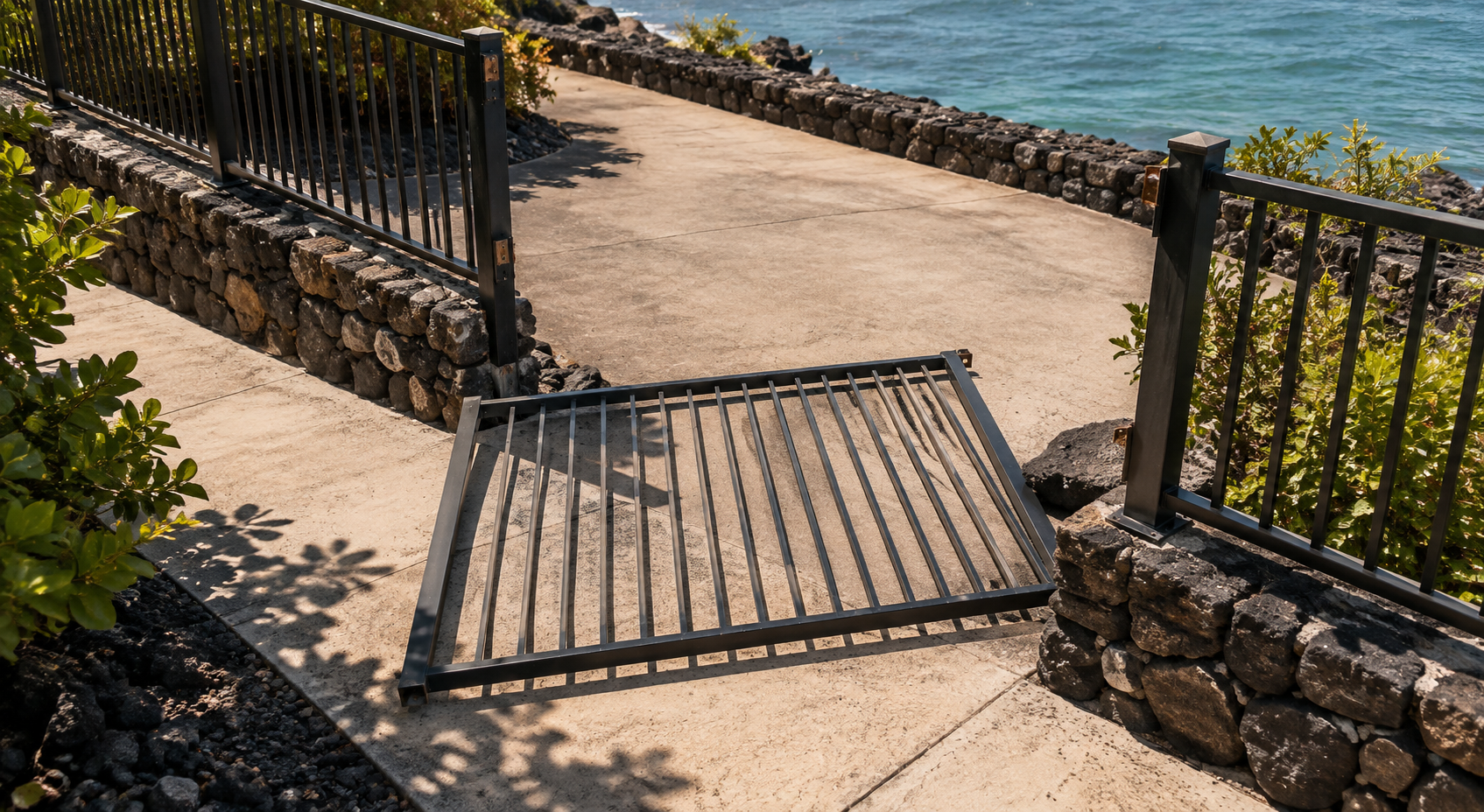
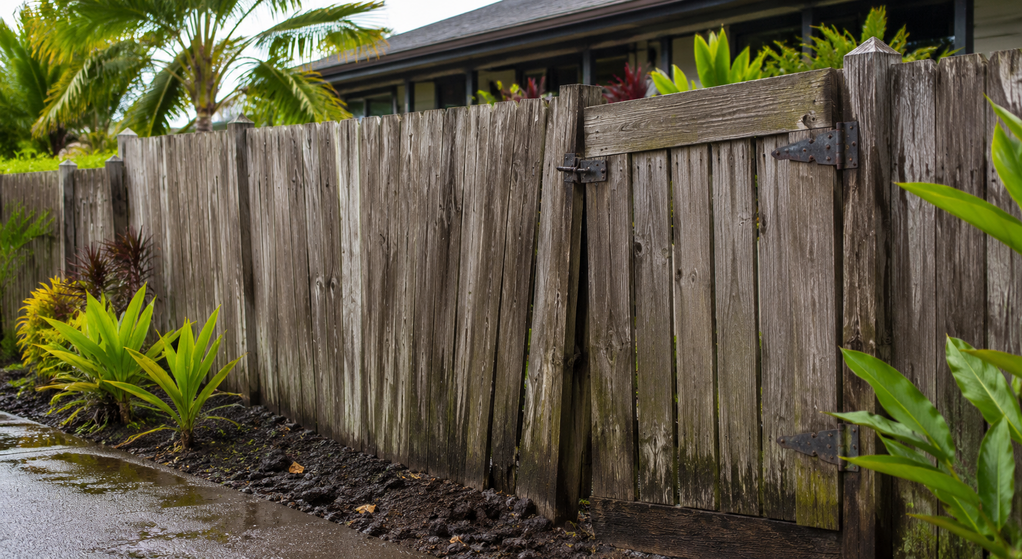
This matters because hardware failure rarely happens all at once. Corrosion usually begins around screw heads, hinge pins, welds, and scratched surfaces. Over time, a gate may begin to sag, a latch may stop aligning, or a bracket may loosen from the post. Once movement starts, surrounding components receive greater stress, causing the problem to spread.
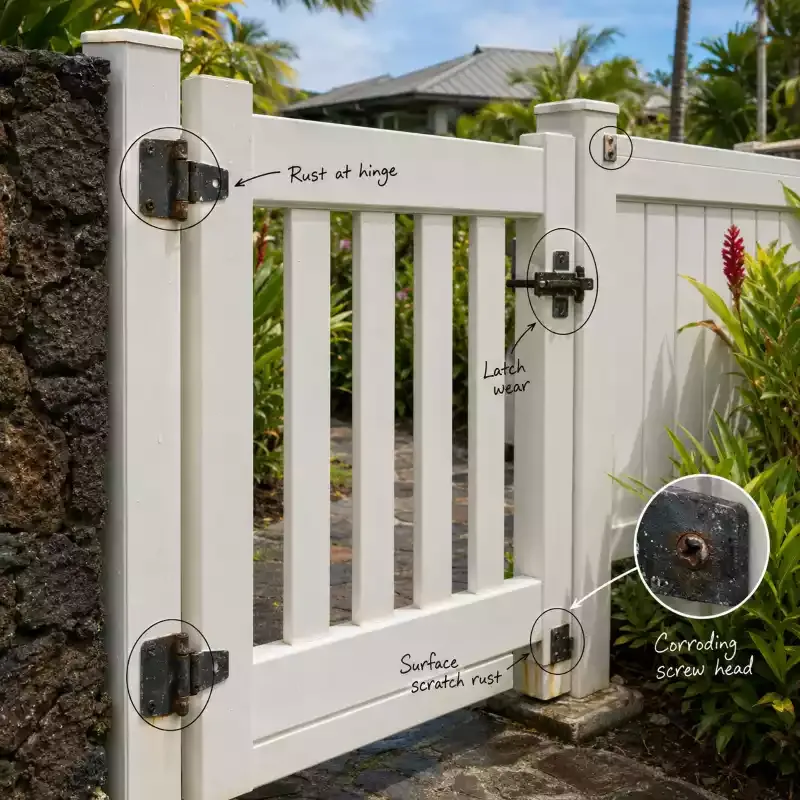
Hardware Determines How Well a Fence Stays Together
Fence panels may receive most of the attention during material selection, but hardware determines whether those panels remain properly aligned. High-quality hardware keeps posts, rails, panels, and gates connected while resisting wind pressure, repeated movement, and environmental exposure.
Stainless steel and hot-dip galvanized hardware are commonly chosen for Hawaii because they offer stronger corrosion resistance than untreated steel. However, not all stainless steel products perform equally. The grade of the metal, the quality of manufacturing, and the surrounding materials all affect performance. Aluminum fence color and powder coating options popular in Hawaii can help homeowners choose hardware and gate materials that withstand long-term coastal exposure.
For example, using incompatible metals can contribute to galvanic corrosion. This happens when two different metals come into contact in the presence of moisture or saltwater. One metal may corrode faster because of the electrical reaction between them. Aluminum fence components paired with unsuitable fasteners can develop staining, pitting, or weakened connection points.
A common mistake is choosing hardware based only on price or appearance. A shiny screw is not automatically corrosion-resistant. Some inexpensive fasteners are coated with a thin protective layer that wears away during installation. Once the coating is scratched, rust can begin underneath the surface.
Gate hardware deserves even more attention. Hinges, latches, drop rods, and brackets experience constant movement and greater mechanical stress. Heavy gates should have hardware designed for their weight and expected use. Residential side gates, driveway gates, and commercial access gates require different hinge capacities and support systems.
Protective Coatings Slow Down Environmental Damage
A protective coating creates a barrier between the fence material and Hawaii’s moisture, salt, and sunlight. Depending on the material, this protection may include powder coating, galvanization, exterior paint, sealant, stain, or a factory-applied finish.
Powder coating is commonly used on aluminum and steel fencing because it produces a durable, even finish. The coating is applied as a dry powder and cured onto the metal. When properly prepared and applied, it can resist fading, chipping, and corrosion better than ordinary paint.
However, powder coating is not indestructible. Scratches caused during transportation, installation, landscaping, or maintenance can expose the metal underneath. Damaged areas should be repaired promptly, especially on steel fencing, because corrosion can spread beneath the surrounding finish.
Galvanization protects steel by applying a layer of zinc. Hot-dip galvanized components are submerged in molten zinc, creating broader protection around edges and difficult-to-reach areas. This process is generally more durable than light electroplated coatings, although the finished appearance may be less uniform.
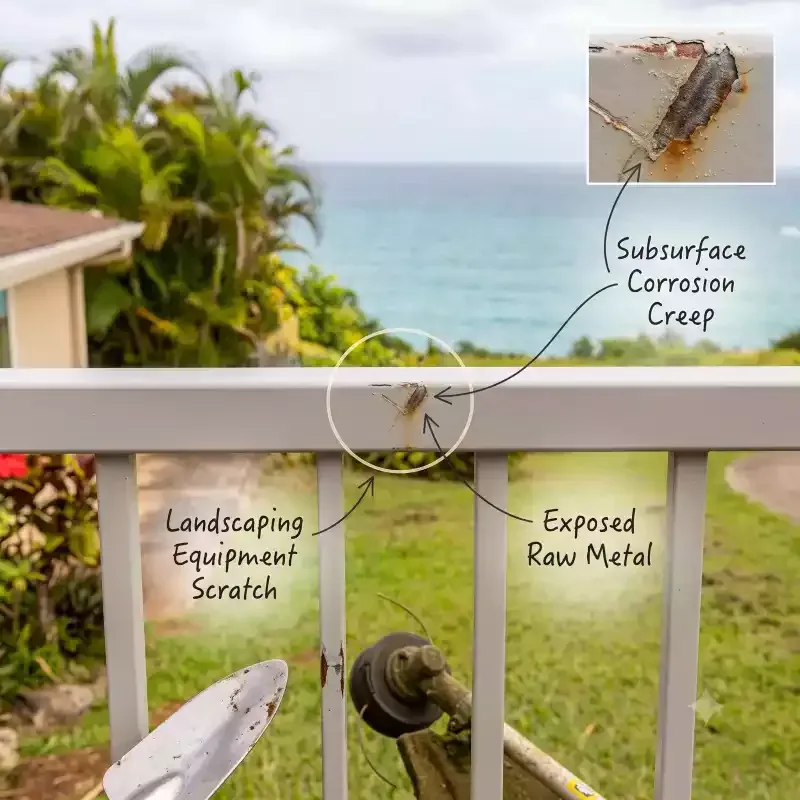
Wood fencing requires a different protective strategy. Sealers, stains, and exterior coatings help reduce moisture absorption, surface cracking, fading, and biological growth. Yet coatings cannot compensate for poor drainage or direct soil contact. A wooden post that remains constantly wet at ground level may still deteriorate, even if the upper section is carefully stained.
Proper Preparation Matters as Much as the Coating
Even a high-quality coating can fail when applied to a dirty, damp, rusty, or poorly prepared surface. Surface preparation is one of the most important steps in any finishing process.
Metal surfaces may need cleaning, degreasing, sanding, rust removal, or blasting before coating. Wood may need time to dry before stain or sealant is applied. Applying a coating over trapped moisture can lead to bubbling, peeling, uneven adhesion, or discoloration.
In island conditions, timing also matters. Coatings should not be applied immediately before heavy rain or when humidity prevents proper curing. The manufacturer’s temperature, moisture, and drying-time requirements should be followed carefully.
Based on our work throughout Oahu and other island communities, coating failure often begins at cut edges, drilled holes, welded joints, and field-modified sections. These areas may not receive the same factory protection as the main fence panels. Installers should inspect and treat every exposed edge rather than assuming the original finish provides complete protection.
The Tradeoff Between Cost and Longevity
Corrosion-resistant hardware and durable finishes usually cost more at the beginning. That added expense can tempt homeowners to choose cheaper components, especially when the fence panels themselves already represent a significant investment.
The tradeoff is straightforward. Lower-cost hardware may reduce the initial installation price, but it can lead to earlier repairs, rust stains, sagging gates, loose panels, and premature replacement. Better hardware and coatings do not eliminate maintenance, but they can reduce how quickly damage develops.
Homeowners should also avoid assuming that the most expensive option is automatically the best. A protected fastener must still be compatible with the fence material, property location, gate weight, and level of exposure. A fence installed near the shoreline may require stronger corrosion resistance than one in a sheltered inland neighborhood.
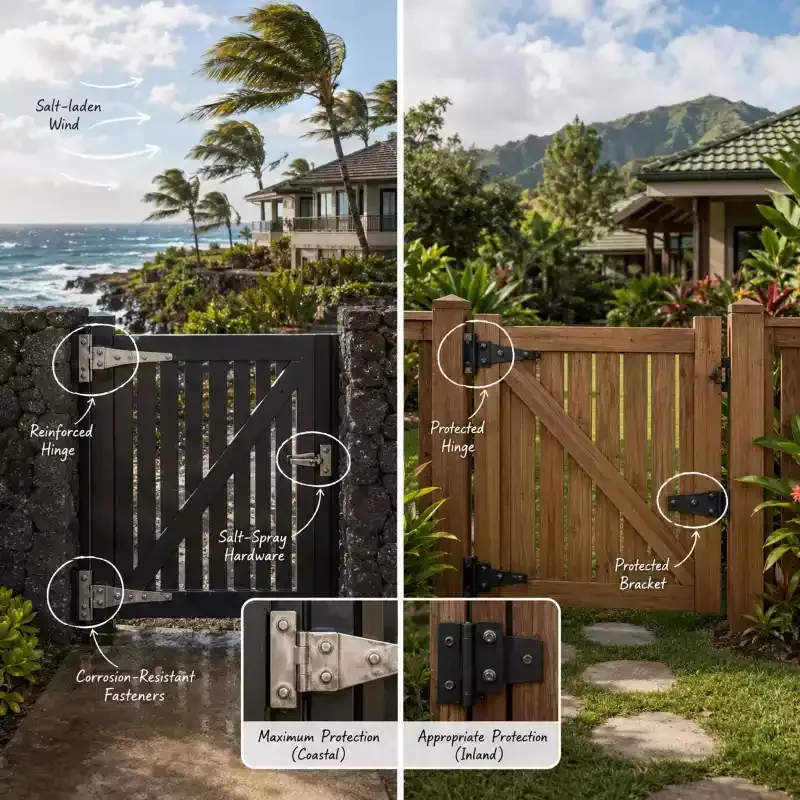
A practical decision should consider the full system. Posts, panels, hardware, coatings, drainage, and installation quality all work together. Upgrading only one part cannot correct weaknesses in the others.
Maintenance Protects the Original Investment
No outdoor fence in Hawaii should be treated as maintenance-free. Even aluminum, vinyl, and properly coated metal should be inspected periodically.
Homeowners should rinse salt residue from fence surfaces, particularly on coastal properties. Hinges and latches should be checked for rust, stiffness, or misalignment. Scratches and chipped coatings should be repaired before corrosion spreads. Vegetation should also be trimmed away because constant contact with wet leaves and branches can keep fence surfaces damp.
A yearly inspection is a sensible starting point, but properties exposed to ocean spray, irrigation, or heavy vegetation may need more frequent attention. The goal is to identify small problems while they are still manageable.
Fence hardware and coatings are easy to overlook because they do not define the overall style of a fence. Yet they have a direct effect on strength, appearance, safety, and service life. In Hawaii, where salt, moisture, wind, and sunlight create constant exposure, these details should be treated as essential parts of the fence rather than optional upgrades.
Choosing compatible corrosion-resistant hardware, selecting a finish suited to the material, protecting cut edges, and maintaining damaged areas can help a fence remain secure for years. Following these
long-term maintenance tips can extend the life of your fence and reduce the likelihood of costly repairs. The smartest next step is to evaluate the complete fence system, including its location, exposure level, gate weight, drainage, and expected maintenance, before deciding which hardware and coating provide the right balance of durability and cost.

written by
Kurt Manalastas
Property Security & Exterior Improvement Journalist
Kurt creates research-based content focused on fencing solutions, property security, and outdoor boundary improvements. By combining industry best practices, material insights, and practical property protection strategies, he helps homeowners and business owners make informed decisions about building safer, more secure, and visually appealing outdoor spaces.