Aluminum Fence Color and Powder Coating Options Popular in Hawaii
Quick Take:
Powder coating is what helps aluminum fencing hold up against Hawaii’s salt air and strong UV exposure. The color and coating quality you choose affect both long-term appearance and maintenance needs. Today, homeowners often move beyond standard black, choosing tones that better match island landscapes and home styles.
Aluminum fencing in Hawaii is not just a practical choice — it is one of the more thoughtful ones a homeowner can make. The material holds up to salt air, resists corrosion without constant maintenance, and does not rot or rust the way other materials do in the island environment. But the finish on that aluminum — the powder coat that protects it and gives it its color — is where a lot of the long-term performance story actually lives.
Color is where personal preference meets practical performance. Hawaii’s architectural landscape is genuinely varied — from mid-century plantation-style homes to contemporary concrete construction to beachside properties where the fence competes visually with the Pacific Ocean behind it. Today’s powder-coated aluminum color options give homeowners real design flexibility, but understanding what performs well in Hawaii’s environment matters more than choosing a color that only looks good on a sample chip.
Why Powder Coating Matters More in Hawaii Than Most Places
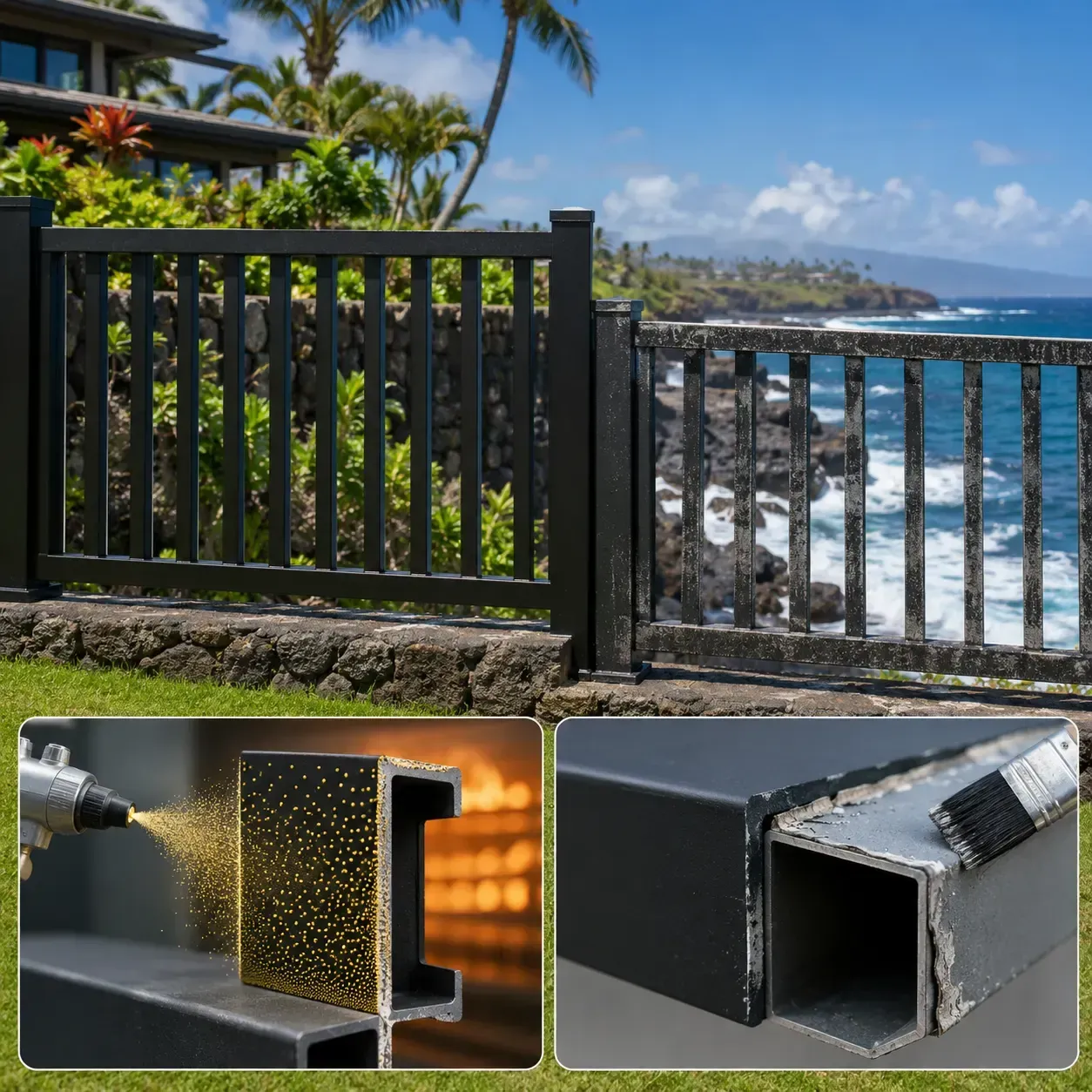
Powder coating is not paint. It is a dry finishing process where electrostatically charged powder is applied to the aluminum surface and then cured under heat, creating a finish that bonds to the metal at a molecular level rather than simply adhering to the surface the way liquid paint does. The result is a finish that is harder, more uniform, and more resistant to chipping, scratching, and environmental degradation than a painted surface. In Hawaii’s coastal environment — where salt air, UV radiation, and humidity all work continuously to degrade exterior finishes — that difference in durability is not marginal. It is the reason aluminum fencing with quality powder coating outlasts other fencing materials in this environment by a significant margin. For homeowners researching aluminum fence installation in Hawaii, the powder coat specification is one of the first technical questions worth asking, because not all coatings are created equal and the difference shows up over time rather than immediately.
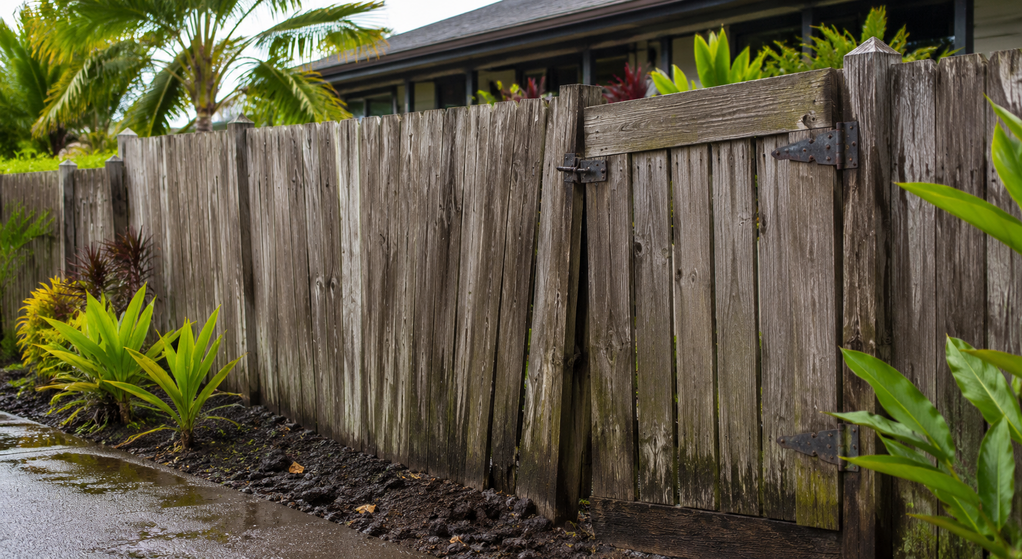
The thickness of the powder coat layer matters, the quality of the pre-treatment process that prepares the aluminum surface before coating matters, and whether the product has been tested and rated for coastal UV exposure matters. A fence installed with a lower-grade coating in a beachside Oahu neighborhood will show color fading, chalking, and surface degradation faster than one with a marine-grade coating — and at that point the options are limited to painting over the original finish, which rarely looks as good, or replacing the fence entirely.
The Colors Hawaii Homeowners Choose Most Often
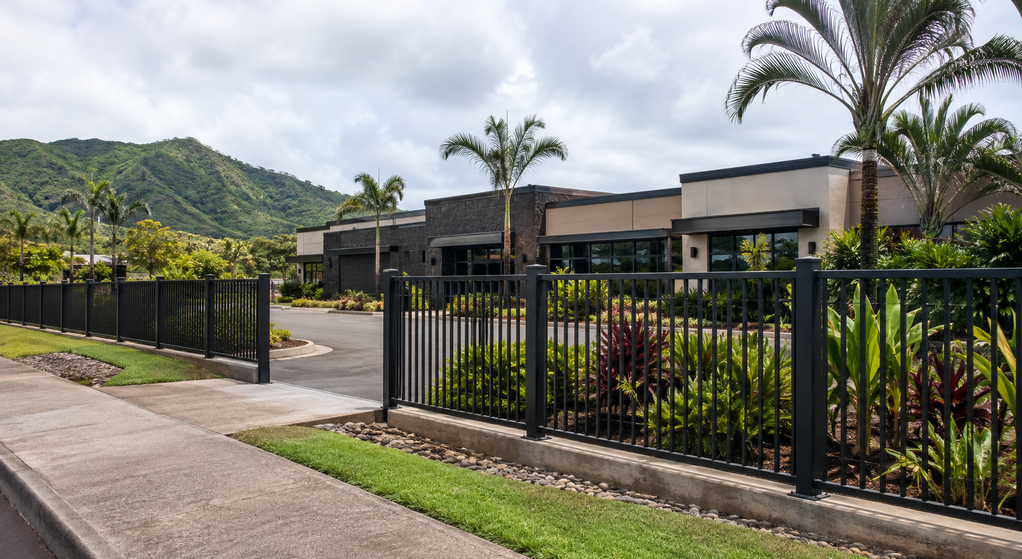
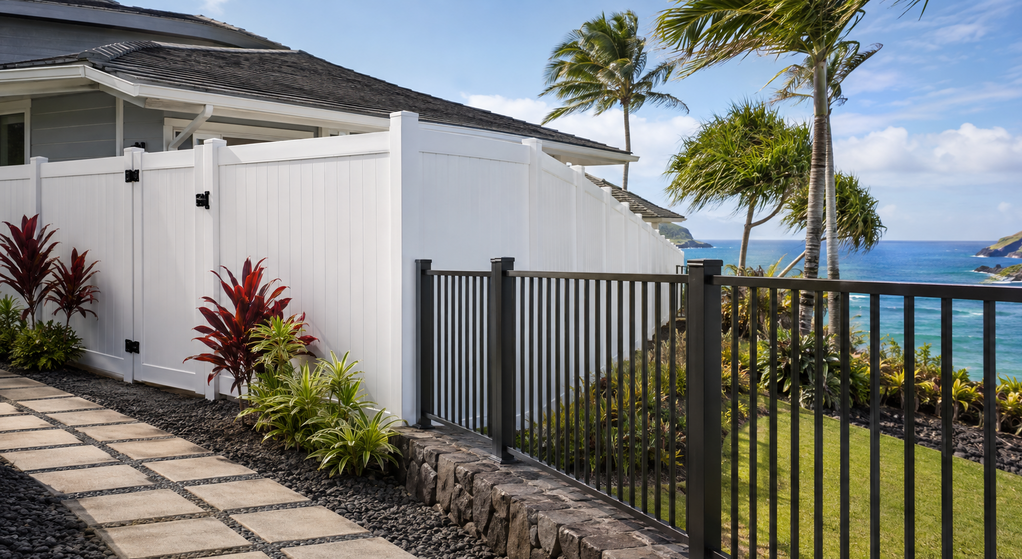
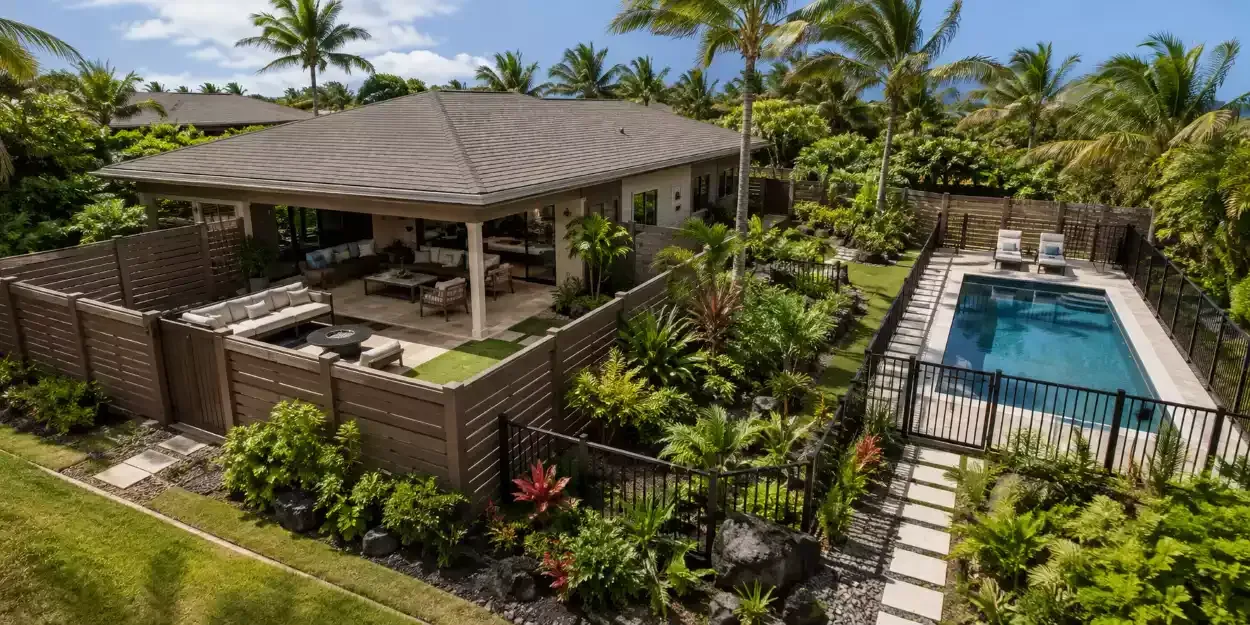
Classic black remains the most popular choice for aluminum fencing across Oahu, and the reasons are straightforward. Black reads as timeless rather than trendy, provides strong visual contrast against tropical greenery, and pairs with virtually every exterior color scheme from white contemporary to warm earth-tone plantation styles. A black aluminum fence disappears visually in photos while creating a clear boundary in person — a quality that works especially well for properties where the view beyond the fence is the feature.
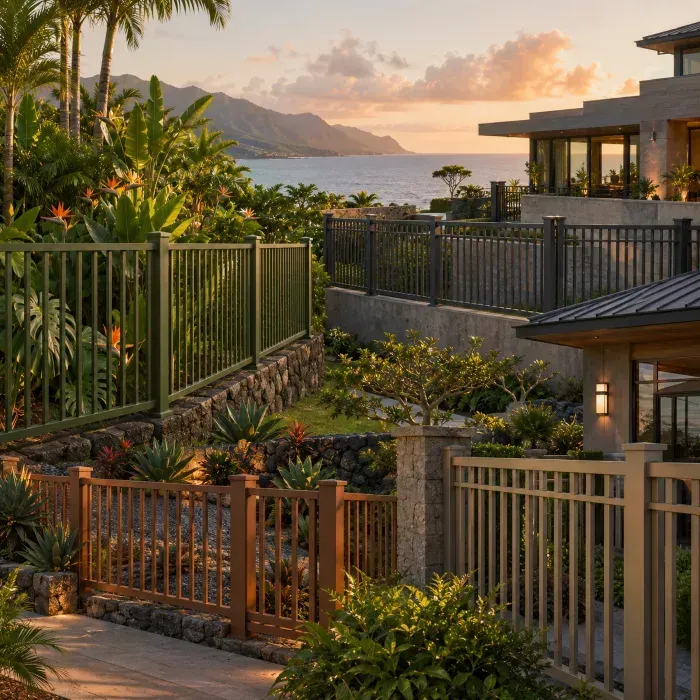
Bronze and dark brown have grown significantly in popularity among Hawaii homeowners over the past several years, particularly for properties with natural wood elements, stone features, or warm-toned landscaping. These earth tones sit more harmoniously in the landscape than black in some settings, reading as part of the natural environment rather than a graphic element imposed on it. They also show less of the surface oxidation that can develop on black powder coat in coastal conditions, which means the fence tends to look well-maintained for longer between cleaning cycles.
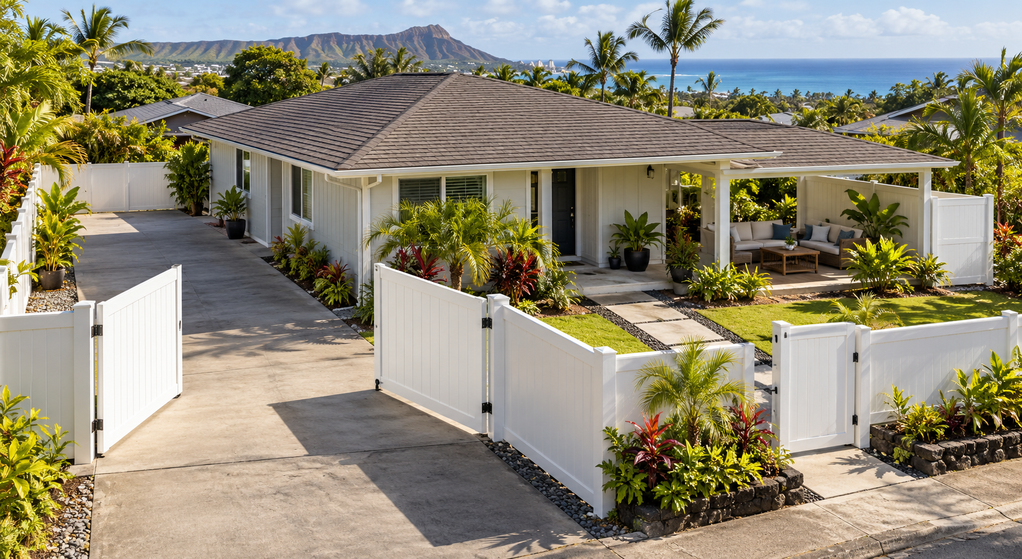
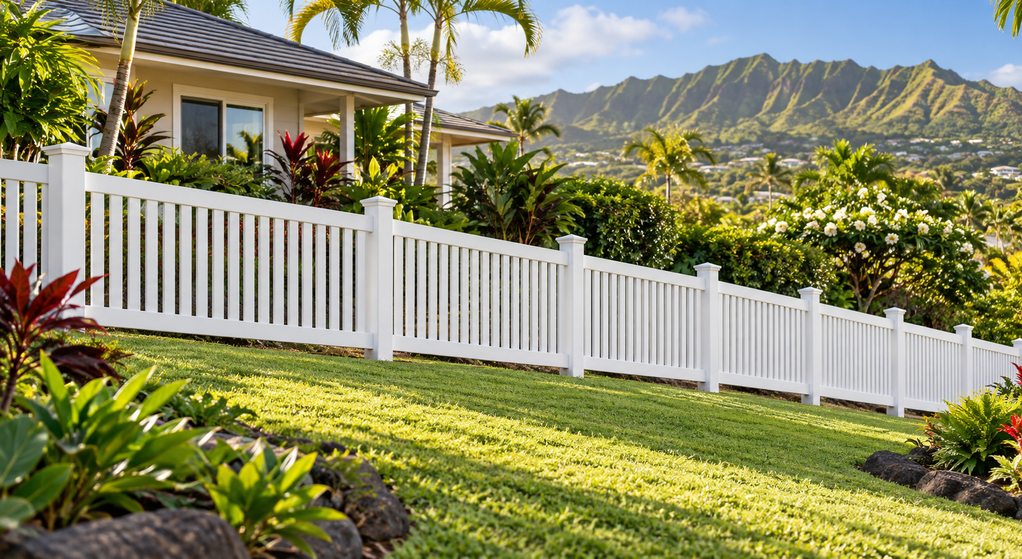
White and antique white are the third major category, most commonly chosen for plantation-style homes, beach cottages, and properties where a light, airy aesthetic is the goal. White aluminum fencing has a long history in Hawaii’s residential landscape, and it continues to suit certain architectural contexts better than darker tones. The practical consideration with white is that it shows surface dirt and salt deposits more readily than darker colors, which means it benefits from more frequent washing in high-exposure coastal locations.
Why Powder Coating Matters More in Hawaii Than Most Places
Powder coating is not paint. It is a dry finishing process where electrostatically charged powder is applied to the aluminum surface and then cured under heat, creating a finish that bonds to the metal at a molecular level rather than simply adhering to the surface the way liquid paint does. The result is a finish that is harder, more uniform, and more resistant to chipping, scratching, and environmental degradation than a painted surface. In Hawaii’s coastal environment — where salt air, UV radiation, and humidity all work continuously to degrade exterior finishes — that difference in durability is not marginal. It is the reason aluminum fencing with quality powder coating outlasts other fencing materials in this environment by a significant margin. For homeowners researching aluminum fence installation in Hawaii, the powder coat specification is one of the first technical questions worth asking, because not all coatings are created equal and the difference shows up over time rather than immediately.
Powder Coating vs. Conventional Paint for Hawaii Aluminum Fencing
| Feature | Powder Coating | Liquid Paint |
|---|---|---|
| Bond | Heat-fused to aluminum | Surface-applied |
| Salt Air | Excellent resistance | Lower resistance |
| UV Exposure | Minimal fading | Fades faster |
| Scratch Resistance | High | Moderate |
| Moisture Protection | Continuous barrier | Vulnerable when damaged |
| Maintenance | Low | Moderate to high |
| Service Life | Longer in coastal climates | Shorter in coastal climates |
| Hawaii Suitability | Highly recommended | Less durable |
Colors That Are Gaining Ground in Hawaii
Beyond the established standards, a growing number of Hawaii homeowners are choosing colors that respond more specifically to the island’s landscape and architectural character. Sage green has emerged as a popular alternative to black for properties with significant tropical landscaping — it reads as a natural transition between the cultivated garden and the built fence rather than a hard boundary. Charcoal grey offers a contemporary alternative to black that photographs with more visual depth and pairs well with the modern concrete and glass construction increasingly common across Oahu.
Warm terracotta and clay tones are occasionally chosen for properties where the landscape design emphasizes drought-tolerant or desert-origin plants — a design direction that has become more common as homeowners think about water-wise landscaping. These colors have a regional specificity that fits certain El Paso or Southwest-influenced designs but feels less natural in settings where the surrounding landscape is lush and green.
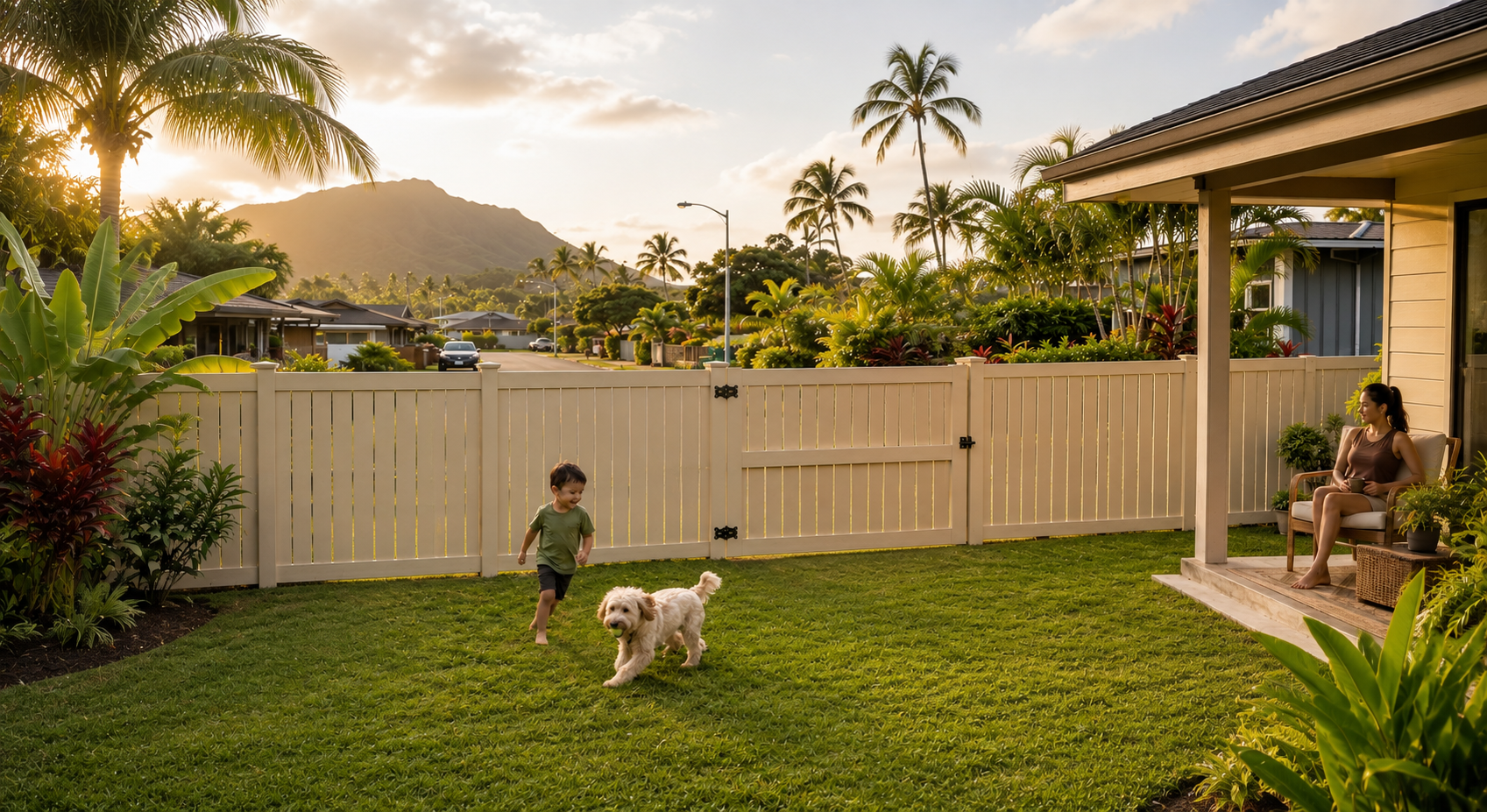
Matching the fence color to the home’s exterior trim is an increasingly common approach that produces a cohesive, designed appearance across the whole property. When the fence color picks up a tone already present in the roof, siding, or shutters, the fence feels like part of an intentional design rather than an afterthought. At Sunset Hawaii Fencing Company, founder Londene Manu walks through color options with every client as part of the design consultation, because the color decision is easier to get right when it is made in the context of the whole property rather than from a color chart in isolation.
Coating Quality: What to Ask About
Not all powder-coated aluminum fencing products are rated for the same environmental exposure. Products designed for inland residential use may carry a different coating specification than those designed for coastal or marine environments. In Hawaii, where virtually every property has some degree of salt air exposure depending on its proximity to the coast and the prevailing wind direction, specifying a product with a coating rated for coastal conditions is the appropriate baseline rather than an upgrade.
The AAMA 2604 and AAMA 2605 standards are the primary references for powder coat performance in architectural applications. AAMA 2604 is the standard for moderate performance coatings, typically warranted for five years against film integrity failure and color change. AAMA 2605 is the higher standard, typically warranted for ten years, and is the more appropriate specification for Hawaii’s combination of UV intensity, salt air, and humidity. Asking a fencing contractor which AAMA standard the specified product meets is a reasonable and specific question that reveals whether the product has been thoughtfully selected for the environment or simply defaulted to whatever is readily available.
Pre-treatment of the aluminum before coating is the other quality variable that affects long-term performance. A chromate or zirconium pre-treatment process that prepares the aluminum surface to bond with the powder coat at maximum adhesion is more durable than a simple cleaning-and-coat approach. The difference is not obvious on installation day, but it shows up over time as the coating either maintains adhesion or begins peeling and blistering from poor pre-treatment.
Maintenance: What Keeps Powder Coat Looking Good
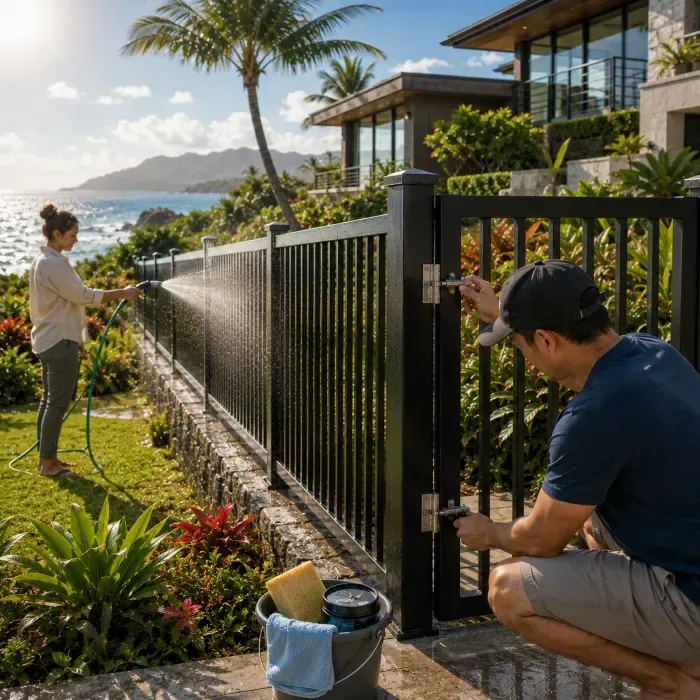
One of the genuine advantages of powder-coated aluminum fencing in Hawaii is how little it asks of you in terms of ongoing maintenance. The basic routine is periodic washing — rinsing salt deposits and surface dirt from the fence with fresh water, more frequently for properties closer to the ocean and less frequently for inland locations. For most Oahu properties, washing the fence two to four times a year is sufficient to prevent the salt accumulation that accelerates surface degradation over time.
Waxing the powder coat surface with an automotive-grade wax once or twice a year adds a layer of UV protection and makes the surface easier to rinse clean, which extends the interval between more thorough washings. This is a low-effort step that has a meaningful effect on how long the coating maintains its original color and gloss level. It is the kind of maintenance that takes an afternoon and adds years to the fence’s appearance.
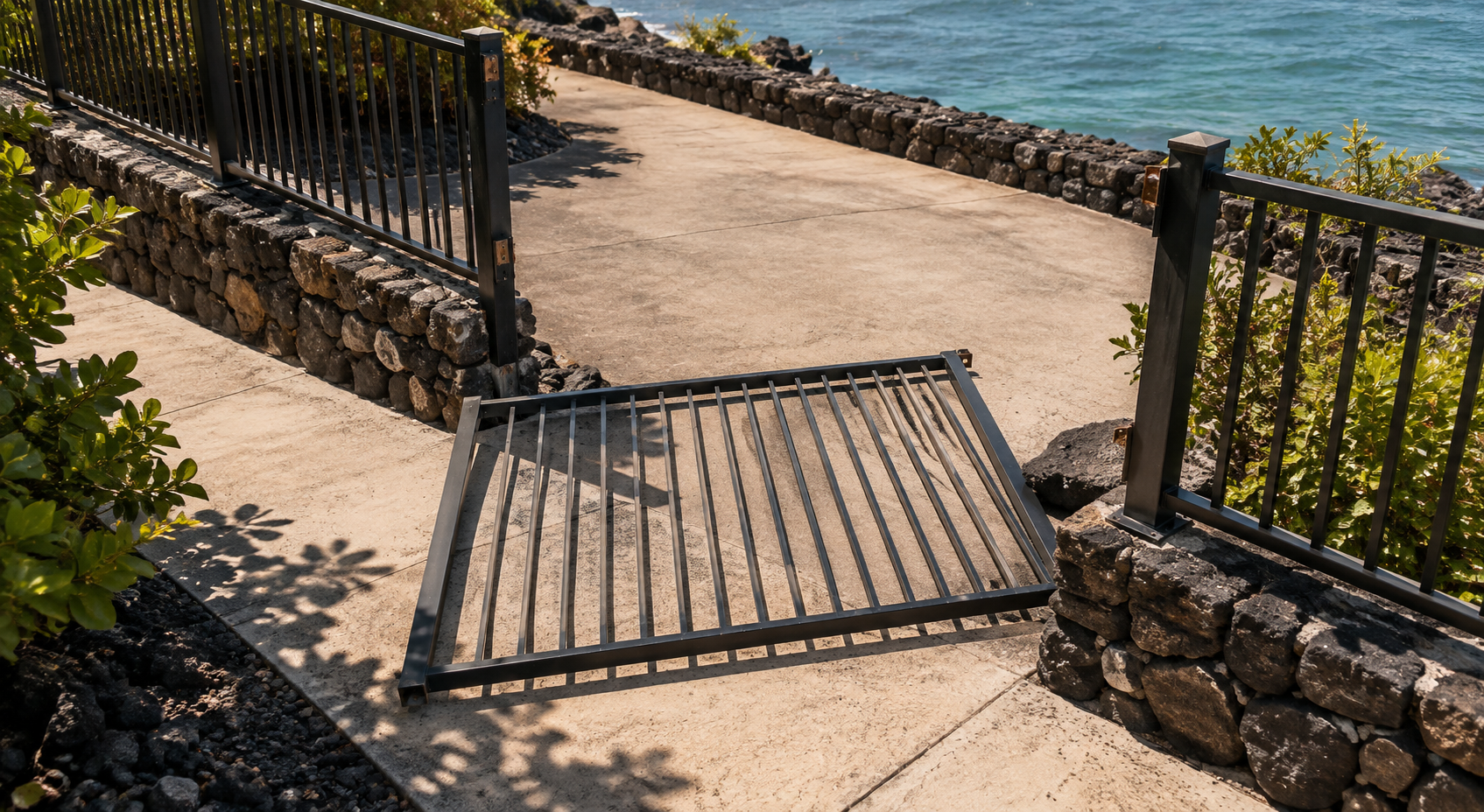
For properties where the fence connects to gates, the hardware and hinge points are the components that benefit most from periodic attention — checking that fasteners are tight, that hinges move freely, and that latch mechanisms are operating correctly. For more on what makes aluminum fencing the right long-term choice for Hawaii properties beyond just the color and coating, our article on the
advantages of fencing in Hawaii covers the full picture of why this material outperforms alternatives in the island environment.
Making the Color Decision
The color decision for an aluminum fence in Hawaii is worth taking seriously because it is one of the more permanent visual choices you make for your property. Unlike paint on a wall, which can be changed relatively easily, a powder-coated fence in a color you have grown tired of requires either living with it or replacing it. Spending time looking at finished examples in similar settings — not just color chips or online photos — is the most reliable way to make a color choice you will be happy with over time.
Viewing the color in the actual light conditions of your property at different times of day is also worth doing before committing. Colors that read one way in the morning light can shift significantly under the midday Hawaiian sun or in the warm late-afternoon light. A color swatch viewed against your exterior wall in natural light gives better guidance than a showroom sample under artificial lighting.
For homeowners who are still deciding whether aluminum fencing is the right choice for their property or want to understand how it compares to other fencing options available in Hawaii, our guide on choosing the right fence for your Hawaii property covers the material comparison in detail — including how powder-coated aluminum stacks up against wood, vinyl, and steel in Hawaii’s specific conditions.

written by
Domenique Bomediano
Property Security & Exterior Improvement Journalist
Domenique creates research-driven content focused on fencing systems, property security, and exterior improvement solutions. By combining practical construction insights, material knowledge, and real-world property protection strategies, he helps homeowners and businesses better understand how to improve safety, privacy, and long-term outdoor durability.