
Exploring Fencing Hawaii: A Guide to Choosing the Right Fence for Your Property

kurt manalastas • September 17, 2024

Are you looking into adding an extra layer of safety and security to your Hawaii property? When defining boundaries and setting barriers for solid protection, installing a fence for your home is one of the smartest moves to make. 


But what kind of fence would suit your build? With the variety of designs and options you can choose from, there are also factors you will need to consider before coming down to your final decision. 


Here we are exploring the things to consider when deciding which type of fence suits your 

needs and preferences within the scope of your build.


Consider the Climate


  • Salt Air and Humidity - This can be a tough challenge for certain materials because Hawaii’s coastal environment means more salt air and humidity. If you’re located in an area where these factors are more prominent, go for materials that are less likely to erode in these conditions such as vinyl, aluminum, or stainless steel.

  • Wind - Some areas in Hawaii are prone to strong winds. Choose a fence design with interval gaps or spaces to better manage airflow within the area.


Material Choices


  • Vinyl - if you are looking for a durable and low-maintenance material with a wide selection of designs and styles to choose from then this could be what you’re looking for. With a high resistance to rust and rot, this makes vinyl an ideal material for fences built by the coast. 

  • Wood - Redwood and Cedar are popular choices for their resistance to insects and rot, though, on the other hand, these materials may need regular maintenance for upkeep.

  • Aluminum - this material is less likely to corrode from salt air. Aluminum fencing  is also a good option for decorative fences or pool enclosures because of its lightweight and rust-resistant features.

  • Chain Link - Considered a practical and affordable material, chain link fencesare durable, flexible, and a great promoter of smooth airflow for your property. If you want to spice up its aesthetic appeal and add a layer of protection to your chain link fences adding vinyl to its surface can do the trick.

  • Bamboo - when it comes to a material that matches the island aesthetic of Hawaii’s landscape, bamboo is a sustainable option that perfectly aligns with the theme. However because bamboo is organic, it may require some maintenance to prevent it from deterioration and decay. 

  • Composite - a type of material that is made up of a mix of wood fibers and plastic, composite fences offer the appearance of wood without the high maintenance needs. Composites are pricier than wood but are highly resistant to pests and rot.


Aesthetics and Privacy


  • Hawaiian Style - Hawaii is a beautiful country that promotes the beauty of its tropical landscape. Consider fences that complement and enhance the aesthetic of the island vibe, such as using bamboo and wood, or creating a clean modern look with the sleek shine of white vinyl and aluminum.

  • Privacy - Some people prefer more privacy for their properties. Solid wood and vinyl panels are great choices, and if a balance of airflow together with privacy is desired, a lattice or a louvered design can ensure your outdoor activities remain private.


Local Regulations


  • Height Restrictions - some areas of Hawaii can have restrictions when it comes to the placement of your fence and how tall you plan to have it be. Check with your local zoning laws, coastline, and residential neighborhood regulations to ensure your build aligns with the standard building code.

  • Permits - Permits are necessary for specific types of fencing, especially for places with height restrictions and areas near cultural sites. 


Sustainability


  • Eco-friendly Materials - Choose sustainable materials for your fence build to promote sustainable construction. Materials like bamboo, reclaimed wood, and composite are sustainable options you can integrate into your construction if environmental impact is the priority of your build.

  • Sustainable Construction - Lessening your environmental impact isn’t only limited to your choice of materials but also extends to the building practices. Sustainable construction can be practiced to ensure less carbon emissions by using local supplies and eco-friendly material producers.


Maintenance Considerations


  • Weathering - maintenance is necessary for all builds, and depending on the materials used, specific types can require regular maintenance to protect against weathering and ensure your fence stays durable and keeps its original appearance. 

  • Cleaning - One of the simplest forms of maintenance, cleaning is necessary for the upkeep of your Hawaii fence. Certain materials such as vinyl and aluminum fences are easy to clean, only requiring a good hose down to remove salt and dirt build-up.


Budget


When it comes to assessing your budget it is always good to consider and compare the initial costs versus the long-term costs of your fence, whether it depends on the material used and the the type of build. A good example would be that although wood is cheaper upfront, it may require frequent maintenance over time compared to materials like vinyl and aluminum which may be pricier but need very little upkeep over its life-performance. Message us fore more information.


Overall, considering all these factors is essential in helping you decide on a fence that not only provides your property with an aesthetic appearance but also improves and solidifies the safety and privacy of your Fencing Hawaii property.

Written by Kurt Manalastas


Kurt is a Home & Property Research Journalist who researches and writes educational content on home services, property improvement, and residential decision-making.


He focuses on translating real-world contractor experience, industry standards, and verified research into clear, practical guidance that helps homeowners understand their options and make informed decisions.


At Sunset Hawaii Fencing Company, Kurt contributes research-driven articles that support accuracy, clarity, and trust across our educational resources.
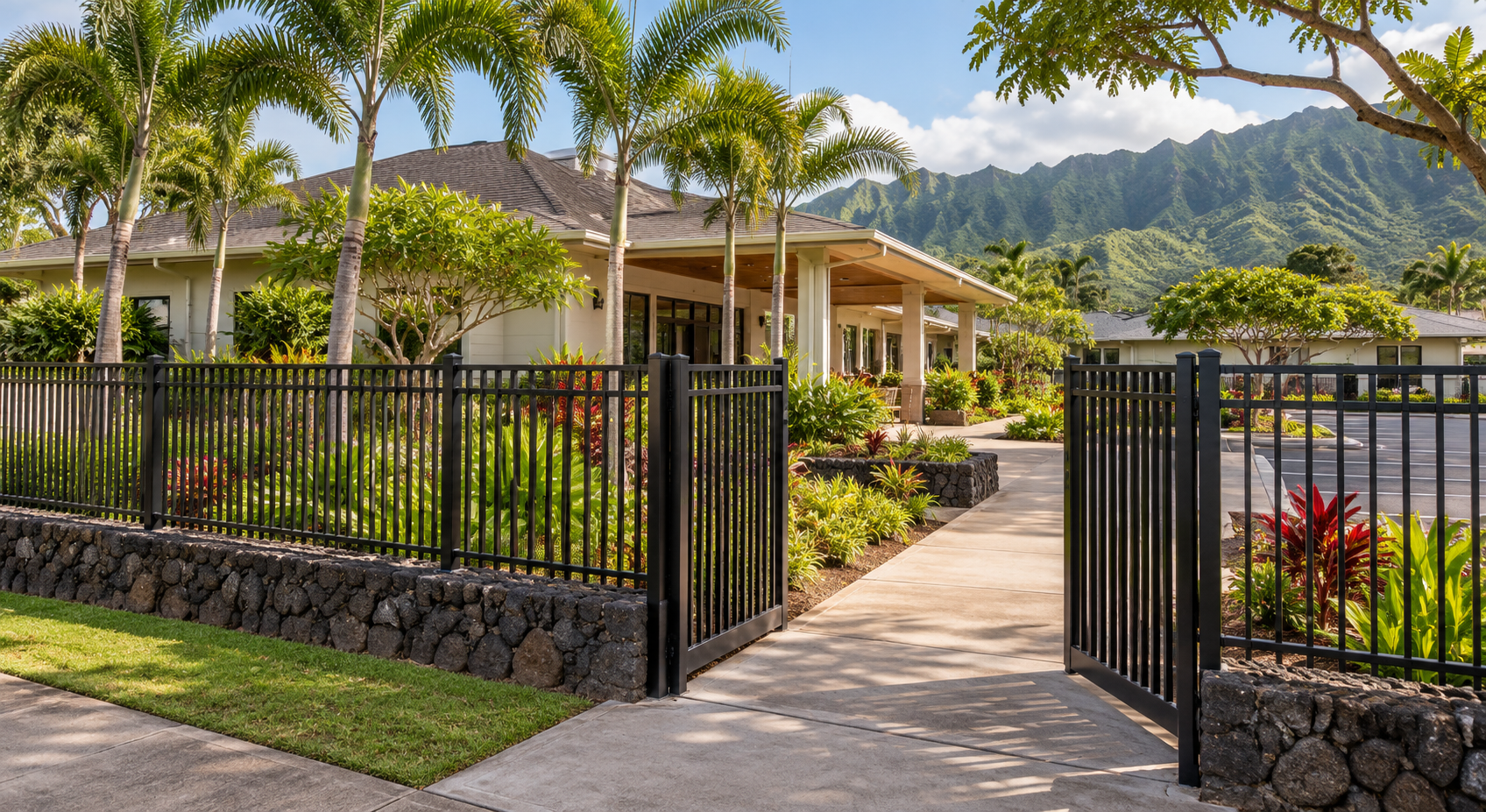
Open aluminum gates lead to an Oʻahu community building surrounded by tropical landscaping.
By Kurt Manalastas • November 1, 2026
Plan fences for Hawaii schools, churches and community sites around visitor access, supervision, event crowds, gates and ongoing upkeep.
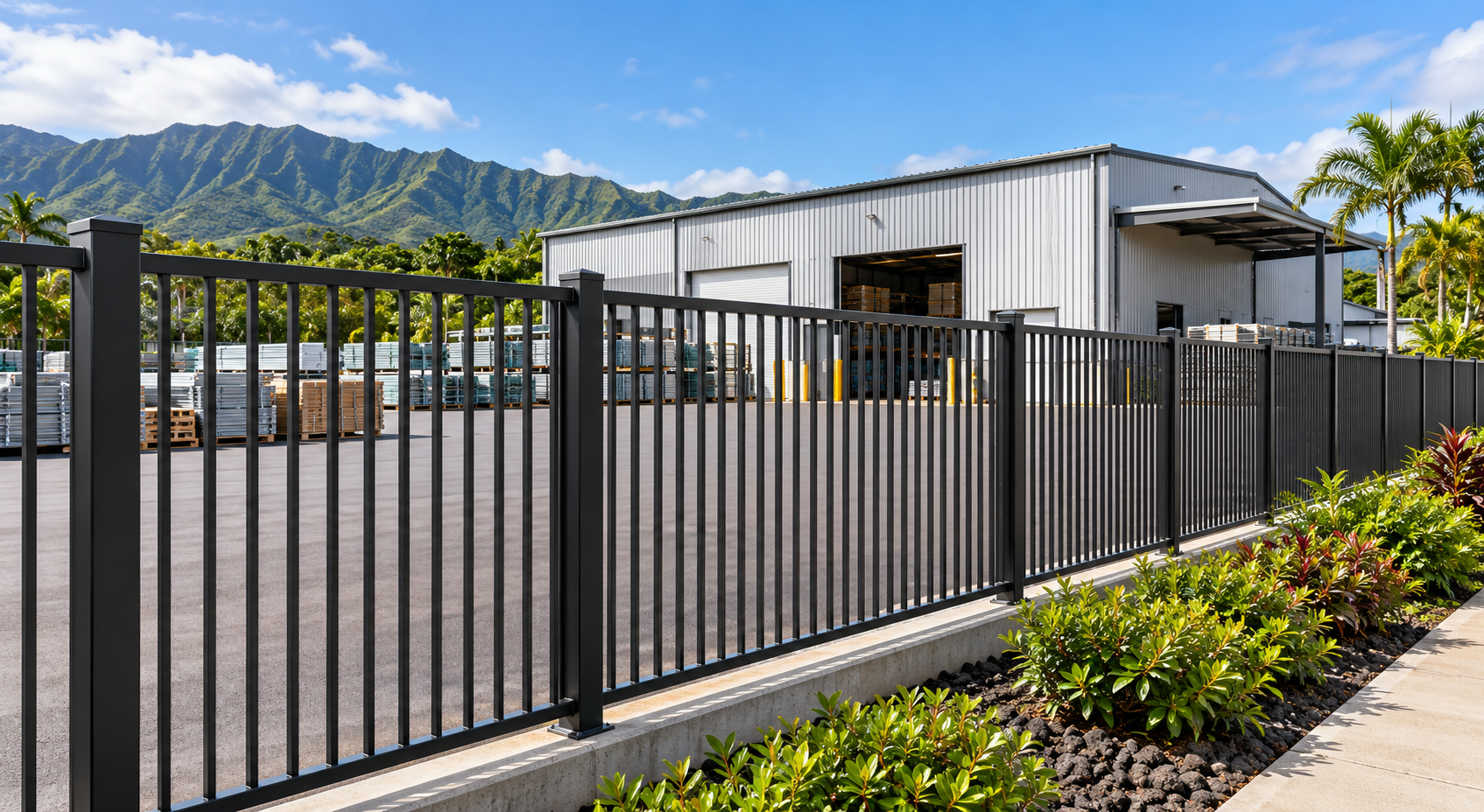
Dark aluminum perimeter fencing encloses an orderly warehouse yard with tropical landscaping.
By Kurt Manalastas • October 28, 2026
Plan Hawaii warehouse fences for delivery trucks, storage zones, pedestrian safety, gate operation and coastal maintenance.
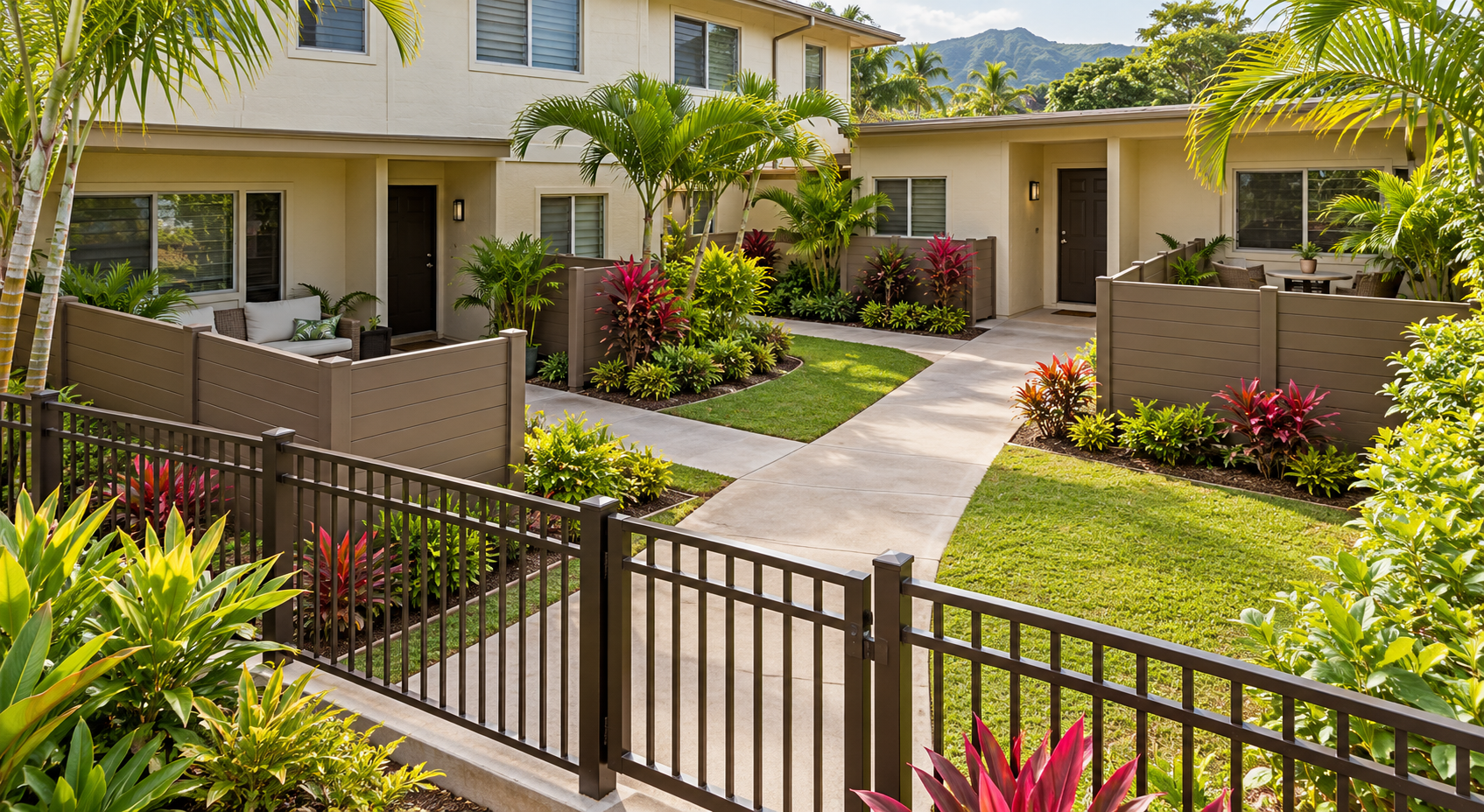
Privacy panels screen individual lanais while open aluminum fencing borders a shared courtyard.
By Kurt Manalastas • October 23, 2026
Plan shared-residential fencing in Hawaii around common-area authority, privacy, gate access, accessibility and upkeep.
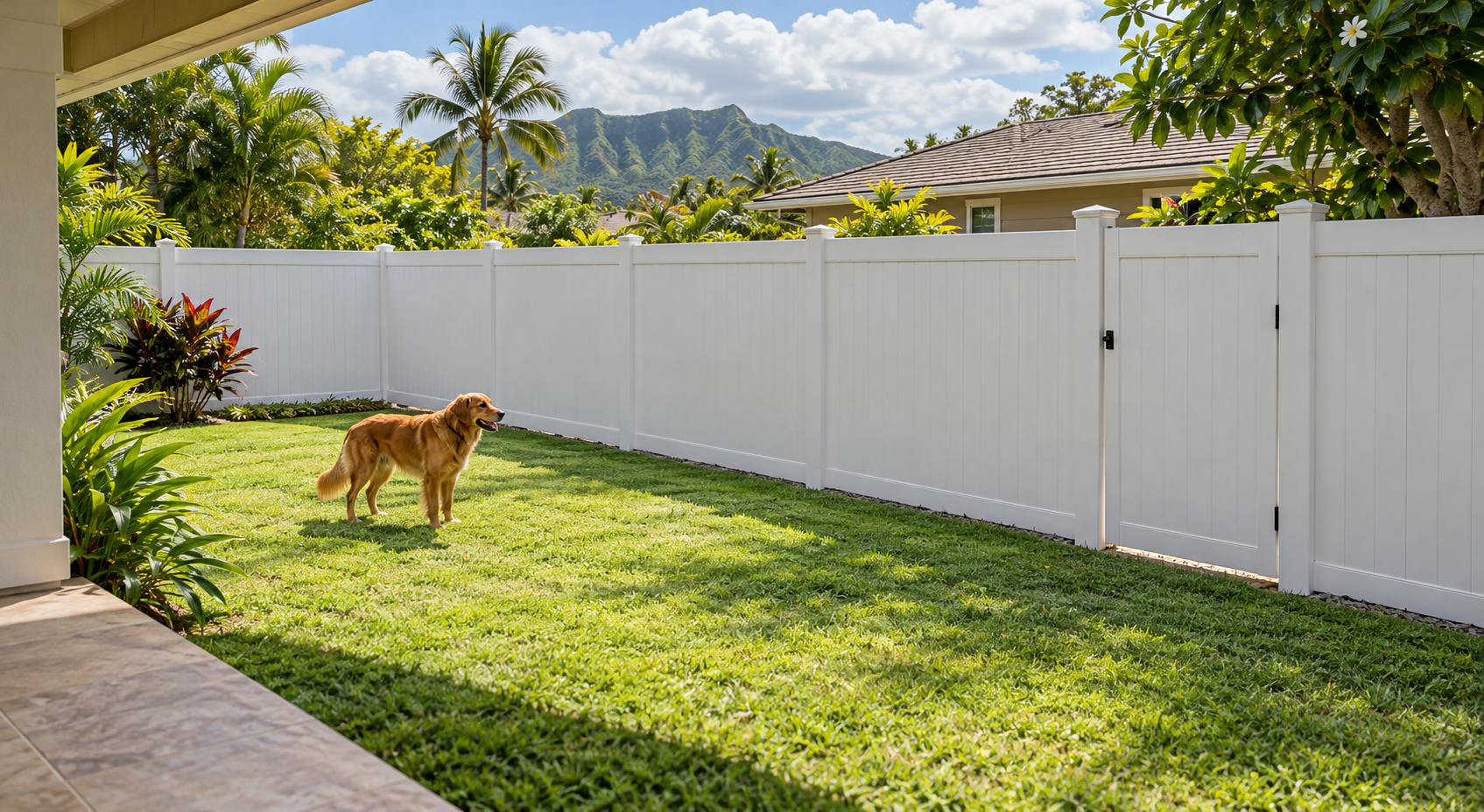
Golden dog in a tropical yard enclosed by a white vinyl privacy fence and closed pedestrian gate.
By Kurt Manalastas • October 21, 2026
Prevent dog escapes from Hawaii yards by checking height, bottom gaps, digging routes, gate latches and the dog’s actual behavior.
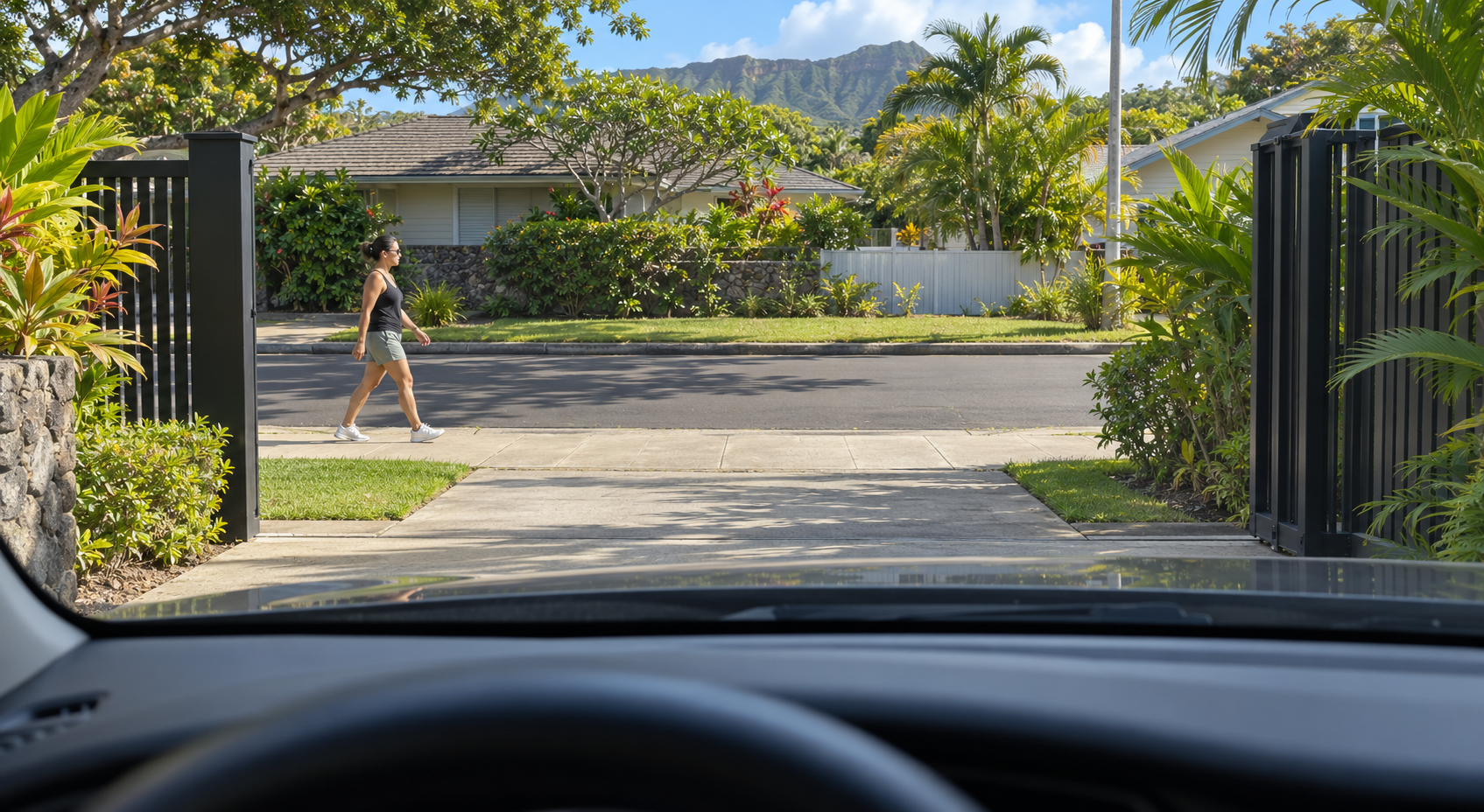
A driver’s-seat view through an open driveway gate shows a pedestrian approaching along the sidewalk
By Kurt Manalastas • October 16, 2026
Improve Hawaii street-side gate safety with clearer driver sightlines, sidewalk waiting room, safe automation and nighttime lighting.
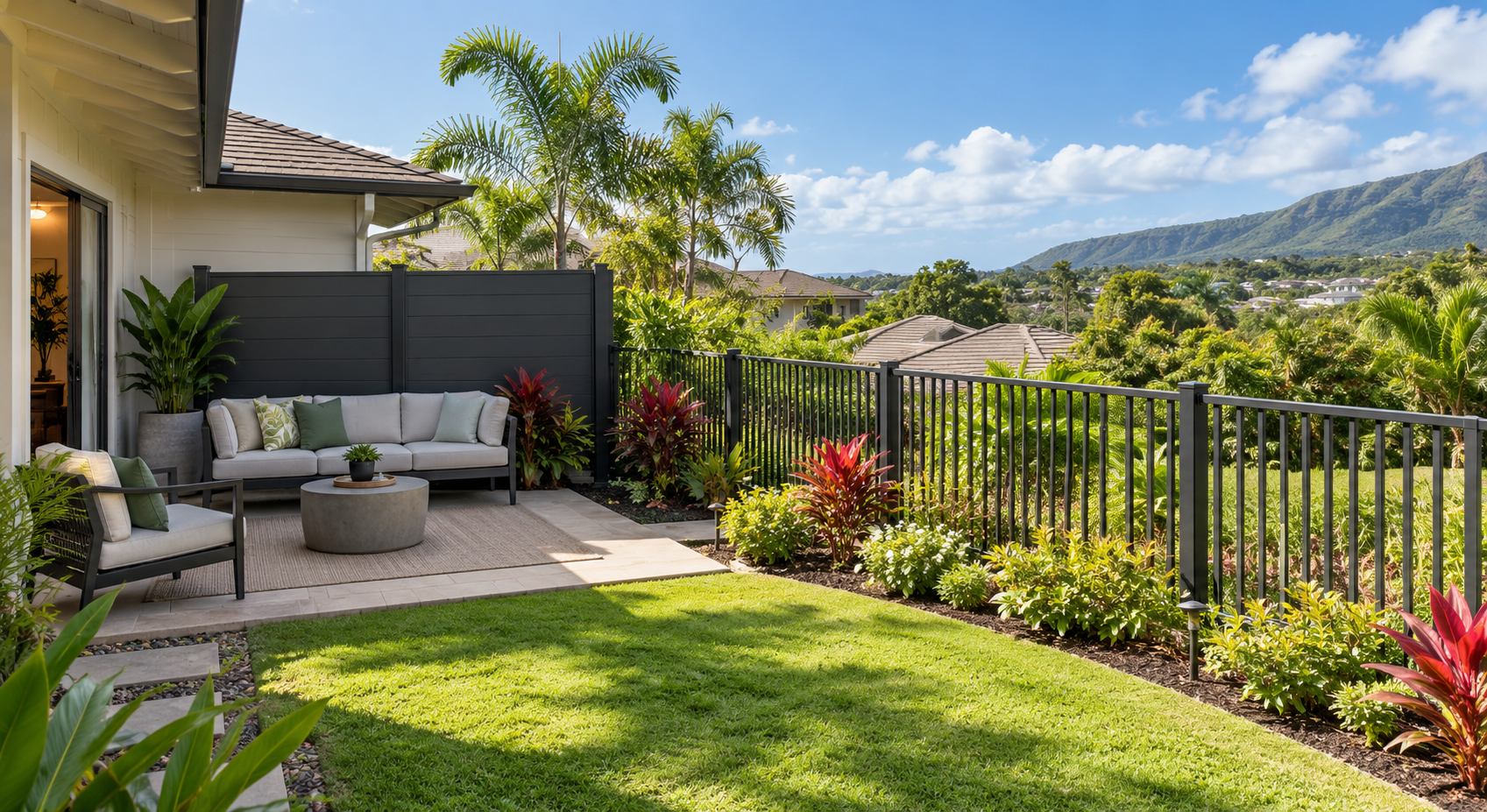
A privacy screen shelters an Oahu seating nook while open aluminum fencing preserves the garden.
By Kurt Manalastas • October 14, 2026
Plan privacy in a Hawaii yard without closing it in by using targeted screens, open fencing, strategic planting, airflow, and carefully placed gates.
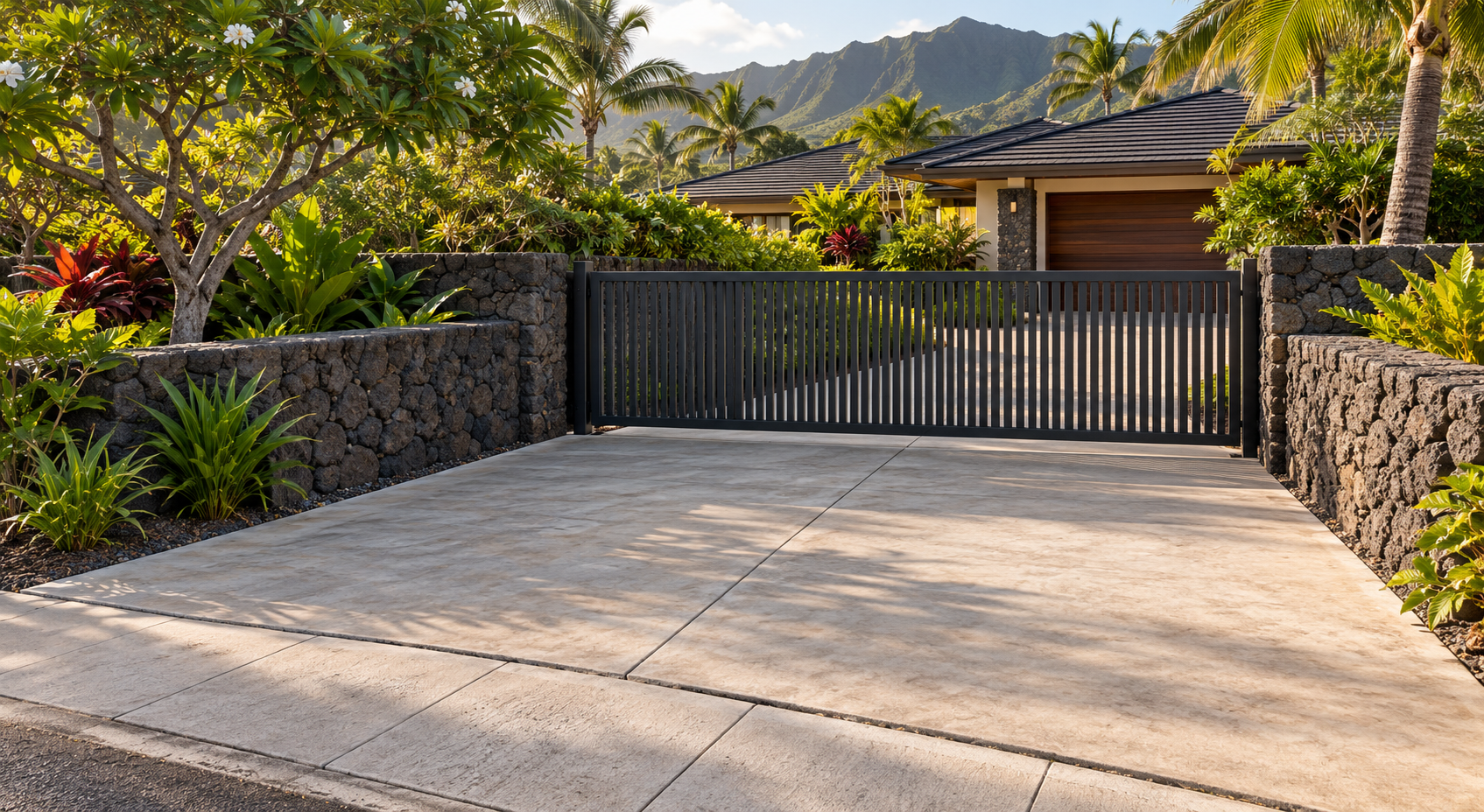
Recessed aluminum driveway gate with a broad concrete approach, lava-rock walls.
By Kurt Manalastas • October 9, 2026
Plan Hawaii driveway gate placement around vehicle waiting, turning paths, gate travel, pedestrian access, slope, drainage, and controls before installation.
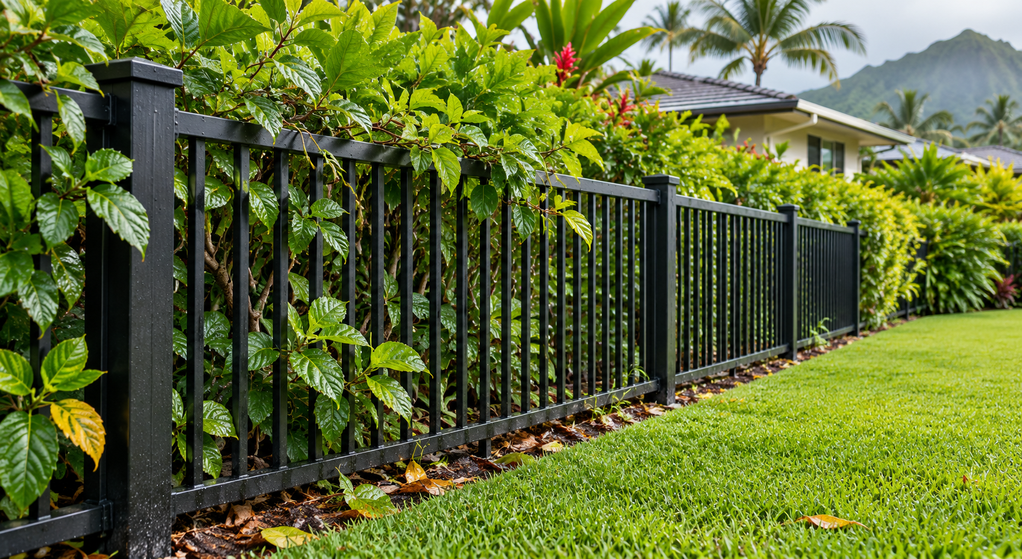
Dense tropical foliage presses against a black metal fence, with fallen leaves along its base.
By Kurt Manalastas • October 7, 2026
Learn how vines, roots, moisture, rubbing branches, and dense tropical growth can damage Hawaii fences and how to preserve safe maintenance clearance.
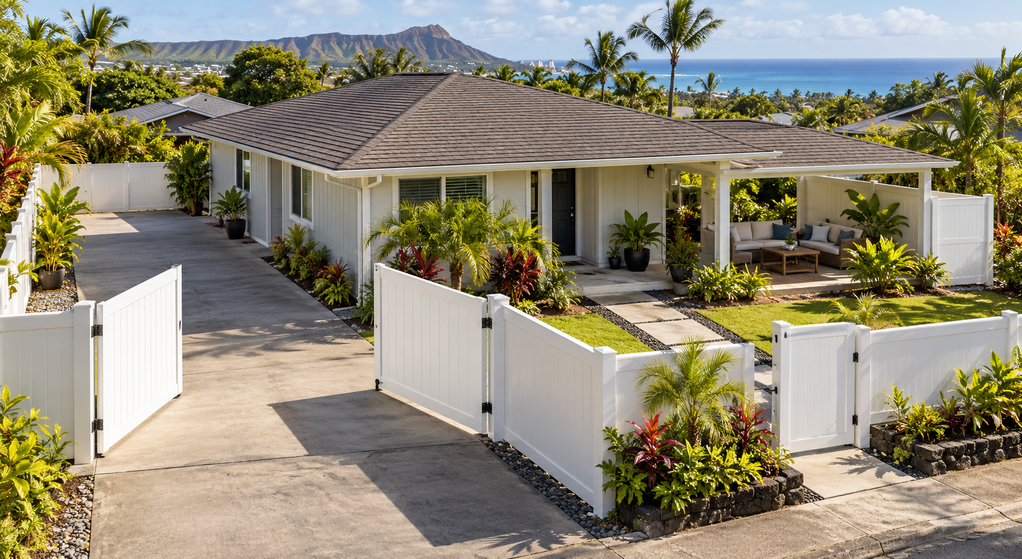
White vinyl fencing separates driveway access, a pedestrian entrance, and a shaded lanai at an Oahu
By Kurt Manalastas • October 2, 2026
Plan Hawaii fencing around driveways, walkways, gates, and outdoor living areas with better access, visibility, drainage, airflow, and usable space.
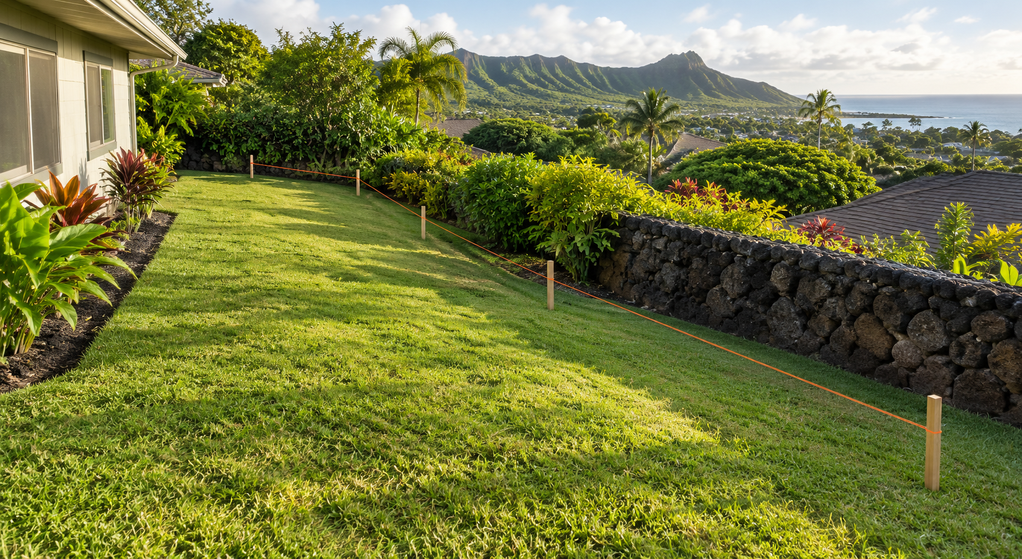
Wooden stakes and orange string mark a proposed fence route across a sloping Hawaii yard.
By Kurt Manalastas • September 26, 2026
Plan a Hawaii fence around confirmed property lines and changing terrain, including slopes, panel transitions, drainage, existing walls, and gate clearance.