Fence Installation for Hawaii Backyards, Gardens, and Pool Areas
Plan by Purpose
A successful Hawaii fence plan should treat backyards, gardens, and pool areas as separate zones with different privacy, airflow, access, visibility, and safety needs. Matching the fence material, gate design, footing, and layout to each area helps create an outdoor space that remains practical, secure, and easier to maintain
Outdoor spaces in Hawaii are used throughout the year, so fencing must do more than mark a property line. A backyard fence may need privacy without blocking airflow. A garden fence should protect plants while allowing sunlight. A pool barrier must control access and remain dependable in a humid, salt-exposed environment. Homeowners considering aluminum fence installation in Hawaii should evaluate each area’s purpose, site conditions, and maintenance needs before choosing a design.
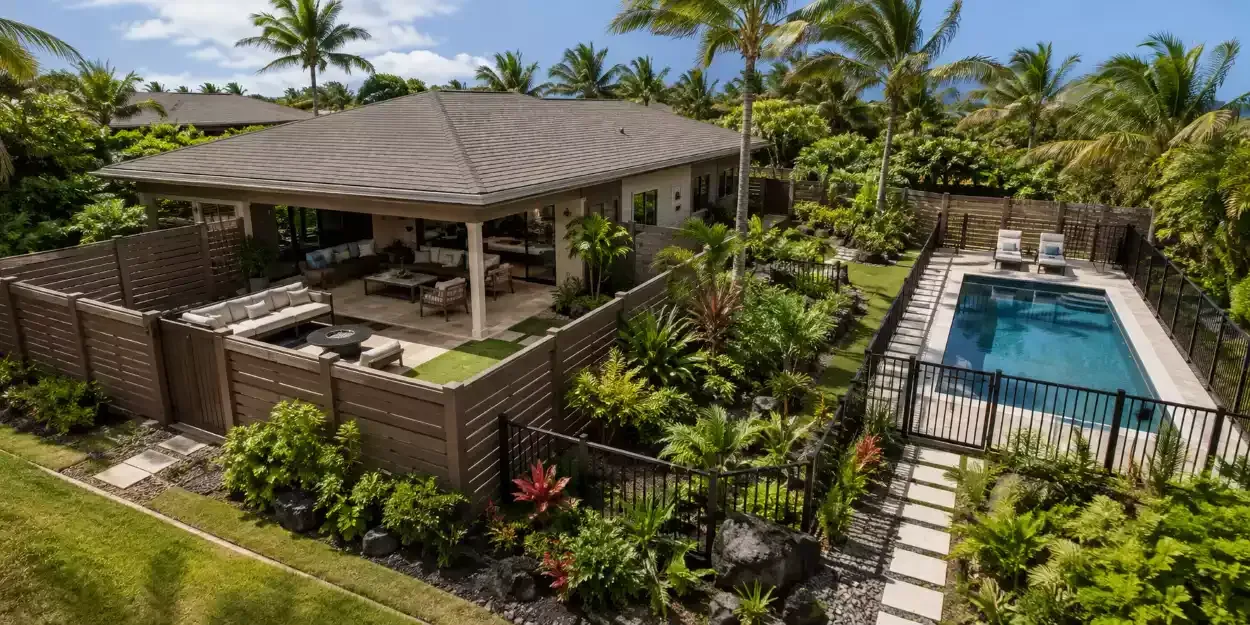
The strongest plan treats the backyard, garden, and pool as separate functional zones. A solid panel that works beside a patio may shade a garden, while an open fence may offer too little privacy near an outdoor dining area. Each section should be designed according to how that part of the property will be used.
Start With the Purpose of Each Outdoor Area
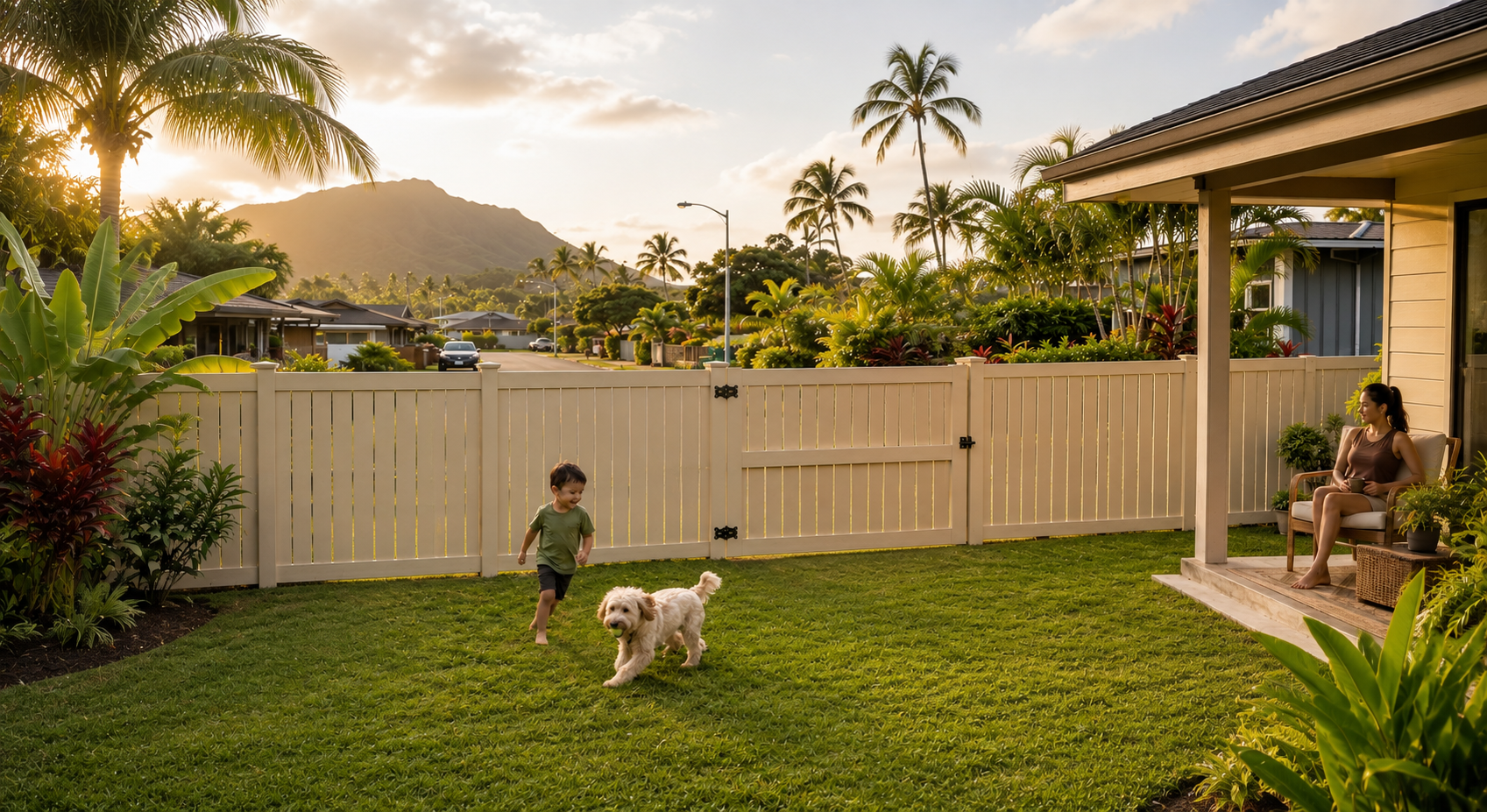
Based on experience with residential projects across Oʻahu, Sunset Hawaii Fencing Company has seen better results when homeowners identify the purpose of each fence section before choosing colors or decorative details. Privacy, pet control, garden protection, pool safety, view preservation, and equipment access often require different solutions. Backyard fencing usually needs to balance privacy, security, airflow, and access.
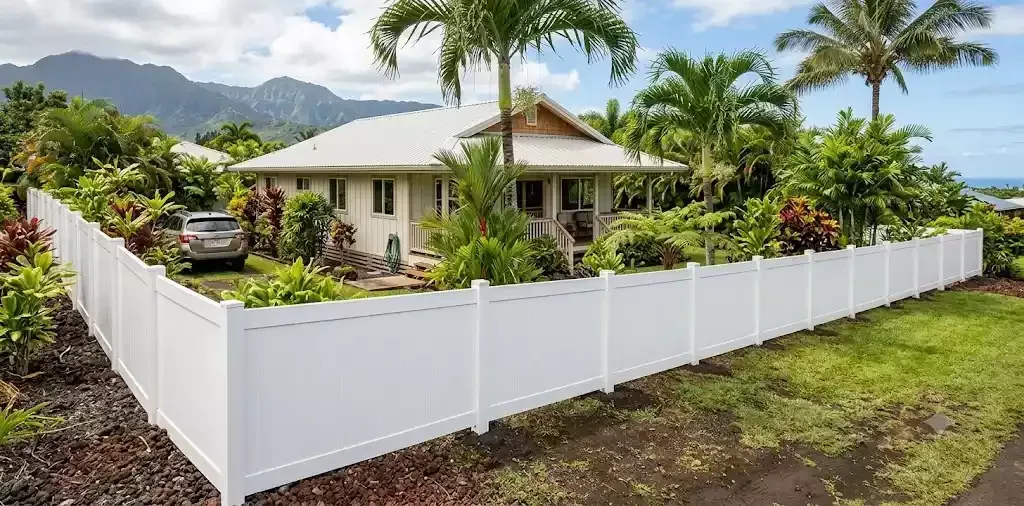
Closely spaced homes may benefit from full or semi-private panels around patios and lanais. However, solid fencing receives more wind pressure than open designs. On exposed properties, post depth, spacing, reinforcement, and panel configuration deserve careful attention.
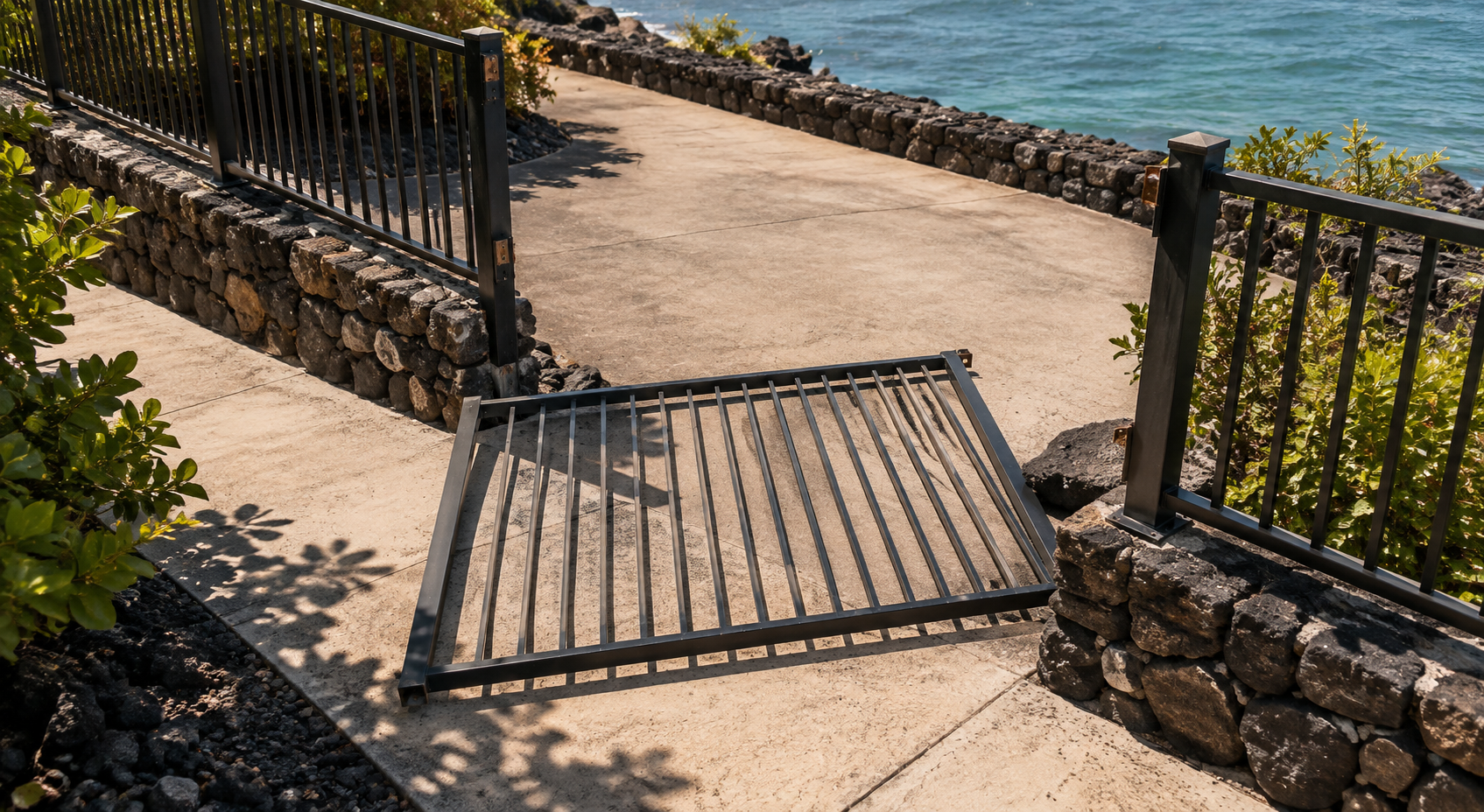
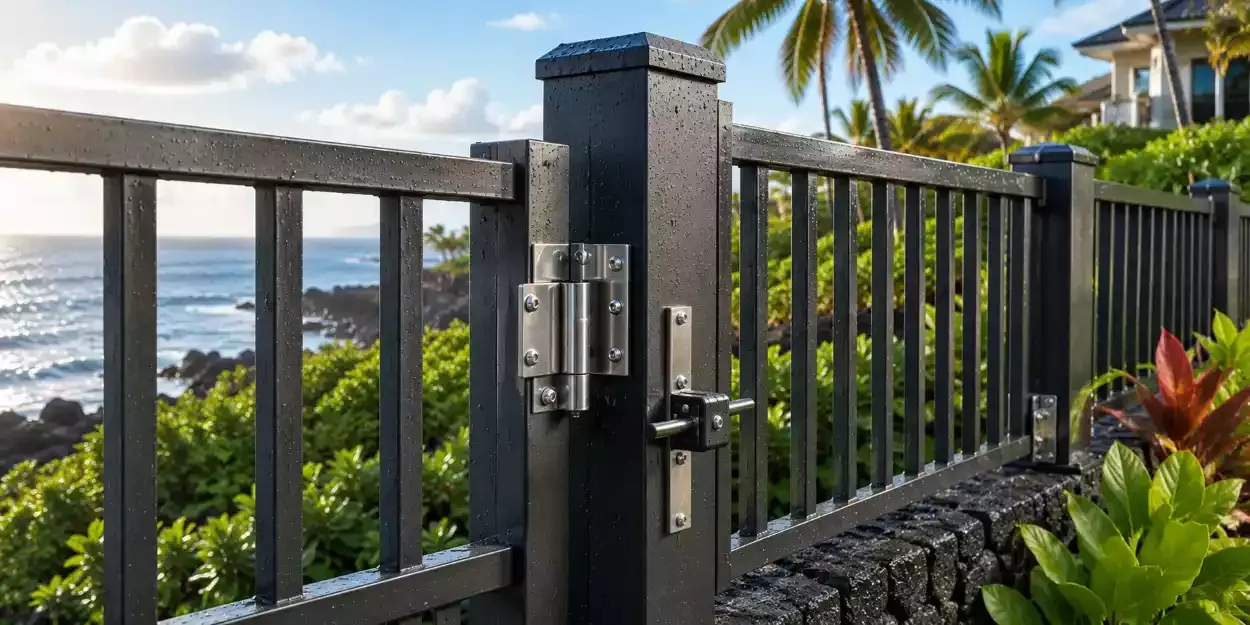
Gate planning is equally important. A pedestrian gate may work for daily access, but landscaping equipment, trash bins, outdoor furniture, or tools may require a wider opening. A common mistake is installing a wide gate without enough support, which can lead to sagging and latch failure.
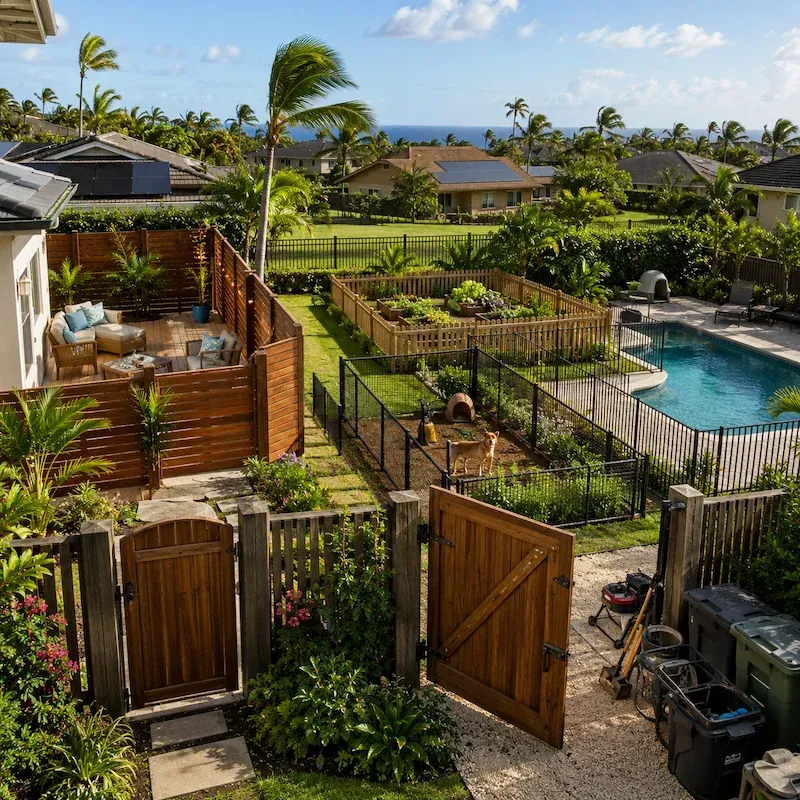
Backyard Fences Should Preserve Airflow and Useful Views
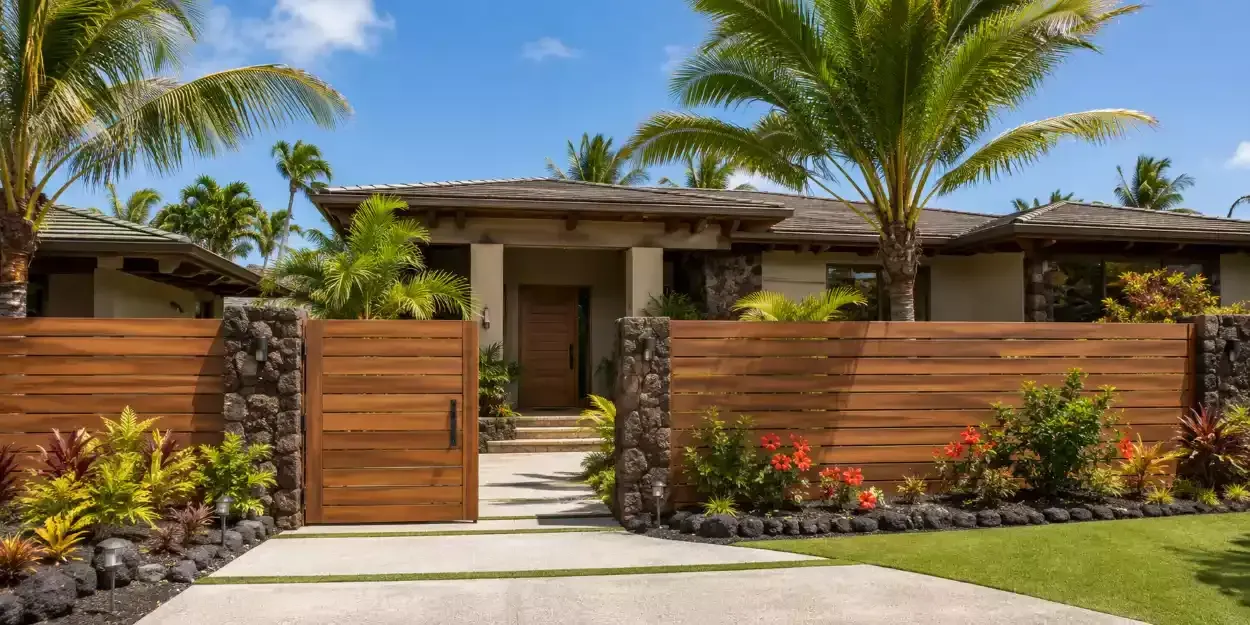
Privacy is valuable, but enclosing a small yard with tall solid panels can make it feel confined. In many Hawaii neighborhoods, a semi-private design is the smarter choice because it screens nearby activity while preserving airflow and openness.
Fence placement should also account for views. A homeowner may want privacy from a neighboring window without blocking a mountain, garden, or ocean-facing sightline. Stepped heights or a combination of solid and open sections can provide more control than one uniform design.
Drainage should influence the layout. Heavy rainfall can move water toward fence posts, especially on sloped or compacted lots. Posts in poorly drained areas may shift or lean, so runoff patterns should be reviewed before footing locations are finalized.
Garden Fencing Should Support Plant Health
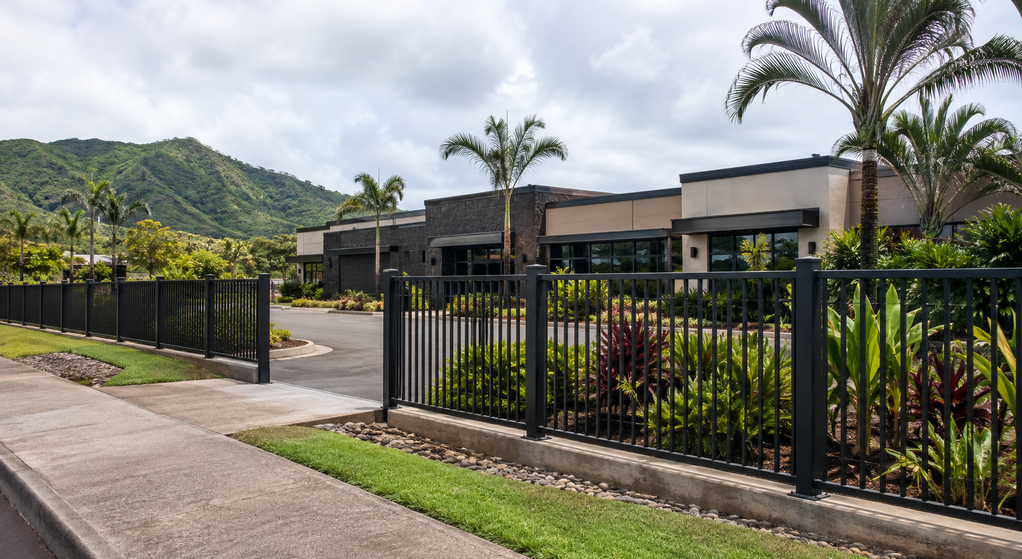
Garden fencing should protect planting areas without creating unnecessary shade or restricting air movement. Open aluminum, coated wire, picket-style vinyl, and other spaced designs often work well because they allow light to reach vegetables, flowers, and tropical plants.
Solid fencing may still be suitable along a boundary, but its distance from the garden matters. Plants too close to a solid panel may receive uneven sunlight and reduced airflow. Dense vegetation can also hold moisture against the fence and make inspections difficult.
In our work, we have seen garden fences become inconvenient because the gate was placed far from the main path or made too narrow for wheelbarrows and soil bags. The entrance should support routine maintenance, with enough clearance for trimming, cleaning, and checking the lower fence line.
Homeowners should also consider how quickly nearby plants will grow. A small shrub may eventually press against the fence, trap moisture, or make repairs difficult. Leaving practical clearance during installation can prevent these issues.
Pool Fencing Requires a Safety-First Design
Pool fencing should be planned differently from ordinary landscape fencing. The priority is controlled access. The barrier should remain continuous, resist climbing, and include a dependable gate and latch system. Homeowners comparing aluminum pool fencing options should evaluate both safety features and visibility before selecting a design.
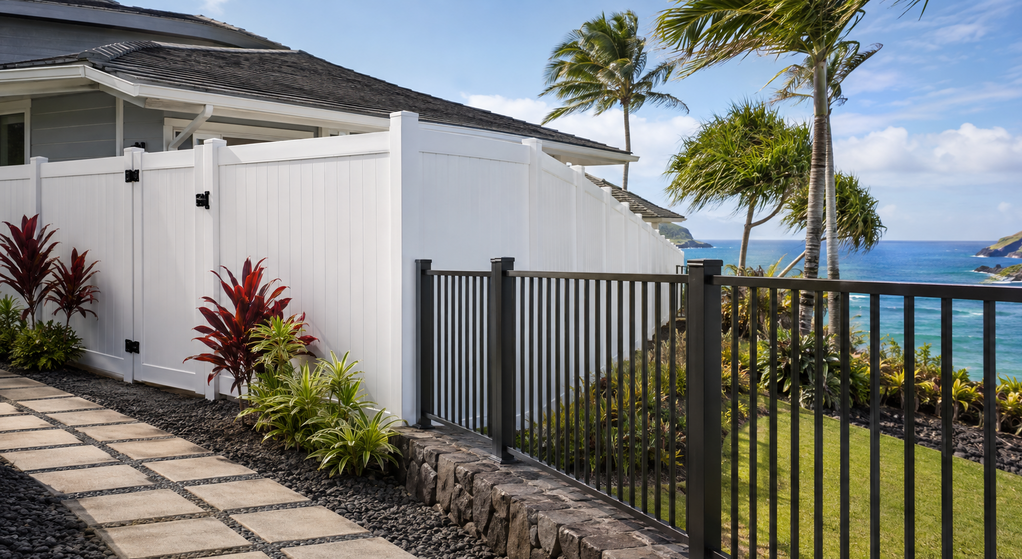
Open aluminum fencing is often practical around pools because it allows adults to observe the area from nearby patios or walkways. Vinyl may work where greater privacy is needed, but the layout should avoid hidden corners that reduce visibility.
Furniture, planters, storage boxes, and pool equipment should not be positioned where they can become climbing aids. Gate hardware needs regular checks because a pool barrier is only effective when the gate closes and latches properly.
County requirements can vary, so homeowners should confirm current height, opening, barrier, and gate rules before installation. Assuming that an ordinary backyard fence automatically meets pool-barrier requirements is a serious mistake. The design should be reviewed specifically for pool access and safety.
Choose Materials According to Exposure and Maintenance
Vinyl is a strong choice for privacy and relatively simple maintenance. It does not require painting, but it still depends on correct post installation, quality hardware, and periodic cleaning. Solid vinyl panels can work well around patios and neighboring properties when privacy is the main concern. Homeowners comparing the
best materials for fencing in Hawaii should weigh privacy, visibility, maintenance, wind exposure, salt air, and the purpose of each outdoor zone before choosing one material for the entire property. Aluminum performs well where visibility, airflow, and corrosion resistance are priorities, making it useful around pools and gardens.
Its open design also reduces the enclosed feeling that can occur around smaller outdoor areas.
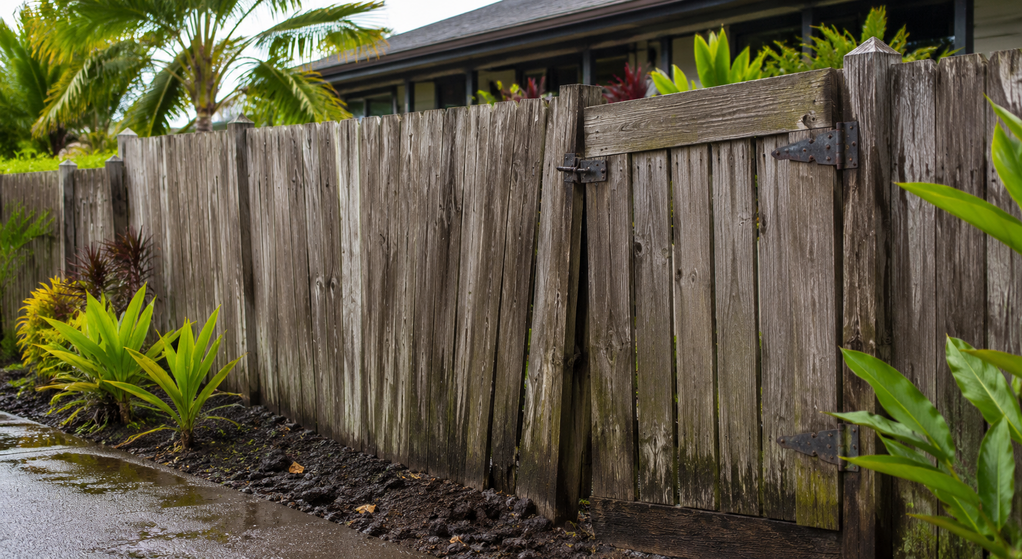
Wood provides a natural appearance, but Hawaii’s humidity, rainfall, insects, and coastal exposure can increase maintenance needs. It should be treated, kept away from constant soil contact when possible, and inspected for decay or pest damage.
Chain-link or coated mesh can be practical for pet areas, utility spaces, and garden enclosures, although it offers limited privacy.
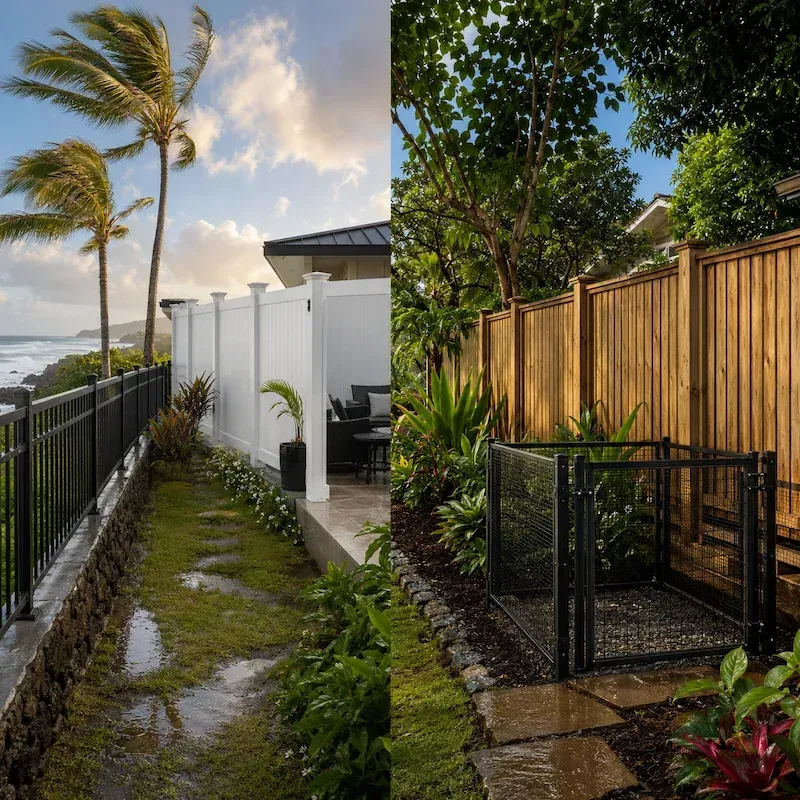
Landscaping or privacy inserts may improve screening, but added materials can also increase wind resistance. A fence near the coast faces different exposure than one in a sheltered inland neighborhood. Wind, salt, slope, drainage, soil conditions, and nearby vegetation should guide the material choice.
Avoid Installation Mistakes That Cause Early Problems
Frequent mistakes include weak gate posts, inadequate drainage, poorly confirmed property lines, low-quality fasteners, and fence sections installed too close to roots or heavy vegetation. Another mistake is forcing one material into every part of the property simply to maintain a uniform appearance.
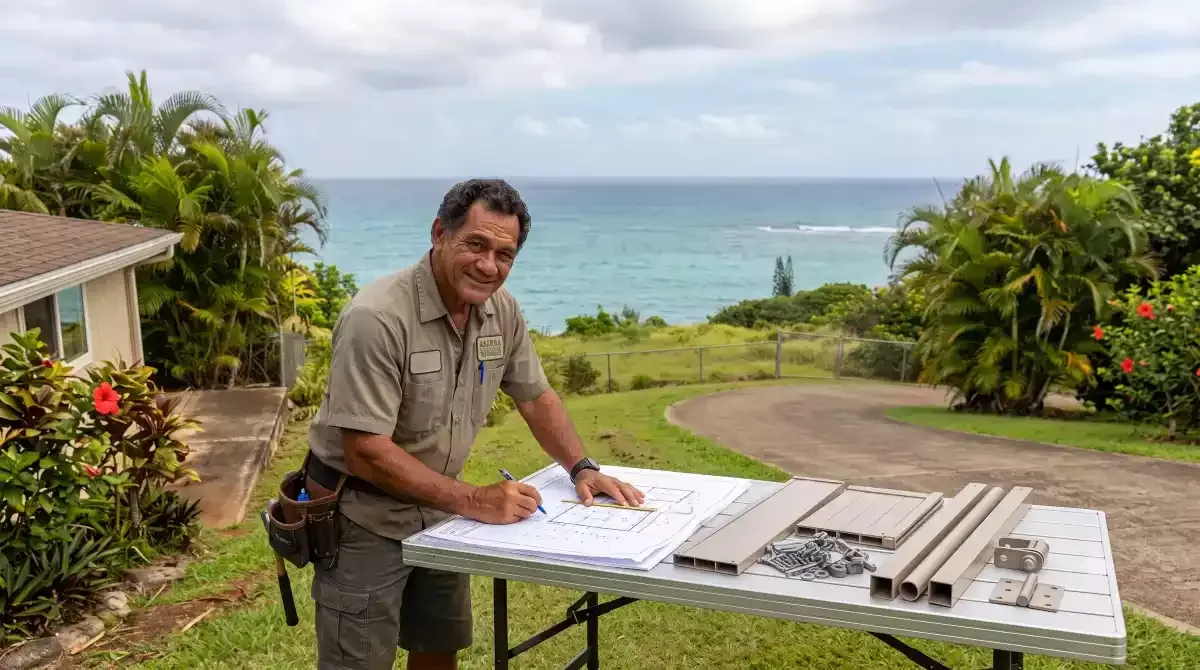
A better process begins with a detailed site walk. The installer should review boundaries, elevations, runoff, access routes, wind exposure, pool requirements, and how each area will be used. This leads to a layout that is easier to maintain and more likely to remain aligned.
Proper footing and alignment are especially important on sloped or uneven island properties. A fence can look straight from one angle while following the grade poorly from another. Planning how panels will step or follow the slope should happen before posts are installed.
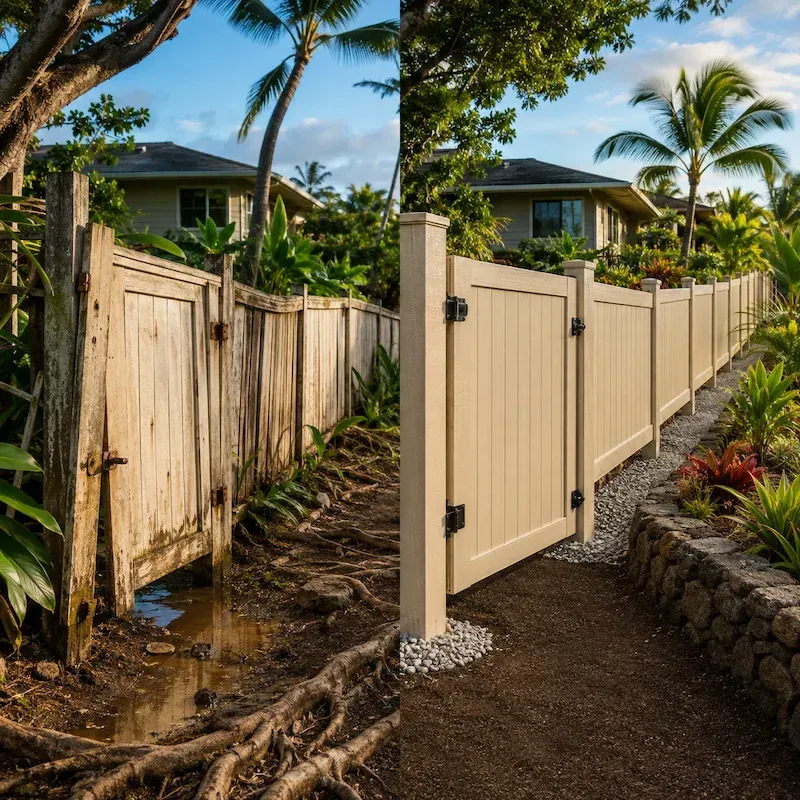
Plan the Entire Property Before Installation
Hawaii backyards benefit from thoughtful privacy and airflow. Gardens need sunlight, access, and plant protection. Pool areas require controlled entry and reliable visibility.
The clearest next step is to map the property by function before selecting materials. Mark where privacy is needed, where views should remain open, where wide access is required, and where safety rules apply. Homeowners should also identify drainage paths, exposed corners, landscaping plans, and areas that will need regular maintenance access.
A fence planned around real use will serve the property better than one selected mainly from a catalog image. Careful decisions about materials, posts, gates, visibility, and exposure can create an outdoor layout that remains practical across the backyard, garden, and pool area.

written by
Kurt Manalastas
Property Security & Exterior Improvement Journalist
Kurt creates research-based content focused on fencing solutions, property security, and outdoor boundary improvements. By combining industry best practices, material insights, and practical property protection strategies, he helps homeowners and business owners make informed decisions about building safer, more secure, and visually appealing outdoor spaces.