Preventing Rust, Warping, and Wear on Gates in Hawaii’s Climate
Maintenance Essentials: Hawaii’s salt air, humidity, and intense sun accelerate rust, warping, and wear on gates, making proper materials, installation, and regular maintenance essential. Preventive care such as rinsing salt buildup, sealing surfaces, and using corrosion-resistant hardware significantly extends a gate’s lifespan and helps maintain structural integrity in harsh island conditions.
If you want a gate that actually survives Hawaiian weather, it starts with understanding the environment you are fighting against. Hawaii does not damage structures slowly. The climate is aggressive, and gates are usually the first feature on a property to show the impact. The good news is that most of the damage people accept as normal is preventable with the right materials and maintenance approach.

Why Hawaii Damages Gates Faster Than Other Places
Gate installation services in Hawaii note that rust, warping, and wear are not random. They are the direct result of predictable environmental forces in the islands.
Salt in the air, whether you live on the shoreline or miles away, accelerates corrosion on metal. Warm humidity keeps wood swollen for long periods of time. The sun exposes every surface to intense heat that breaks down finishes and weakens protective coatings.
Some climates deliver these elements one at a time. Hawaii delivers all of them every single day. Gates stand at the front of a property, often without shade, receiving direct exposure from all angles. Even high-quality materials will fail if they are not prepared for this.
Many homeowners focus on appearance when choosing gates, but the climate decides whether a gate succeeds or not. The weather here does not allow shortcuts. If a hinge, latch, post, or frame is vulnerable, the environment will expose it.
Preventing Rust on Metal Gates
Rust is the most common problem in Hawaii because metal reacts quickly to salt. Even powder-coated or galvanized metal can eventually corrode if the protection is thin, damaged, or poorly applied. The mistake people make is assuming that one layer of coating is enough. It usually is not in harsh coastal environments like Hawaii.
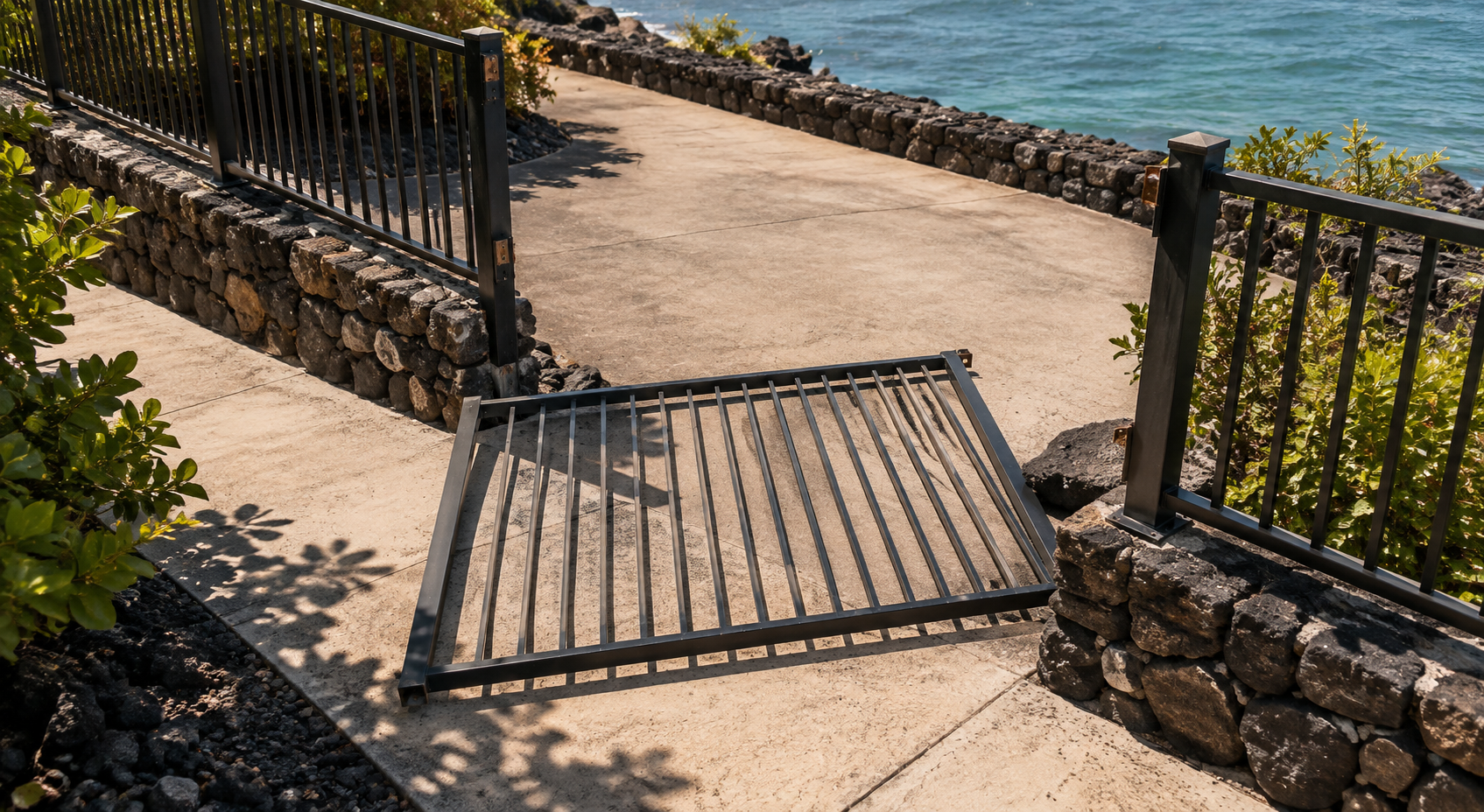
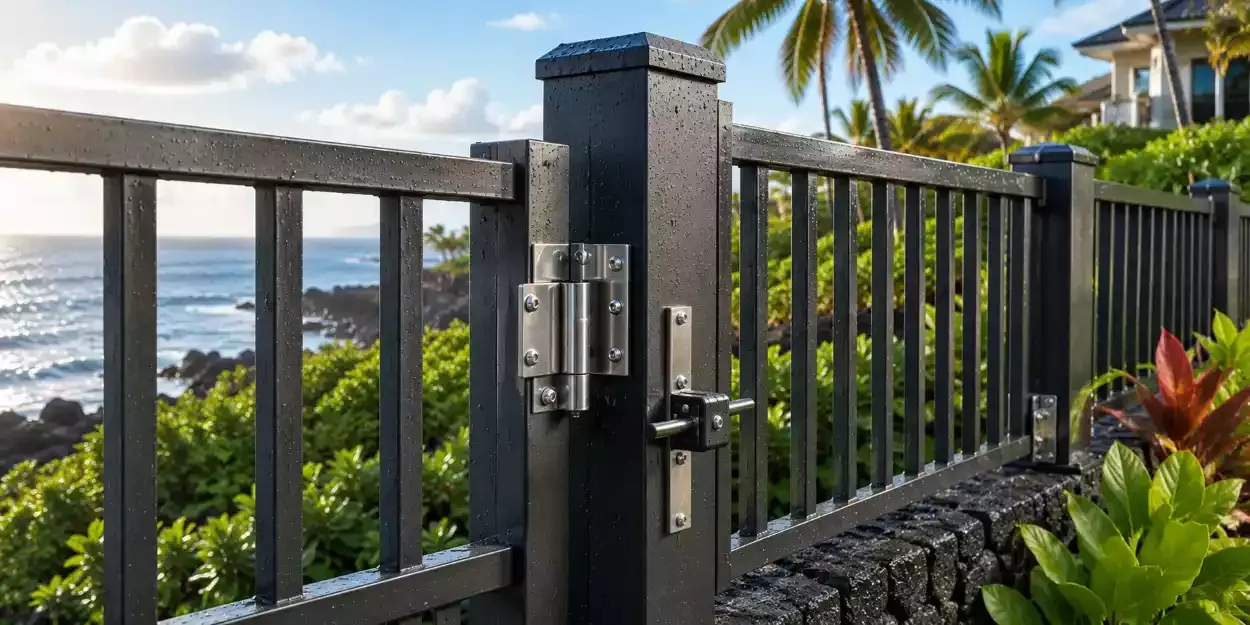
The best way to prevent rust is to treat metal as a long-term investment that requires multiple layers of protection for long-lasting outdoor environmental durability. Our professional gate installers prefer to choose high-quality coatings, ensure every cut or weld is properly sealed, and avoid cheap hardware that corrodes instantly when exposed to sea air. Hardware is often the weakest link on a gate. Once a hinge begins to rust, the gate starts to drag, sag, or misalign. That misalignment creates more stress on the posts and eventually causes the entire structure to fail.
Regular rinsing also helps prevent rust. Salt deposits build up even on inland homes, and rinsing the gate with fresh water removes a major source of corrosion. Many people wait until they see rust before taking action, but by the time rust appears, the metal has already weakened. Preventative care is far more effective than reactive repair.
Preventing Warping on Wood and Composite Gates
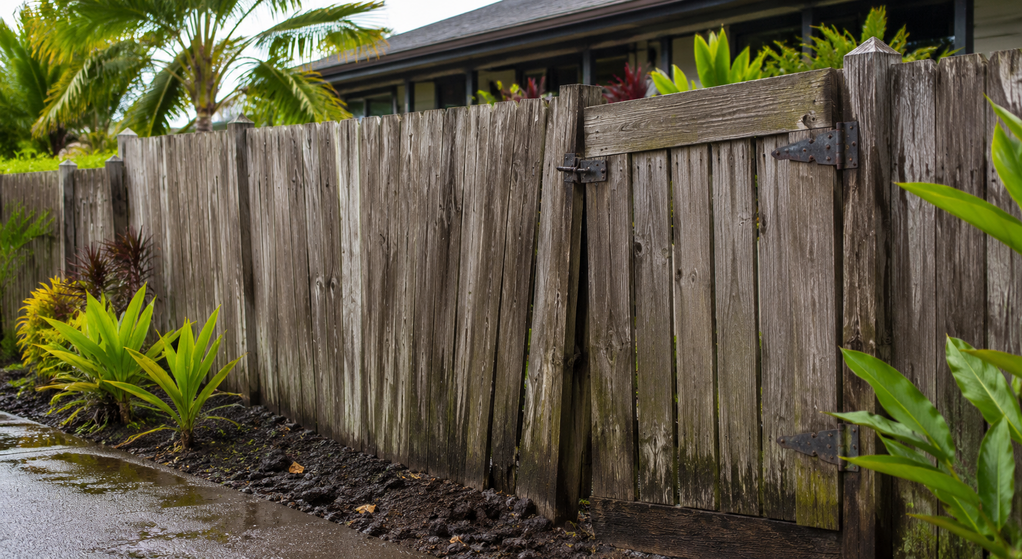
Wood is especially vulnerable in Hawaii. Humidity pushes moisture deep into the grain, causing boards to swell, twist, or bow. Sun exposure dries the outer surface faster than the inner layers, which causes uneven movement. The result is warping, splitting, and misalignment that can ruin a gate that started out perfectly square and structurally sound when it was first installed on the property.
We have seen homeowners assume that warping is unavoidable, but proper construction techniques significantly reduce the risk. Wood gates need strong frames, proper joinery, and correct spacing to handle moisture cycles. Posts need to be set deep and anchored correctly so the structure is not affected by soil movement or shifting. A poorly supported gate will warp faster than a well-built one.
Sealing is another major factor. A sealant that works in a dry mainland climate is often too weak for Hawaii. Gates here need finishes that block moisture from all sides, not just the front. If the bottom edge of a board is unsealed, humidity will find it. Without consistent protection, uneven moisture absorption is guaranteed, and the gate will warp.
Composite materials perform better than natural wood, but even composites can warp if installed incorrectly or exposed to excessive heat. Hawaii’s climate does not allow homeowners to rely on material alone. Technique matters.
Not all fence materials perform well in tropical conditions. See which materials are best for fencing in Hawaii to ensure long-lasting results.
Why Hardware and Footing Matter
Gates fail because of two overlooked components: hardware and footing. Even the strongest material will fall apart if the hinges are weak or the posts are not set properly. Posts must be anchored deep enough to resist movement caused by rain, soft soil, and daily use. Shallow footings are one of the main reasons gates lean over time.
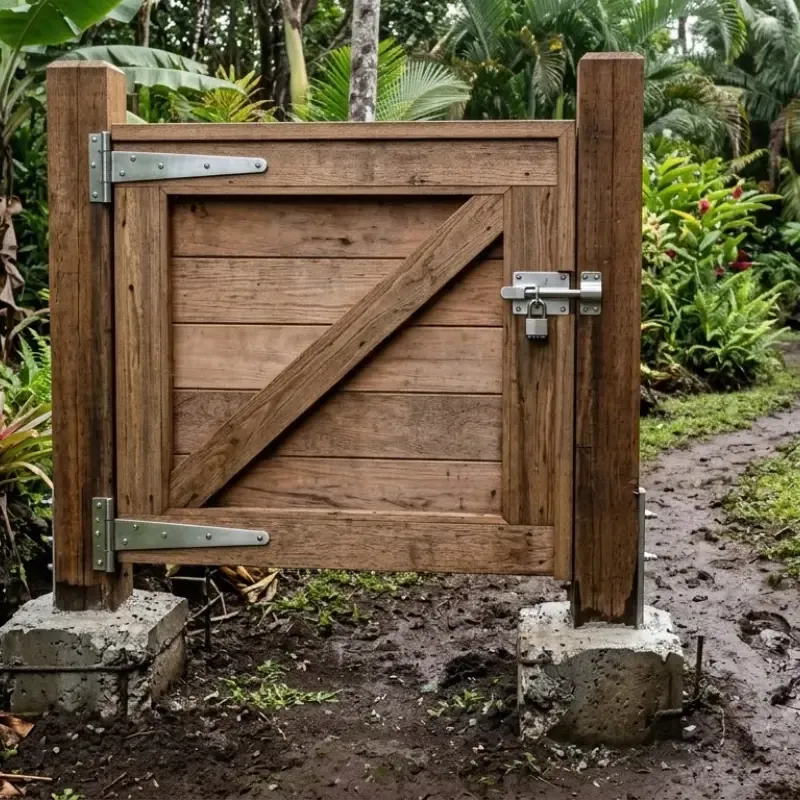
Hardware is equally important. Hawaii’s salt air destroys cheap screws, hinges, and latches quickly. Once hardware begins to corrode, the entire system loses its alignment. A misaligned gate rubs, scrapes, or puts pressure on the frame. Eventually, this stress causes warping or structural failure. High-quality stainless steel hardware, correct hinge placement, and proper alignment make a dramatic difference in how long a gate lasts.
A gate that is built with strong footing and corrosion-resistant hardware can withstand conditions that would destroy a weaker build. These details are not optional in Hawaii. They are the foundation of long-term durability.
How Regular Maintenance Extends the Life of a Gate
The climate in Hawaii demands consistent care. Rinsing salt from the surface, tightening hardware, reapplying sealants, and checking for early signs of wear keep small issues from becoming major repairs. Ignoring maintenance allows damage to accelerate quickly. The environment does not pause while you wait for the right moment to take care of repairs.
Some people avoid maintenance because they expect a gate to handle the weather on its own. That expectation rarely works out. When you live in a place with salt-rich air, intense UV exposure, and constant humidity, maintenance becomes part of ownership. Gates that receive periodic care last significantly longer.
Prevent damage and costly repairs with simple upkeep. Discover key tips to maintain your fence for lasting performance.
Wrap Up
Preventing rust, warping, and wear is not guesswork. It is the result of choosing strong materials, using proper building techniques, and understanding how the island climate interacts with every part of a gate. A gate that lasts in Hawaii is not simply a gate that looks good on installation day. It is one that has been built and maintained with intention.
There is nothing surprising about the damage gates experience in Hawaiian weather. What is surprising is how preventable most of that damage is. With the right preparation and consistent care, a gate can hold its shape, resist corrosion, and withstand the elements far longer than homeowners expect. The climate might be harsh, but a well built gate can stand up to it.