How Salt Air and Humidity in Oahu Impact Your Gate Installation Choices
What Most Buyers Miss:
Salt air and humidity on Oahu accelerate corrosion, weaken hardware, and affect soil stability, making material selection and proper installation critical for long-lasting gates. Choosing climate-appropriate materials, corrosion-resistant hardware, and well-designed footings helps prevent early failure and ensures reliable performance in Hawaii’s demanding coastal environment.
In our work across Oahu, we have seen that many gate problems are not caused by poor installation alone. They are caused by choosing materials and designs that simply do not belong in a coastal island climate. Understanding how salt and moisture interact with gate components is the difference between a gate that lasts two years and one that performs reliably for a decade or more.

Why Salt Air Changes Everything
Salt in the air accelerates corrosion. According to the National Oceanic and Atmospheric Administration, coastal salt aerosols significantly increase oxidation rates on exposed metals, even miles inland. On Oahu, there is no true escape from salt exposure.
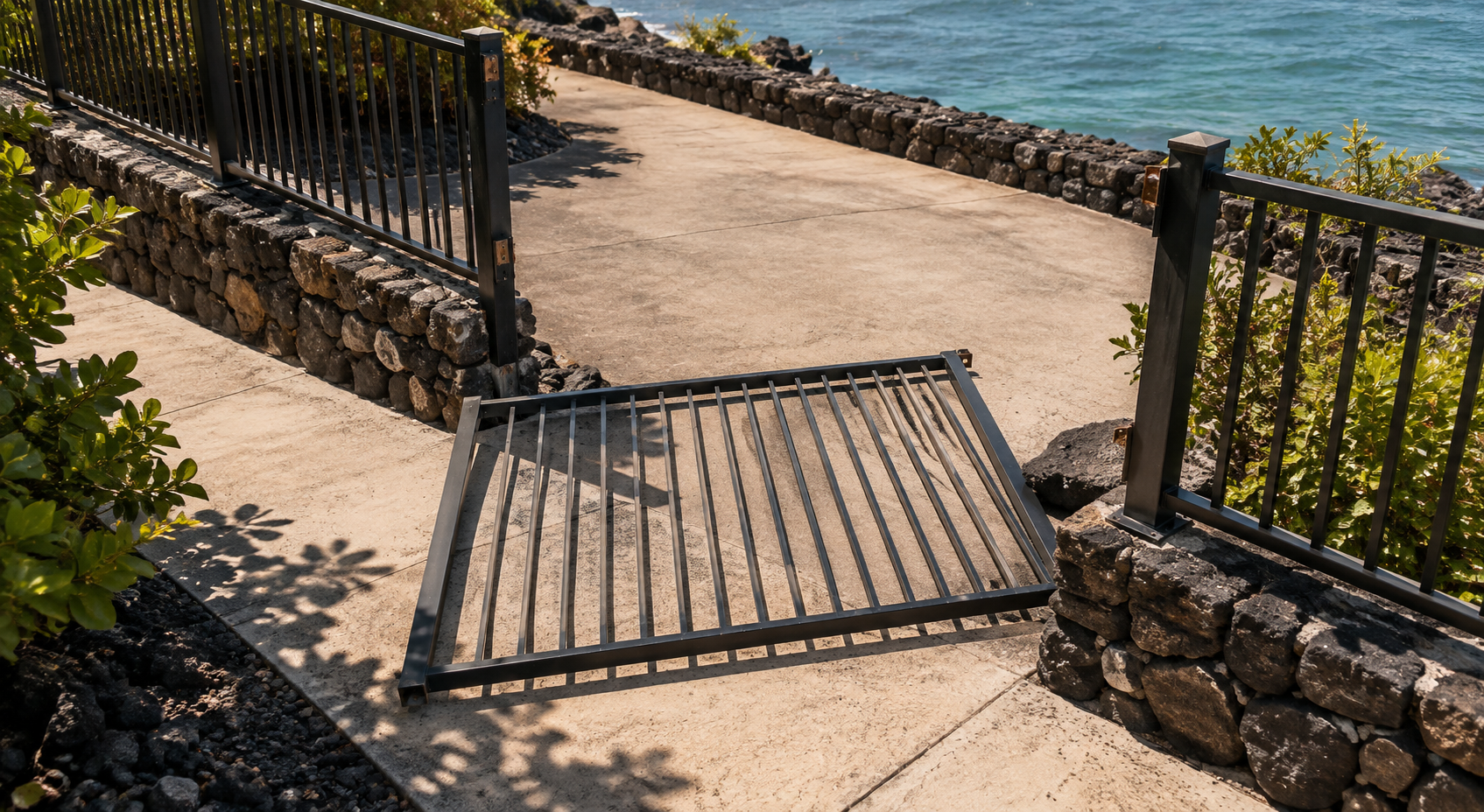
Steel hardware rusts faster. Aluminum oxidizes and pits. Even treated fasteners degrade when salt crystals settle into joints and seams. Gates are especially vulnerable because hinges, latches, and rollers rely on tight tolerances. Once corrosion begins, movement becomes uneven, weight shifts, and alignment fails.
This is why
gate installation services in Hawaii
emphasize that material choice is not just a cosmetic decision here.
Material Tradeoffs That Actually Matter
Every gate material involves tradeoffs. The mistake is pretending otherwise.
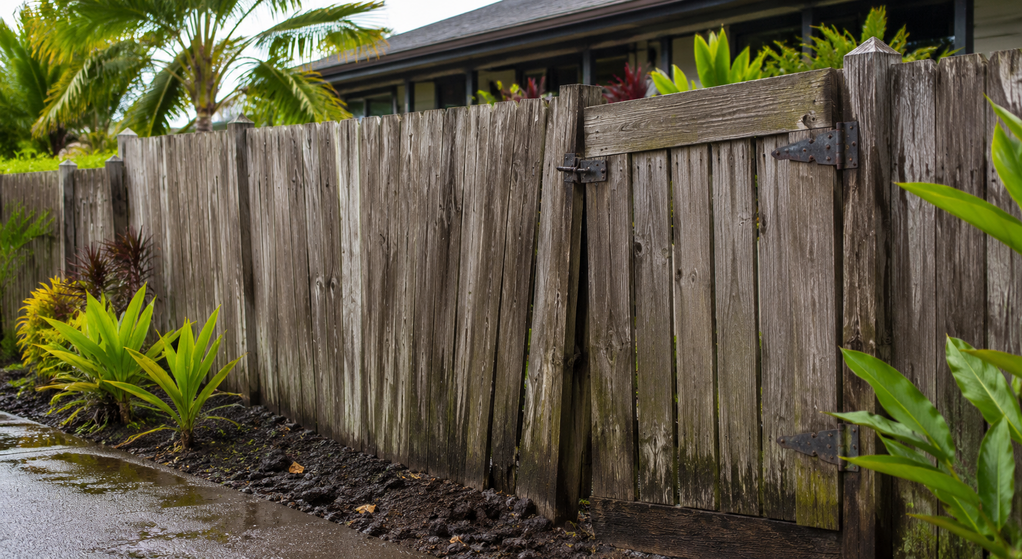
Wood gates are popular for aesthetics, but they require constant maintenance on Oahu. Even pressure-treated lumber absorbs moisture. Without aggressive sealing and ongoing care, warping and rot are inevitable. We often see sagging within the first year if the gate is wide or undersupported.
Steel gates offer strength but demand careful coating and hardware selection. Powder coating helps, but any scratch becomes a corrosion entry point. In salt air, rust spreads beneath finishes faster than homeowners expect.
According to our gate installation team, thin aluminum frames are prone to twisting under repeated humidity-driven expansion, despite aluminum’s natural resistance to rust, making hardware quality more important than the metal itself.
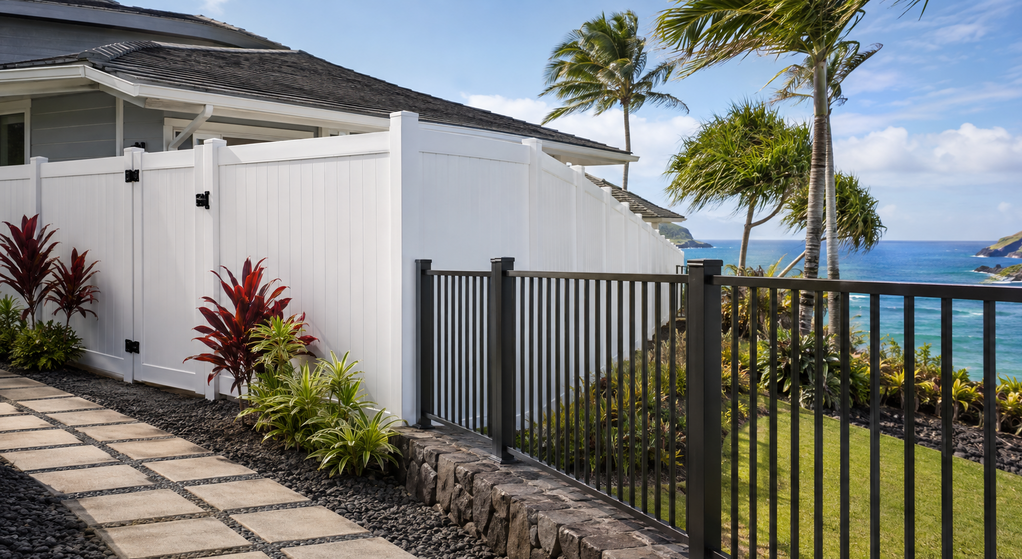
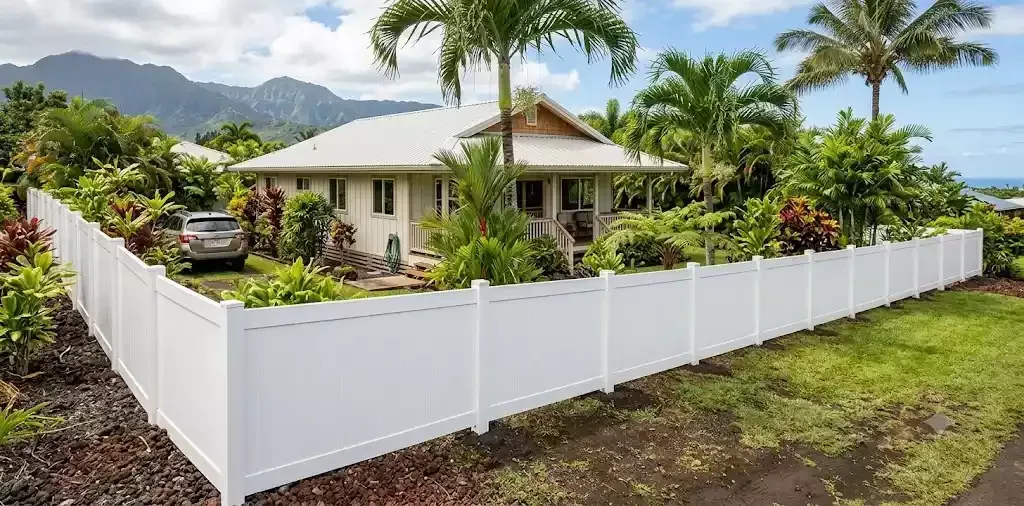
Vinyl gates, when properly reinforced, tend to outperform other materials in Oahu’s climate. Vinyl does not absorb moisture and does not corrode. The tradeoff is that reinforcement and footing must be done correctly. Lightweight vinyl without internal support will fail structurally even if the surface looks fine.
| Gate Material | Performance in Salt Air | Maintenance Level | Common Issues in Oahu |
|---|---|---|---|
| Wood | Poor resistance to humidity | High | Warping, rot, sagging |
| Steel | Strong but prone to corrosion | Medium–High | Rust under coatings |
| Aluminum | Resists rust but can weaken | Medium | Pitting, frame twisting |
| Vinyl (reinforced) | Excellent moisture resistance | Low | Structural failure if not reinforced |
Footings and Soil Are Part of the Gate
One of the most overlooked factors is what happens below the surface. Oahu soil varies dramatically by location. Coastal sand, clay-rich inland soil, and volcanic fill all behave differently when saturated.
Humidity and rainfall soften soil over time. Posts that are not set deep enough or lack proper drainage begin to lean. Gates amplify this movement because of their weight and motion.
The Federal Highway Administration emphasizes that proper footing depth and drainage are critical in high-moisture environments. We see this firsthand. We have seen many gate failures traced back to shallow posts rather than poor-quality materials.
The Federal Highway Administration emphasizes that proper footing depth and drainage are critical in high-moisture environments. We see this firsthand. Our gate installation team has seen many gate failures traced back to shallow posts rather than poor-quality materials.

Humidity and Constant Moisture Stress
Humidity compounds the problem. Oahu’s average relative humidity regularly sits above 70 percent. Moisture lingers. Surfaces do not fully dry. Wood swells. Metal stays damp. Hardware never gets a break.
In our experience, gates fail faster not because of rain, but because moisture never fully leaves the system.
Hinges seize. Posts soften at ground contact. Fasteners loosen as materials expand and contract daily.
This is also why mainland gate recommendations often fail here. Advice written for dry or seasonal climates does not translate to a tropical island with year-round exposure.
Common Mistakes
Based on real projects across the island, these mistakes appear repeatedly:
- Choosing gate hardware rated for indoor or mainland use
- Prioritizing appearance over structural reinforcement
- Assuming treated wood equals moisture-proof
- Underestimating how quickly salt air affects hinges and latches
- Skipping drainage planning at post bases
Each of these choices seems small in isolation. Together, they shorten a gate’s lifespan dramatically.
To learn more about the appropriate material for your gate, explore Choosing the Right Gate Material for Oahu’s Weather Conditions.
Design Choices That Reduce Long-Term Stress
Smart gate design on Oahu focuses on reducing stress points.
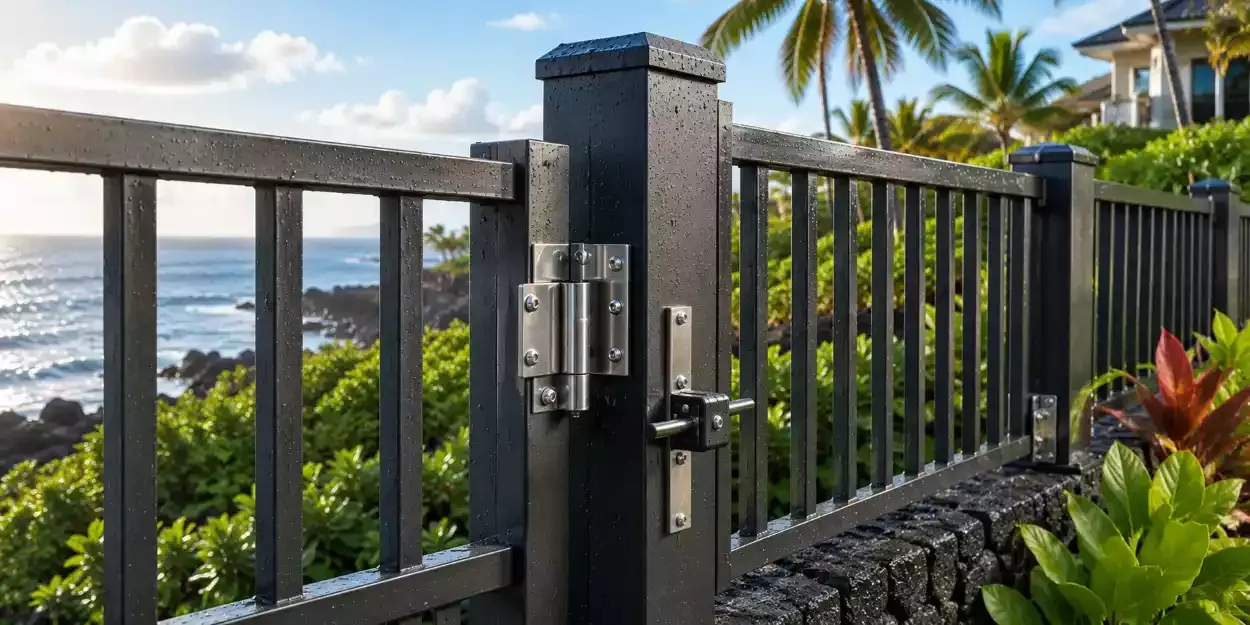
Shorter gate spans reduce sag. Self-closing hardware rated for marine environments holds up better. Stainless steel fasteners with proper grades resist corrosion longer than galvanized alternatives. Elevating wood components slightly off ground contact slows moisture absorption.
We have seen that gates designed with these principles remain functional years longer than visually similar gates built without them. Check out
Modern Gate Designs That Elevate the Look of Oahu Homes.

Why Local Conditions Demand Local Judgment
Advice that works in California or Arizona does not account for Oahu’s environmental load. Salt exposure is constant. Humidity is relentless. Soil movement is real.
This is why local experience matters more than generic specifications.
In our work, we have seen identical gate designs perform very differently depending on microclimate, wind exposure, and distance from the shoreline.
The Hawaii Department of Transportation notes that coastal infrastructure requires enhanced corrosion protection due to airborne chlorides. Residential gates are no exception.
What Homeowners Should Take Away
The most reliable gate installations on Oahu are not the most expensive. They are the most appropriate. Materials must be chosen for salt resistance. Hardware must be rated for moisture exposure. Footings must respect local soil behavior.
When homeowners understand this, they make smarter decisions, avoid repeated repairs, and gain confidence that their gate will function as intended in an island climate.
If you’re planning a new gate or replacing an existing one, reach out to qualified professionals who work with Hawaii’s climate and conditions to ensure the job is done right.