Wood vs. Vinyl vs. Metal Gates: What Works Best in Oahu’s Climate?
Quick Comparison: Wood, vinyl, and metal gates perform very differently in Oahu’s climate, where salt air, humidity, and sun exposure accelerate wear. While wood and metal require ongoing maintenance to prevent warping and corrosion, vinyl consistently offers the best balance of durability, low upkeep, and long-term reliability for island conditions.
Wood, vinyl, and metal are the three most common choices for gates, yet they behave very differently once installed in Hawaiʻi. Each material offers strengths, but longevity and day-to-day performance do not match evenly. Understanding how these materials react to moisture, heat, and coastal air will help you avoid long-term repair costs and structural problems.

Wood Gates
Wood gates have a timeless appearance that many people love. The style fits plantation homes, rustic designs, and traditional island properties. When freshly installed, a well-built wood gate looks warm and natural. The problem is not the beauty of wood. The challenge is how quickly island weather begins to break it down.
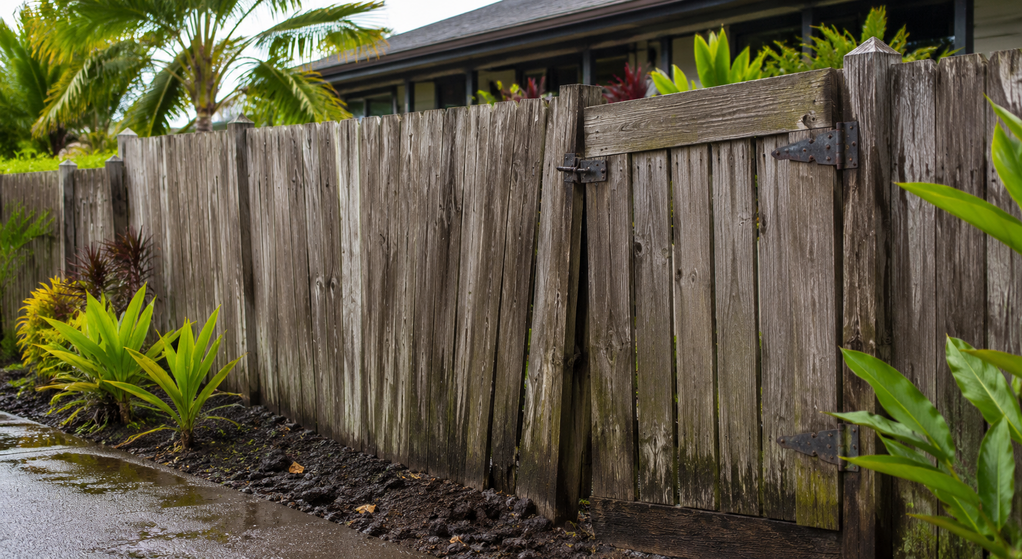
Oahu’s humidity penetrates untreated or lightly treated wood, which leads to swelling, warping, and rotting.
Even high quality cedar or redwood cannot fully escape moisture in the long run. UV exposure dries the surface while the interior holds humidity, causing boards to twist and lose alignment. Salt in the air adds an abrasive effect that shortens the lifespan of hinges and fasteners connected to wood structures.
According to gate installation services in Oahu, regular sealing and painting help, but the maintenance cycle is frequent. Homeowners often find themselves refinishing a wood gate every one to two years. This becomes a time commitment as well as an expense. Even with consistent care, wood rarely provides the stability or longevity that Oahu’s climate demands.
The bad news is that in isolated dry areas or shaded inland neighborhoods, wood can last longer.
Vinyl Gates
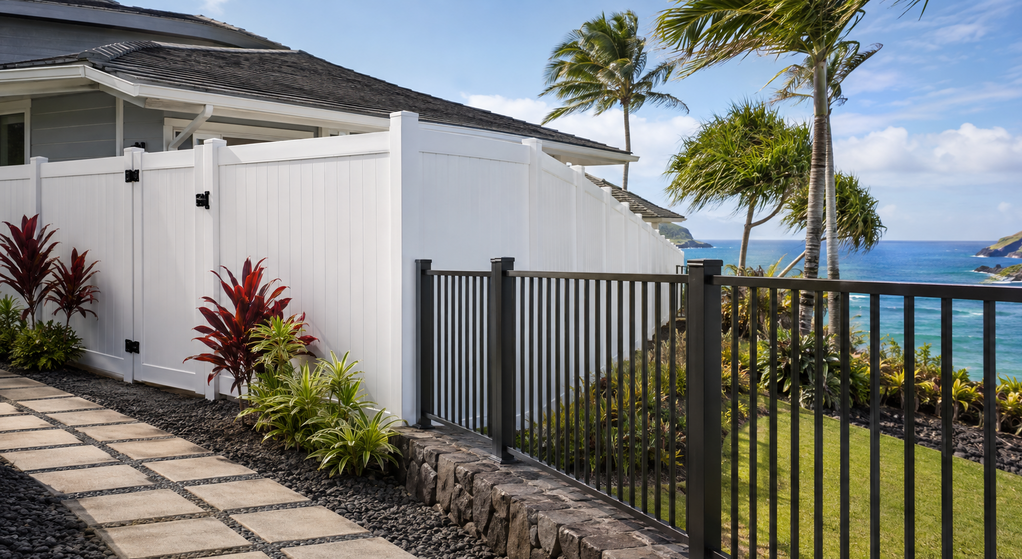
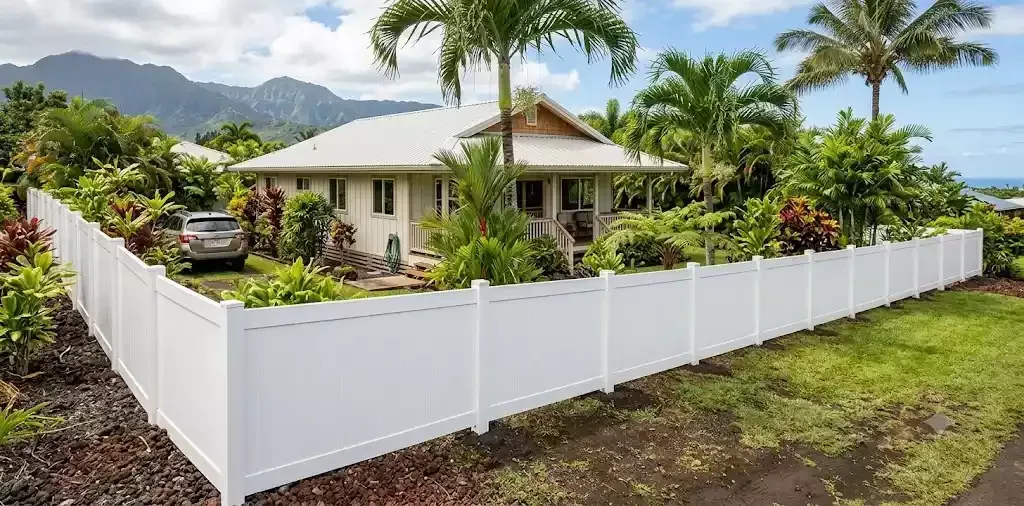
Vinyl performs better in wet environments because it does not absorb water and does not corrode. This single important design characteristic of vinyl gives it a major advantage, which is why Our team of gate installation experts recommends it. The material stays straight, clean, and structurally sound despite year-round humidity. Unlike wood, vinyl does not warp. Unlike metal, it does not rust. Homeowners appreciate that the surface only needs occasional rinsing rather than sanding or repainting.
Vinyl also resists termite damage, which is an important factor on the island. Hawaii’s insect activity can compromise wood structures quickly, but vinyl is not affected. In terms of stability, properly installed vinyl gates have strong internal reinforcement and secure footing that keeps them aligned even when exposed to high winds.
Some people assume vinyl is fragile because it feels lighter than wood or metal. That is not the case when the posts are anchored correctly and the panels are supported with reinforced rails. When built with quality materials and set on solid foundations, vinyl gates remain strong, dependable, and low maintenance for many years in Oahu’s climate.
A major benefit is consistent appearance. Vinyl keeps its color without needing stain or paint. Homeowners also appreciate that it does not split or peel. This makes vinyl the most practical option for those who want a long-lasting gate without constant maintenance.
Metal Gates
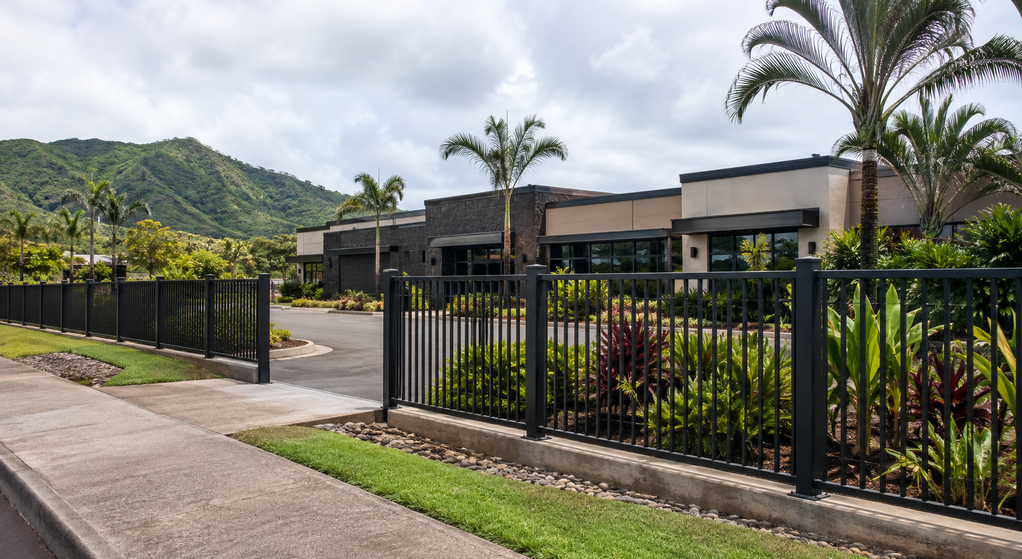
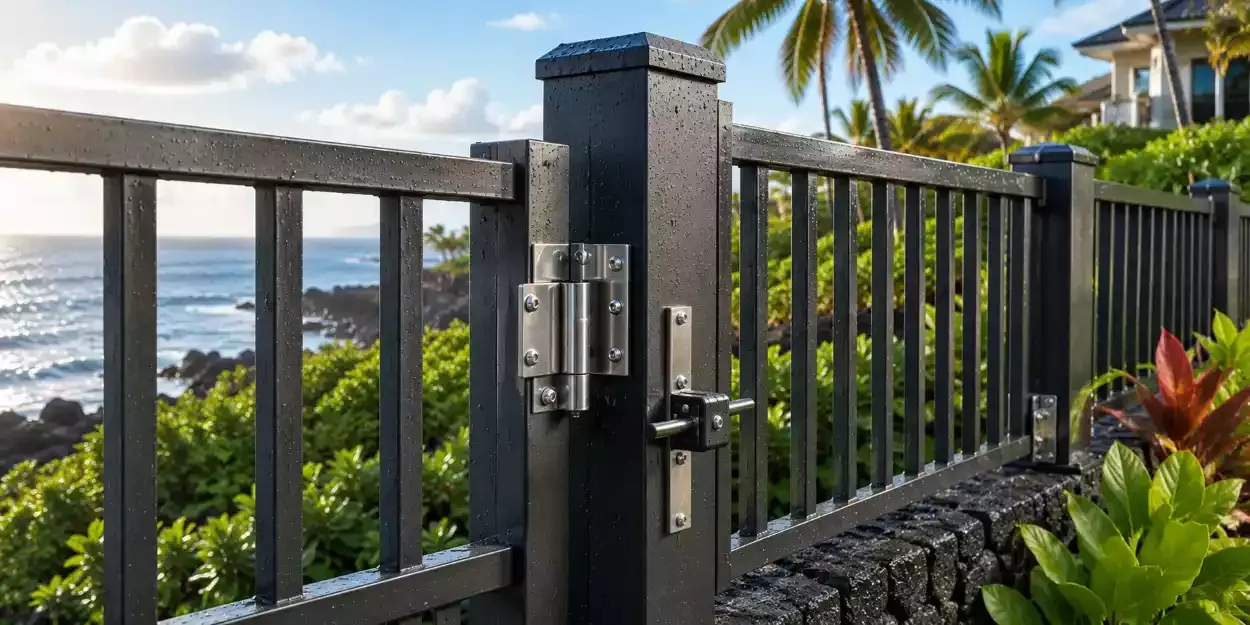
Metal gates appear durable at first glance. Steel and iron structures feel heavy and secure. They work well for properties that prioritize security and a high-strength barrier. However, metal is not naturally suited for salty, humid air.
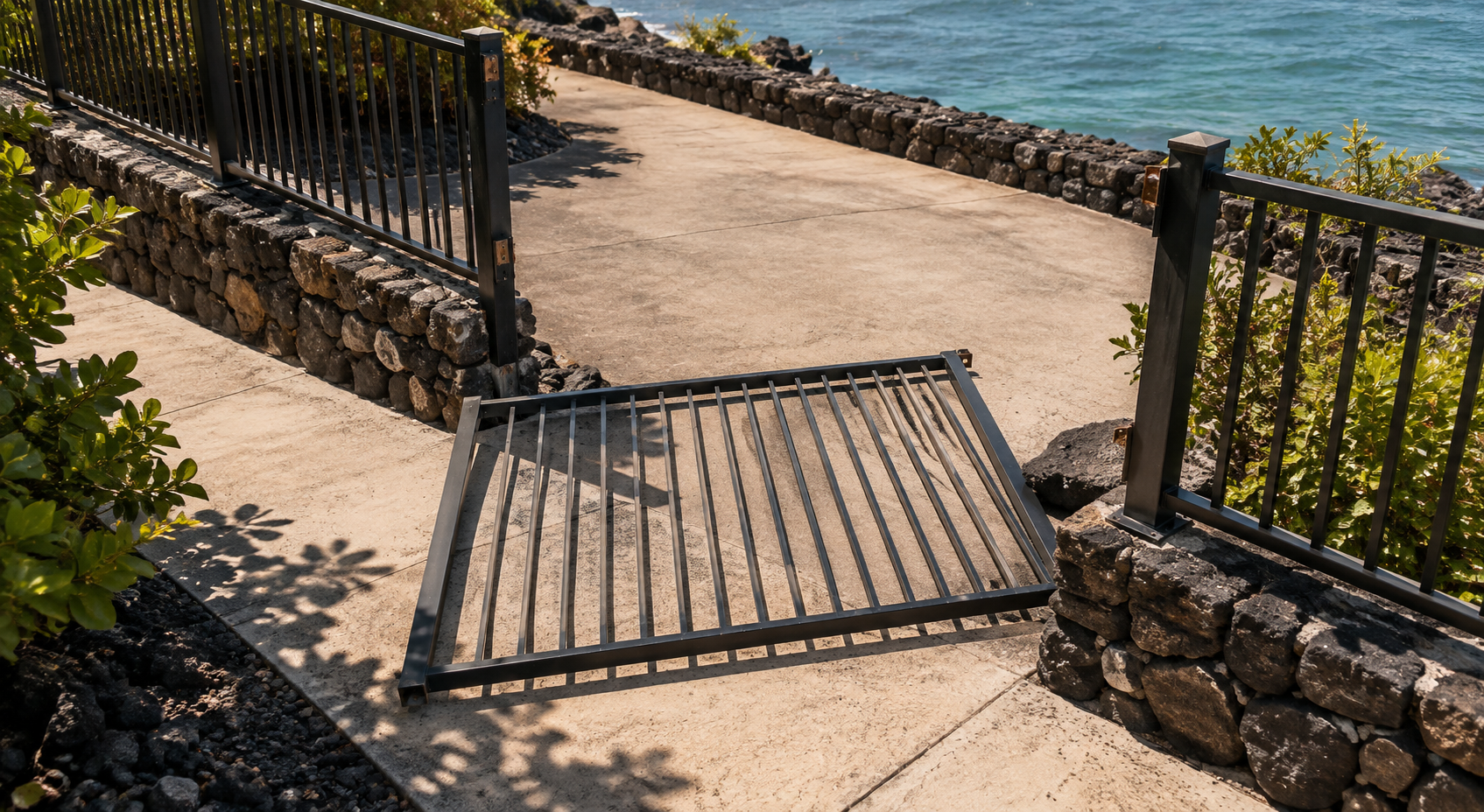
Corrosion is the primary issue. Even powder-coated metal will eventually show signs of rust in Hawaiʻi. The process begins at joints, hinges, weld points, and areas where the coating becomes scratched. Once rust starts, it can travel underneath the coating, weakening the structure over time.
Aluminum is more resistant to corrosion, but it is softer and can dent more easily. Steel is stronger but rusts faster. Iron looks beautiful, yet requires continuous upkeep. Every type of metal gate needs regular inspection, refinishing, and rust treatment to survive Oahu’s environment.
For commercial properties that can budget regular maintenance, metal remains a workable option. For homeowners who want a low-maintenance solution, metal becomes a time-consuming and costly choice unless installed far from coastal exposure.
Hawaii’s climate is tough on metal and wood structures, but the right maintenance can make all the difference. Learn how to prevent rust, warping, and premature wear on gates in island conditions.
Which Material Performs Best in Oahu
When the goal is long-term strength, minimal upkeep, and resilience against salt, humidity, and heat, vinyl consistently performs better than wood or metal. Wood struggles with moisture and sun damage. Metal battles corrosion from the moment it is installed. Vinyl is built for coastal climates where moisture is unavoidable.
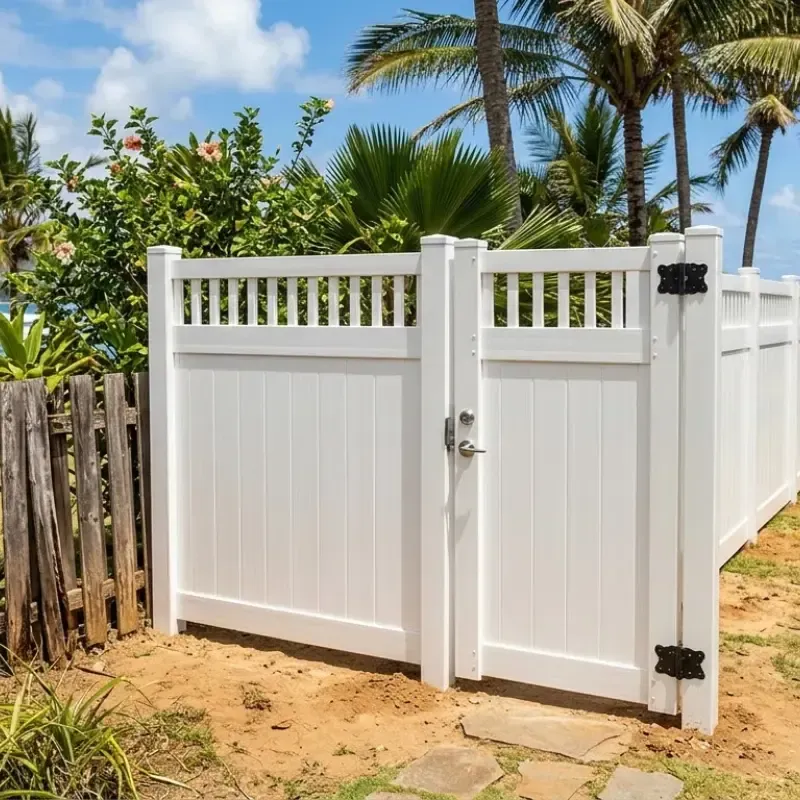
A gate is only as strong as its foundation and alignment. Proper footing ensures the posts do not shift in soft or uneven island soil. Reinforced rails prevent sagging. Secure hinges allow smooth movement despite wind and daily use. A material that resists weather is important, but the quality of installation is just as crucial. Gates in Oahu experience more environmental stress than in many mainland regions, which is why construction technique matters as much as the material itself.
Homeowners who want the longest lifespan with the least maintenance often choose vinyl. In terms of reliability, it continues to outperform the alternatives in Hawaiʻi’s climate.
For homeowners weighing long-term value, performance, and appearance, understanding how each fencing material holds up in Hawaii’s unique climate is essential. Learn how the top options compare in Best Materials for Fencing in Hawaii.
| Feature | Wood | Vinyl | Metal |
|---|---|---|---|
| Moisture Resistance | Low | High | Medium |
| Maintenance Level | High | Low | High |
| Lifespan in Oahu | Short–Mid | Long | Mid |
| Corrosion Resistance | Low | High | Low–Medium |
| Pest Resistance | Low | High | High |
| Overall Performance | ❌ | ✅ Best | ⚠️ Situational |
Final Thoughts
Wood, vinyl, and metal can all function as gate materials, but Oahu’s environment exposes weaknesses that are not always obvious at first. The best gate is one that stays aligned, remains strong through storms, and holds its appearance without repeated repairs.
In Oahu, vinyl consistently achieves these results while reducing the burden of maintenance for homeowners. It is the material that aligns most naturally with the island’s weather and provides dependable results year after year.