What to Consider When Installing an Entry Gate for Multi-Generational Homes in Hawaii
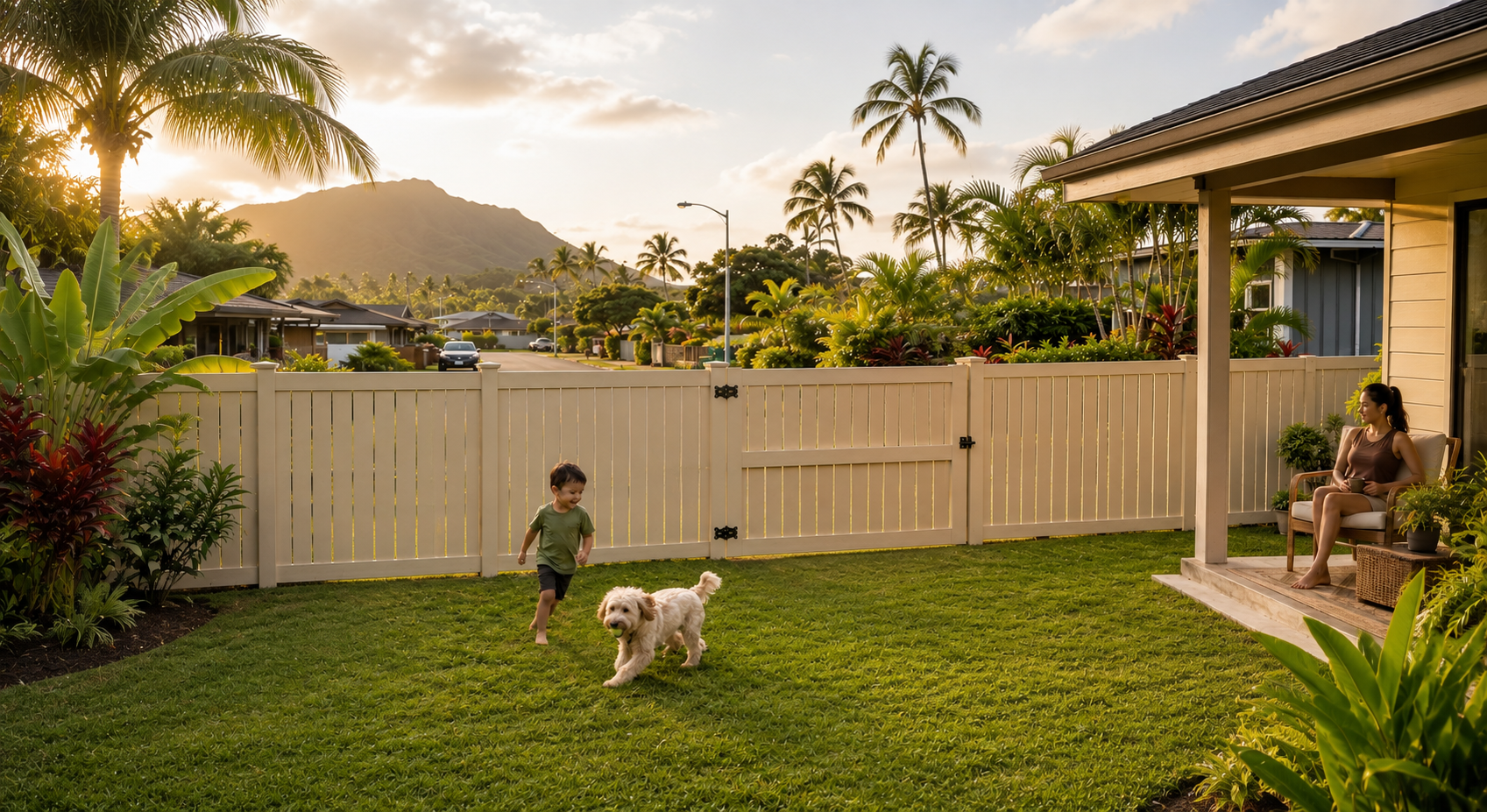
Property Fit Check: Installing an entry gate for multi-generational homes in Hawaii requires balancing accessibility, security, privacy, and daily usability across different age groups and routines. The right design considers local climate, soil conditions, and shared living dynamics, ensuring the gate remains durable, easy to use, and supportive of long-term family comfort.
An entry gate does more than mark a boundary. In a multi-generational household, it influences safety, daily routines, accessibility, privacy, and even family harmony. Installing the wrong gate creates friction quickly. Installing the right one supports how the household actually lives.
Start With How the Home Is Used Daily
Multi-generational homes rarely operate on a single schedule. Early risers, night workers, school drop-offs, deliveries, and visitors all pass through the same entrance. A gate that functions well for one person but frustrates others will not last long in daily use.
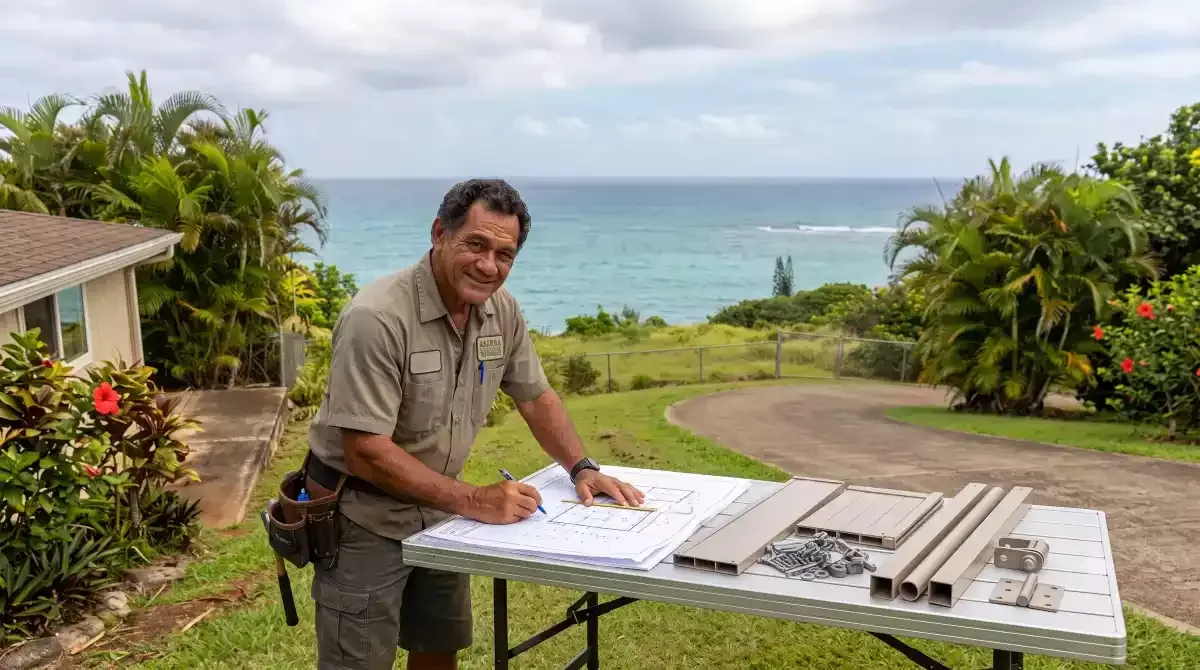
Before thinking about style, consider frequency, gate installation services in Hawaii recommend considering how many times per day the gate will open and close. Will vehicles pass through, or only pedestrians? Is the gate shared between a main house and an ohana unit? These answers shape the gate’s size, swing direction, and hardware choices.
Homes that ignore these practical questions often end up with gates that stay open permanently, defeating their purpose.
Accessibility Is Non-Negotiable
In multi-generational households, accessibility is not optional. Gates must work for residents of all ages and abilities. Heavy gates, high latches, or narrow openings quickly become obstacles for kupuna, children, or anyone with limited mobility.
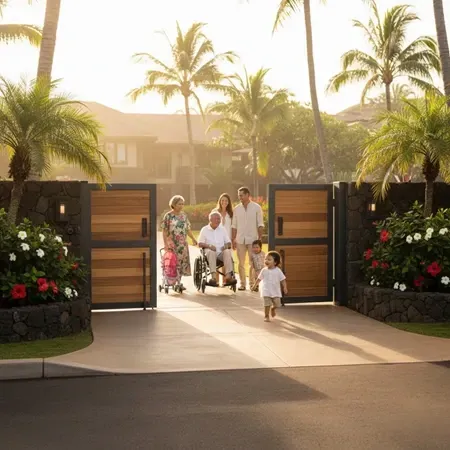
Gate width should allow comfortable passage for walkers, wheelchairs, strollers, and carts. Hardware should operate smoothly with minimal force. Handles placed too high or too low create daily frustration and safety risks.
Hawaii’s climate adds another layer. Humidity, rain, and salt air cause materials to swell, warp, or corrode. A gate that feels fine at installation can become difficult to operate within a year if materials are poorly chosen.
Security Without Creating Isolation
Many families install entry gates for security, but security should not come at the expense of connection. A gate that feels overly restrictive can make a family home feel closed off rather than protected.
Visibility matters for home safety and security. That’s why our gate installation team offers gates with partial sightlines, allowing residents to see who is arriving before opening. This is especially important in homes where elders or children may answer the gate.
Locking systems should be consistent and intuitive. Complex locks or multiple access methods lead to confusion. In multi-generational homes, simplicity supports safety better than high-tech solutions that few people understand.
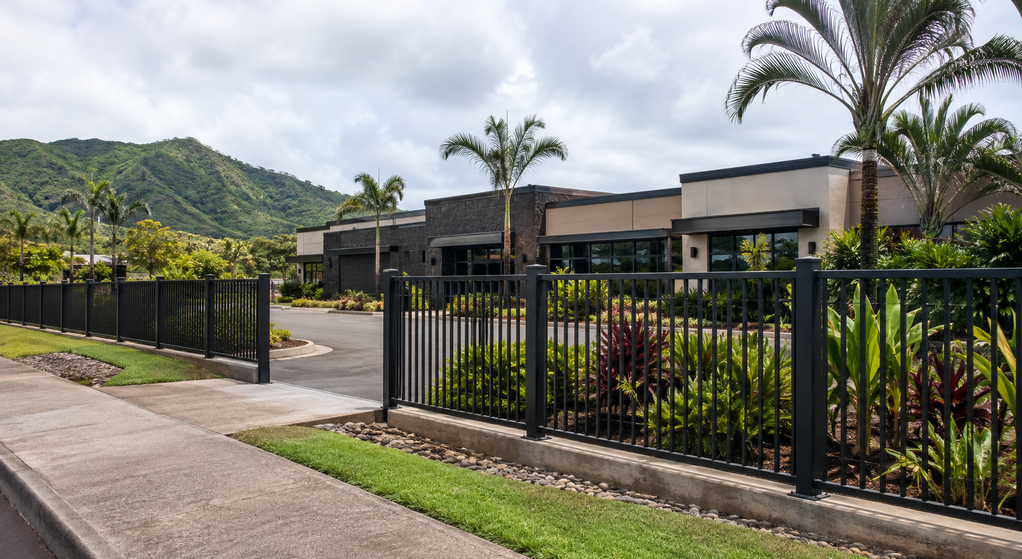
Commercial properties require gate systems that balance security, access control, and long-term reliability.

Material Choices Must Match Island Conditions
Hawaii is unforgiving to the wrong materials. Sun exposure, moisture, and salt accelerate wear faster than many homeowners expect. Material choice directly affects maintenance demands and lifespan.
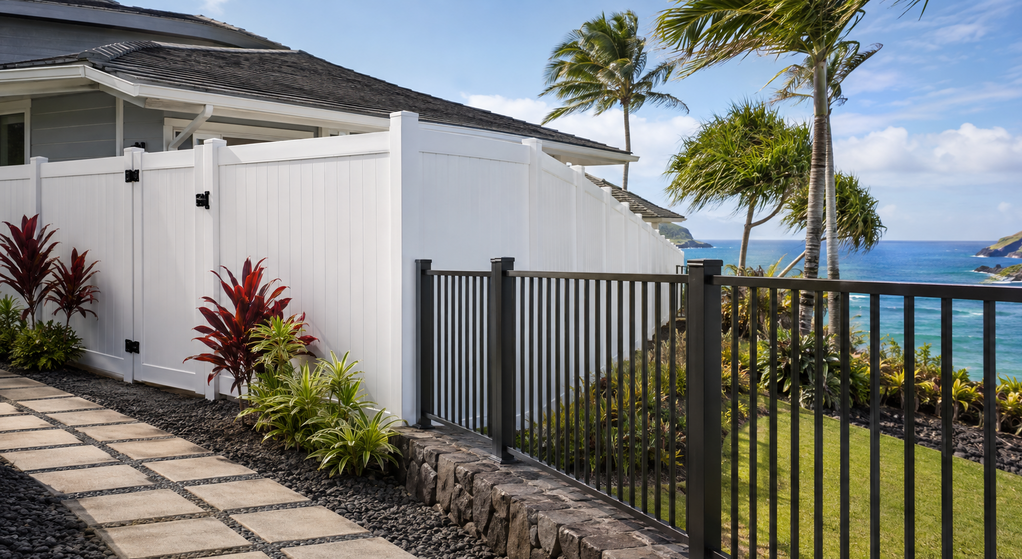
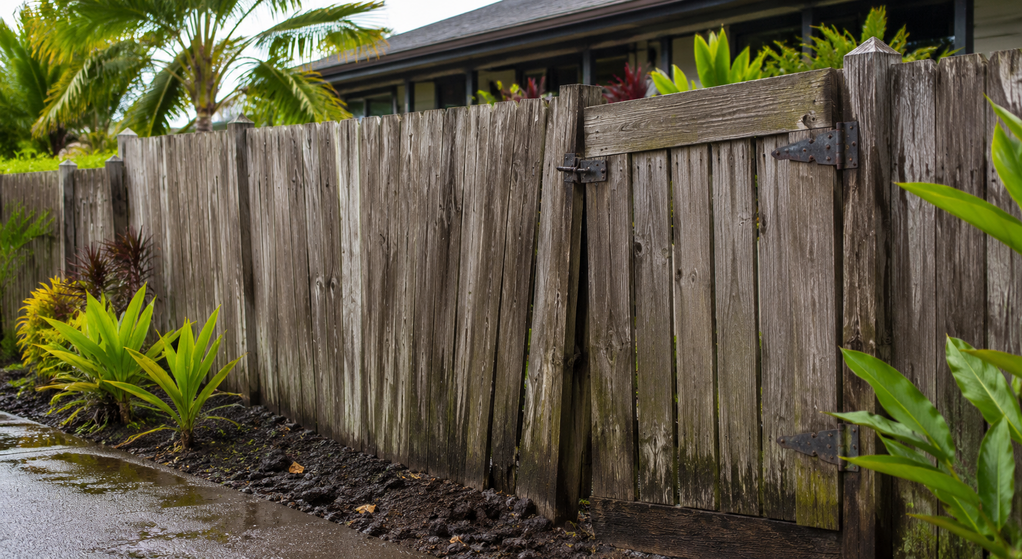
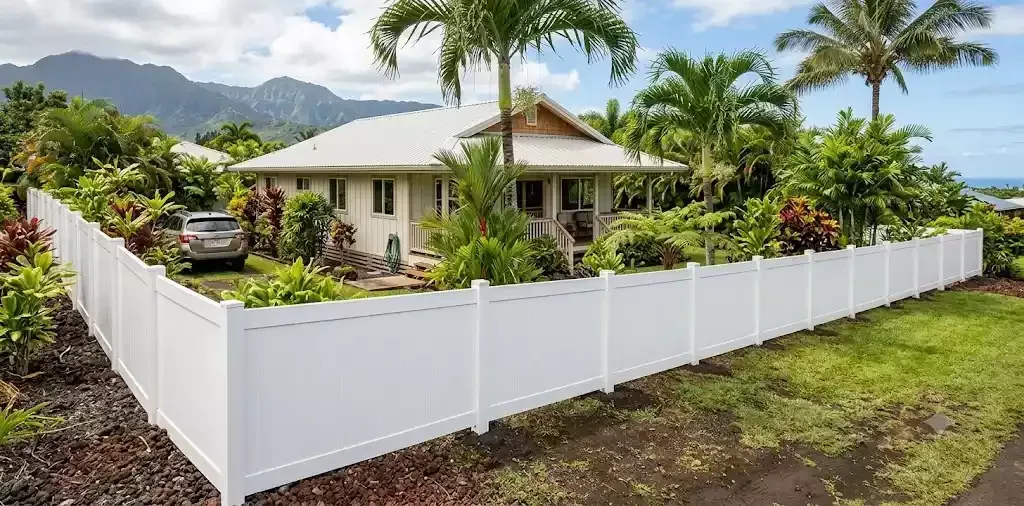
That’s why professionals recommend vinyl gates, as they resist rot, rust, and insect damage. They maintain alignment better over time and require minimal upkeep. Wood gates can work, but only with ongoing maintenance that not every household can realistically provide. Metal gates require protective coatings and regular inspection to prevent corrosion.
In shared households, low maintenance reduces tension. When responsibility is spread across multiple people, materials that quietly perform without constant attention are the most practical choice.
| Gate Material | Pros in Hawaii Climate | Drawbacks | Maintenance Level |
|---|---|---|---|
| Vinyl | Resistant to moisture, salt air, and insects | Limited color customization | Low |
| Wood | Natural appearance, customizable | Susceptible to rot, warping, termites | High |
| Metal | Strong and secure | Prone to corrosion without coating | Medium |
Privacy Needs Vary Across Generations
Privacy is not one-size-fits-all. Older family members may value quiet and separation from street activity. Younger residents may prefer openness and connection to the neighborhood.
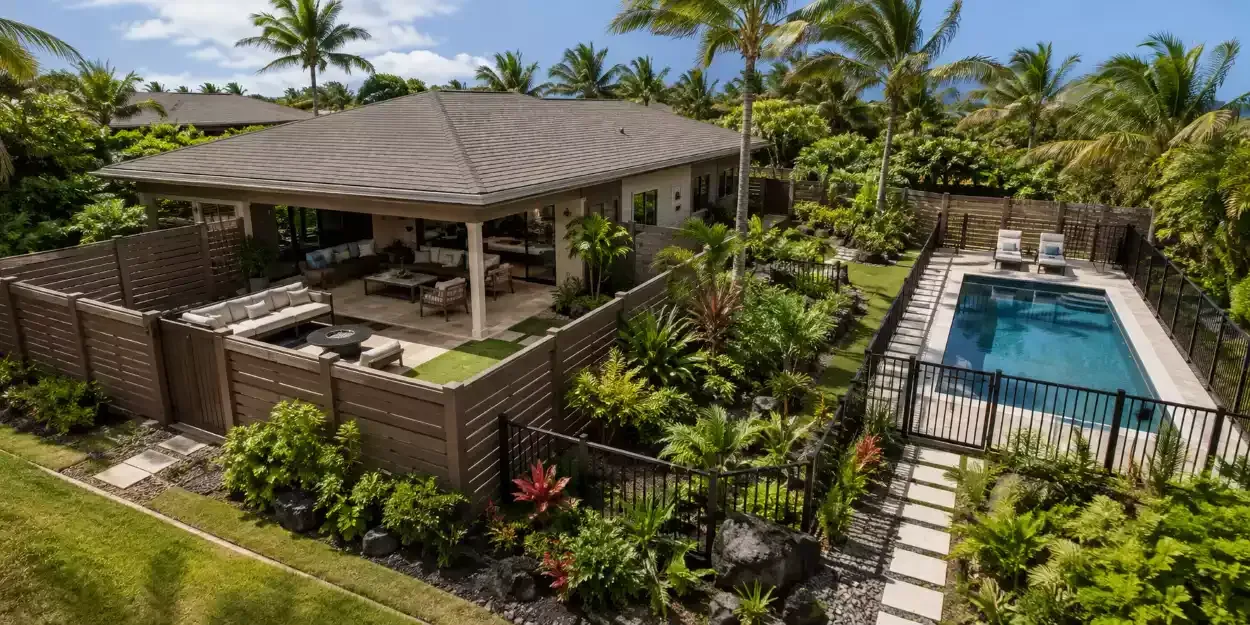
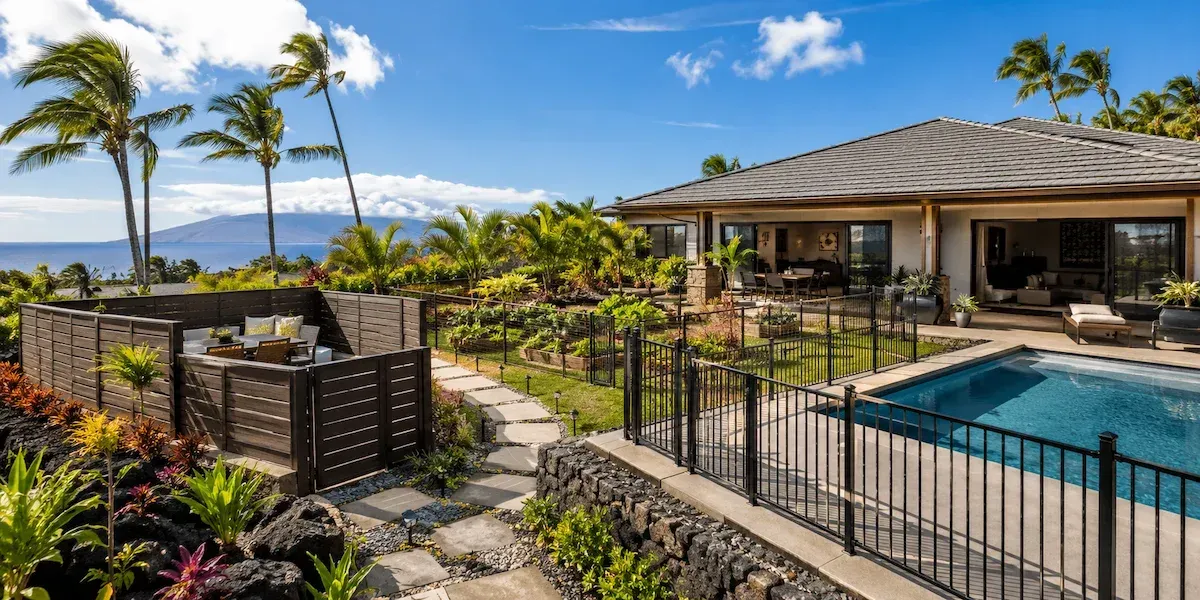
An entry gate can balance these needs through thoughtful design. Partial panels, spaced pickets, or mixed materials allow airflow and light while limiting direct visibility. This approach supports comfort without making the property feel sealed off.
In Hawaii, outdoor living is central to daily life. Entry gates often define the transition between public space and private family space. Getting this balance right improves how everyone experiences the home.
Privacy fencing offers security and seclusion, but it also comes with design, maintenance, and cost considerations. Learn about the benefits and drawbacks of privacy fencing to determine whether it is the right choice for your property.
Footings and Soil Conditions Matter More Than Appearance
Most gate failures happen below ground. Hawaii’s soil conditions vary dramatically, from volcanic rock to loose fill. Improper footings cause sagging, dragging, and misalignment.
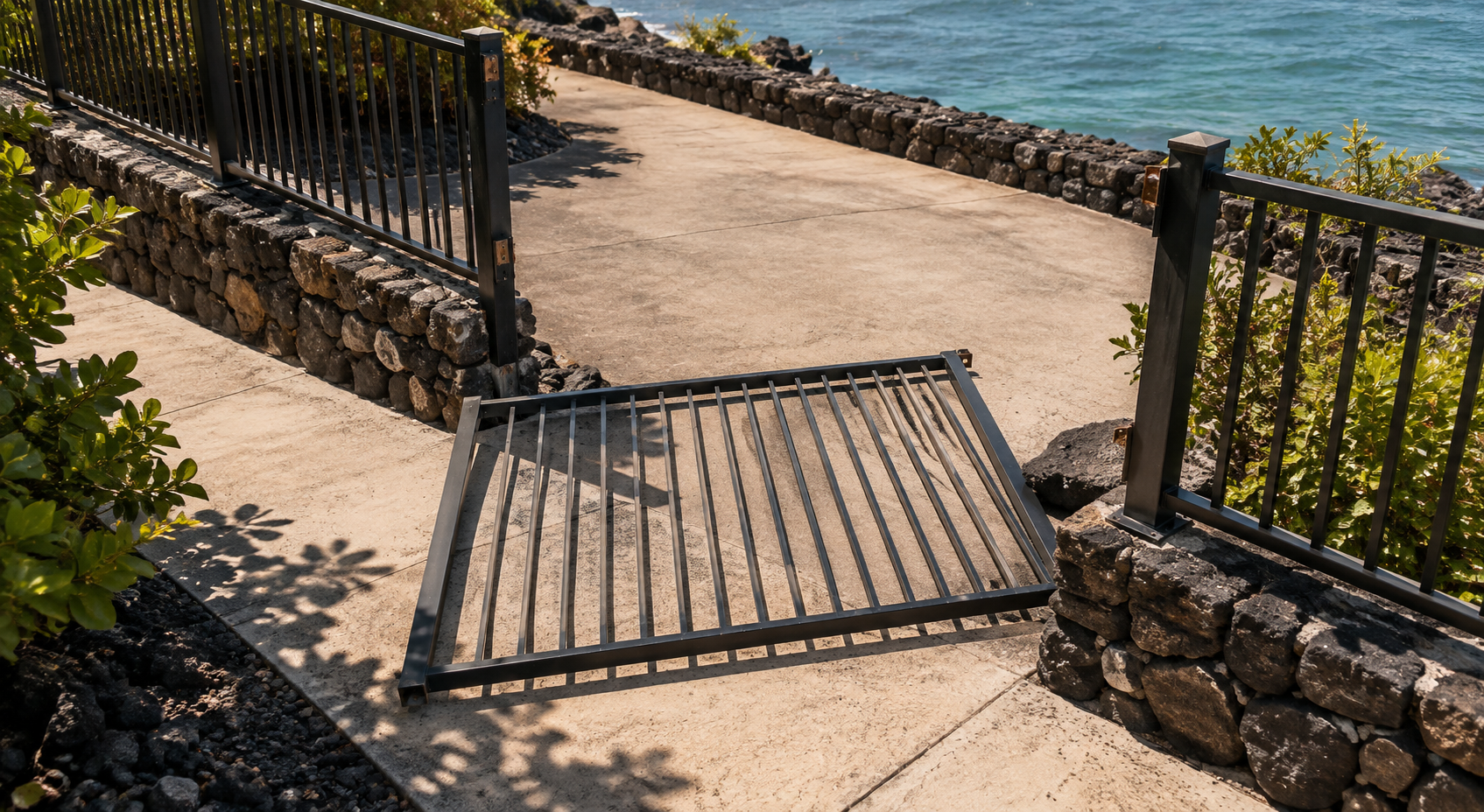
For multi-generational homes, a failing gate is more than an inconvenience. It becomes a safety hazard. A gate that suddenly drops or swings unpredictably creates risks for children and elders alike.
Proper footing depth, post alignment, and anchoring based on soil conditions determine whether a gate lasts five years or twenty. No design detail can compensate for poor groundwork.
Gate performance in Oahu depends heavily on how materials respond to sun, salt air, and humidity. Learn whether wood, vinyl, or metal gates work best in Oahu’s climate to make a choice built for island conditions.

Noise and Daily Comfort Are Often Overlooked
In households with multiple generations, noise sensitivity increases. Gates that slam shut or squeak loudly disrupt early mornings and late evenings.
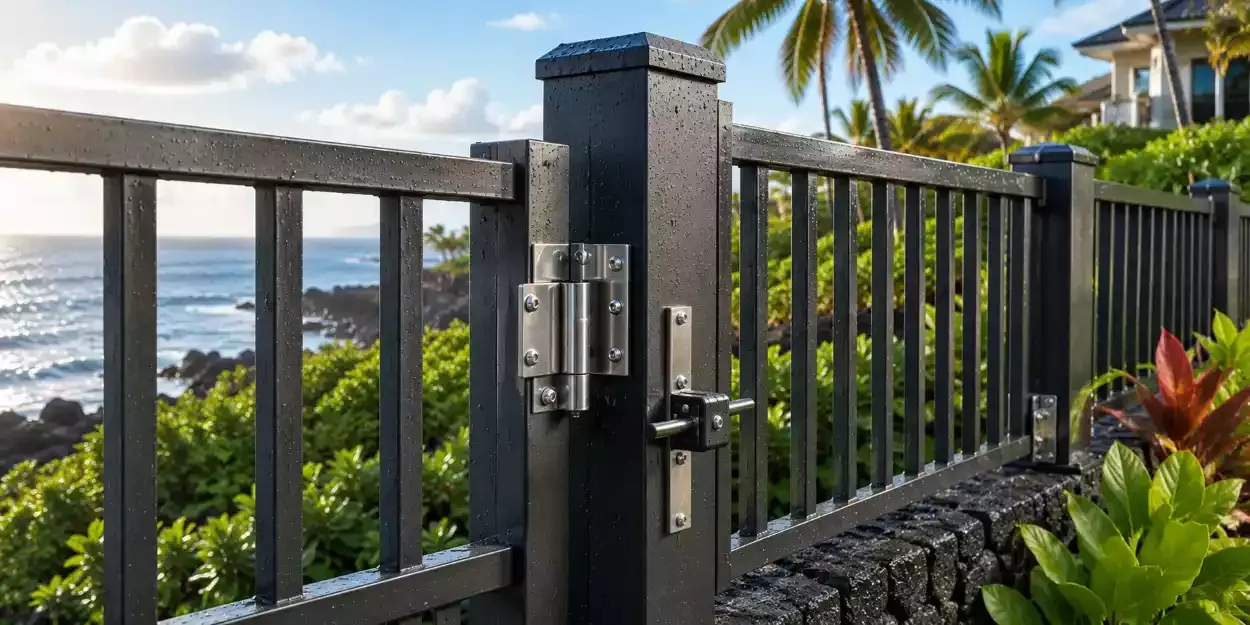
Soft-close hardware, quality hinges, and correct alignment reduce noise significantly. These details may seem minor, but over time they shape how comfortable the home feels. A well-designed gate should operate quietly and predictably, blending into daily life rather than interrupting it.
Local Regulations and Property Layout
Hawaii has zoning rules, setback requirements, and community guidelines that affect gate placement and height. Multi-generational properties often have shared driveways, parking areas, or pedestrian paths that complicate layout.
Ignoring these realities leads to costly changes later. Gates that block sightlines, restrict emergency access, or interfere with parking quickly become problems.
Thoughtful planning ensures the gate supports how the property is actually used, not just how it looks in isolation.
Installing a vinyl privacy fence in Hawaii requires compliance with specific permits, local codes, and height regulations. Learn about permits, local codes, and height rules for vinyl privacy fences in Hawaii to avoid delays and costly revisions.
Final Thoughts
Installing an entry gate for a multi-generational home in Hawaii requires more than aesthetic decisions. It demands an understanding of family dynamics, accessibility, climate, and land conditions.
Meeting those requirements takes thoughtful planning and experienced insight. Reach out to professionals to design an entry gate that serves every generation and performs reliably in Hawaii’s conditions.