Residential vs. Commercial Aluminum Fencing Solutions in Hawaii
Decision Snapshot:
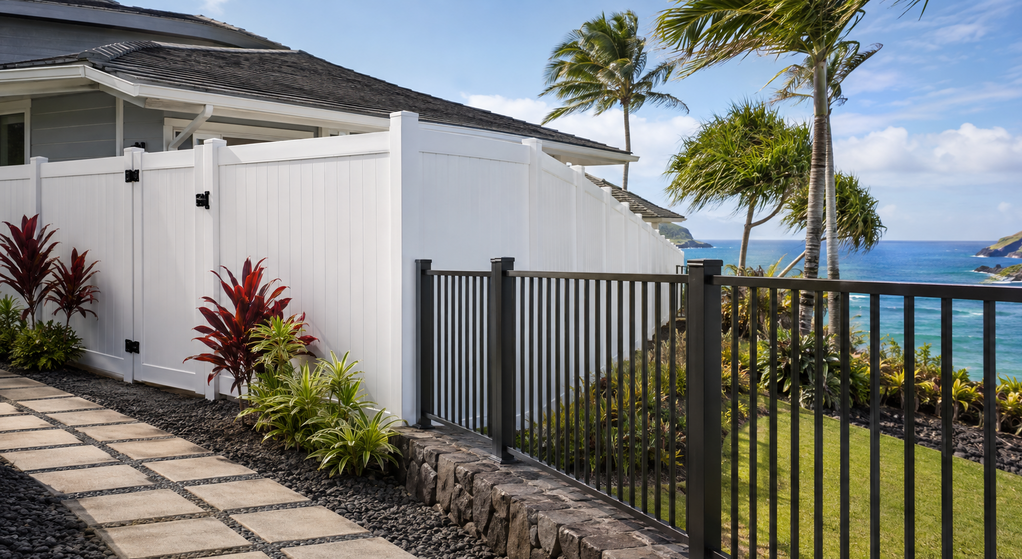
Residential and commercial aluminum fencing may look similar, but they differ significantly in strength, durability, and performance under Hawaiʻi’s unique climate conditions. Choosing the right option depends on wind exposure, soil conditions, usage, and security needs, with commercial-grade systems offering greater resilience while residential options suit lighter, aesthetic-focused applications.
The visual gap between residential and commercial aluminum fencing can be subtle. The structural gap is not. And in Hawaiʻi, where wind exposure shifts from calm inland neighborhoods to exposed coastal zones, and soil ranges from volcanic rock to sandy shoreline, that difference matters more than most property owners realize.
Let’s break it down.
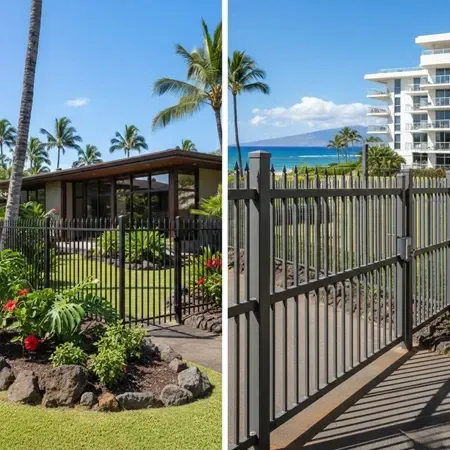
Why Aluminum Fencing Performs Well in Hawaiʻi
Professional aluminum fencing services in Hawaii are in demand as aluminum fencing has become increasingly common across Oʻahu and the neighbor islands for practical reasons. Unlike traditional steel, aluminum resists rust when properly powder-coated.
In a coastal environment like Hawaiʻi, that matters.
Aluminum naturally resists corrosion due to its protective oxide layer, and surface treatments such as powder coatings further enhance its performance in salt-rich environments. Salt air exposure is constant in communities near the shoreline, and untreated metal simply does not last.
However, corrosion resistance alone does not determine long-term performance. Structural strength, installation depth, and usage demands separate residential systems from commercial-grade ones.
Residential Aluminum Fencing: Designed for Home Use
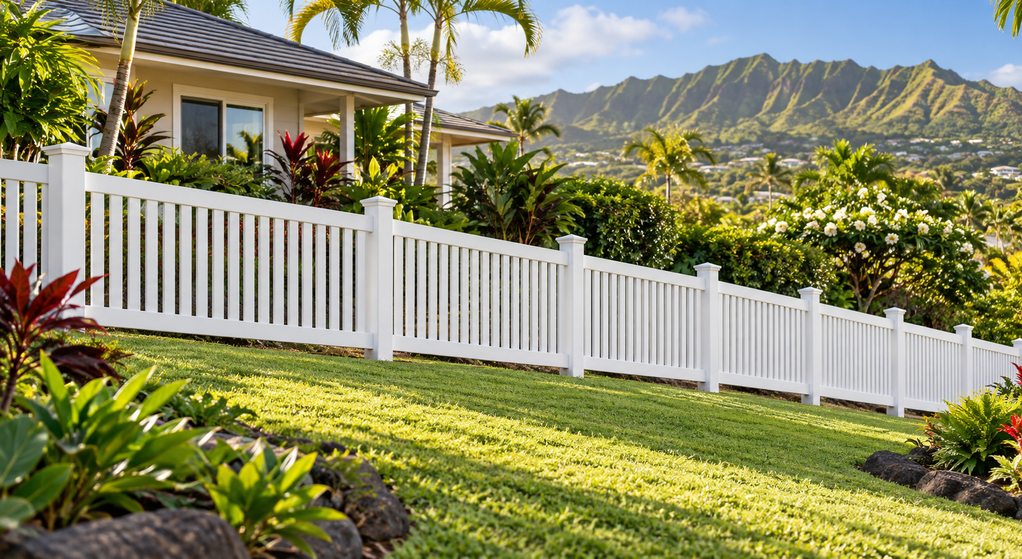
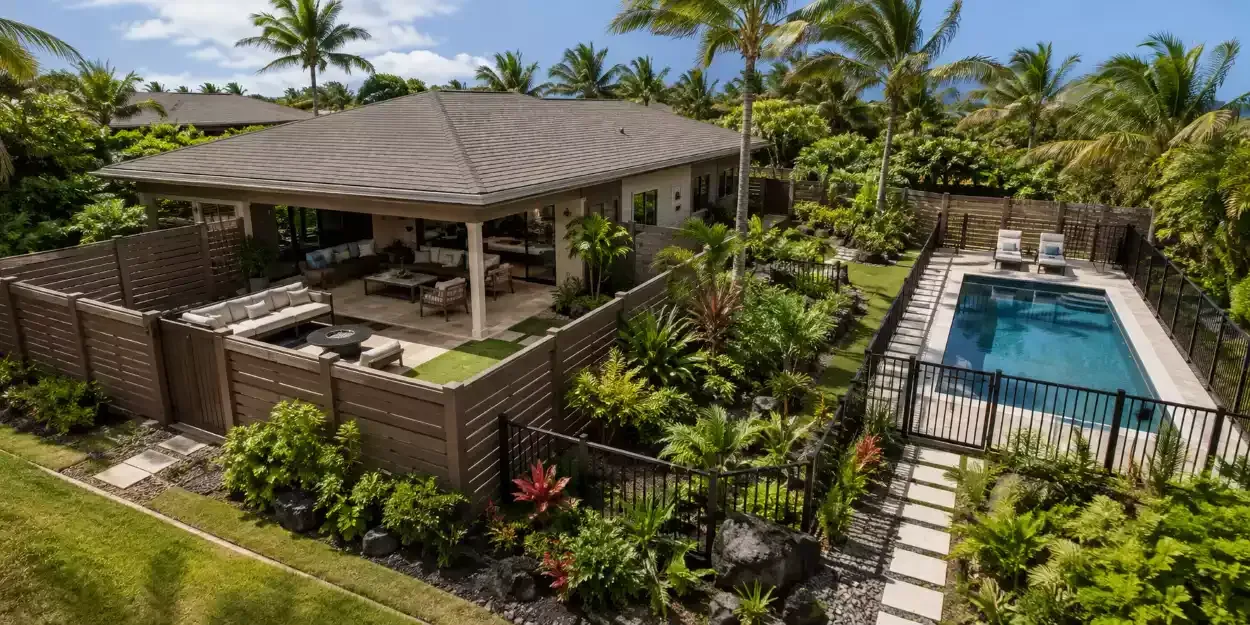
Residential aluminum fencing is typically chosen for single-family homes, pool enclosures, and decorative perimeter boundaries. It is lighter in material gauge and generally more affordable.
For many homeowners in areas like Ewa Beach or Pearl City, residential aluminum fencing provides sufficient durability when installed correctly. Professionals can ensure your fence enhances curb appeal, defines property lines, and requires minimal maintenance compared to wood or chain link.
Our aluminum fencing team has seen residential aluminum perform very well in sheltered neighborhoods with moderate wind exposure. When posts are properly set in concrete and aligned correctly, the system remains stable for years.
Where homeowners often miscalculate is in exposure. Trade winds can intensify along open corridors and coastal areas. According to the National Oceanic and Atmospheric Administration, the tropical Pacific Ocean is dominated by consistent prevailing trade winds that blow from east to west near the equator. In open coastal zones, lighter residential panels may flex more than expected.
Residential aluminum fencing works best when aesthetics and moderate boundary definition are the primary goals. It is not engineered for heavy impact or high-traffic environments.
Commercial Aluminum Fencing: Built for Demands
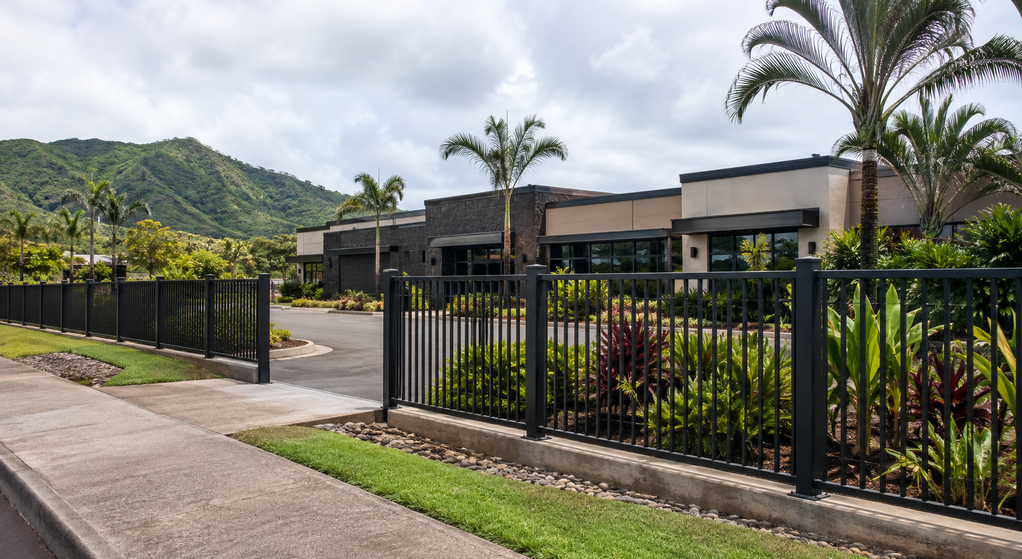
Commercial aluminum fencing is constructed with heavier-gauge rails, thicker pickets, and reinforced posts. We commonly install it around schools, businesses, parks, apartment complexes, and industrial properties.
The difference becomes clear during installation. Commercial systems require deeper post footings and more substantial concrete anchoring. Soil conditions in Hawaiʻi vary widely.
According to the U.S. Federal Highway Administration, the strength and bearing capacity of coastal soils vary significantly, and this variability can influence the stability and performance of coastal infrastructure and structural elements placed on or in these soils. Sandy or shifting ground requires additional reinforcement.
Based on experience, commercial-grade aluminum handles repeated stress far better than residential systems. Gates remain aligned under frequent use. Panels resist bending under pressure. The structure holds its form during high wind events.
The tradeoff is cost. Commercial aluminum fencing costs more upfront due to thicker materials and labor requirements. Yet for high-use environments, the durability often justifies the investment. Replacing lighter panels repeatedly can exceed the initial savings of choosing residential grade.
Climate and Location Change the Equation
Hawaiʻi’s environmental diversity makes this decision more complex than in many mainland states. Wind exposure in North Shore differs dramatically from central Oʻahu. Salt concentration near the coastline accelerates wear. Rainfall intensity varies between leeward and windward communities.
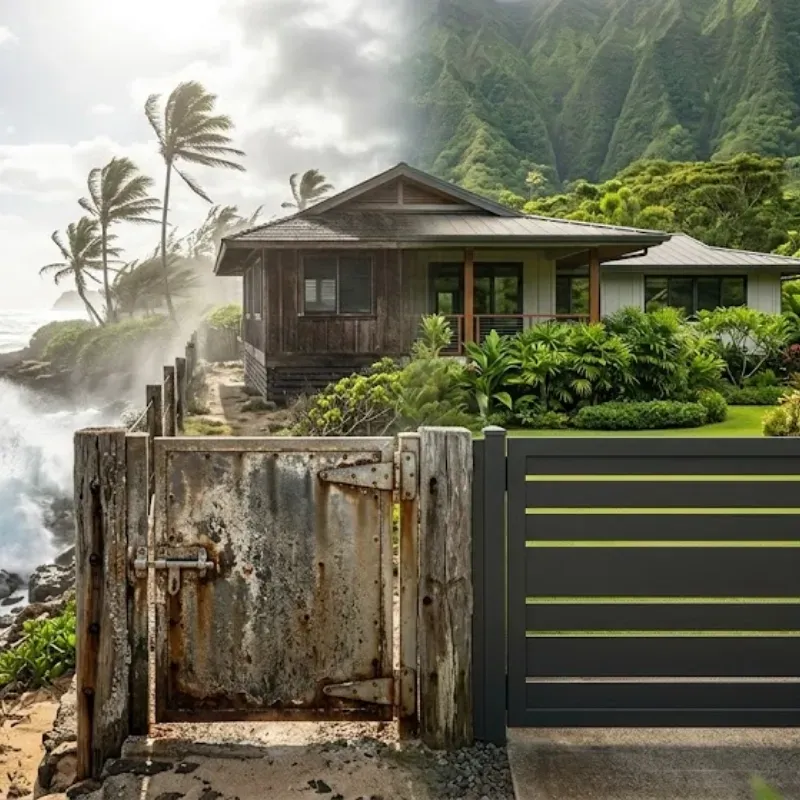
For properties near the ocean, stronger coatings, stainless hardware, and deeper post installations are critical. For inland homes shielded from direct wind exposure, residential aluminum may perform perfectly well.
Choosing without considering location often leads to premature wear or structural movement. To prevent early signs of damage, here’s a guide to preventing rust, warping, and wear on gates in Hawaii’s climate.
| Condition | Impact on Fencing | Recommended Choice |
|---|---|---|
| Coastal (salt exposure) | Accelerates corrosion | Commercial-grade with stronger coating |
| High wind zones | Panel flexing, structural stress | Commercial-grade |
| Sandy soil | Reduced stability | Deeper commercial installation |
| Sheltered inland areas | Minimal stress | Residential is sufficient |
| Heavy rainfall areas | Soil shifting | Reinforced posts (commercial preferred) |
Security Versus Appearance
Residential aluminum fencing tends to prioritize appearance. Smooth top rails and decorative accents complement landscaping and architectural style. It blends into neighborhoods comfortably.
Commercial aluminum fencing prioritizes function. Taller panels, reinforced gates, and security-focused designs support controlled access and deterrence.
If security is central to your needs, commercial-grade aluminum provides greater resistance to bending and forced entry. If your goal is to define space while enhancing curb appeal, residential aluminum may be sufficient.
The key is clarity about your purpose before making a selection.
Maintenance Reality in Hawaiʻi
Aluminum fencing is often described as maintenance-free. That description is incomplete.
In Hawaiʻi’s humid and salt-rich air, powder-coated aluminum benefits from occasional rinsing to remove salt buildup. Hardware should be inspected annually. Post stability should be checked after heavy rain seasons.
Most failures occur at connection points rather than along panels. Proper installation matters as much as material grade. Based on years in the field, footing depth and alignment are often the difference between long-term success and early shifting.
To learn more, here are some long-term maintenance tips for aluminum fences in Hawaii.
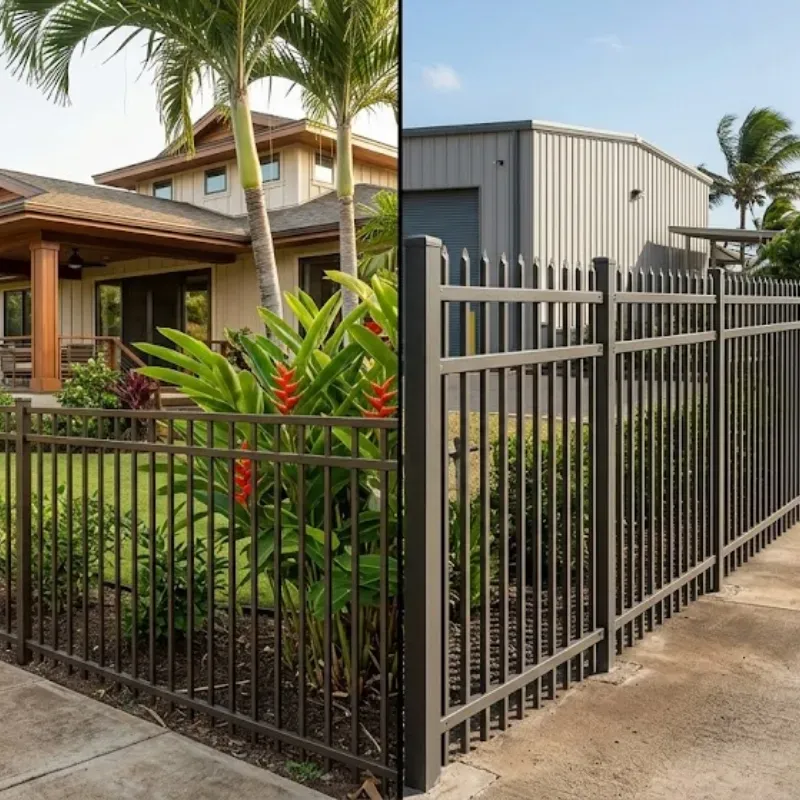
Making the Smarter Choice
The real decision between residential and commercial aluminum fencing in Hawaiʻi comes down to exposure, usage, and long-term goals.
If your property faces strong winds, high traffic, or security concerns, commercial-grade aluminum is typically the wiser investment. If your environment is sheltered and your needs are primarily aesthetic, residential aluminum can serve you well.
The two may look similar from a distance. Structurally, they are not.
When aluminum fencing is matched correctly to Hawaiʻi’s climate and property demands, it remains one of the most durable and practical fencing solutions available.