Comparing Aluminum vs. Wood Fencing in Hawaii: Durability and Maintenance
Island Durability Verdict: In Hawaii’s humid, salt-rich climate, aluminum fencing usually delivers better long-term value than wood because it resists corrosion, UV wear, termites, and constant moisture with far less upkeep. Wood still suits privacy-focused designs, but the smarter choice depends on your property’s coastal exposure, rainfall pattern, and how much maintenance you realistically want to manage.
Choosing between aluminum and wood fencing in Hawaii should be less about appearance alone and more about how each material survives island conditions over time. While many homeowners begin researching Aluminum fencing services in Hawaii for the clean modern look, durability and maintenance realities quickly make this a much more practical decision, especially in coastal and humid areas where salt air accelerates wear.
Based on experience working across Oahu, Maui, and the Big Island, we’ve seen wood fences look beautiful in the first year and then begin showing swelling, mildew staining, or fastener corrosion far sooner than expected in windward neighborhoods. Aluminum consistently performs better in Hawaii’s salt-heavy air, intense UV exposure, and year-round humidity, which makes it the stronger long-term choice for most residential properties.
Why Aluminum Usually Outlasts Wood in Hawaii
For Hawaii properties, durability is rarely theoretical. Climate creates constant pressure on fence materials every day.
Salt carried inland from the ocean settles on surfaces and speeds up deterioration. Humidity keeps moisture trapped longer. Frequent rain on the windward sides of the islands increases saturation cycles, while strong UV on leeward properties accelerates surface breakdown.
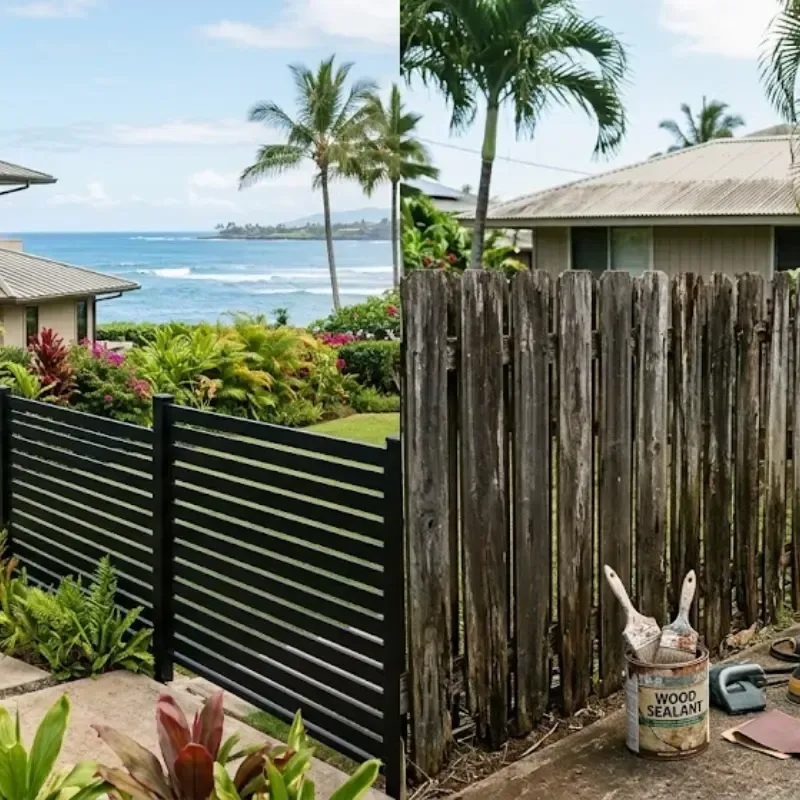
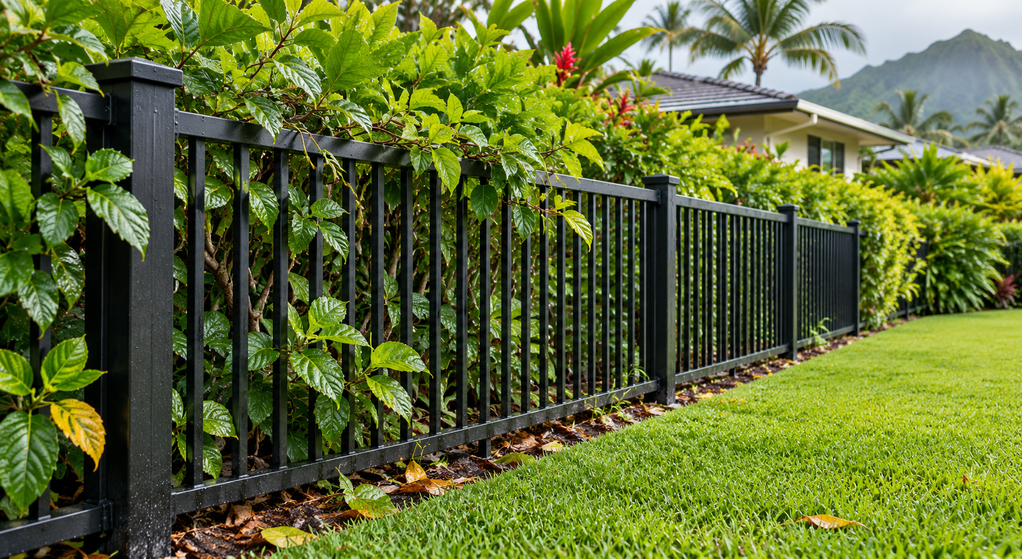
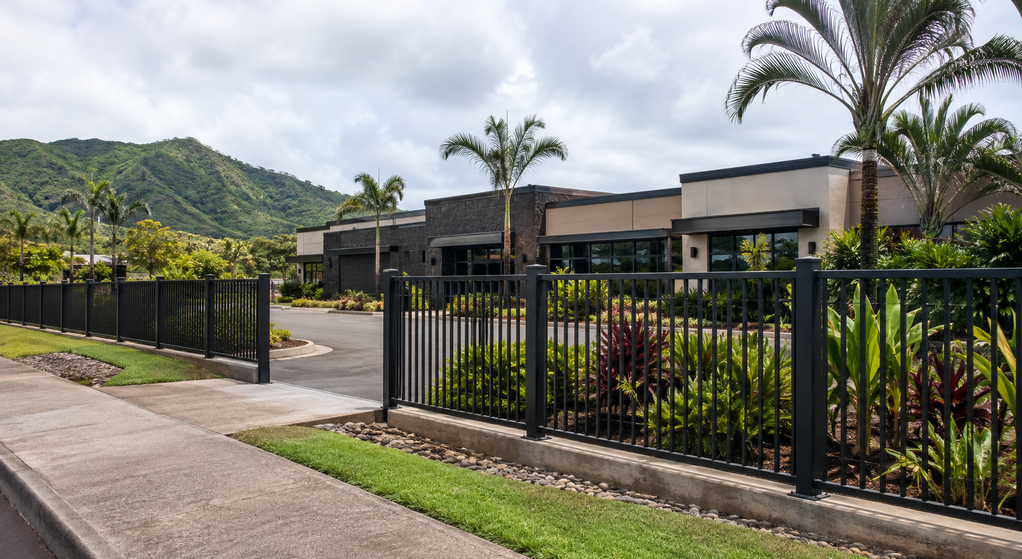
Aluminum handles these conditions with far less material stress because it naturally forms a protective oxide layer and is usually powder-coated for additional resistance. Industry guidance for coastal fencing consistently points to aluminum as one of the best-performing materials in salt-air environments because it resists corrosion and requires minimal upkeep.
Wood, by comparison, remains vulnerable to:
- moisture absorption and swelling
- warping during wet-dry cycles
- fungal staining and mildew
- termite and pest pressure
- finish breakdown from UV exposure
- rusting hardware around posts and brackets
This is exactly why durability in Hawaii must always be evaluated through climate exposure, not just manufacturer lifespan claims.
Where Maintenance Costs Change the Real Decision
This is where our fencing experts usually guide homeowners toward the smarter long-term choice.
The initial price of wood may look appealing, especially for privacy fencing. But life-cycle cost principles show that long-term maintenance and repair often outweigh the lower upfront investment. The USDA’s life-cycle cost guidance reinforces that evaluating ongoing maintenance is often more realistic than comparing initial cost alone.
In practical terms, aluminum typically needs:
- occasional rinsing to remove salt buildup
- annual hardware inspection
- rare touch-up for surface scratches
Wood usually needs much more:
- sealing or staining every 1–2 years
- replacement of warped boards
- mildew cleaning
- post repairs in wet soil
- termite prevention measures
In our work, maintenance becomes the deciding factor for homeowners who want a fence that still looks good five to ten years from now without constant weekend upkeep. Here are some long-term fencing maintenance tips to ensure the longevity of your fence.
The Honest Tradeoff: Privacy and Warmth vs Longevity
Aluminum is the better investment for most Hawaii homes unless maximum privacy or a traditional natural look is the priority.
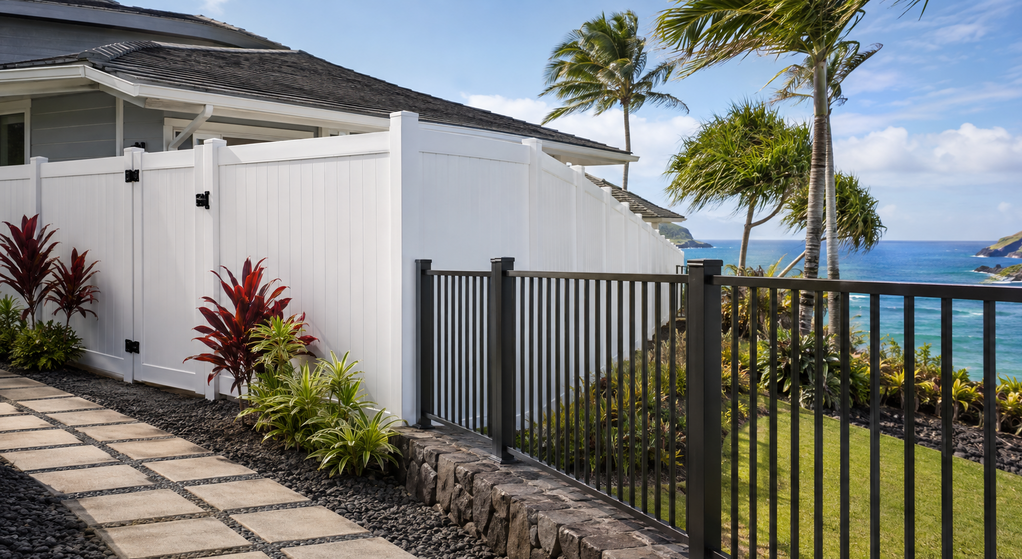
Wood undeniably offers warmth and complete visual privacy. It fits tropical landscaping beautifully and can soften modern homes with a more natural island feel.
But that design advantage comes with ongoing responsibility.
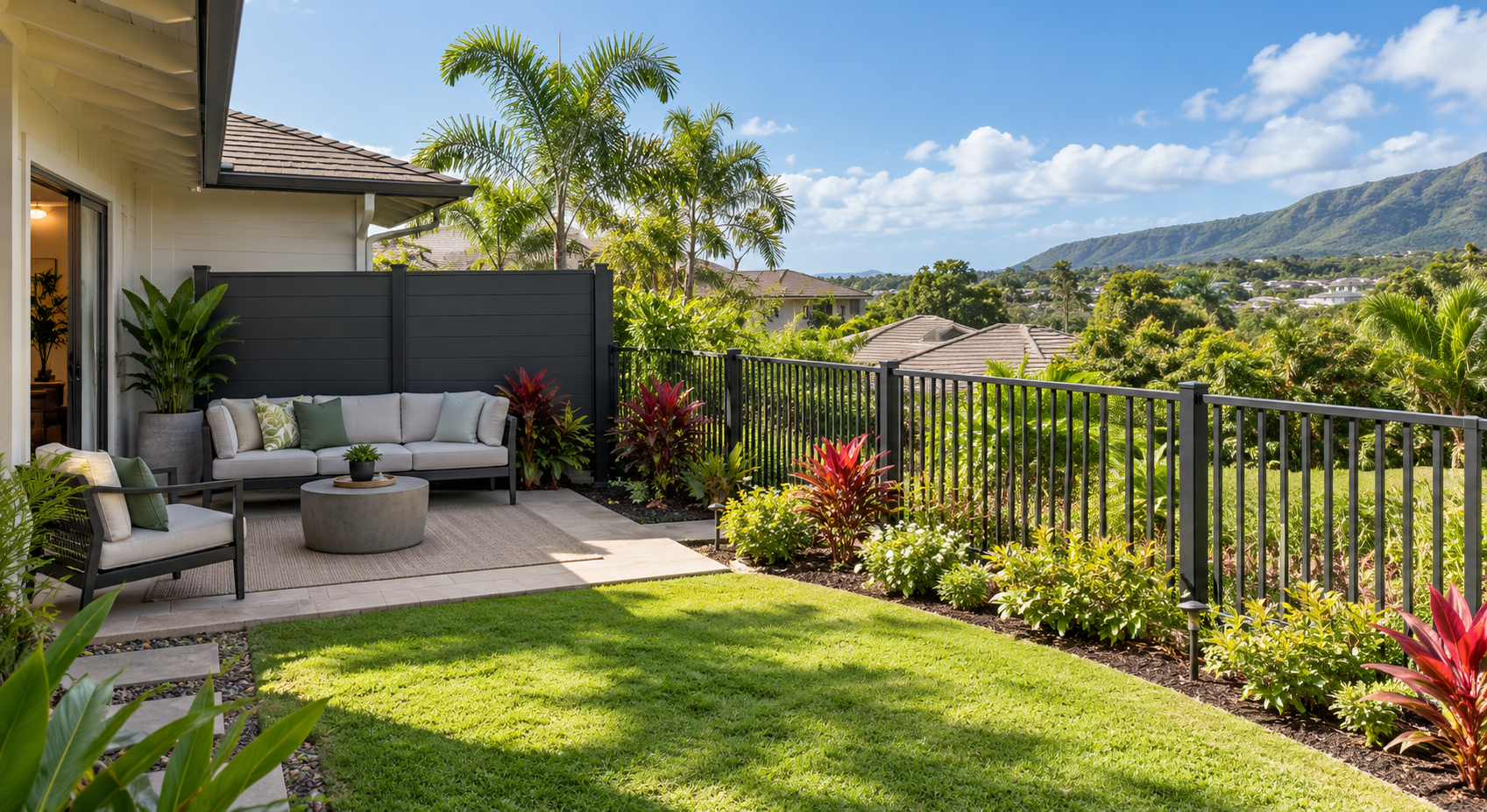
Aluminum offers:
- longer service life in coastal air
- cleaner appearance over time
- better resistance to termites and rot
- less fading and surface failure
- lower lifetime maintenance cost
Wood offers:
- stronger privacy potential
- natural texture and visual warmth
- easier customization for decorative patterns
- better sound buffering in dense neighborhoods
The tradeoff is simple: wood may win the first impression, but aluminum usually wins the 10-year ownership experience. To delve deeper into this topic, here is a comparison of residential and commercial aluminum fencing solutions in Hawaii.
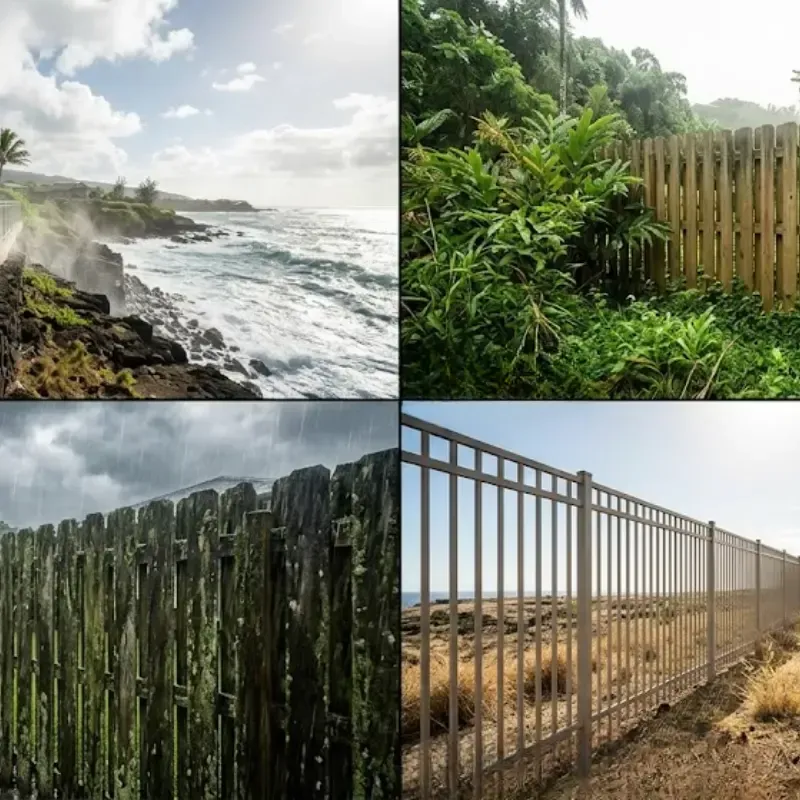
Why Fence Advice Changes by Island and Microclimate
Fence recommendations in Hawaii should never be generic.
A property in Hawaii Kai near direct salt spray faces different conditions than a Mililani inland lot.
Hilo’s constant rainfall creates different risks than the drier leeward sides of Kona or Waianae.
That local context changes everything.
In coastal Oahu communities, aluminum’s corrosion resistance becomes the dominant advantage. In heavily shaded valleys with persistent moisture, wood is more likely to develop mildew and premature rot.
We’ve seen inland wood fences perform acceptably with disciplined maintenance, but on exposed coastal lots, aluminum almost always proves more dependable.
That difference in performance is why location-specific advice matters far more in Hawaii than in many mainland climates.
Common Mistakes Homeowners Make When Comparing Materials
The most common mistakes are surprisingly consistent:
- choosing wood without budgeting for sealing cycles
- underestimating salt air reach from nearby shorelines
- using non-stainless fasteners with either material
- ignoring drainage around fence posts
- assuming inland neighborhoods are “safe” from humidity damage
- focusing only on upfront cost
The smarter decision comes from asking how much time, money, and effort you realistically want to spend maintaining the fence.
That question usually makes the right material obvious.
Final Takeaway: Aluminum Is the Smarter Long-Term Hawaii Fence Choice
For most Hawaii properties, aluminum outperforms wood in the areas that matter most: durability, maintenance, salt resistance, and long-term ownership cost.
Wood still has value for privacy-focused or design-led landscapes, but in Hawaii’s humid and salt-rich climate, it demands a much higher maintenance commitment to age well.
The clearest next step is to evaluate your property’s microclimate: coastal exposure, rainfall frequency, shade, and how much upkeep you realistically want to handle. Once those factors are honest, aluminum is usually the material that gives homeowners the most confidence and the fewest regrets over time.