Why Fencing Matters for Hawaii Homes With Children or Pets
Family Safety Check:
Fencing helps Hawaii families create safer boundaries around roads, driveways, pools, slopes, and neighboring properties. The right system should match how children and pets use the yard, provide dependable gates, preserve needed visibility or privacy, and use materials suited to salt air, humidity, wind, and intense sun.
What happens when a yard feels safe until one open gate, loose panel, or distracted moment proves otherwise?
For Hawaii families with children or pets, that question deserves careful attention. Outdoor living is part of daily life across the islands. Children play near lanais, carports, and driveways. Dogs move between backyards and side yards. Many properties sit close to roads, sidewalks, neighboring homes, slopes, pools, or open areas that are easy to reach when boundaries are unclear.
A fence does not replace adult supervision, pet training, or responsible property use. What it does is create a more dependable layer of control. It helps define where children can play, where pets can move, and which parts of the property require restricted access.
For families who need a durable boundary without completely blocking visibility, professional
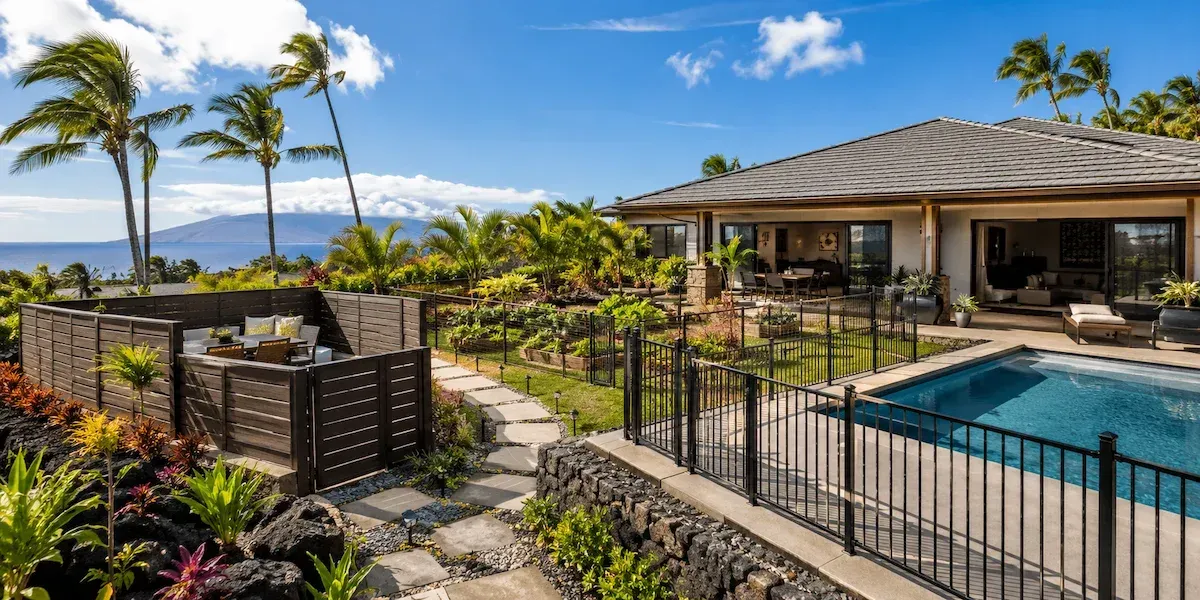
aluminum fencing installation in Hawaii can be a practical option around play areas, driveways, walkways, and pools. Properly spaced aluminum fencing allows parents and homeowners to monitor activity while still establishing a clear physical boundary. However, aluminum is only one solution. Privacy needs, pet behavior, property layout, and exposure conditions may make vinyl fencing or a different system more appropriate in other parts of the yard.
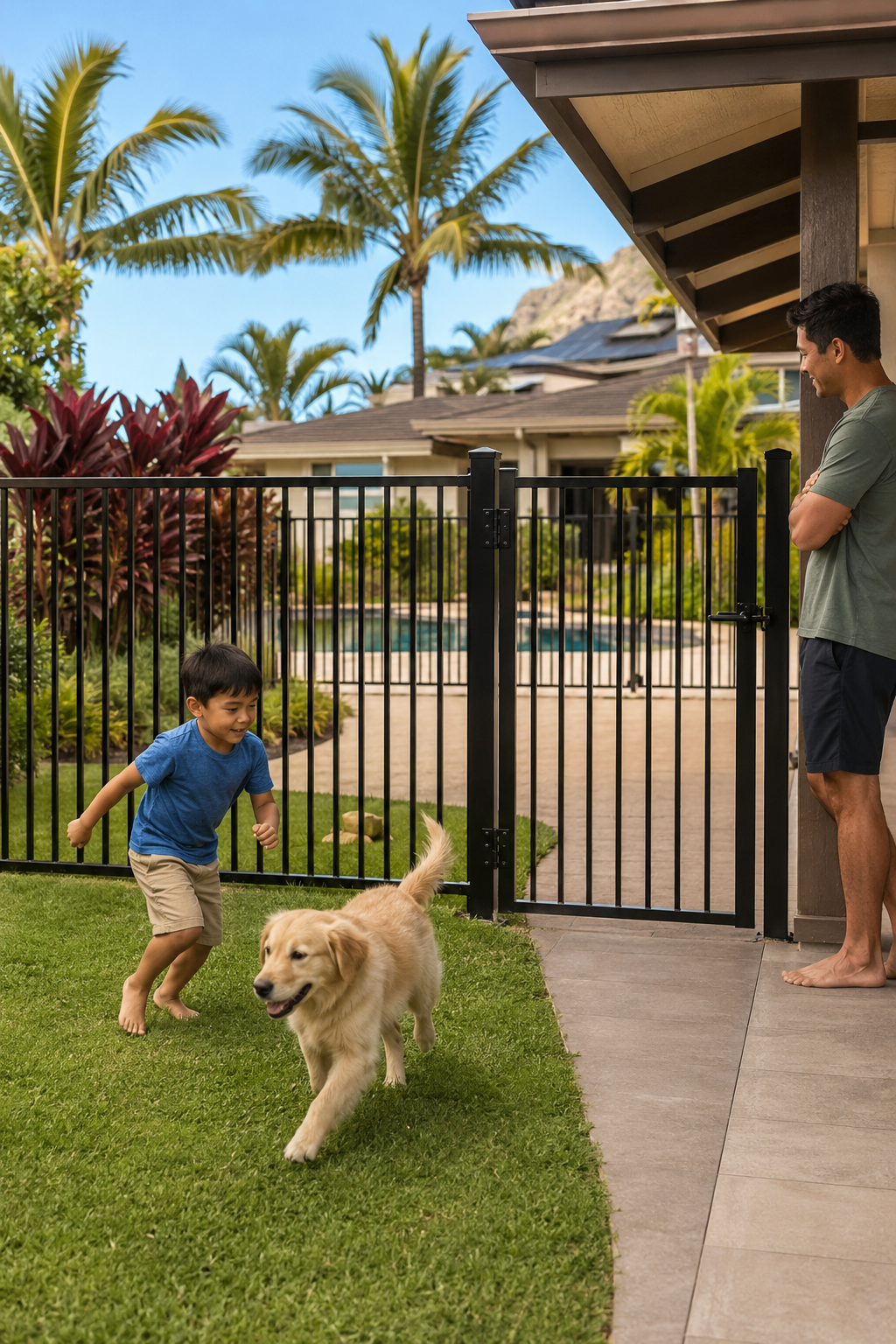
Start With How the Family Uses the Property
Fence planning should begin with the household’s daily routine, not with a material sample or design catalog.
A front yard near a road may need a secure gate and clear visibility for vehicles entering or leaving the property. A backyard used by dogs may require tighter spacing along the bottom and stronger support around corners. A side yard beside an open carport may need a barrier that prevents a child or pet from reaching a blind spot. Properties with pools, slopes, retaining walls, or uneven ground require even more careful planning.
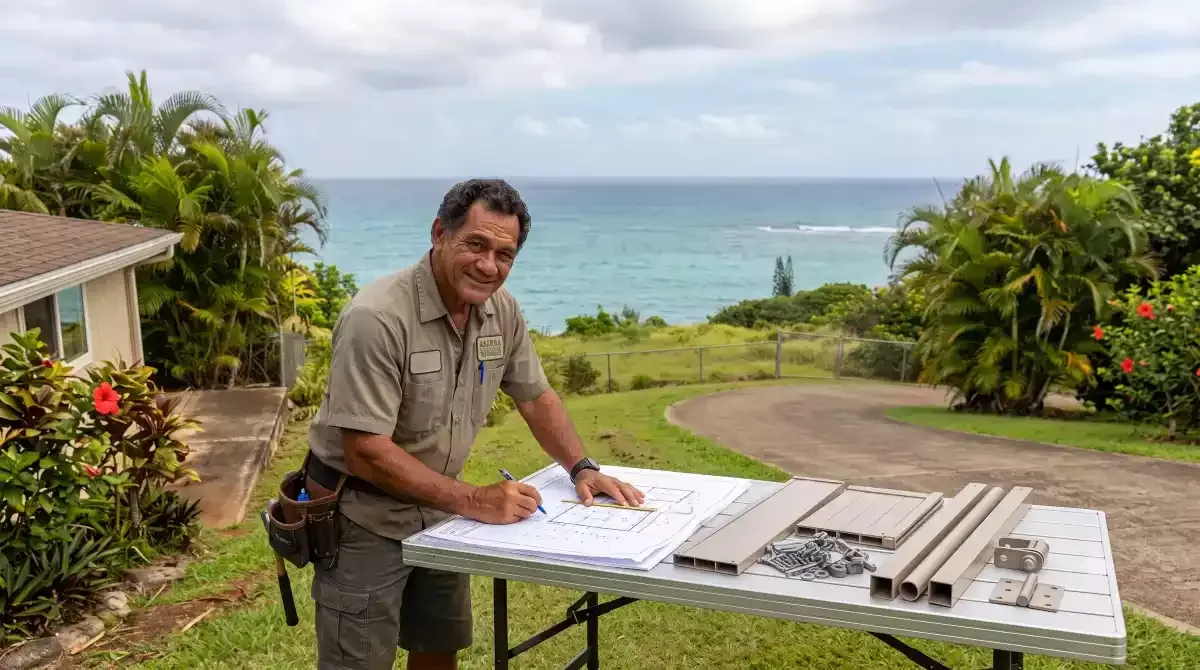
At Sunset Hawaii Fencing Company, fence recommendations should begin with how people and animals move through the property. The same fence design does not need to be used everywhere. A homeowner may need privacy fencing along a neighboring boundary, aluminum fencing near a pool, and a secure gate at the driveway or side-yard entrance.
Planning each area according to its actual purpose creates a safer and more usable property than selecting one fence style and applying it uniformly around the home.
Children Need Boundaries That Are Clear and Difficult to Bypass
Children are curious, quick, and not always aware of the risks beyond a familiar play area. A fence that looks complete may still provide weak protection if it is too low, easy to climb, poorly positioned, or fitted with an accessible latch.
Height, picket spacing, horizontal footholds, gate location, and latch placement should all be evaluated. Fences near play areas should not provide obvious climbing points. Bottom gaps should not be large enough for a young child to crawl through. Gates should close reliably and should not depend on hardware that can be released easily from the child’s side.
Driveways deserve particular attention. A child moving from the yard toward a driveway may enter the path of a reversing vehicle before the driver has a clear view. A well-planned fence can separate the active play area from vehicle movement and direct people through a controlled gate instead of an open boundary.
The objective is not to make the yard feel restrictive. It is to give the outdoor space a clear edge so children understand where the play area ends and adults have more time to respond when they move toward a restricted area.
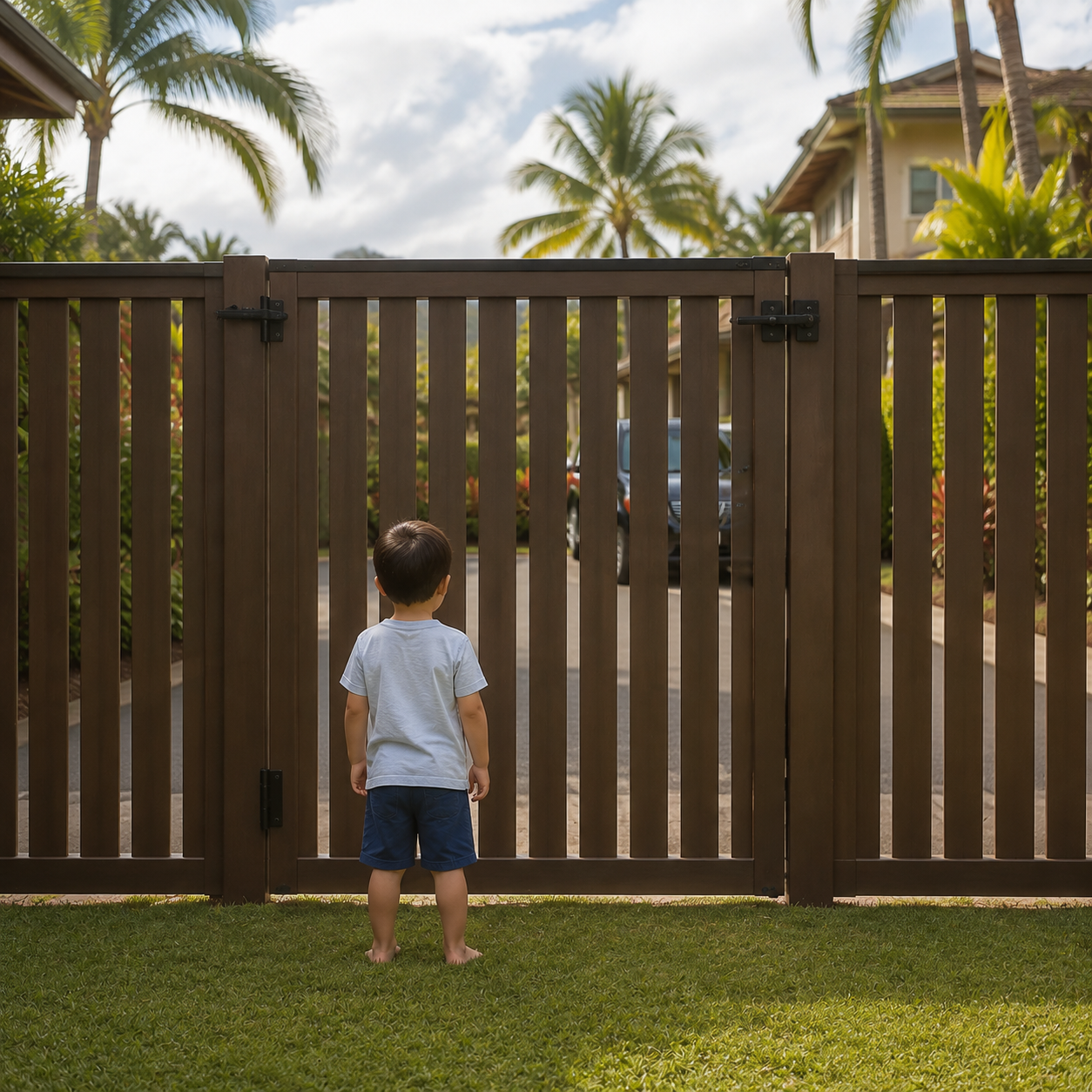
Pet Fencing Should Reflect the Animal’s Actual Behavior
Pet fencing is not simply a matter of choosing a fence that appears tall enough.
Dogs may react differently outside than they do inside the home. They may chase birds, mongoose, chickens, passing dogs, delivery workers, or people walking near the property. Some dogs dig under fences. Others squeeze through small gaps, push weak gates, climb horizontal rails, or repeatedly test the same loose section.
A pet-friendly fence should account for the animal’s size, strength, habits, and triggers. Small dogs may need narrow spacing and minimal gaps at the base. Stronger dogs may require reinforced posts, durable panels, and more dependable gate hardware. Dogs that jump may need additional height, while persistent diggers may require closer attention to the ground line.
Visibility is another consideration. An open aluminum fence may work well for a calm pet that benefits from airflow and homeowner visibility. A dog that becomes overstimulated by pedestrians or neighboring animals may be better suited to a more private vinyl fence that limits visual triggers.
The right fence does more than keep the pet inside. It also protects neighbors, visitors, other animals, and anyone approaching the property.
Pools, Slopes, and Driveways Require More Than a Standard Boundary
Certain areas create greater consequences when a fence or gate fails.
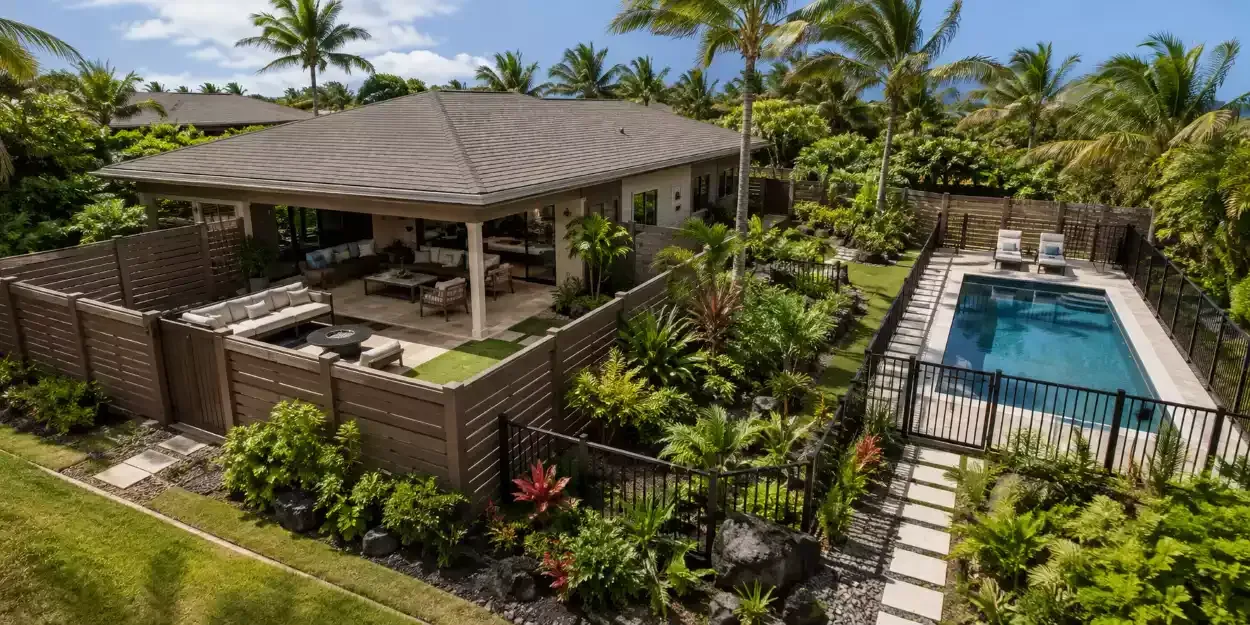
Pools require a barrier system that supports controlled access, visibility, and dependable gate operation. Fence height, spacing, climb resistance, gate direction, and latching behavior should be planned as one safety system rather than as separate design details.
Homeowners evaluating pool barriers can review aluminum pool fencing safety standards and design options in Hawaii to better understand how open visibility, picket spacing, secure gates, and corrosion-resistant materials can support pool-area safety without making the space feel visually closed.
Sloped properties present different concerns. Uneven ground can leave large openings beneath an otherwise secure fence. Soil movement can weaken posts, and runoff can erode the material supporting the footing. The fence line should follow the terrain without creating crawl spaces or escape points.
Driveways and open carports also require deliberate gate placement. A gate should not release a child or pet directly into vehicle movement, a blind corner, or a busy sidewalk. The opening direction and access path should support the way the household parks, enters, exits, and uses the property.
Choose Materials According to Safety, Privacy, and Exposure
Hawaii’s climate makes material selection part of the safety decision.
Humidity, frequent rainfall, intense sunlight, salt air, wind, soil movement, and uneven terrain can all affect how long a fence remains straight, smooth, secure, and dependable. A system that performs well in a dry inland climate may not respond the same way on a coastal or windward Hawaii property.
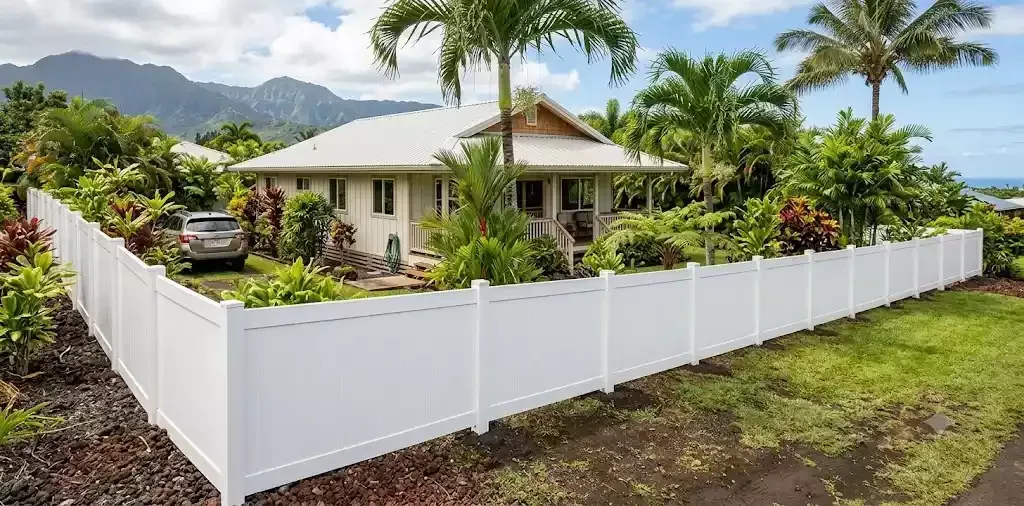
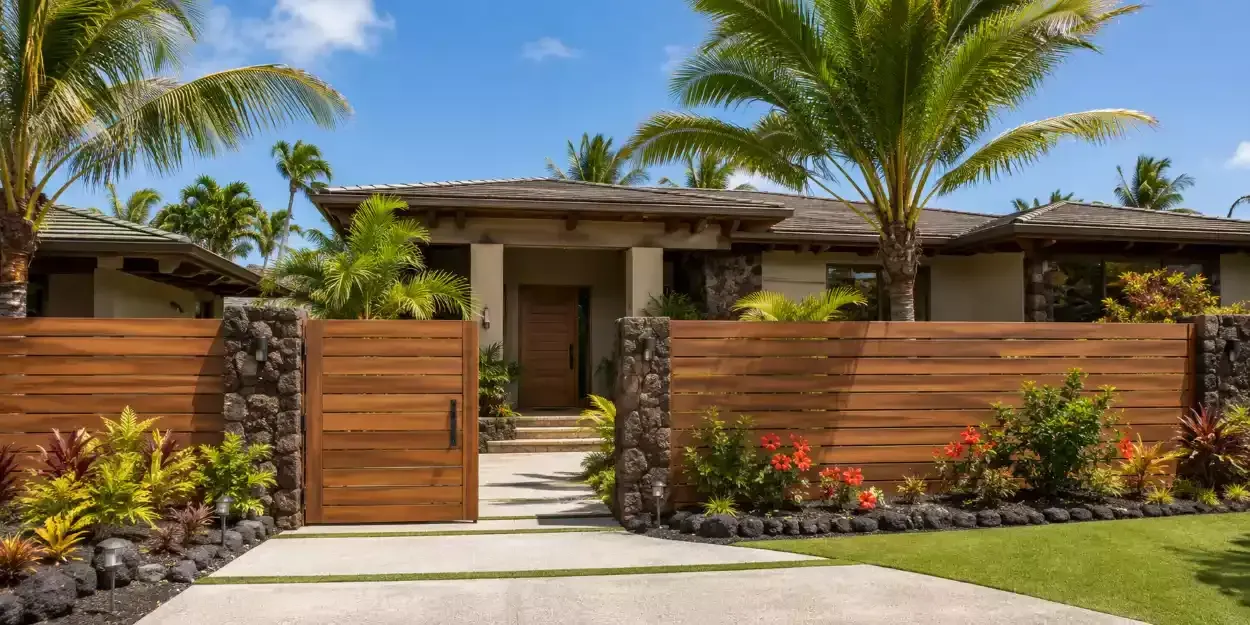
Vinyl fencing is often useful for family yards that need privacy and lower maintenance. It does not rot like wood and does not create the same splinter concerns as deteriorating boards. Solid or semi-private vinyl panels can also reduce visual stimulation for reactive pets and provide separation from nearby roads or neighboring properties.
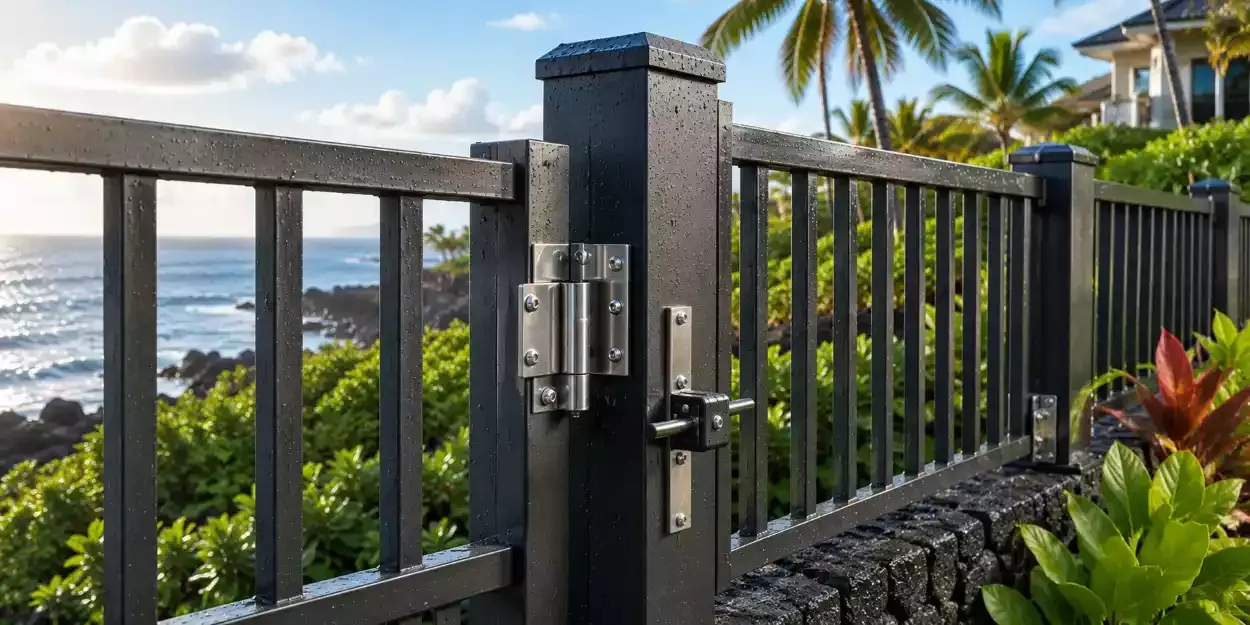
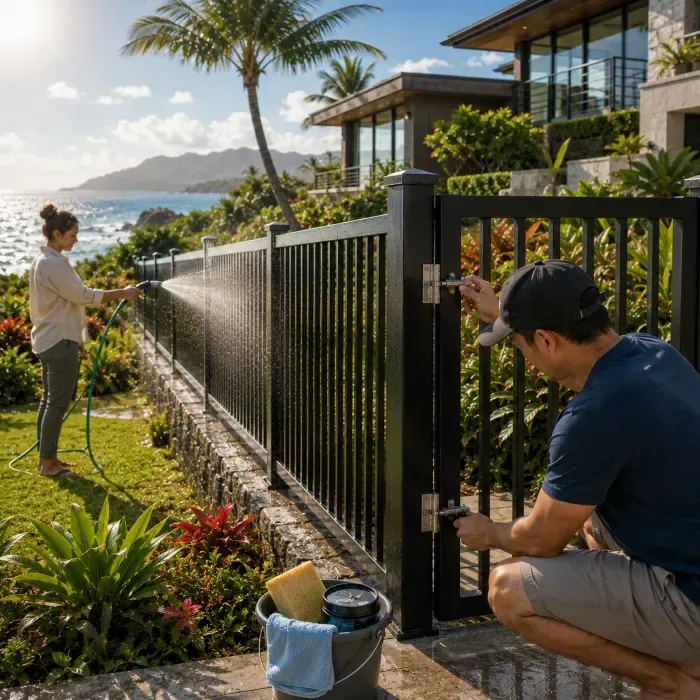
Aluminum fencing is often better where visibility, airflow, and open sightlines matter. It may be appropriate around pools, gardens, driveways, and areas where adults need to monitor children or pets through the fence. Its performance still depends on suitable coatings, compatible hardware, correct post installation, and proper spacing.
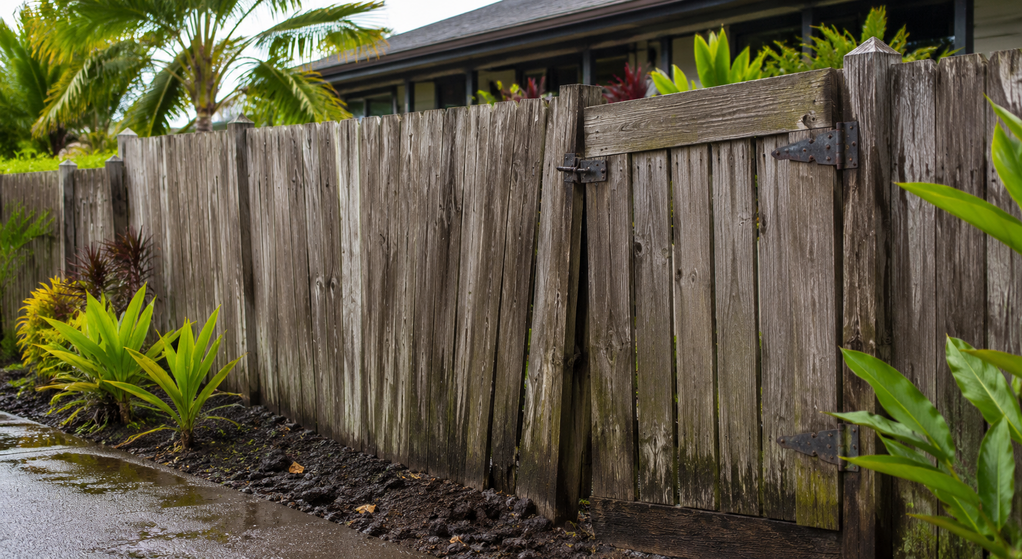
Wood can provide a warm, natural appearance, but it requires regular protection against moisture, rot, termites, warping, and surface deterioration. Chain-link can provide practical containment but may not offer the privacy, appearance, or climb resistance some households require.
Homeowners comparing these options can review the best materials for fencing in Hawaii to understand how vinyl, aluminum, wood, and other systems respond to island weather, maintenance demands, privacy needs, and property conditions.
Material should never be chosen according to appearance or initial price alone. The best option is the one that supports the household’s safety priorities and can remain stable under the property’s actual exposure.
Gates Are the Most Frequently Used Part of the System
A secure fence can still fail its purpose if the gate is unreliable.
Gates are opened by household members, children, guests, delivery workers, landscapers, contractors, and neighbors. They carry more moving stress than fixed fence panels and are more likely to develop problems involving hinges, latches, alignment, sagging, corrosion, or ground clearance.
For homes with children or pets, the latch should close consistently and should be positioned according to the household’s safety needs. The gate should not drag, remain partly open, or swing in an unsafe direction. Bottom clearance should not create an escape route, and the gate frame should remain stable under repeated use.
Gate material should also be selected according to weight, span, wind exposure, salt air, moisture, and maintenance requirements. Homeowners comparing gate options can use choosing the right gate material for Oahu’s weather conditions to evaluate how wood, vinyl, and metal gates perform under Hawaii’s coastal and humid conditions.
A gate should be treated as part of the safety system from the beginning. It should not be selected after the fence layout has already been finalized.
Installation Quality Determines Whether the Fence Performs as Intended
Even the right material can underperform when the installation does not match the property.
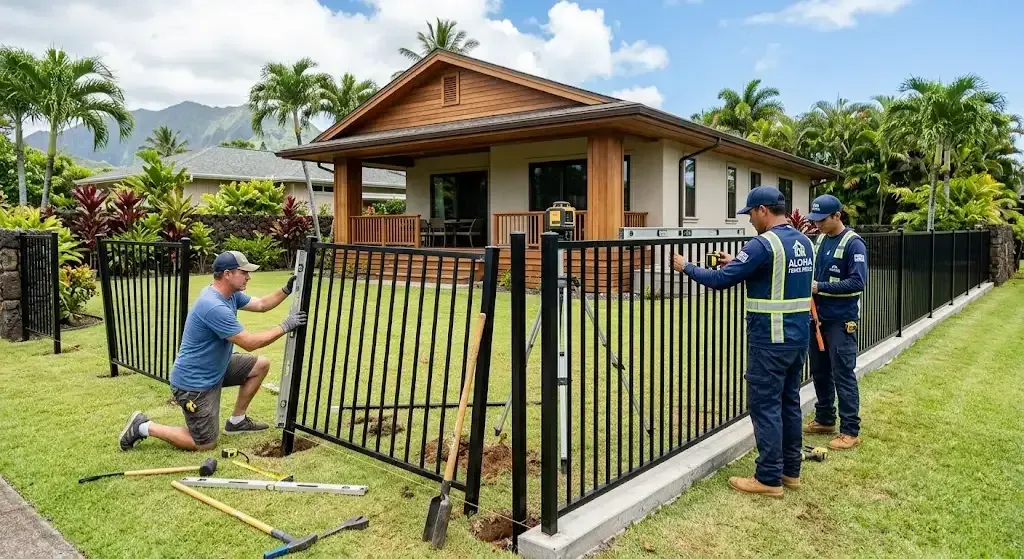
Posts need sufficient depth and support for the fence height, material weight, soil conditions, and wind exposure. Panels should follow the terrain without creating large gaps. Gates require stable posts that can support repeated movement without leaning or shifting.
Drainage also matters. Water collecting around posts can weaken soil support, accelerate deterioration, and cause sections to move over time. On sloped or uneven properties, runoff patterns should be evaluated before post locations and footing depths are finalized.
Hardware and fasteners should be compatible with the fence material and suitable for local exposure. Coastal salt air can accelerate corrosion, while intense sunlight can degrade certain finishes and plastic components. Small installation shortcuts can become safety concerns when a loose panel, failed latch, or shifting post creates an opening.
A family fence should be designed as a complete system: material, posts, panels, gates, hardware, footing, drainage, and terrain all working together.
Common Mistakes Hawaii Homeowners Should Avoid
One common mistake is choosing a fence that is too low or too easy to climb for the household’s actual risks. Another is accepting large ground gaps because the yard is uneven. Those gaps may become escape routes for pets or access points for children.
Homeowners also make mistakes when they focus on privacy but ignore visibility. A fully enclosed fence may provide excellent separation, but it can also create blind areas near driveways, pools, entrances, or sidewalks. In some locations, an open aluminum fence or a combination of open and private sections may provide a better balance.
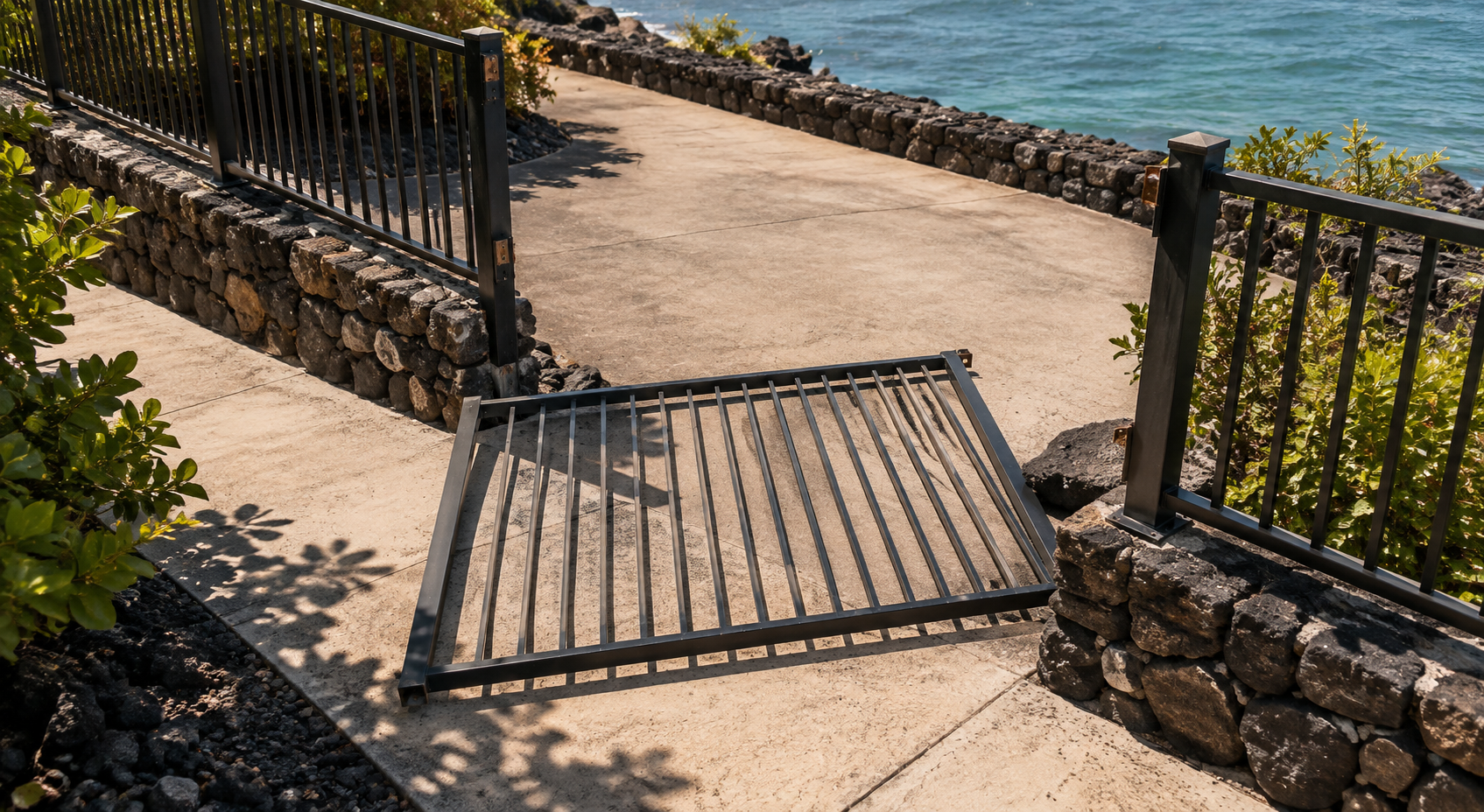
Another mistake is selecting a gate primarily for appearance. A decorative gate that sags, fails to latch, or leaves a large opening underneath does not support the purpose of the fence.
Families should also avoid planning the fence without watching how the property is used. Before selecting a design, observe where children naturally run, where pets test the boundary, where vehicles enter, where water collects, and which areas receive the strongest wind or salt exposure.
The fence should respond to those patterns instead of forcing the household to adapt to a poorly planned layout.
Final Takeaway for Hawaii Families
Fencing matters for Hawaii homes with children or pets because it gives outdoor space clearer boundaries, stronger control, and greater everyday usefulness.
The best solution is not automatically the tallest fence, the most private fence, or the most expensive material. It is the system that matches the risks around the property, the behavior of the children or pets using the yard, the visibility and privacy the household needs, and the environmental conditions the fence will face.
Vinyl fencing may be the stronger choice for enclosed family yards and privacy. Aluminum may be better where sightlines, airflow, pool visibility, and open boundaries matter. Properly designed gates provide the controlled access that makes either system dependable.
When the material, layout, gates, hardware, terrain, and installation are planned together, a fence becomes more than a property feature. It creates an outdoor space where children can play, pets can move, and homeowners can feel more confident about how the yard functions every day.

written by
Kurt Manalastas
Property Security & Exterior Improvement Journalist
Kurt creates research-based content focused on fencing solutions, property security, and outdoor boundary improvements. By combining industry best practices, material insights, and practical property protection strategies, he helps homeowners and business owners make informed decisions about building safer, more secure, and visually appealing outdoor spaces.