Long-Term Maintenance Tips for Aluminum Fences in Hawaii
Practical Takeaways: Aluminum fences in Hawaiʻi require regular maintenance to withstand salt air, humidity, and sun exposure, with rinsing, hardware inspection, and finish protection being essential practices. Consistent care, including managing vegetation and monitoring footings, prevents early wear and ensures your fence remains stable, functional, and long-lasting in island conditions.
An aluminum fence in Hawaiʻi often feels like an easy win at the start. The lines are clean, the finish looks sharp in the sun, and the fence settles naturally into the landscape without demanding much attention. Months go by without any obvious change. Wind, rain, and heat seem to pass without leaving a mark. Over time, small details begin to stand out. A light film on the surface that does not fully rinse away. Hardware that feels slightly less smooth than before. A post that moves just enough to be noticeable after heavy rain. None of it feels urgent, but together these signs mark the beginning of wear that comes from Hawaiʻi’s salt air and humidity when maintenance is overlooked.

Why Aluminum Fences Perform Differently in Hawaiʻi
Aluminum is a smart fencing choice for the islands because it does not rust like steel. That alone makes it popular in coastal areas from Kapolei to Kāneʻohe. However, aluminum is still vulnerable to surface oxidation, salt buildup, and fastener corrosion.
In our work across Oʻahu, we have seen well-installed aluminum fences fail early due to simple maintenance oversights. The material itself holds up, but connectors, coatings, and footings suffer when ignored.
- Hawaiʻi’s climate accelerates wear in three ways:
- Salt particles settle on surfaces even miles inland
- Humidity traps moisture against metal
- UV exposure slowly degrades protective coatings
Professional aluminum fencing service providers in Hawaii notes that understanding these forces explains why maintenance matters more here than in drier mainland regions.
Regular Washing Is Highly Important
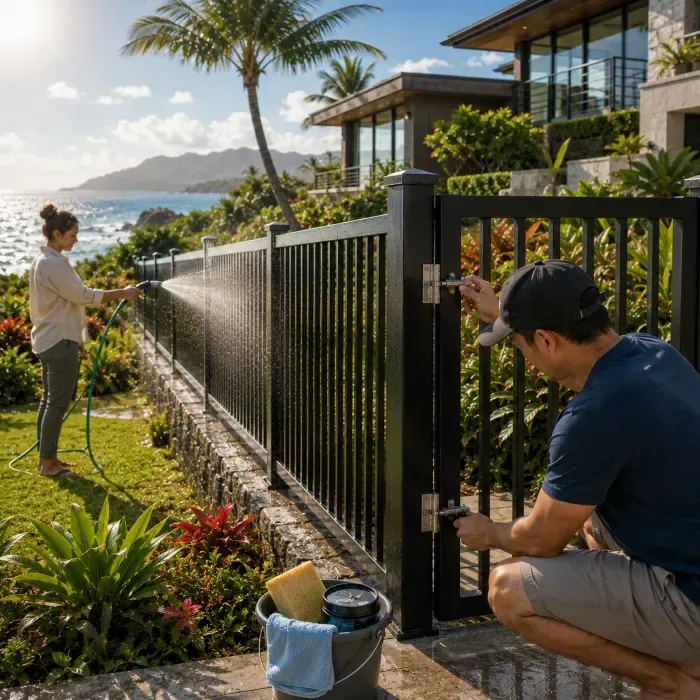
The most important maintenance task for aluminum fencing in Hawaiʻi is regular rinsing. Salt residue is invisible until damage begins. When left on the surface, it attracts moisture and slowly breaks down protective finishes.
Based on experience, fences within a few miles of the ocean should be rinsed every one to two months. Inland properties can often stretch this to quarterly cleaning.
Use clean water and a mild soap if buildup is visible. Our aluminum fencing experts recommend avoiding pressure washers because high pressure can force water into seams and loosen post caps.
According to NASA’s corrosion reference information, chloride ions present in salt-laden coastal environments can attack the protective oxide film on aluminum surfaces, making them more susceptible to pitting and other forms of corrosion under humid conditions.
Inspect Fasteners and Connections Twice a Year
Aluminum panels rarely fail first. Hardware does.
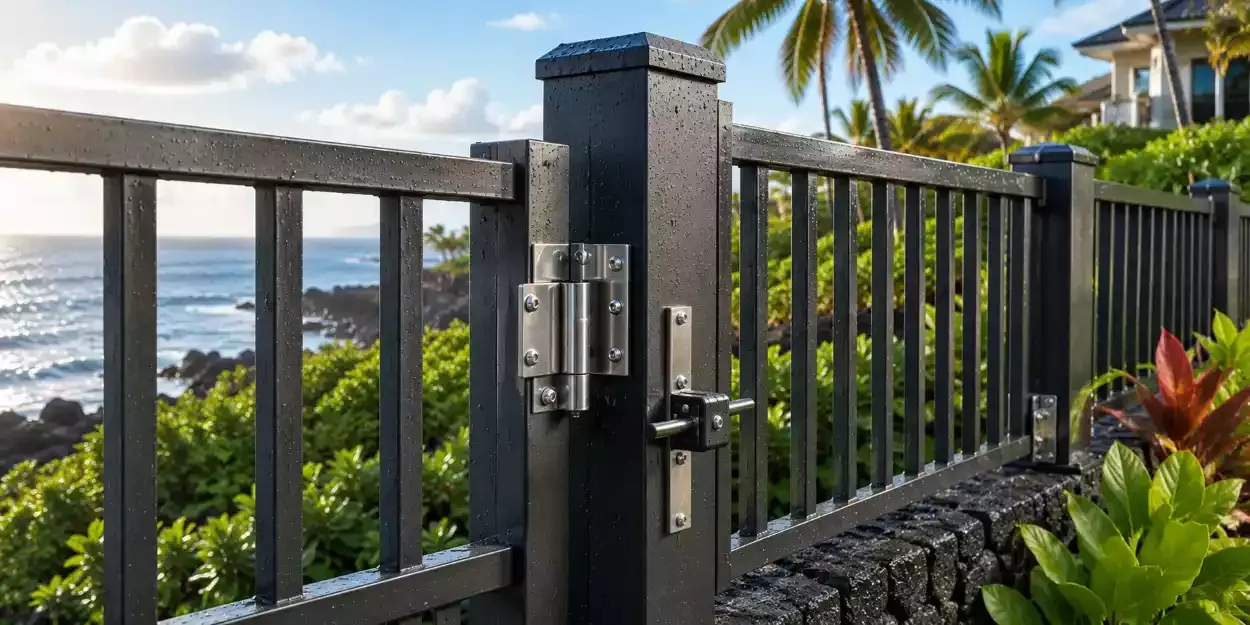
Bolts, screws, and brackets are often stainless steel or coated steel. In Hawaiʻi’s humidity, dissimilar metals can react over time, leading to corrosion and loosening.
Twice a year, check:
- Post-to-panel connections
- Gate hinges and latches
- Anchors at concrete footings
We have seen entire fence sections tilt simply because one corroded anchor bolt failed below grade.
If fasteners show rust staining, replace them early. Waiting almost always leads to larger repairs.
| Location Relative to Ocean | Recommended Rinse Frequency | Notes |
|---|---|---|
| Within 1–3 miles of coastline | Every 1–2 months | Salt buildup accumulates quickly in trade winds |
| 3–10 miles inland | Every 2–3 months | Moderate salt exposure |
| Far inland or elevated areas | Every 3–4 months | Lower salt accumulation |
Protect the Finish Before It Fades
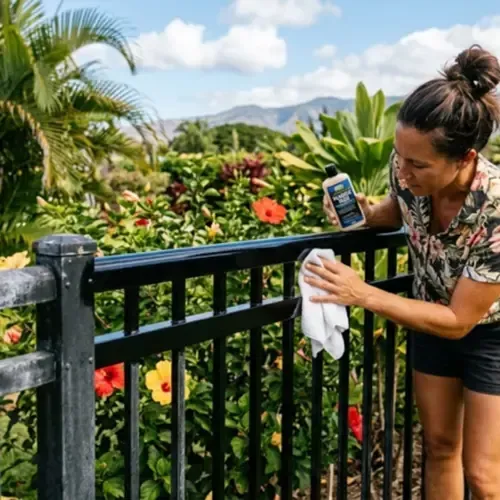
Powder-coated aluminum fences perform well in Hawaiʻi, but sun exposure eventually dulls even high-quality coatings. Once the finish breaks down, oxidation accelerates.
Inspect the fence annually for chalking, fading, or peeling. When early signs appear, a protective wax or UV-resistant sealant can extend the life of the coating.
Avoid abrasive cleaners or metal brushes. These remove the very layer protecting the aluminum.
According to the Federal Highway Administration’s Coatings and Corrosion Laboratory, research into corrosion prevention emphasizes that the durability and performance of protective coatings on metal surfaces are fundamental to mitigating environmental degradation of outdoor structural materials.
Manage Vegetation Around the Fence Line
One of the most common maintenance mistakes is allowing plants to grow directly against aluminum fencing. In Hawaiʻi, vegetation grows fast and aggressively.
When plants trap moisture against fence panels, oxidation increases. Roots can also disturb post footings, especially in softer soils common in windward areas.
Keep at least a few inches of clearance between plants and fence panels. Trim back vines and avoid tying plants directly to aluminum rails.
This matters more in Hawaiʻi than many homeowners realize. Constant moisture contact is far more damaging here than in drier climates.
Pay Attention to Footings and Soil Movement
Aluminum fences depend on stable footings. Hawaiʻi’s soils vary dramatically, from sandy coastal ground to dense clay and volcanic fill.
After heavy rains, inspect posts for movement or settling. Early detection allows simple corrections before alignment issues spread across the fence line.
We have seen fences that looked structurally sound above ground but failed because water undermined footings below.
According to NOAA’s U.S. Climate Resilience Toolkit, coastal erosion caused by rising sea levels, strong wave action, and flooding gradually removes soil and sediment from shorelines and can damage or undermine coastal infrastructure and built structures, showing how soil movement and moisture-related erosion affect coastal stability.
Gates Require Extra Care
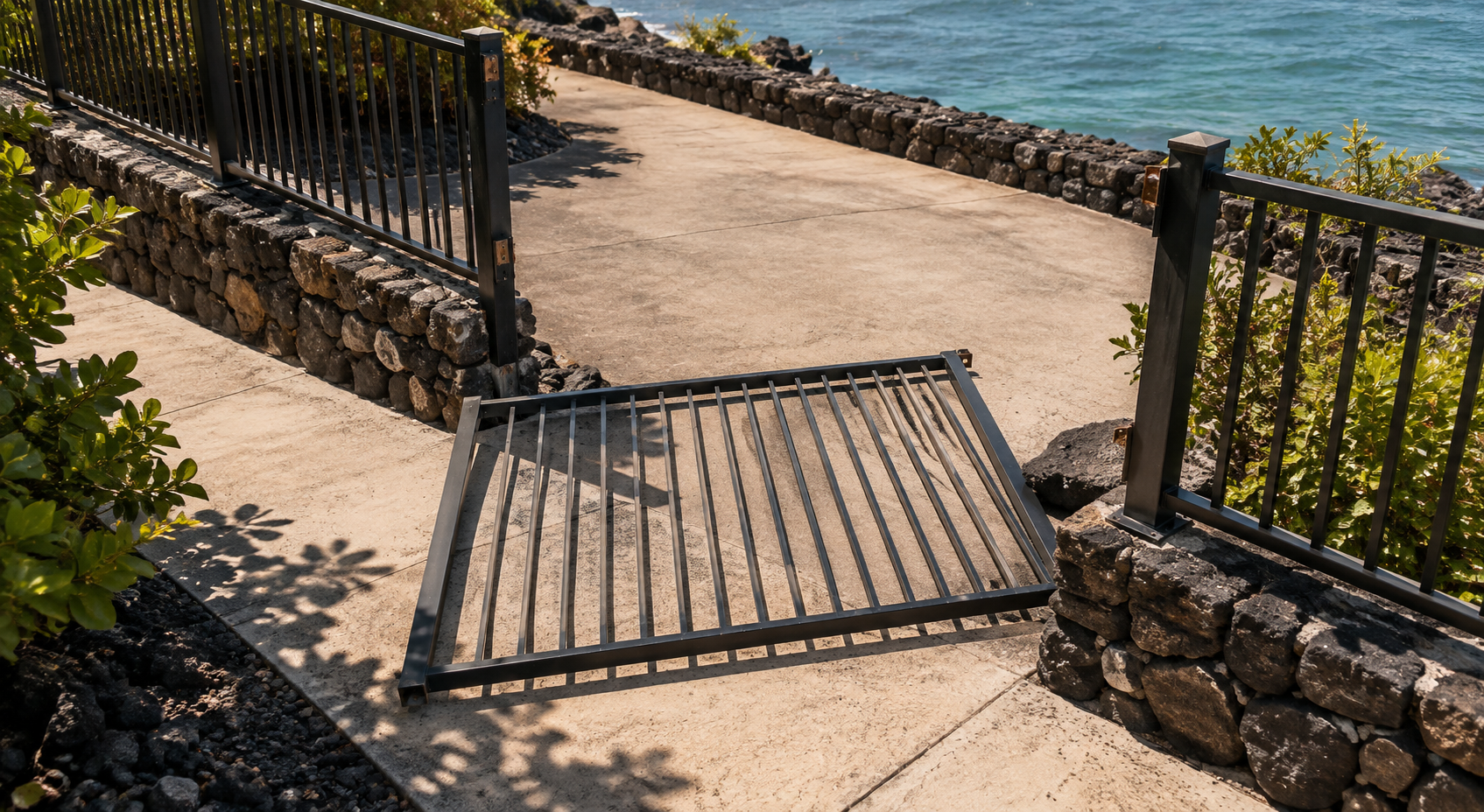
Gates are the most stressed part of any aluminum fence. They move daily, carry weight, and experience wind load.
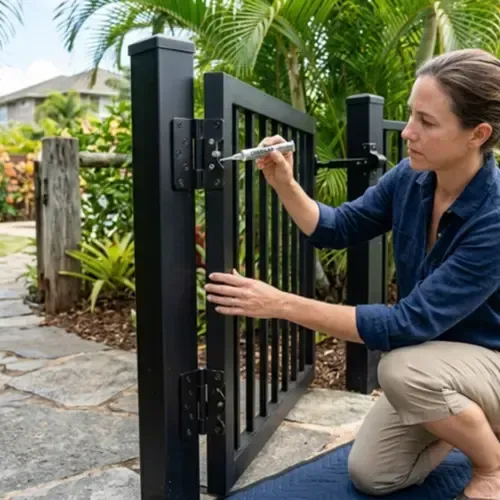
Lubricate hinges annually with a non-greasy, corrosion-resistant lubricant. Check alignment and latch engagement often.
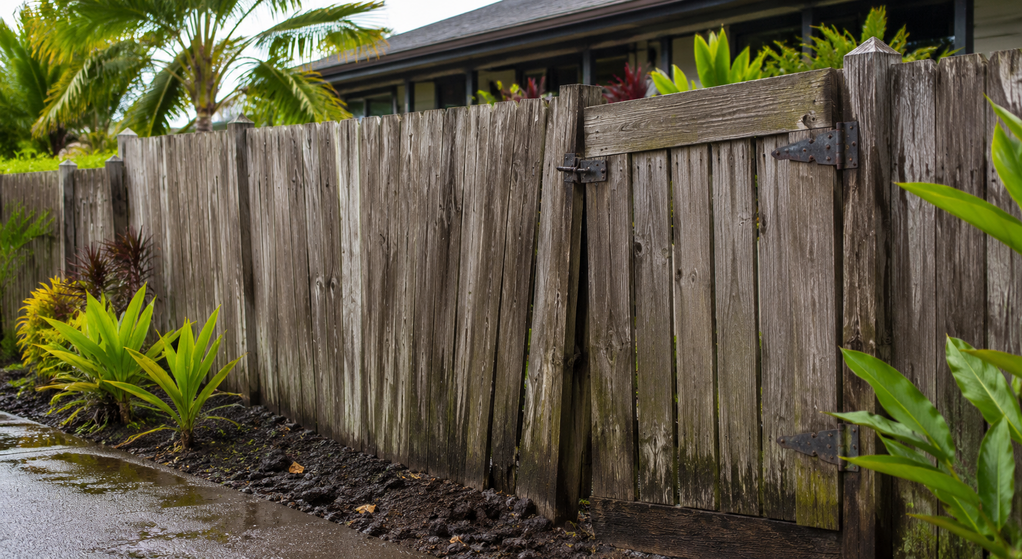
A sagging gate is rarely just a gate problem. It often signals post movement or fastener failure that should be addressed immediately.
Explore Preventing Rust, Warping, and Wear on Gates in Hawaii’s Climate to learn more about how to extend your aluminum fence’s lifespan.
Common Long-Term Mistakes to Avoid
Several issues appear repeatedly over time:
- Assuming aluminum needs no maintenance
- Ignoring small coating damage
- Letting salt buildup accumulate
- Mixing incompatible hardware materials
- Skipping post and footing inspections
Each of these shortens fence lifespan significantly in Hawaiʻi. Learn more about How Salt Air and Humidity in Oahu Impact Your Gate Installation Choices.
Final Takeaway
Aluminum fences can be an excellent long-term solution in Hawaiʻi, but only when maintained with the environment in mind. Regular rinsing, hardware inspection, finish protection, and vegetation control are not optional here. They are the difference between a fence that lasts ten years and one that lasts thirty.
The next step is simple. Walk your fence line with intention. Look closely at hardware, finishes, and footings. Address small issues early, before Hawaiʻi’s climate turns them into expensive repairs.