Fence Features That Help Prevent Dogs from Escaping Hawaii Yards
Summary
Keeping a dog inside a Hawaii yard takes more than choosing a tall fence. Secure ground clearances, suitable panel openings, dependable gates, and protection against digging all matter. The right combination depends on how your dog attempts to escape and how the fence meets slopes, walls, and everyday access routes.
A fence can look complete from the lanai while leaving an escape route behind a planter or beneath a gate. Before replacing it, identify whether your dog jumps, climbs, digs, squeezes through openings, or follows someone outside. Each behavior calls for a different improvement.
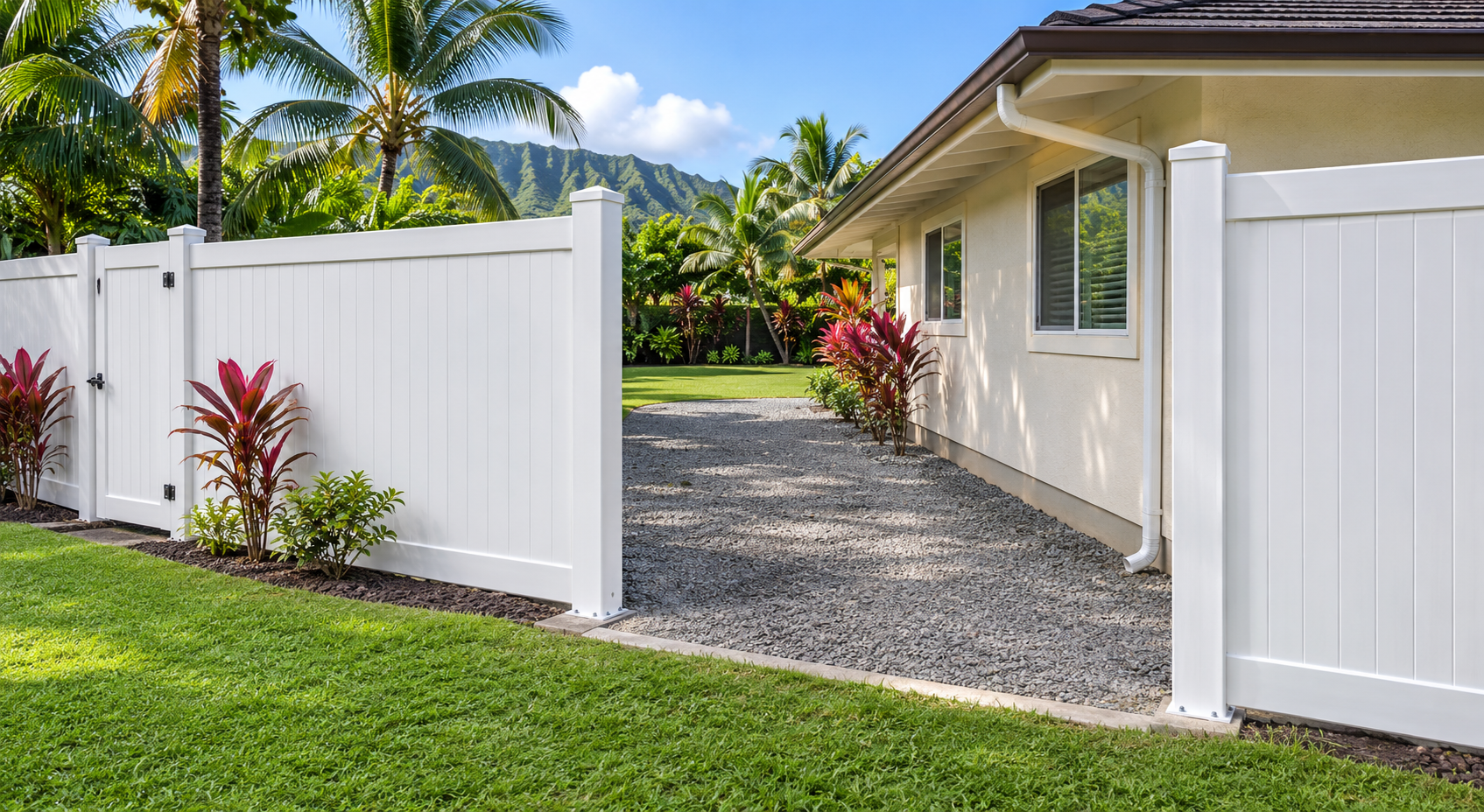
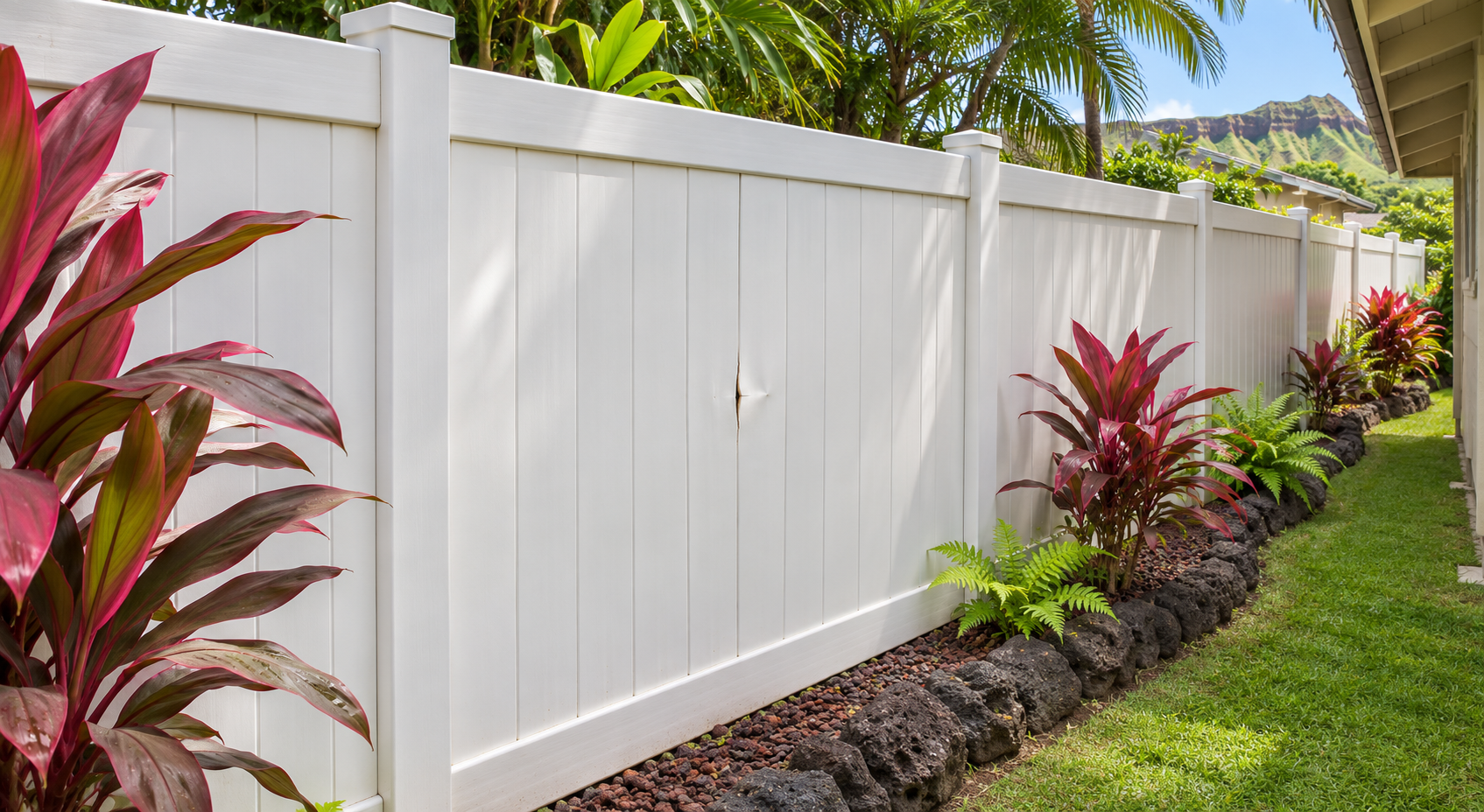
For owners comparing vinyl fence installation services in Oahu, solid panels are one option to evaluate alongside height, ground clearance, and gate design. Material alone does not establish whether an enclosure suits a particular dog.
The guide to how property lines and terrain affect fence layout in Hawaii explains why bottom clearances change on slopes and at wall junctions.
Why fence hardware and coatings matter in Hawaii adds the hinge and latch durability checks needed for secure gates in coastal conditions.
Sunset Hawaii Fencing Company offers vinyl fencing across Oahu, including privacy styles. When discussing a layout, describe your dog's escape attempts as carefully as your preferred appearance. A useful proposal needs to address the animal and the property together.
Match Height and Openings to the Dog
There is no single fence height that safely contains every dog. Size matters, but so do jumping ability, persistence, and nearby objects. Measure the barrier from the surface the dog can actually stand on, including raised planting beds or an adjoining terrace.
For climbers, evaluate the inside face.
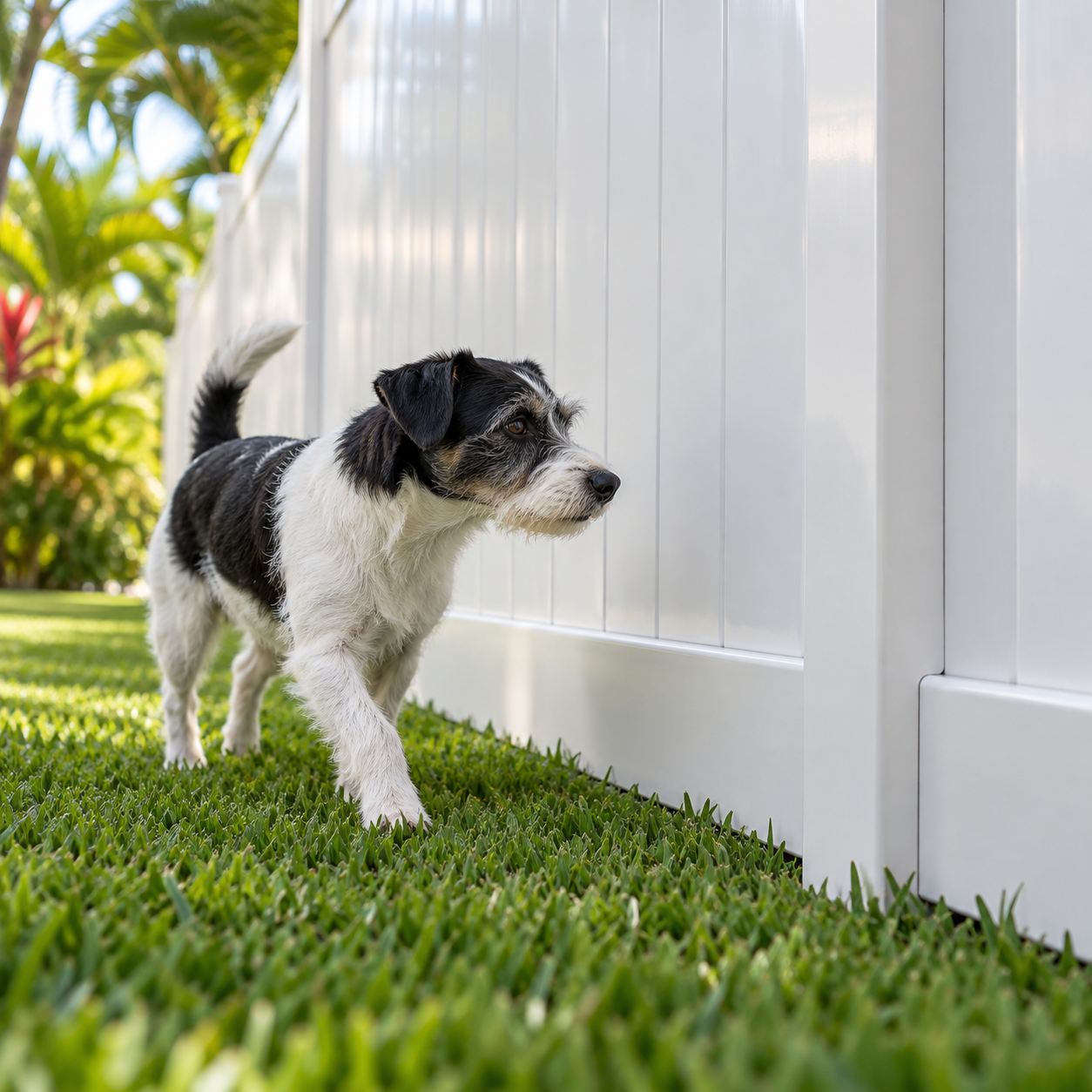
Accessible horizontal rails and open mesh can provide footholds. A smooth, solid face offers fewer opportunities, although it cannot guarantee containment. Move furniture, storage boxes, and other potential launch points away from the boundary.
For small dogs, inspect openings throughout the enclosure, including decorative sections and the spaces beside gate posts. Specify a maximum clear opening appropriate for the individual dog rather than relying on a product's “pet-friendly” label. Do not test suitability by encouraging a dog to push its head through a gap.
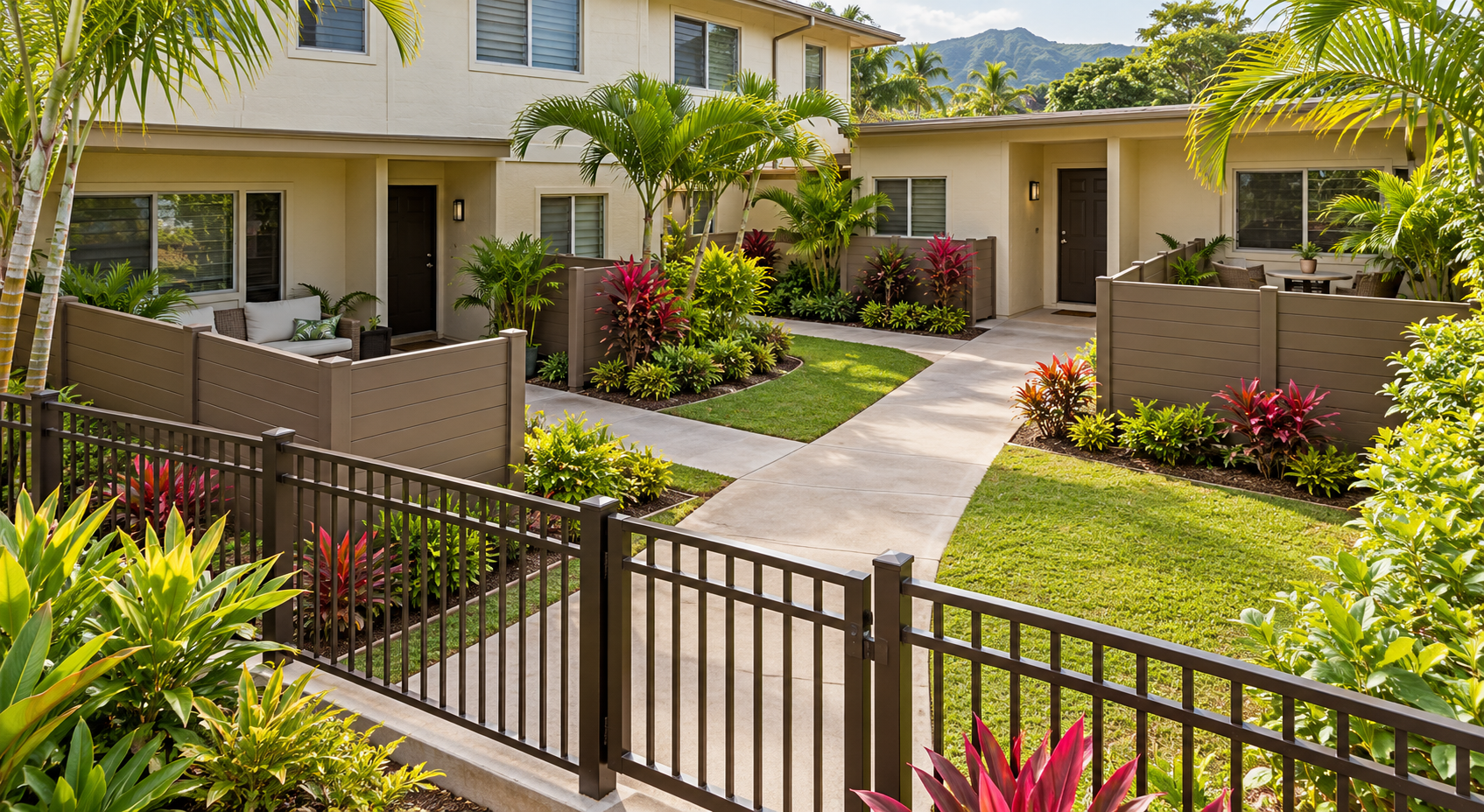
Solid panels can also screen activity outside the yard. However, privacy should be considered alongside airflow and the fence system's suitability for the site's wind exposure. Avoid adding solid screening to an existing open fence without checking whether its supports can accommodate the change.
Close Escape Routes Where the Fence Meets the Ground
Ground clearance deserves its own inspection. A uniform-looking top line can conceal a large opening underneath, particularly where a fence crosses a slope or meets an existing wall.
Stepped panels can leave triangular spaces at their downhill ends. Panels designed to follow a slope may reduce those openings, but their adjustment range depends on the product.
Ask the installer to show the largest finished bottom gap, not simply an average clearance. Include corners, changes in elevation, and the junction between old and new fencing.
Do not solve every opening by piling soil against a panel. Where rainwater crosses the boundary, a continuous barrier or added fill could interfere with drainage. Plan containment and water movement together, and inspect these locations after heavy rain for newly exposed gaps.
Give Diggers a Barrier Below the Visible Fence
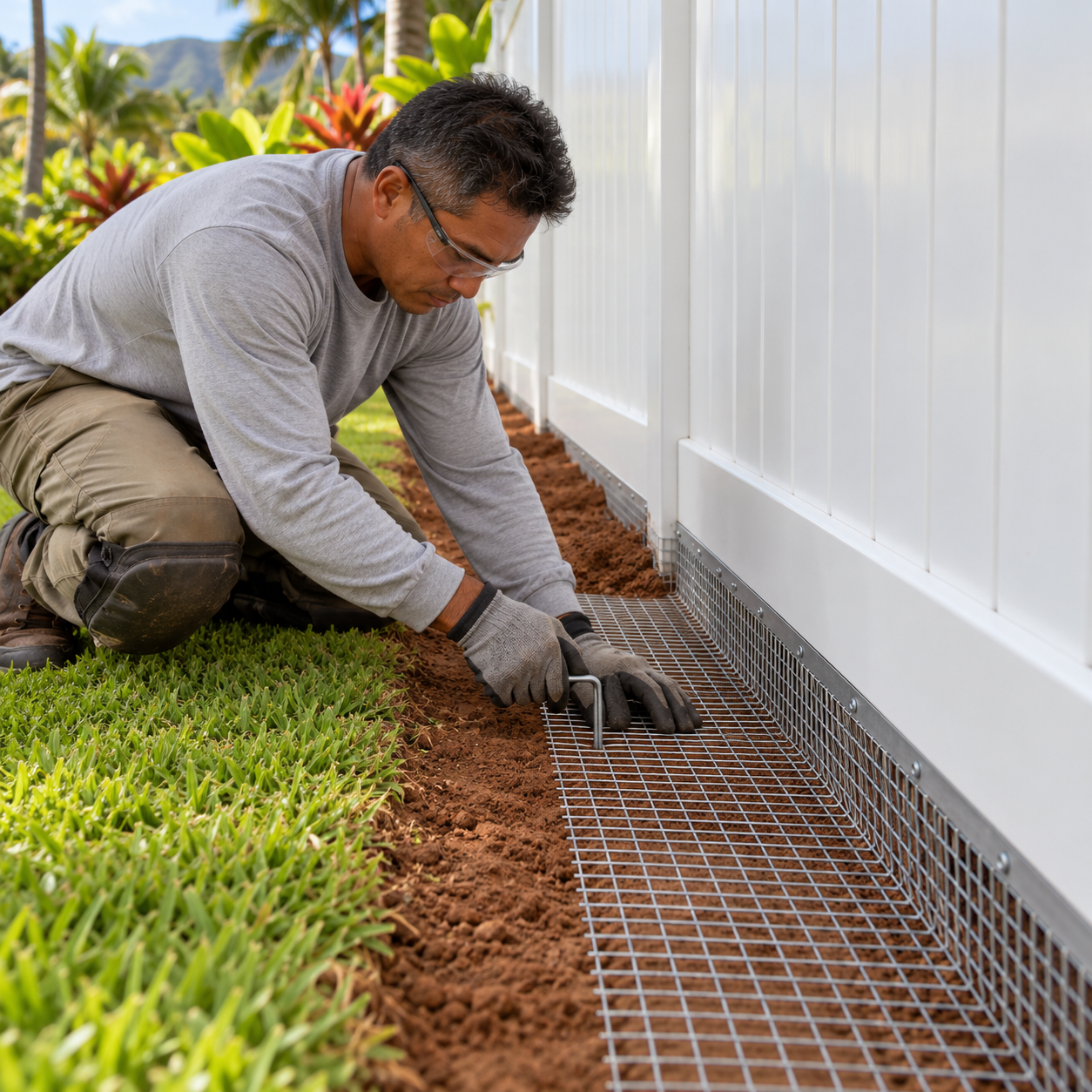
A dog that excavates beside a sound panel needs a different solution from one that jumps over it. An inward-facing mesh apron at the fence base can obstruct digging, provided it is securely attached and installed without exposed sharp edges or loose sections.
The American Kennel Club's guidance on preventing dogs from escaping the yard
identifies inward-facing bottom barriers as an option for diggers. It also recommends removing climbing aids and using secure gate closures.
Discuss the apron material, attachment, coverage, and edge treatment with the installer. Buried utilities, roots, drainage, and existing footings can affect the work. A concrete base is a more permanent intervention and deserves site-specific planning rather than an improvised pour against the fence.
Loose decorative rocks should not be treated as a dependable substitute for a secured barrier. Record where digging occurs so the proposed improvement addresses the actual route.
Make the Gate as Dependable as the Panels
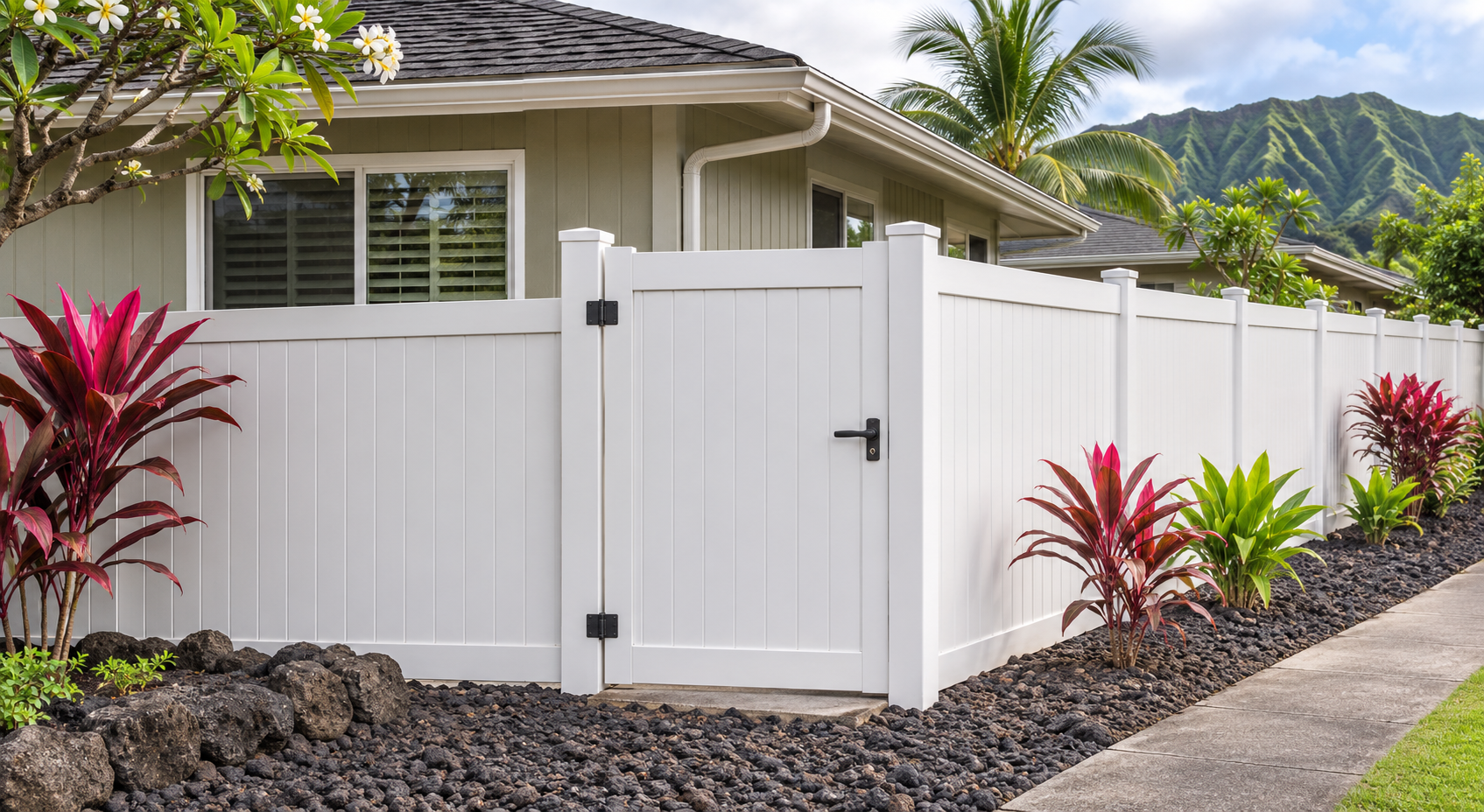
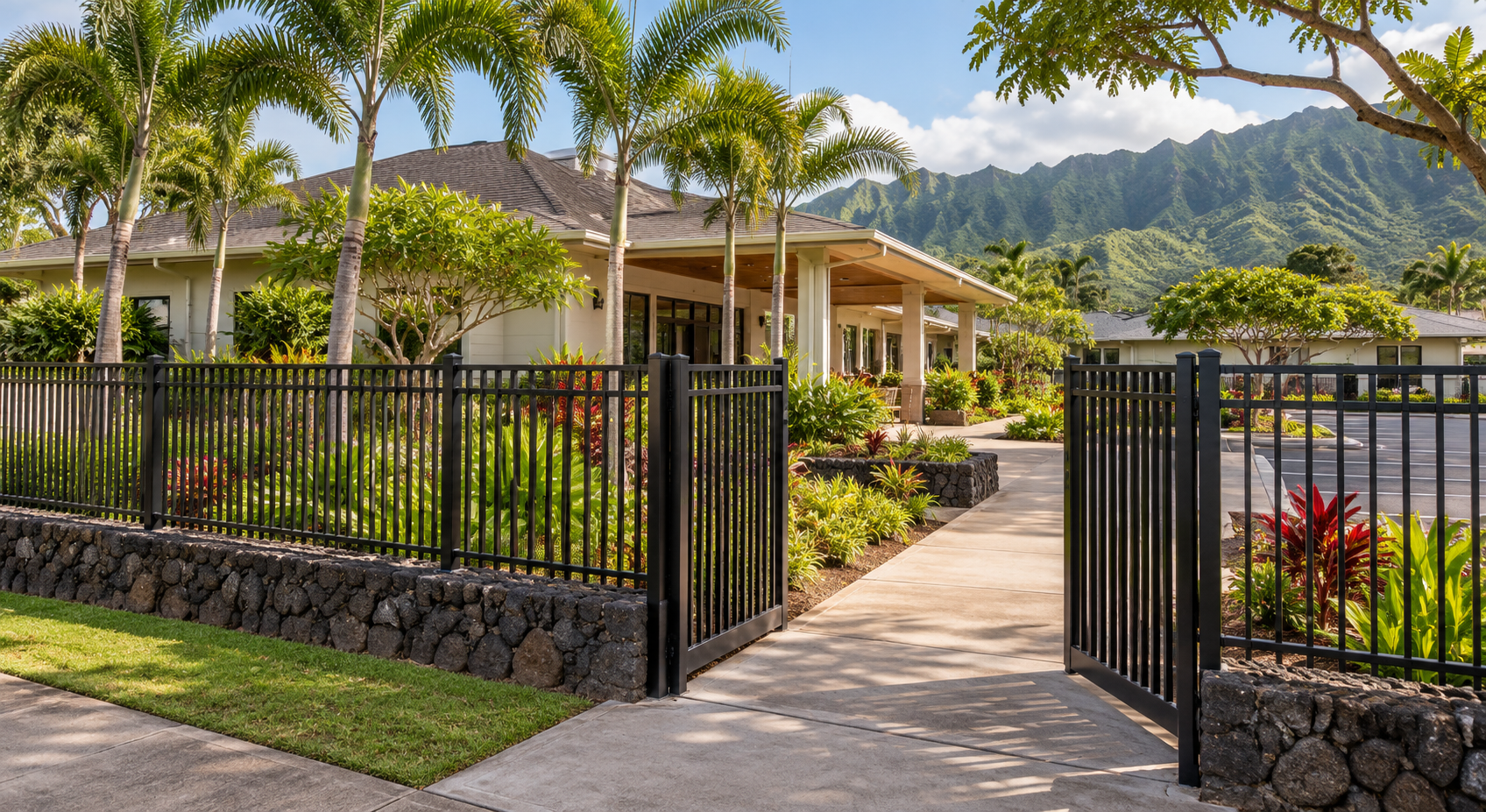
A secure perimeter loses its value whenever a gate fails to latch. Specify a positive-latching mechanism that your dog cannot readily operate, and consider compatible self-closing hardware for pedestrian access.
With the dog safely elsewhere, check whether the gate closes and engages from different opening positions. Then push gently against the
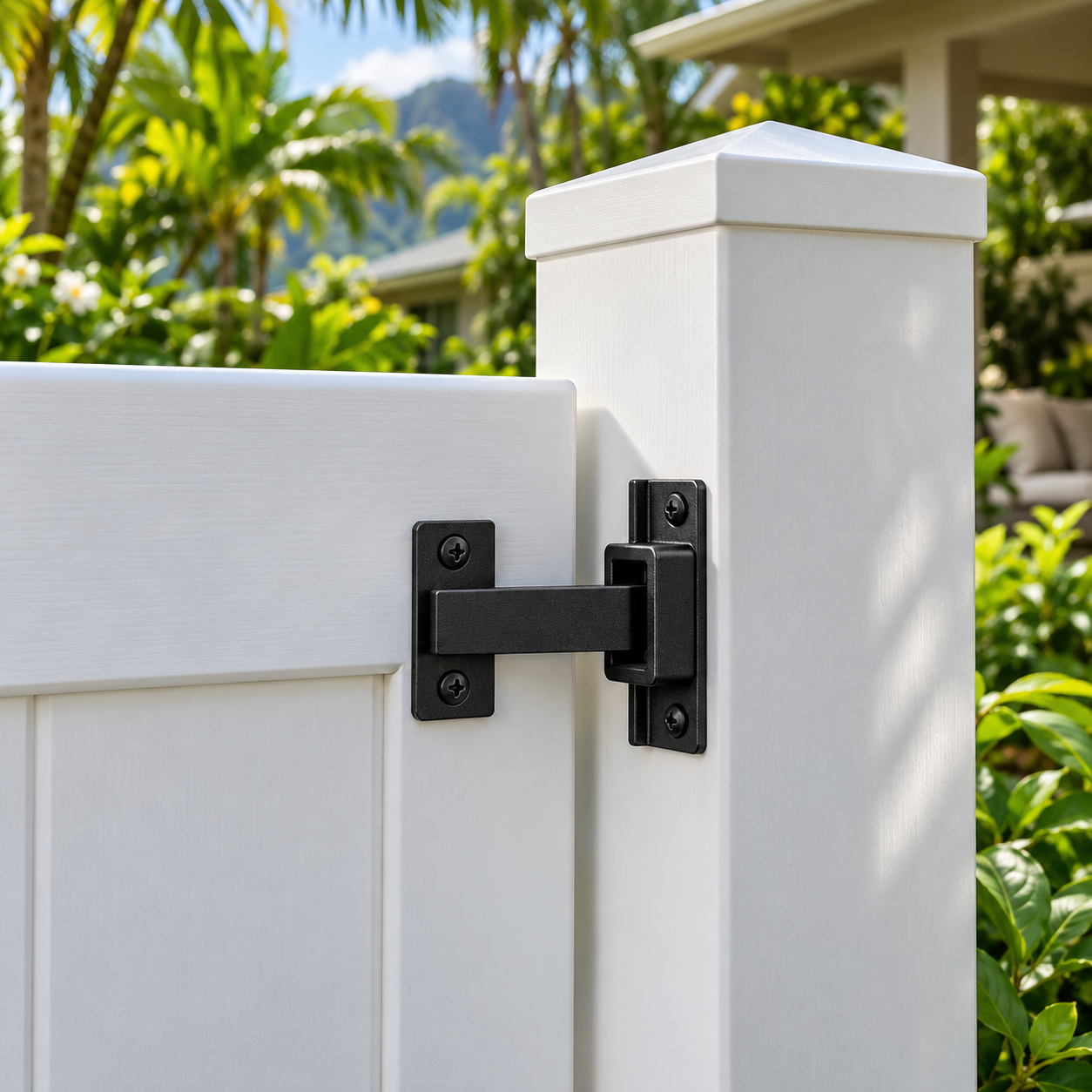
closed gate to confirm it has caught. A gate that looks closed but needs lifting to latch requires attention.
On sloped ground, inspect the entire swing path. Increasing bottom clearance to avoid scraping can create an escape opening when the gate is closed. Repositioning the gate may be a better design choice.
For Oahu properties exposed to salt air, include hinges, fasteners, and latch components in the material discussion.
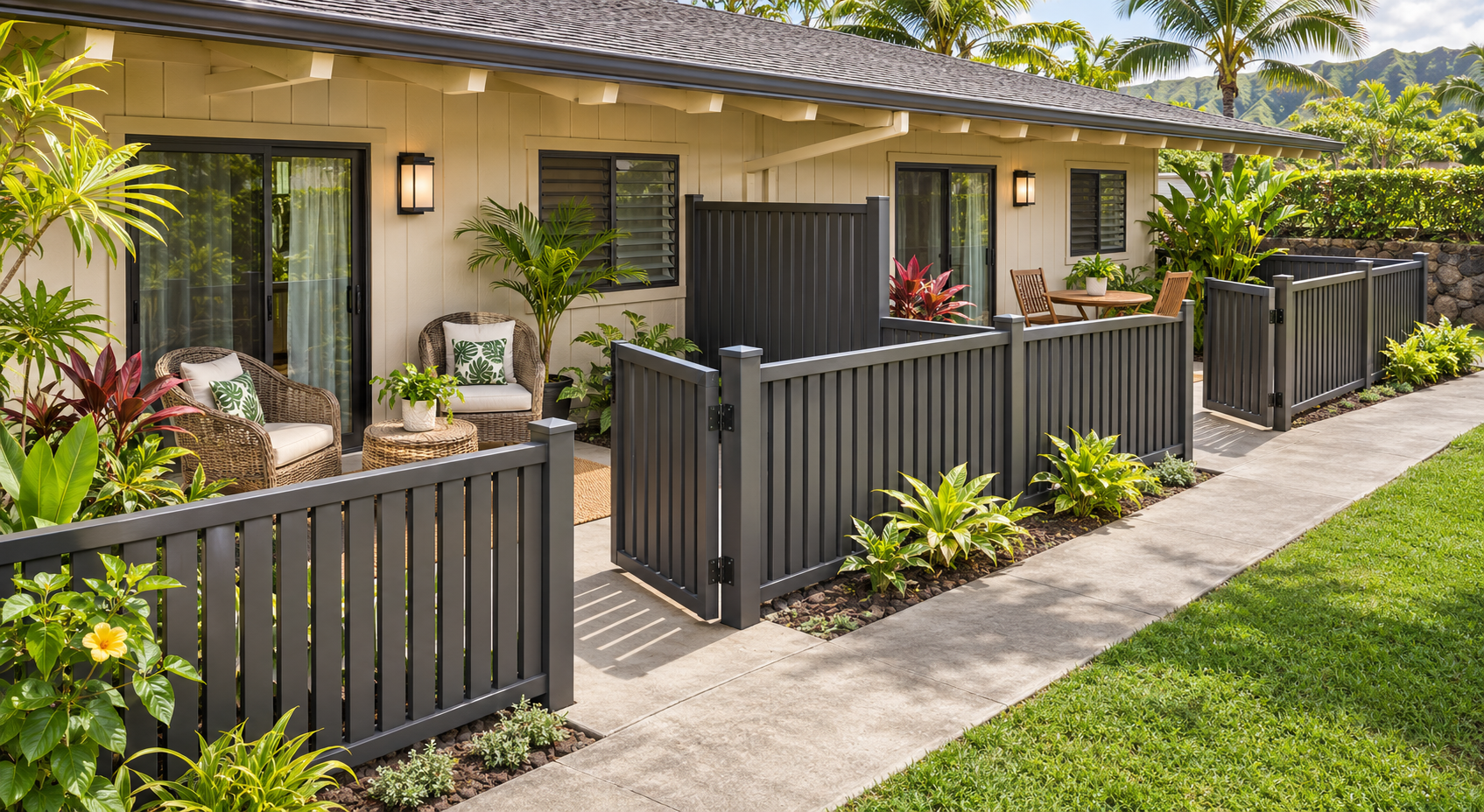
Where a dog rushes open gates, a small enclosure with two sequential gates can provide another layer of control. Its effectiveness depends on closing one gate before opening the other.
Turn the Walkthrough Into a Clear Scope of Work
Before approving improvements, photograph each weak point and ask the installer to document:
- Finished height and maximum openings at the most vulnerable locations.
- Treatment of slopes, wall junctions, and digging areas.
- Gate clearance, latch operation, and hardware specifications.
- Drainage provisions and access for future maintenance.
Keep the dog away from incomplete work and inspect the finished perimeter before use. Continue supervised outdoor time, with exercise, shade, water, and engagement. A carefully detailed fence reduces escape opportunities, but ongoing attention keeps those details working as the yard changes.

written by
Kurt Manalastas
Property Security & Exterior Improvement Journalist
Kurt creates research-based content focused on fencing solutions, property security, and outdoor boundary improvements. By combining industry best practices, material insights, and practical property protection strategies, he helps homeowners and business owners make informed decisions about building safer, more secure, and visually appealing outdoor spaces.