The Most Common Gate Installation Mistakes Homeowners Make in Oahu
What Homeowners Get Wrong: Most gate installation failures in Oahu result from poor planning, improper footing, and ignoring local soil, weather, and wind conditions rather than material quality. Mistakes like shallow posts, misalignment, and inadequate drainage lead to sagging and instability, making proper installation and long-term planning essential for reliable gate performance.
Installing a gate on a property in Oahu seems simple at first. Many people see it as a finishing touch rather than a structural feature. However, gates are one of the most technically demanding parts of any fence or wall system. The soil, weather, and terrain can amplify small mistakes into expensive problems. Most gate failures are not caused by bad materials, but by poor planning and incorrect installation choices.
Below are the most common gate installation mistakes homeowners make in Oahu, and why they cause long-term issues.
Ignoring Oahu’s Soil Conditions
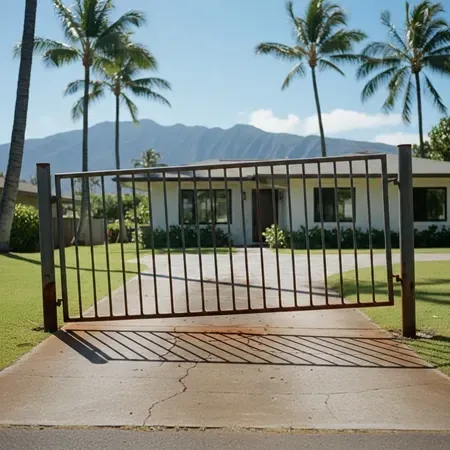
One of the biggest mistakes gate installation services in Oahu frequently encounter is treating Oahu soil like mainland ground. Many areas have volcanic soil, coral fill, clay pockets, or loose backfill from older construction. These conditions shift over time, especially after heavy rain.
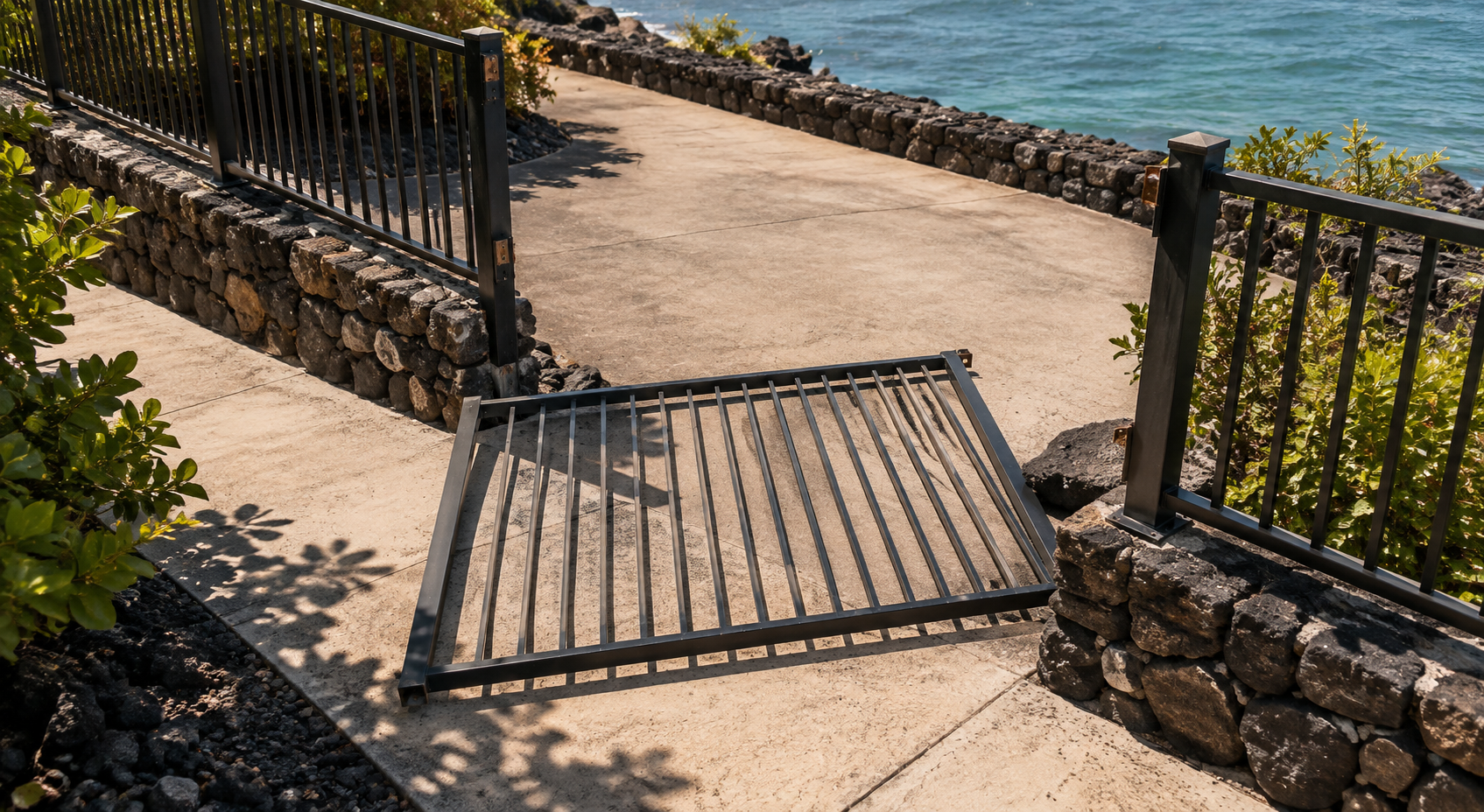
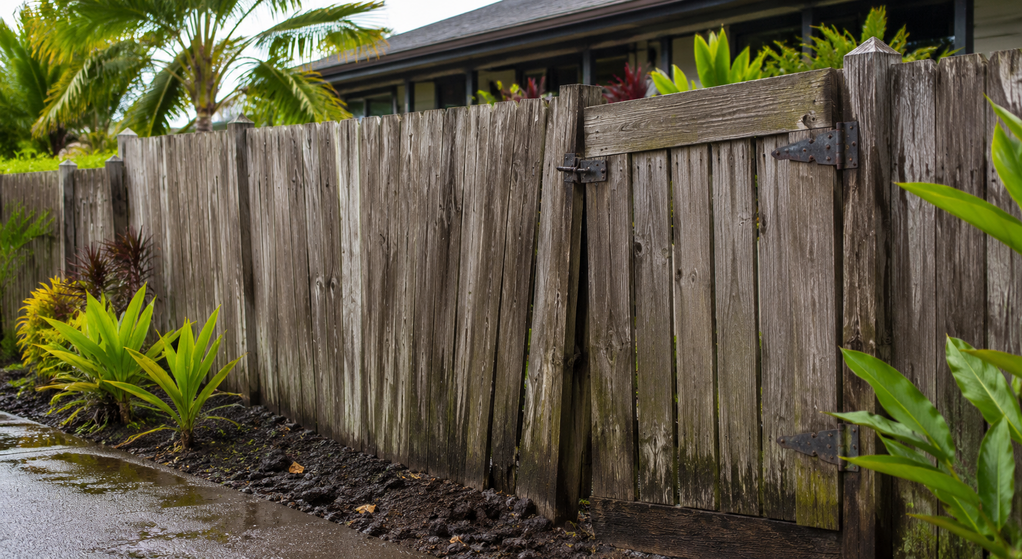
When gate posts are not set deep enough or lack proper footing, the gate slowly leans. Once a gate begins to sag, it rarely stops. Homeowners often blame the gate hardware, but the real issue is below ground. A gate is only as strong as the post holding it.
Fence strength depends on more than surface materials, since proper masonry support determines how well posts resist movement over time.
Underestimating Gate Weight
Gate weight is often miscalculated. Vinyl gates, metal gates, and wood gates all place different loads on posts and hinges. Even lightweight materials become heavy when combined with wind pressure and frequent use.
In Oahu, trade winds put constant lateral stress on gates. If the post diameter, footing size, or hinge rating does not match the gate’s true load, the result is dragging gates, uneven gaps, and latch failure. This problem usually appears within the first year.
| Gate Material | Approx. Weight | Recommended Post Diameter | Recommended Hinge Rating |
|---|---|---|---|
| Wood | Medium-Heavy | 6 in | Heavy-duty |
| Vinyl | Light | 4 in | Standard |
| Metal | Heavy | 6–8 in | Extra-heavy |
Improper Post Alignment
Posts that are slightly off level during installation may look fine at first. Over time, gravity exposes the error. Gates magnify alignment issues more than straight fence sections.
Many installations fail because posts were not braced properly while concrete cured. In humid island conditions, curing times vary, and premature movement weakens the base. Once a post sets crooked, adjusting hinges will only hide the problem temporarily.

Skipping Drainage Planning
Water management is often overlooked. Gates are usually installed at low points of a property, near driveways or walkways where water naturally collects, as
our gate installers
often observe.
Without proper drainage, water pools around the post base. This softens soil and accelerates movement. Even vinyl or metal posts rely on stable ground. Poor drainage leads to leaning, sinking, and eventual replacement.
Using Mainland Installation Standards
Many online guides assume dry climates and stable soil. Applying mainland installation methods in Oahu is a common mistake.
Footings need to be wider and deeper in many island locations. Wind load requirements are different. Materials must withstand humidity and salt exposure. Homeowners who follow generic instructions often discover their gate works perfectly on day one and fails quietly over the next rainy season.
Choosing Style Over Function
Decorative gates with wide spans, diagonal designs, or heavy ornamentation look appealing but require additional reinforcement. Aesthetic choices without structural planning cause imbalance.
A gate that is too wide for its support system will always fight gravity. Functional design must come first. Visual elements should follow structural logic, not override it.
Gate design plays a major role in curb appeal, especially in homes where outdoor spaces define the property. Modern gate designs that elevate the look of Oahu homes highlights styles that balance function, durability, and visual impact.

Incorrect Hinge Placement
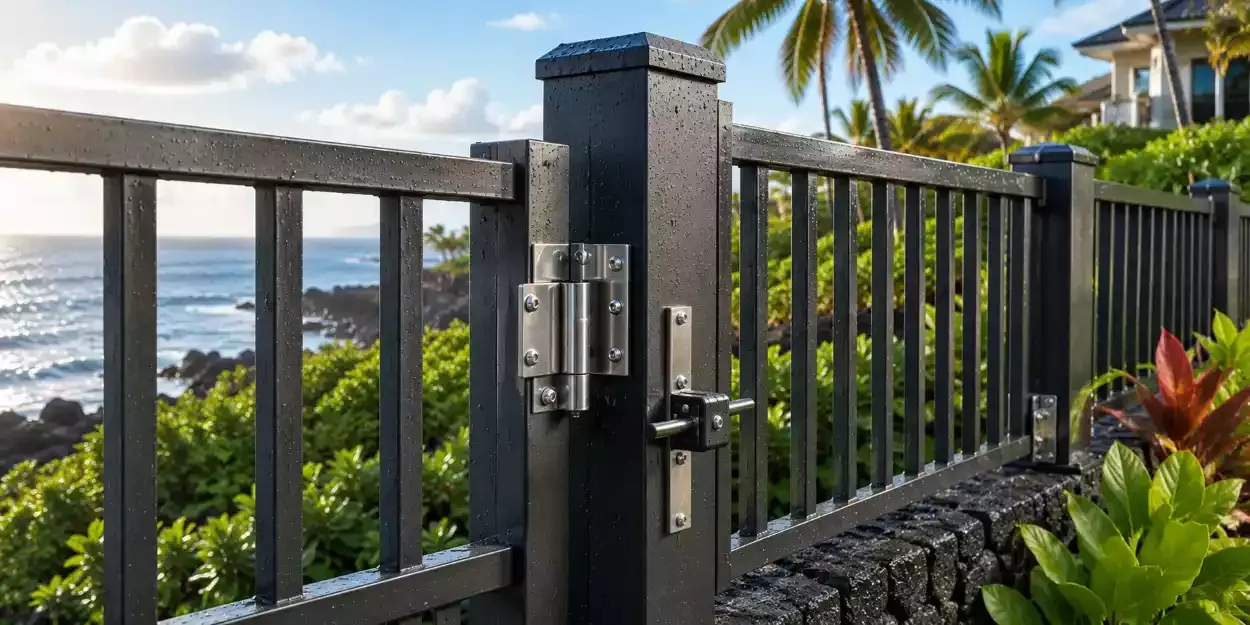
Hinges are often installed based on convenience rather than load distribution. When hinges are spaced incorrectly or mounted into weak sections of the post, stress concentrates at one point.
Over time, screws loosen, holes enlarge, and hinges shift. This leads to misalignment and latch problems. Proper hinge spacing spreads weight evenly and protects both the gate and post.
Poor Latch Positioning
Latch placement affects both security and longevity. Latches mounted too high or too low cause twisting during opening and closing.
In Oahu, frequent use combined with environmental stress makes poor latch placement noticeable fast. A well-installed gate should close smoothly without force. If slamming or lifting is required, something is wrong.
No Allowance for Expansion and Movement
Materials expand and contract with temperature and moisture changes. Vinyl and metal behave differently than wood, but all materials move.
Gates installed too tightly between posts leave no room for movement. Over time, this causes rubbing, binding, and structural stress. Allowing proper clearance prevents seasonal problems and extends lifespan.

DIY Without Structural Knowledge
Many homeowners attempt DIY gate installation to save money. While small repairs are manageable, full gate installations require an understanding of load, leverage, and soil behavior.
Mistakes are rarely obvious immediately. Gates often appear functional until months later, when repair costs exceed professional installation. Structural work rewards precision, not shortcuts.
Fence installation involves more than setting posts and attaching panels, and small mistakes can lead to costly failures over time. How to fix a leaning or damaged fence without full replacement explains practical solutions that restore strength without starting over.
Lack of Long-Term Thinking
The final mistake is viewing a gate as a short-term feature. In Oahu, outdoor structures must survive humidity, wind, rain, and ground movement year after year.
A properly installed gate should operate smoothly for many years with minimal adjustment. If an installation requires frequent fixes, the issue lies in the foundation, not the hardware.
Final Thoughts
Most gate installation problems in Oahu come down to underestimating local conditions and structural demands. Gates are moving parts attached to fixed systems, which makes them unforgiving of small errors.
Well-built gates do not rely on luck. They rely on proper planning, solid footing, accurate alignment, and respect for the environment they stand in.
Achieving that level of precision and durability takes experienced hands and informed decisions. Reach out to professionals to ensure your gate is built to perform reliably for years to come.