Permits, Local Codes & Height Rules for Vinyl Privacy Fences in Hawaii
Since 1950, only five tropical storms or hurricanes have caused major property damage in Hawaii. However, one of them, Hurricane Iniki (1992), caused around $1.8 billion in losses on Kauai alone.
For homeowners, this underscores why even structures that seem modest (fences, for example) must be built with codes, permits, and height limits in mind.
In Hawaii, laws that govern bold vinyl fencing privacy vary not just from island to island, but from county to county. In some places, it varies from neighborhood to neighborhood.
Therefore, we’ve made this guide to help you navigate these rules and plan accordingly.
Why Permits & Local Codes Matter in Hawaii
Fences may look like simple additions to a property, but in Hawaii, they are treated as regulated structures for good reasons.
County building codes are there to ensure that materials and construction methods can withstand the local environmental forces like high winds, heavy rain, and salty air. If a barrier is installed poorly in such a situation, it might topple and cause property damage or even injury.
Permits also protect the look and function of neighborhoods. Height restrictions, for example, prevent the blocked ocean view or unsafe blind spots at driveways and intersections.
Fines and mandatory removals are used as a tool to stop people from ignoring these requirements. Therefore, it is important to take the time to understand local codes before starting a project. This way, you can not only avoid the penalties but also ensure that your vinyl privacy fences add lasting value and safety to your property.
Fence Height Rules and Permits by County
Let’s take a look at fence height rules and permits by county.
Honolulu
In Honolulu, fences are typically limited to six feet in residential zones before a building permit becomes necessary. Anything taller will require approval from the Department of Planning and Permitting. Drawing details may also be requested.
Placement is just as important as height. Corner lots must follow “sight triangle” requirements to preserve visibility for drivers and pedestrians. Properties near shorelines or flood zones face additional restrictions, since solid fencing can affect drainage and public access.
Homeowners that are considering vinyl privacy fences in Honolulu should confirm whether their lot lies in a special management area or not. These regions often require extra reviews.
Maui County
Maui County allows fences up to seven feet high in most residential areas before a building permit is required. This gives homeowners slightly more flexibility than Honolulu.
In rural and agricultural districts, taller fences may be approved to protect crops from animals. However, in these zones, the county may require engineered drawings to ensure the fence design can handle high winds.
Hawaii County
On the Big Island, fence regulations are similar to those in Honolulu. Six feet is the common threshold for residential fences, with permits required for taller designs.
Sloped properties could create extra complications, though, since the measured fence height may change depending on grade. Moreover, the retaining walls that are combined with fences are closely reviewed.
Kauai County
Kauaʻi generally allows fences up to six feet. Taller fences, or those near roads and waterways, usually require a building permit.
Some districts with scenic view protections may require a variance if a solid barrier blocks a shared outlook.
Residents planning vinyl privacy fences on Kauai should keep in mind that the county puts an emphasis on neighborhood character. This means that approval could depend on how the fence fits visually with surrounding properties.
Technical Considerations for Vinyl Privacy Fences
The technical climate and geography of Hawaii create unique challenges that homeowners should plan for before installing vinyl privacy fences.
Wind is the first concern. Strong gusts are common in exposed areas, which require a tall and solid panel. Local codes often require deeper post embedment and reinforced bracing to keep fences upright during storms.
Durability becomes another key factor due to Hawaii’s salty air, intense sunlight, and heavy rainfall. In certain cases, building officials may request engineered drawings. This is especially true for vinyl privacy fences that are taller than six feet or the ones that are placed in wind exposed and flood prone locations.
How the Fence Permit Process Works in Hawaiʻi
Getting a fence permit in Hawaiʻi might sound complicated—but it’s actually pretty simple when you know what to expect. Think of it as a short checklist that keeps your project legal, safe, and stress-free.Applying for a fence permit in Hawaii is a straightforward process.
Step 1: Know Your Rules
Start by checking your zoning district and any homeowners’ association (HOA) guidelines. Some HOAs have stricter rules than the county, so confirming both early can save you from redesigns or disputes later.
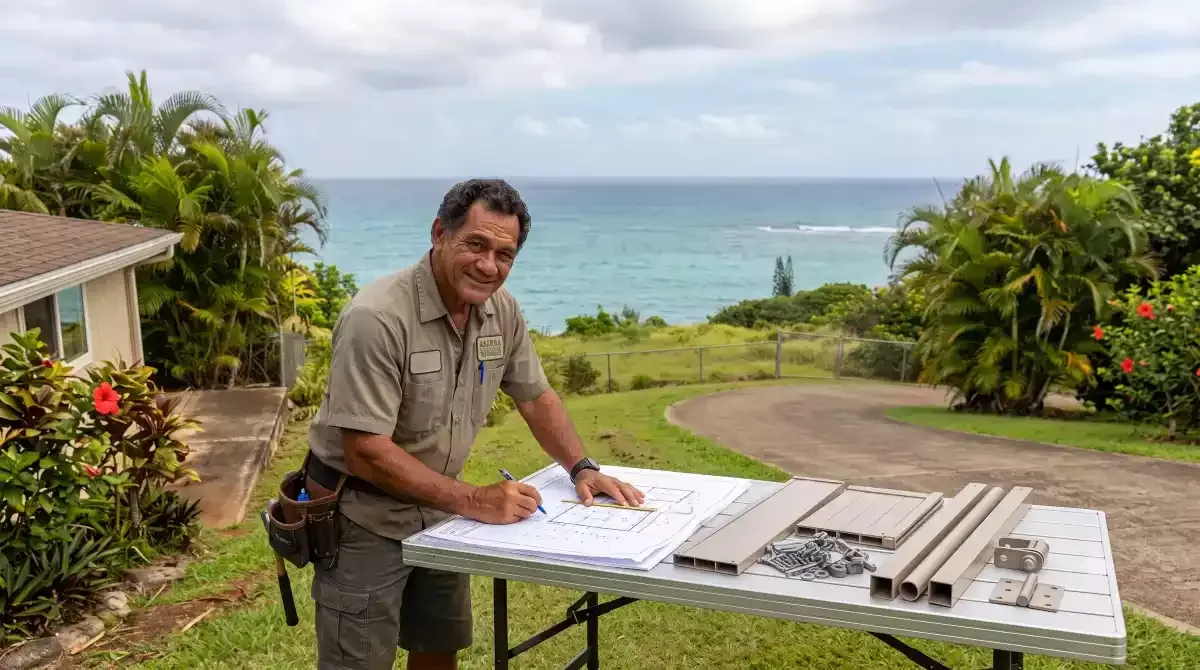
Step 2: Create a Site Plan
Next, prepare a basic site plan. This doesn’t need to be fancy—just clear. It should show:
• Your property boundaries
• Existing structures
• Where the new fence will be placed
Counties also require the fence’s height and design details. If your fence is taller than usual or located in a flood zone, you may need to provide extra information, like post depth and footing size, for safety approval.
Step 3: Submit Your Application
Once your plans are ready, submit them through your county’s online permitting portal or directly at the planning office. A reviewer will check for:
• Proper setbacks
• Height compliance
• Safety concerns
Permit fees vary by island but are typically affordable for residential fences.
Step 4: Inspections & Final Approval
After approval, you’re cleared to build—but inspections are part of the process.
Most counties schedule:
• One visit to check footing depth
• A final inspection once the fence is complete
Once you pass, you’re officially done—no worries about fines or future issues.
Checklist For Homeowners.
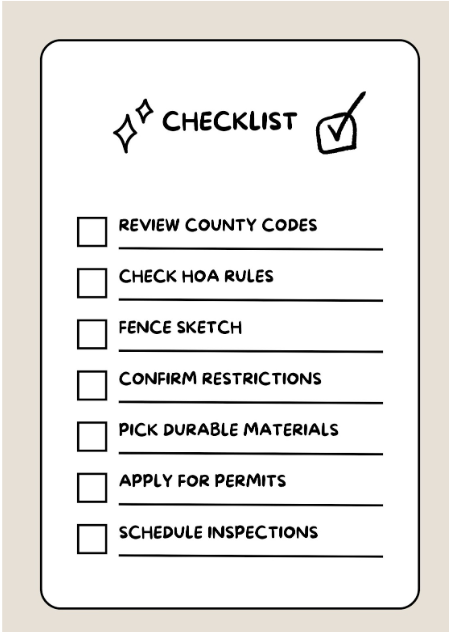
Planning a fence in Hawaii is easier when you follow a clear process. Therefore, you can use this checklist as a starting point:
- Identify your county and review local codes.
- Check for HOA or neighborhood association rules.
- Measure your property and sketch the proposed fence.
- Confirm flood zones and shoreline restrictions.
- Choose materials that suit the climate of Hawaii.
- Submit your permit application.
If you follow these steps, it gets easier to avoid common issues and enjoy code-compliant results.